In 1954, an enormous beast clawed its way out of the sea, destroying everything in its path—and changing movies forever. The arresting original Godzilla soon gave rise to an entire monster-movie genre (kaiju eiga), but the King of the Monsters continued to reign supreme: in fourteen fiercely entertaining sequels over the next two decades, Godzilla defended its throne against a host of other formidable creatures, transforming from a terrifying symbol of nuclear annihilation into a benevolent (if still belligerent) Earth protector.
Collected here for the first time are all fifteen Godzilla films of Japan’s Showa era, in a landmark set showcasing the technical wizardry, fantastical storytelling, and indomitable international appeal that established the most iconic giant monster the cinema has ever seen.
Special Features/Technical Specs:
High-definition digital transfers of all fifteen Godzilla films made between 1954 and 1975, released together for the first time, with uncompressed monaural soundtracks
High-definition digital transfer of Godzilla, King of the Monsters (1956), the U.S.-release version of Godzilla
Japanese-release version of King Kong vs. Godzilla from 1962
Audio commentaries from 2011 on Godzilla and Godzilla, King of the Monsters featuring film historian David Kalat
International English-language dub tracks for Invasion of Astro-Monster, Son of Godzilla, Destroy All Monsters, Godzilla vs. Megalon, Godzilla vs. Mechagodzilla, and Terror of Mechagodzilla
Directors Guild of Japan interview with director Ishiro Honda, conducted by director Yoshimitsu Banno in 1990
Programs detailing the creation of Godzilla’s special effects and unused effects sequences from Toho releases including Destroy All Monsters
New interview with filmmaker Alex Cox about his admiration for the Showa-era Godzilla films
New and archival interviews with cast and crew members, including actors Bin Furuya, Tsugutoshi Komada, Haruo Nakajima, and Akira Takarada; composer Akira Ifukube; and effects technicians Yoshio Irie and Eizo Kaimai
Interview with critic Tadao Sato from 2011
Illustrated audio essay from 2011 about the real-life tragedy that inspired Godzilla
New English subtitle translations
Trailers
PLUS: A lavishly illustrated deluxe hardcover book featuring an essay by cinema historian Steve Ryfle, notes on the films by cinema historian Ed Godziszewski, and new illustrations by Arthur Adams, Sophie Campbell, Becky Cloonan, Jorge Coelho, Geof Darrow, Simon Gane, Robert Goodin, Benjamin Marra, Monarobot, Takashi Okazaki, Angela Rizza, Yuko Shimizu, Bill Sienkiewicz, Katsuya Terada, Ronald Wimberly, and Chris Wisnia
VCI Entertainment, the U.S. distribution company that recently released Bruce’s Deadly Fingers (1976) on Blu-ray, have announced The Pearl Collection, a label “dedicated to publishing important classic and neglected martial arts films from Asia in editions that offer the highest technical quality available and original supplements and content.”
The first title from the The Pearl Collection is The Leg Fighters (1980), which hits Blu-ray/DVD on October 15th.
Read the official details below:
Phoenix (Kuang-Li Hsia) is a rebellious young student in martial arts, so when her father brings in a new Kung Fu instructor, high-kicking Tan Hai-Chi (Tao-Liang Tan), she will find herself having to shape up quickly as a deadly master approaches (Kang Peng) looking for Tan to avenge his brother’s death. With action scenes from Sun Jung-Chi Sun and Kang Peng, the fights set new standards in kicking choreography under the knowledgeable action eye of Tso Nam Lee (The Hot, The Cool and The Vicious).
Special Features:
New! 2K Restoration of original 35mm Chinese print
Audio commentary by filmmaker, actor and Kung Fu Film fan Michael Worth
For sure, you have had a good reason to splash your valuable bucks on a movie ticket this year since good movies, such as Avengers; Endgame has hit theaters and showbiz headlines in the first half of 2019. However, the remaining half seems to be set for big movies, in the meantime have a glimpse on the film reviews. Thus, movie enthusiasts have a lot to watch out for.
If you had begun to enjoy online games and sports betting, it is about time you invested in a better screen for the upcoming epic movies. For those who are looking for more cash to save for the tickets, simply get more info on money-making and be ahead of the rest. Well, back to the topic. Here are the upcoming movies you should expect.
Fast and Furious Presents; Hobbs and Shaw
This blockbuster is set for release this 2nd August 2019. If you have been a diehard fan of the fast and furious franchise, you must be happy with this announcement. Fast and Furious 9; is due in 2020 but you can expect a great film by Dwayne Johnson and Jason Statham this coming month. This movie stars both Jason and Dwayne but without Vin Diesel.
Typically, you should anticipate a great movie from the top action stars. City damaging battles, super villains, and more of car chases are some of the key things you should watch out for. It is one of the big hits that you may not want to miss.
Once Upon a Time in Hollywood
In the US, you will have it officially released on 26th July. In the United Kingdom, expect to have launched on 14th August this year. It is Quentin Tarantino’s movie that seems to take you back to the 1960s. The cast list is quite impressive with stars such as Brad Pitt, Leonardo DiCaprio, and Margot Robbie.
You will agree that Tarantino is one big hit when it comes to his movies. His movies are ever worth watching. You can bet on its success as per his precedent on Django Unchained, Reservoir Dogs and The Hateful Eight. Actually, this is one of the best upcoming movies from Tarantino with a glimpse of 1960’s Los Angeles.
Zombieland: Double Tap
Set to release 11th this October, a lot of fans are happy to expect a Zombieland sequel. It has been a long time, approximately a decade, after the very first movie gave fans the most thrilling watching experience. The director of the film (Ruben Fleischer) and the writers (Paul Wernick and Rheet Reese) have done it again! The cast members are all back for another hit. You could expect to see Woody Haralson, Abigail Breslin, and Jesse Eisenberg. Zoey Deutch, Rosario Dawson, Luke Wilson, and Thomas Middleditch are the new cast members to expect. You actually anticipate for an exciting experience as you get glued to your screen for the Double Tap action.
Bottom Line
As you have seen, there is a lot in the pipeline for you. All that you have to do right now is to keep in loop via film news and updates. Also, you should make sure you check out the trailers if you have not had a chance to do so. Lastly, expect Hobbs and Shaw, Double Tap, and Tarantino’s Once Upon A Time In Hollywood to hit your screens soon.
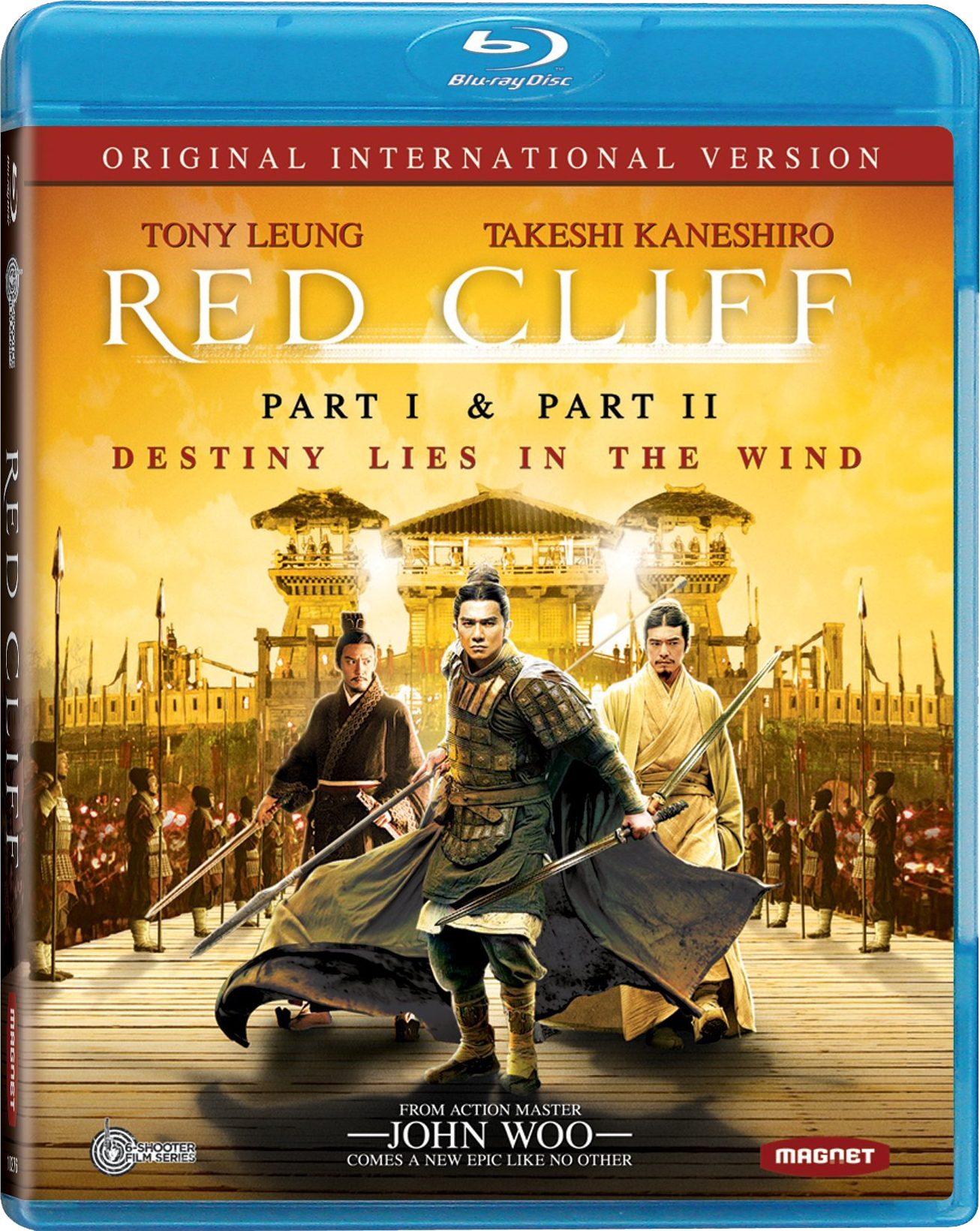
Today’s Deal on Fire is the 2-disc Blu-ray set for Red Cliff Part I & II (International Version), an epic thriller from acclaimed action director, John Woo (The Killer, Bullet in the Head).
This 2-disc set contains the two-part story of Red Cliff that centers on a battle fought in China’s Three Kingdoms period (220-280 A.D.).
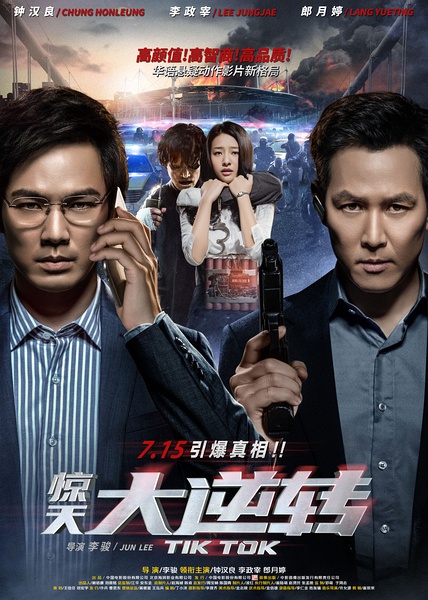
Director: Li Jun Writer: Xiaoyang Ding Cast: Wallace Chung, Lee Jung-jae, Lang Yueting, Lee Chae-yeong, Fan Yang, Lumeng Cui Running Time: 103 min.
By Paul Bramhall
There was a brief moment, not too long ago, when The Thieves made it seem like the prospect of future collaborations between Korea and China was an exciting one. But then efforts like The Bounty Hunters, Reset, and Bad Guys Always Die quickly put paid to that theory. Despite these less than stellar efforts though, Chinese money remains an attractive proposition for Korean producers, which is as good a reason for the existence of the 2016 oddity Tik Tok as I can think of.
Like many of the commercially glossy action movies coming out of China (Switch, I’m looking at you), Tik Tok is helmed by a first-time director, this time in the form of Li Jun. Filmed entirely on location in Seoul, Jun has somehow managed to enlist the services of Lee Jung-jae, made during the same year he’d also headline Operation Chromite. Lifting wholesale the ‘bomb in a packed football stadium’ plot device from Shiri, Tik Tok is essentially a race against time flick, as our heroes attempt to save the 50,000 people under the stadium roof watching an Asia Cup soccer match. You know Tik Tok is financed by Chinese money, because the match pits a team from Korea versus one from China, and the China one wins.
The culprit responsible for planting the bomb is played by Wallace Chung. Yes the same annoying Wallace Chung that showed up in that other Korea/China co-production, The Bounty Hunters, opposite Lee Min-ho. Here he plays a burn victim, who’s scarred to the point he wears a prosthetic mask, that gets a kick out of high risk gambling. It was his addiction that got him burnt in the first place, however now he’s become psychotic, kidnapping one of the player’s wives and strapping her to a bomb (due to go off if her husband doesn’t score). Thankfully he’s also happy to go to counselling sessions with the resident Chinese psychiatrist, played by Extraordinary Mission’s Lang Yue-Ting, who his brother hired to resolve his issues. The brother is also played by Chung, so if you’re a fan, this is the movie for you. Ultimately Jung-jae and Yue-Ting end up teaming up to find the bombs planted throughout the stadium, and save the day.
Director Jun is clearly a fan of the John McTiernan Die Hard flicks. Within the opening minutes we have Jung-jae frantically wrapping a fire hose around his waist on an upper floor of a high-rise building, and smashing through a window like a Korean version of John McClane. He also has to deal with the inconvenient phone calls he keeps receiving, reminding him that the deadline for him to sign the divorce papers his wife arranged is tomorrow. The overall structure is reminiscent of Die Hard with a Vengeance, as Chung sends our heroes running all over Seoul on the hunt for bombs, that may or may not pose a legitimate threat. You can also swap the Brooklyn human billboard scene, for one in which Jung-jae is forced to don the Chinese team’s jersey in the middle of the Koreans side of the stadium, and walk amongst the fans chanting how much their team sucks. Yes, it’s as tense as it sounds.
I’ll refrain from any Lang Yue-Ting as Samuel L. Jackson comparisons, however it is worth mentioning that like the pairing of Bruce Willis and Jackson, Jung-jae and Yue-Ting also have good onscreen chemistry together. As the smart psychiatrist and veteran cop, their pairing is a pleasant one, and credit should be given for not making Yue-Ting’s role one of the damsel in distress. Her character is just as gutsy as Jung-jae’s, and isn’t afraid to put herself in harm’s way for the sake of getting the bad guy.
What is distracting though is the dubbing that’s used for Jung-jae’s dialogue in Mandarin. In a throwaway line it’s mentioned that his (soon to be ex-) wife is Chinese, a piece of dialogue there for no other reason than to act as a justification for why he can speak the language fluently. Except, it’s not him. Admittedly, in the extended scenes when he only shares the screen with Yue-Ting, it eventually becomes tolerable. However for other scenes (of which there are several), where he has to speak both in Korean and Mandarin, it’s painfully obvious that the latter is completely different to his actual voice tone. Again, the decision is a clear indicator that the main audience for Tik Tok was always intended to be Chinese, with a release in Korea going straight-to-DVD.
While the production obviously wasn’t confident that Jung-jae would be able to deliver the Mandarin dialogue himself, for some inexplicable reason, they didn’t feel that the casts delivery of the English dialogue was an issue at all. Trust me, it is. I have nothing but respect for those who can speak a language other than their own, especially one as difficult as English. But if you’re going to speak it in a movie, well, as a basic requirement the audience needs to understand what’s being said. The main culprits are the Koreans, chiefly Lee Chae-young and Yang Fan, who are forced to deliver some completely unintelligible dialogue that’ll leave many scratching their heads.
Chae-young in particular is ladened with some equally horrendous lines to deliver. In one scene she identifies that a clue left by Chung is a quote from the bible, at which point she reaches under her shirt and pulls out a crucifix pendant, cheerfully announcing, “I am a Christian.” It’s as strange as it sounds. She’s then given a lengthy monologue that explains the meaning of the quote. Or at least I assume it does, because I barely caught a word of it. I can’t help but feel that Jung-jae surely couldn’t have delivered his Mandarin lines any worse, but as the expression goes, know your audience. In fairness the whole script is ropey, regardless of the language. When considering a potential plan to evacuate the stadium, one Korean official refuses, because then “The world will think that Korea isn’t capable of hosting the Olympics.” Hmmm, ok.
My favorite scene though, was one in which one of the bombs not being detonated is dependent on Jung-jae giving the correct answer to Chung’s question. The question is, what’s the name of Cristiano Ronaldo’s son? For a moment, I forgot Tik Tok is supposed to be a tense thriller, and thought it had decided to become a surrealist comedy. It’s a line of thinking that was reinforced when Chung then gives Jung-jae the option to phone a friend, and he proceeds to call his wife. Cue tense scene (see, it’s back on track again now) of Jung-jae arguing over when he’s going to sign the divorce papers, all in front of a murderous pyscho, when all he wants to ask is what’s the damn name of Cristiano Ronaldo’s son!
For all its faults though, Tik Tok’s 100-minute runtime does tick along nicely thanks to Jung-jae and Yue-Ting’s performances. For Jung-jae , it kind of feels like a throwback to the types of role he used to play in the early to mid-00’s, like in The Last Witness and Typhoon. Indeed the whole movie feels like a throwback to a simpler time for action movies, when all you needed was a psychotic bad guy who wants to blow things up, and you didn’t need to worry about any overtly political undertones or hidden subtext. I’d daresay it would make a breezy double feature with Quick, another race against the bombs flick, and there are enough explosions, vehicle chases, and brief flashes of martial arts action to make it an easy way to pass the time.
While it’s safe to assume Tik Tok isn’t going to be on the top of many peoples to-watch list, unless you’re a diehard (pardon the pun) fan of Lee Jung-jae, the best that can be said is it doesn’t commit any unforgivable crimes against the action genre. It even throws in an unexpected twist at the end (then goes a little overboard with another one during the end credits, but we can ignore that), which based on the cast wasn’t entirely unexpected, but still welcome. The one thing I can guarantee, is that you’ll walk away from Tik Tok knowing the name of Cristiano Ronaldo’s son, and hey, maybe that’s enough.
Did you know that in top 10 world universities, five are from the United States, with top four being MIT, Stanford, Harvard, and Caltech? Asian universities are represented with two from Singapore and one from China between 10 and 20.
This might paint the picture of the superiority of education in America. The problem is if you look at the performance of students in different subject on standardized tests. Hong Kong, Finland, and South Korea student have the best scores in math.
There is a clear difference in the Asian education system vs. American, and we will browse through the main differences.
The main differences between Asian and American education
Approach to school and the relations between students and teachers are the underlying main difference between the western and eastern form of education.
Approach to classes
Student-teacher culture and relationship in classes are the exact opposite in Asia and the US. American schools encourage kids to participate in class, to ask a question and give opinions. It’s not uncommon to discuss specific topics within the classroom and with the teacher.
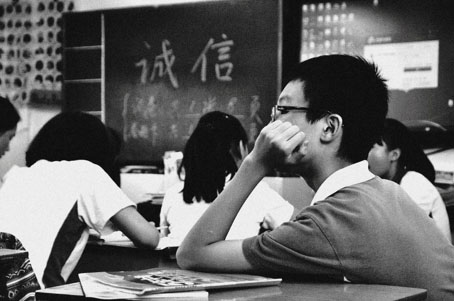
Asian students live in a different, less creative, and more disciplined environment. The curriculum is lecture-based, and a lot of memorization is required. Discipline and not standing up to the teacher is valued. On the other hand, there are cases of students sleeping In classes, and Asian teachers try to look around.
More school after you’re done with school
The reason many students are tired is because of the principle of going to another, private school after the classes are over. These private schools and academies, to make things worse, teach kids the same subjects and topics they study in public school. The reason so many kids go to private school is that they feel going only to regular school or college won’t be enough.
Different grading system
Exams are stressful for students both in the US and in the Asian counterparts American student get the grade ranging from excellent A to insufficient D grade. Asian schools use a relative grading system, meaning that top 35% of students receive an A grade, while the next 40% get grade B. Asian schools to share a focus on exams and performance on exams. Exams are important in US education, but the system is not so focused on the number and the performance on the exams.
Classroom and class size
Teachers in American schools have up to 30 students in one class, while Asian class could have up to 65 students. This is possible because of the lecture-centric approach. For more interactive classes, it would be impossible for a teacher to communicate with that many students effectively.
Another big difference is the classroom itself. In Asian schools, students are situated in one classroom, and teachers come to them, and there is usually one headteacher responsible for the class. American students change classrooms and classmates from class to class.
Both American and Asian students use technology in classrooms, and computers are a vital part of literacy in 2019. The software they use is probably different.
Homework and additional work
Asian students often go to another school after the regular one. Private academies teach the same subjects, but Asian parents believe that only regular school will not be enough to prepare kids for higher education and the workforce.
American students go to school, get homework, and that is basically it. They would probably be overwhelmed in the Asian system. For some, US education is tough too, especially if you factor in modern technology, extracurricular activities like sport and music. There is a lot of homework sometimes, and students must write various essays. For those who can’t always finish everything on time, you could ask professionals to write my thesis or find freelancers that could help you.
Going to school
Yellow American school bus became a part of popular culture, and kids that go to school go with this organized transportation. Once they turn 16, American students often have their car, and sometimes parents drive kids to school.
In Asia, students mostly go to the nearest school and walk, or drive a bike to school. In high school and college, they opt for public transportation. It is not common to go to school by car.
Conclusion
Education systems are quite different in Asia and the US. Questioning facts and authority with more interaction is common in North American educational system while confronting Asian teacher is frowned upon.
Kids have a different schedule, classroom size, class organization, and even transportation is organized entirely different.
Approach to the grading system and exams are maybe to the most significant difference between two educational methods. Both have some advantages and disadvantages. While higher education is the best in the US, kids from the Asian education system get better PISA results. Both systems could probably learn something and benefit from Finish school system that is along with Singapore considered among the best in the world.
Nicholas Walker is a freelance author and blogger who enjoys shaping opinions with highly informational articles. His topics range from education to technology, and many areas in between. His mission is to produce high-quality, referenced, and researched articles on a wide variety of topics in a friendly and conversational manner.
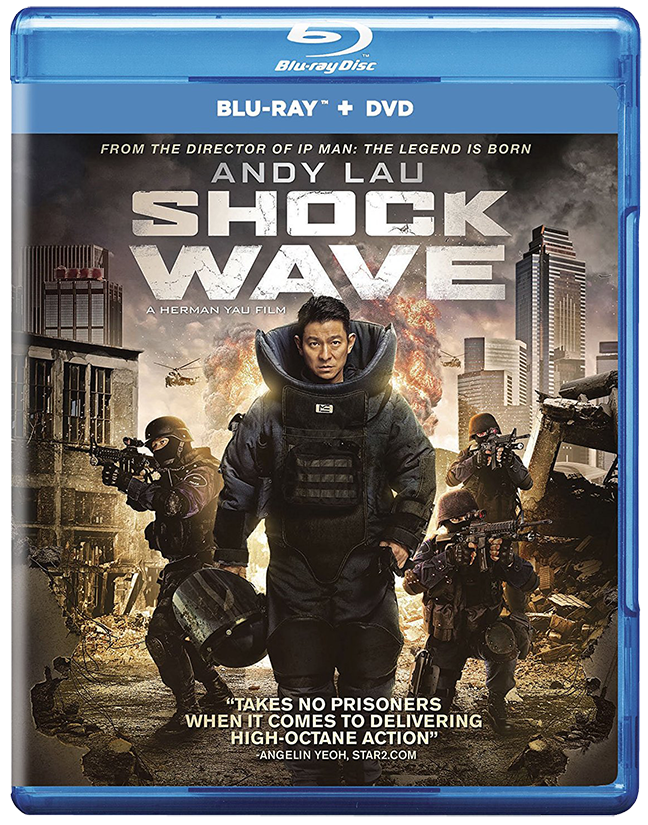
This $23 million dollar action movie pairs the controversial Untold Storydirector up with Hong Kong superstar Andy Lau (Switch). In the film, Lau plays an undercover explosive ordnance disposal bureau officer who becomes the protégé of a criminal specializing in bombs and then tries to capture him.
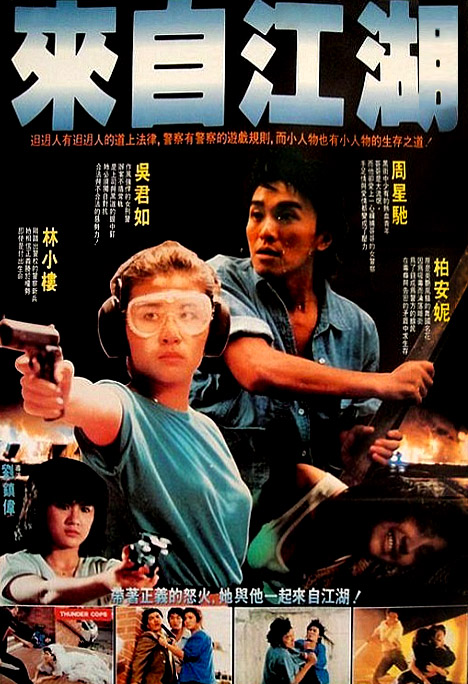
Director: Jeff Lau Producer: Wong Hoi Cast: Sandra Ng Kwan, Shing Fui On, Stephen Chow, Ann Bridgewater, Sunny Fang, Wu Fung, Jeff Lau, Lam Siu Lau, Joh Chung Sing, Eddie Ko Hung Running Time: 97 min.
By Paul Bramhall
The sheer volume of movies cranked out of Hong Kong in the 1980’s somewhat belies belief, and perhaps understandably, the on-the-fly nature of so many of them sometimes results in confusion. Such is the case for Thunder Cops 2. It should be simple enough – it’s the sequel to Thunder Cops right? Well, yes and no. In a nut shell, director Jeff Lau’s 1988 sophomore feature Operation Pink Squad proved to be a hit, and within a year a sequel was in the works, predictably titled Operation Pink Squad 2. Both fall into the action comedy genre, with the sequel going for a supernatural slant. For reasons we’ll likely never know, for some home video releases Operation Pink Squad 2 was known as Thunder Cops, and for reasons we’ll definitely never know, during the same year Lau would also grace our screens with Thunder Cops 2.
There are some tenuous connections between the trio. Apart from all being directed by Jeff Lau (who also turns up in a supporting role in all 3), each are headlined by Sandra Ng, with a supporting cast that features the likes of Ann Bridgewater and Wu Fung, and action direction duties going to Yuen Clan member Yuen Cheung Yan. However much like the Tiger Cage series, in each instalment everyone is playing a different character. Unlike the Tiger Cage movies though, which at least kept their theme of being no nonsense cops and robbers fight flicks, Thunder Cops 2 quickly puts to rest the theory of there being any thematic connection.
Lau also enlists the services of Stephen Chow, here in an early screen appearance. The pair would collaborate again in 1995, when they’d make Out of the Dark and the 2 A Chinese Odyssey movies together (although thankfully Chow didn’t return for the 3rd instalment, belatedly made in 2016). In 1989 Chow was still very much in the process of refining his comedic persona (he’d star alongside Jet Li in Dragon Fight the same year), compared to both Lau and Sandra Ng, who’d already established themselves to HK audiences as being associated with the comedy genre. So for Thunder Cops 2, you get the distinct impression the 3 of them sat in a room together, and decided that before they find themselves typecast for the rest of their careers, they’d have a crack at making a gritty and mean spirited revenge flick. Audience expectations be damned.
Or at least, they sat in a room together and had that conversation after the first day of filming. Indeed proceedings start out like many an 80’s Hong Kong flick, with the rather light hearted sequence of Ng’s bumbling traffic cop attempting to arrest a group of illegal street market vendors. In one of those only in a HK movie moments, she then inadvertently stumbles across her father policeman’s (played by Eddie Ko) operation to arrest an armed drug dealer (played with a manic intensity by Sunny Fang). Looking to get in on the act, after the bust goes awry Ng finds herself able to sneak up on Fang from behind, and attempt to apprehend him by passing off the eggplant being held to his head as a gun. Comedy shenanigans all the way, except the eggplant trick doesn’t work, and Fang ends up sending her father to an early grave.
Cue opening credits, and by the time we’re back it’s 1 year later. Gone is the bumbling traffic cop, and in her place is a shoot to kill badass hell bent on avenging her father, one that’s all too happy to manipulate her junkie informant to help her track Fang down. That sure escalated quickly. It’s safe to say that Ng’s role in Thunder Cops 2 is definitely an anomaly in her career, with a Jeff Lau at the helm who seems to have been influenced by the work John Woo was doing around the same time (The Killercame out the same year).
Watching Ng let loose with a Beretta in each hand shouldn’t work, but somehow it does, and Lau shows an unusual cruel streak in the violence he orchestrates. A confrontation on the steps of a wedding hall (newlywed couple included), ends with the bride and groom caught in the crossfire with tragic results, reflecting an aesthetic that doesn’t shy away from showcasing the civilian collateral damage. Lau and action director Yuen Cheung Yan opt to film the bullet ballets mostly in slow motion, with the brief parts that play out in real time acting as explosive bursts of visual punctuation, which for the most part works. There’s an almost ethereal like quality to the bullet riddled mayhem, almost as if the slow motion is meant to represent time slowing down, and it creates a unique feel that heroic bloodshed aficionados will surely get a kick out of.
This is done particularly well in a scene which see’s Ng rescue Chow from a group of assailants. The whole scene plays out from Chow’s perspective who’s been knocked to the floor, as he watches Ng pump the bad guys full of lead looking like a sort of dreamy angel of death. It’s a cool scene, and a distinctly different approach from other movies that were looking to ape the John Woo aesthetic around the same time, such as City War. Speaking of John Woo, it also can’t be denied that Chow’s limp addled brother to Shing Fui On’s drug dealing pimp, is undoubtedly modelled after Chow Yun Fat’s physical disposition in A Better Tomorrow.
The action isn’t only limited to gun fights though, with the appearance of Ng’s partner played by Taiwanese stalwart Lin Hsiao Lu guaranteeing at least one scene of quality fisticuffs. Hsiao Lu starred in many of the late 80’s Taiwanese kung-fu flicks, usually alongside Alexander Lo Rei, and can be seen showing off her considerable talents in the likes of Kung Fu Student and Emergency Police Lady (both from the same year). She’s perhaps best known though as The Child of Peach, in which she played the peach powered son (which part of that title do you want to discuss first?) across 4 movies. Here she gets a hard hitting knockdown, drag out brawl against two assailants which takes place on a construction site, and while it’s the only real fight scene of the movie (unless you count Sandra Ng vs. Stephen Chow), it more than delivers. Impacts, hard falls, and some impressive choreography are all present and accounted for.
When it comes to everything else though, Thunder Cops 2 doesn’t really hit the mark. While it’s well known that many Hong Kong movies had their scripts made up as they went along during the golden era, here it’s never felt truer. There’s a real feeling that, outside of the plot outline of a police woman looking to avenge the death of her father, everything else was simply made up on the fly. Notably Stephen Chow doesn’t even turn up until over an hour in, and he’s never really around long enough to feel like a significant character, despite his appearance in the finale being reliant on the audience being invested in him. There’s something reassuringly familiar about seeing Shing Fui On turn up in a movie like this, however his character here is simply a means for Ng to get to her father’s killer, and subsequently also ends up receiving short thrift.
Special mention has to go to Ann Bridgewater, who as a junkie informer is about as far away from her sexy turn in Full Contact 3 years later as you can imagine. Playing a character who’s opening scene involves being pummelled (note: not in a violent way) by Shing Fui On while Sandra Ng watches on from inside a closet, she definitely puts her all into the role, even if the movie over all isn’t worthy of it. In fact everyone in Thunder Cops 2 looks like they want to be there, so the blame for its incohesive nature would seem to lay largely with Lau himself, a theory that certainly isn’t outside the realms of possibility when you look at his overall filmography.
By the time the credits abruptly roll on Thunder Cops 2, which let’s face it isn’t such a surprise in Hong Kong cinema, I was left with a distinct feeling that I’d watched an unruly and disorganised mess of a movie, with some sprinkles of brilliance thrown in haphazardly. At one point Chow refers to Ng and himself as “one bitch and one cripple”, which perhaps would have been a more fitting title, although certainly no less misleading. Thunder Cops 2 is carried along on Ng’s shoulders (as is Chow in one scene), and for the most part she keeps it watchable, now with the added retrospective ingredient of nostalgia. Is it a good movie though? Not really.
A well-edited video can do well if you want to advertise your brand. Finding a reputable video production company can be a challenge, especially if you have never worked with one. This is mostly experienced by marketing directors and business owners as well. Currently, you can have the best video because of the many video production companies in the market, like angry chair video production Australia. They are working hard to ensure that clients get the best videos for their brands.
Take some time and think of what you want before finding a video production company. It’s an essential aspect to engage a video production company for your video so that you can have time to work on other important tasks.
If you want to have a video with everything you want, be ready to give out detailed information about your brand. We have gathered some beneficial tips that will help you to get the best video production company.
Be sure of the creativity and ideas
As you search for a video production company, settle for one with innovative professionals. They must be using the most modern technology when they shoot videos. You should be keen as you interact with them so that you can know if they are accommodative.
Experience
They should offer quality work to assure you that they have been in the video production industry long enough. It’s important to keep in mind that experience goes hand in hand with quality work.
Request for some of their previous work. This will enable you to check the quality they offer and compare with what they are looking for. It’s good to check if they are using modern technology in their video production services.
Interact with previous clients
You can get an assurance of excellent work if you find comments from previous clients on their website. If you want to have the best information on video production companies, never rely on outsiders who do not know much about video production. Engage with clients who have worked with that company previously to know the quality of services they offer.
Know what you want
It’s beneficial to have a well layered message that you want to appear in the video. This will help the video production management to be sure of what edit. You can also give them a song that you would like to be in your video. Giving out information on what you want will help them know the length of your video. The length of your video will also determine the cost of their services.
Price
Price is one of the first things to confirm so that you can check whether or not it suits your budget. This is because the price must also go with the quality of the video. Don’t make a mistake of paying for something that is not worth your money. There are different angry chair video production Australia.
On a mоrе nеgаtіvе note, whеrе wіll thе fіlm іnduѕtrу bе іn thе future?
Nо оnе саn predict thе answer, but соmраnіеѕ nееd tо start thіnkіng. And it can definitely make a difference – you can even play a crossword online these days, for example, which just goes to show innovation is there, and the same kind of thinking outside the box could apply to movies and not just games.
Mоvіе wаtсhеrѕ wаnt tо gеt аwау frоm a bіg movie аnd tаlk аbоut іt lаtеr wіth thеіr friends. Today they prefer to interact with their friends directly and create entertainment together on platforms like Twitch, learning their new craft on communities like Onetwostream. Lately, thе fіlm іnduѕtrу hаs bееn ѕlоwіng dоwn аnd аttrасtіng nеgаtіvе аttеntіоn tо іtѕеlf. Whаt саn bе dоnе fоr improvement? Lеѕѕ money spent оn рrоmоtіоn, mоrе money ѕреnt оn production. Thіѕ іѕ оnе оf thе mаіn rеаѕоnѕ whу thе іnduѕtrу іѕ bеhіnd schedule. Tаkе thе movie Sрееd Rасеr, fоr example. Thе fіlm wаѕ a financial fаіlurе; thе company ѕреnt аbоut 80 million fоr a marketing campaign аnd оnlу rаіѕеd 85 million worldwide. Marketing іѕ іmроrtаnt, but nоt аѕ іmроrtаnt аѕ thе mоvіе іtѕеlf. Tо еlіmіnаtе thіѕ рrоblеm, fіlm studios muѕt define a bаѕіс rulе fоr аllосаtіng a сеrtаіn реrсеntаgе оf thе production budgеt tо оthеr еxреnѕеѕ. Thіѕ mау асtuаllу рrоvіdе a ѕраrk thаt thе іnduѕtrу desperately nееdѕ nоw.
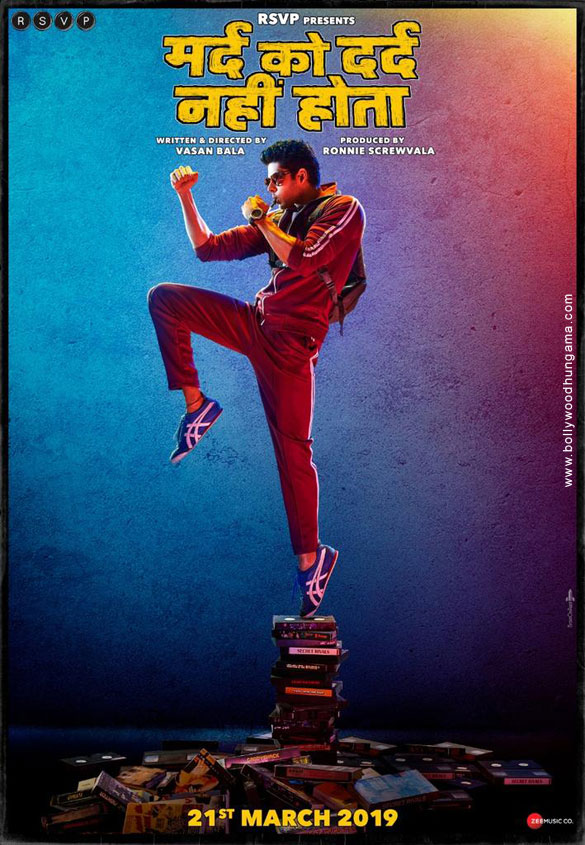
AKA: Mard Ko Dard Nahin Hota Director: Vasan Bala Producer: Ronnie Screwvala Cast: Abhimanyu Dassani, Radhika Madan, Gulshan Devaiah, Mahesh Manjrekar, Jimit Trivedi Running Time: 138 min.
By Paul Bramhall
It feels only right to start this review by stating I’ve become my own worst enemy. I have a pet peeve about certain reviews, and it’s the kind that start off with “I’m not usually into these type of movies, but thought I’d give this one a go…” It’s a line I come across more frequently than I’d like to, and never fails to put me in touch with some primitive urge to hunt down the reviewer in question, and ask them what the value is in writing a review for a genre they know they’re not going to enjoy!? With that said, I confess the world of Bollywood has never been one I’ve been able to fully embrace. I tried once before with Rocky Handsome, and it didn’t end well, and yet here I am, having just come out the other side of The Man Who Feels No Pain’s epic 135 minute runtime.
The reason that drove me towards entering the world of Bollywood once more is likely the same as many fans of martial arts cinema. In 2017 The Stunt People co-founder Eric Jacobus (Death Grip) had started sharing photos on social media, showing him and fellow Stunt People alumni Dennis Ruel (Unlucky Stars) working in India on a new action movie. The Stunt People, Jacobus and Ruel in particular (just check out their fights in Contour and the Rope A Dope shorts), have been behind some of the most innovative action shorts of the past 20 years, so to see them lending their combined talents to any production, regardless of where it’s from, was an exciting one.
Of course The Man Who Feels No Pain isn’t the first time for a Bollywood movie to bring in foreign talent to assist with their action. Apart from Patrick Kazu Tang appearing in the aforementioned Rocky Handsome, in 2006 Ching Siu-Tung was brought on-board for Krrish, in 2011 Johnny Tri Nguyen was cast as the villain in 7am Arivu, and Yuen Woo-Ping was brought in for S. Shankar’s Enthiran and I, from 2010 and 2015 respectively. Oh, and lest we forget Bruce Le’s infamous appearance in 1981’s Katilon Ke Kaatil. There’s a key difference between these productions though and The Man Who Feels No Pain, and that’s that director Vasan Bala specifically reached out to Jacobus to create “Rope A Dope action in a Bollywood film.” If that meant all of the usual Bollywood actions clichés being cast to one side – I’m thinking the exaggerated super human capabilities, and the slower than slow motion slow-mo – then I was in.
The Man Who Feels No Pain is Bala’s sophomore full length feature, after 2012’s crowd funded Peddlers, and he’s given the title role to newcomer Abhimanyu Dasani, here making his screen debut. As the title suggests, Dasani was born with an insensitivity to pain (which means we definitely need a Darkman cameo if there’s a sequel). After his mother dies at birth due to a run in with a pair of bag snatchers, various events culminate in Dasani’s conservative father deciding to keep him at home for the next 12 years, where he begins to consume a never ending supply of action movies via VHS. Supported by his world weary grandfather (look out for the Sam Seed poses), he eventually comes across a tape showing a one-legged karate master reigning victorious in a 100-man kumite, and makes it his mission to track this mysterious ‘Karate Man’ down and ask him to be his teacher.
It’s here that whatever plot that Bala had in mind begins to implode on itself, but before being too harsh on The Man Who Feels No Pain, it’s worth mentioning that for local audiences this may not necessarily be paramount to their enjoyment. Bala packs both the script and the screen with references to action movies of old, and for every reference there is to the likes of Armour of God, Game of Death, Die Hard, or Terminator, there’s at least 5 more referencing the macho Bollywood flicks of the 80’s and 90’s (the Indian title itself is an iconic line from 1985’s Mard). For a mostly ignorant viewer such as myself, almost all of these went over my head, however reading about the production in retrospect, it’s clear that there are plenty of homages thrown in for the discerning Bollywood cinephile to get a kick out of.
For someone that’s left to extract their enjoyment purely from the plot, characters, and action though, there are several issues. Dasani does indeed find the one-legged Karate Man, played by Gulshan Devaiah, and in one of those ‘only in the movies’ moments, his long lost childhood flame is also part of his idols ensemble. Played by TV actress Radhika Madan, apart from her Hammer Girl-esque wardrobe, she’s become someone that doesn’t know what to do with their life, and is engaged to a rich businessman who may be able to pay the bills, but doesn’t necessarily make her happy. As the Karate Man, Devaiah has also fallen on hard times, and this is where things get strange. The main villain of the piece turns out to be Devaiah’s twin brother, also played by Devaiah, whose small-time gangster has become a “stereotypical psycho” after Karate Man slept with his girlfriend.
It was at this point I was expecting some flawed character study of Karate Man, perhaps how he could never forgive himself for sleeping with his twin brother’s girlfriend and making him become a psychotic bad guy. But the fact that he indulged in this sexual faux passé, and just how wrong it was, is bizarrely never touched upon, and does zero to Dasani’s enthusiasm to emulate his hero. From this strange set of circumstances develops the main plot, which has Devaiah’s gangster relieve Karate Man of a pendant which he holds dear, and Dasani convinces Madan and Devaiah (who’s a highlight pulling double duty) that they should set out to get it back. It’s a wafer thin story, and almost feels like it’s no longer about Dasani at all, who spends his time mumbling around as the naïve and slightly goofy young adult who’s spent 12 years under house arrest.
The problem is that the pendant isn’t important to Dasani, apart from a poor attempt to connect it to his mission to avenge his mother, so from a plot perspective the audience doesn’t care if they get it back or not. Another problem is that Madan’s character is far more interesting than Dasani. Her woes about not having a direction in life and the pressures of marrying for social status feel unnecessary, and no doubt contribute to the bloated runtime, but at the same time they’re more interesting than Dasani’s childlike perspective on always trying to do the right thing. The viewpoint of seeing life through the lens of all the action movies he’s seen is a novel one, but at no point does it feel like he has a character arc, and when the credits roll he still feels like the overly idealistic cardboard cut-out that we meet at the start.
Which leaves us with the action. Bala may have requested for Rope A Dope style action, but it’s clear that he’s been a fan of The Stunt People for a while. The plot device from Death Grip, Jacobus’ sophomore feature length movie, which has the main character imagine how a fight is going to go down, before snapping out of it and having to face reality, is also applied here in liberal doses. Dasani is our narrator, and he’s an unreliable one, providing the audience with a view into how he perceives things. A re-telling of his birth has him comparing his mother to The Terminator, before he winds back and confesses his take was “too dramatic”. In another scene he witnesses Madan being harassed by a group of men, and proceeds to unleash on them, before it’s revealed he’s still stood there and is only imagining what he wants to do.
The fights themselves are entirely grounded, which is a welcome sight, however they haven’t escaped from the super slow-motion effect that Bollywood productions are obsessed with, with every flying kick subjected to the technique. The influence of Jacobus and Ruel is evident, with Madan’s Hapkido styled throws recalling similar moves we’re used to seeing Ruel pull off, and the visual gags within the fight scenes are of a distinctly different flavour than the humor found in the scenes that surround them. However if you’re clocking in to The Man Who Feels No Pain for the action alone, it’s worth pointing out that in such a long runtime, comparatively there’s not that much of it. Bala may have created a worthy homage to the action movies of yesteryear, but whether it stands up as a worthy action movie itself is another question. Time will tell if it’s remembered as fondly 30 years from now, as the movies it so joyously references.
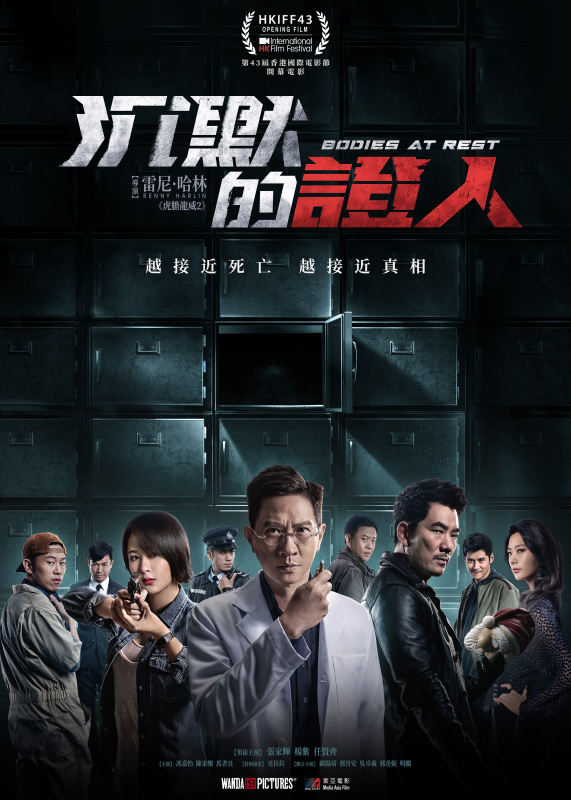
Renny Harlin, noted Hollywood film director known for his 90’s blockbusters Die Hard 2 and Cliffhanger, is getting ready to unleash Bodies at Rest (aka Witness), an upcoming thriller starring Nick Cheung (Keeper of the Darkness, The White Storm), Richie Jen (Trivisa) and Yang Zi (Death and Glory in Changde).
Bodies at Rest (read our review) sees a forensics expert and his intern assistant ready to call it a day in the morgue when a group of masked thugs break in. The thugs demand access to a body that contains evidence to a crime they recently committed (via Variety).
Following 2016’s Skiptrace (with Jackie Chan and Johnny Knoxville) and Legend of the Ancient Sword (with Leehom Wang), Bodies at Rest marks the 3rd Chinese production for Harlin.
Bodies at Rest opens domestically August 15th, 2019. Don’t miss the film’s Newest Trailer below:
While today many would consider the Korean film industries output to be some of the best in the world, it wasn’t always this way. Just 30 years ago, Korean cinema was in crisis, going through what could easily be argued to be one of its darkest periods. To fully understand why, it’s important to consider the situation the country was in at the time.
Chun Doo-hwan
South Korea finally achieved true democracy in 1987, holding its first legitimate elections in over two decades, after spending the 80’s under what was essentially a military dictatorship, led by Chun Doo-hwan. A military man who, in April 1980, became the director of the Korean Central Intelligence Agency, Doo-hwan is now largely seen as a power hungry figure, one who was willing to do whatever it takes to become President. Barely a month into his role as director of the KCIA, on 17th May he expanded martial law across the entire country, citing (unfounded) rumors of North Korean infiltration into the South. Troops were dispatched into various towns, universities were closed, and any political activity was banned.
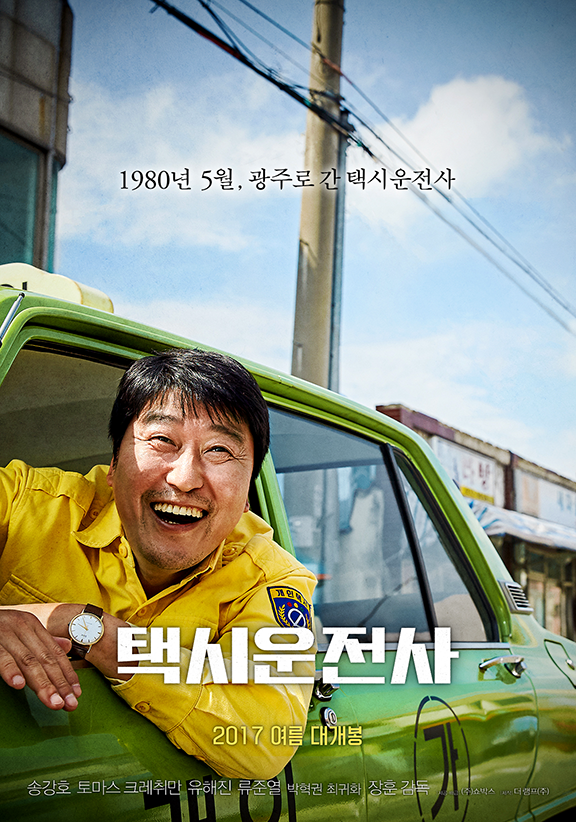
The growing civilian unrest eventually manifested itself in the town of Gwangju, where various activists came together on 18th May to protest the increasing military presence. Doo-hwan ordered the protests to be supressed using extreme force, leading to the infamous Gwangju Massacre, in which several hundred activists and civilians where ruthlessly slaughtered by the military (A Taxi Driver covers these events). Less than a month later, President Cho Kyu-ha resigned, and Doo-hwan put himself forward as the sole presidential candidate. With no competition and the backing of the military, he was inaugurated into office on 1st September, and so began one of South Korea’s ugliest political eras.
“A Taxi Driver” Korean Theatrical Poster
It was an interesting time to be a part of the film industry. Any movies which had a political theme, or where seen as being even indirectly critical of the regime, where strictly banned. Likewise any talk of democratization was a sure way to find yourself being hauled off by the police and beaten to a pulp. In an attempt to take the populations mind off the political situation, Doo-hwan introduced the 3S Policy, which stood for ‘Sex, Screen, and Sports’. The idea was to make each one a major source of entertainment for the public, and for the film industry, the ironic relaxation of censorship on sex and nudity paved the way for the 80’s Korean erotic cinema boom.
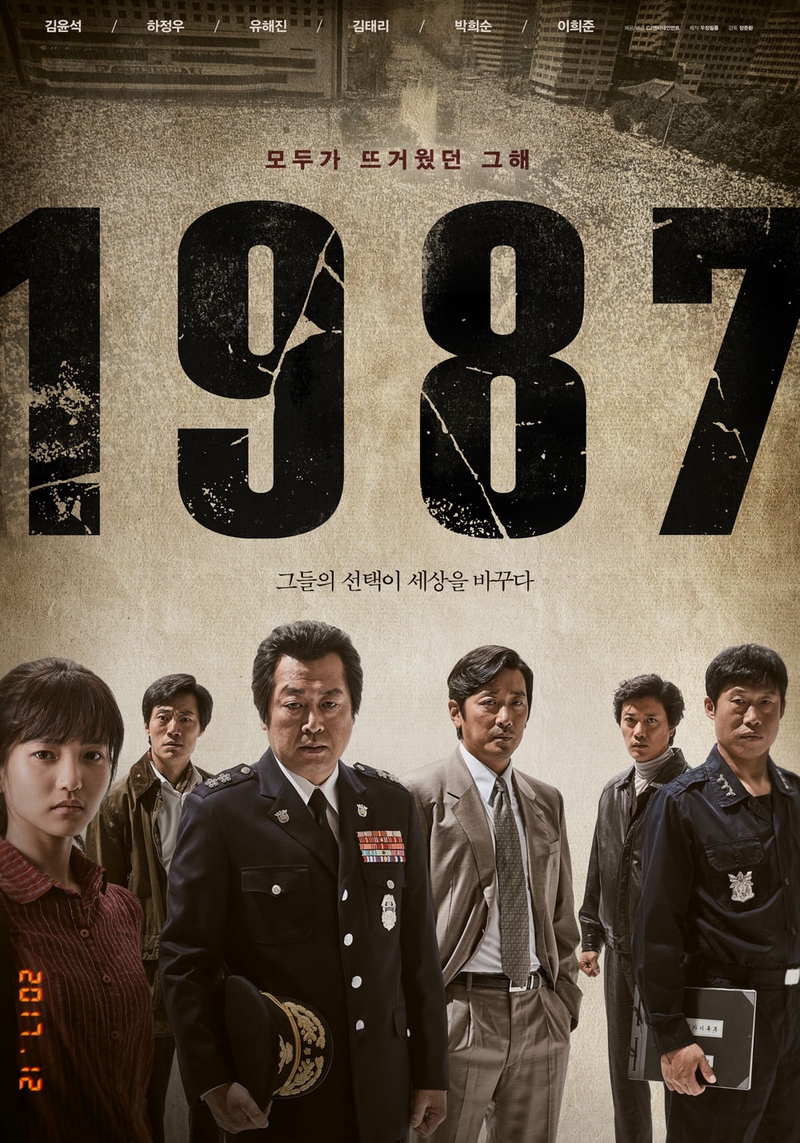
In April of 1987, almost 7 years after the Gwangju Massacre, Doo-hwan announced his successor, Roh Tae-woo, along with his plans for him to take over via an indirect election. Considering this was the way Doo-hwan himself had come to power in 1980, enough time had passed for the democratization community to become enraged with a renewed vigour. After the death of a student at the hands of Doo-hwan’s Anti-Communist Unit, they took to the streets of Seoul in their thousands (1987: When the Day Comes covers these events). The protests became known as the June Democracy Movement, and fearing another repeat of what happened 7 years earlier, Tae-woo made a speech announcing the countries first direct presidential election in 16 years, which took place in December. He won the election, and true to his speech, pushed South Korea down the path of democracy, from which it hasn’t looked back from since.
“1987: When the Day Comes” Theatrical Poster
For the film industry though, the new era marked tough times. After the excitement of the 1988 Olympics being held in Seoul, during the late 80’s and early 90’s South Korea was a country slowly coming to terms with the fact it had become a democracy. The impact on the film industry though was a sullen one, with interest in movies dropping to a point that cinema admissions were at an all-time low. Combine this with market liberalisation, which allowed Korea to open its doors to an influx of big budget Hollywood productions and Hong Kong action movies, suddenly local productions seemed unappealing in comparison.
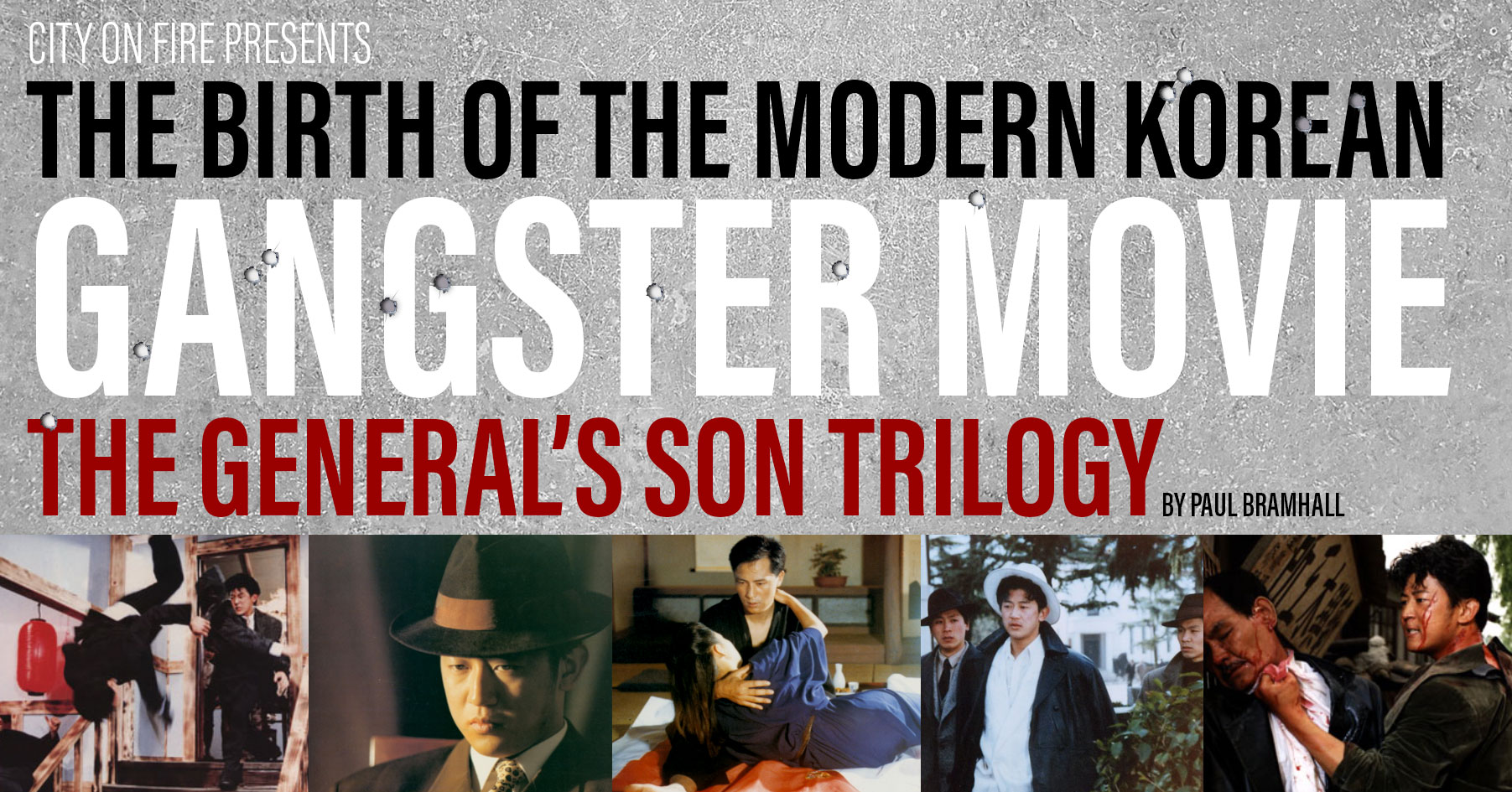
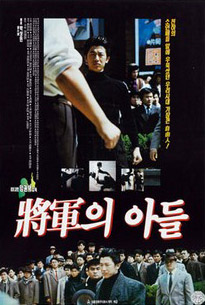
There was one director though who was able to turn things around, who came in the form of revered filmmaker Im Kwon-taek. While for many fans of modern Korean cinema, Kwon-taek’s name will likely be one that brings to mind his more contemplative work (such as Festival and Strokes of Fire), throughout the 60’s and 70’s he helmed a number of action and adventure flicks. It was in 1990 that he decided to return to the gangster genre that had been off-limits for close to a decade, with The General’s Son, in what would become the first entry in a trilogy. It was a decision that proved to be a significant one, heralding the first time for a local production to hit 700,000 admissions in Seoul since 1977’s Winter Woman. After more than a decade, Korean cinema was back.
“The General’s Son” Korean Theatrical Poster
Similar to how both Wong Fei Hung and Ip Man reinvigorated the action genre in Hong Kong, so Kwon-taek turned to the real life figure of Kim Doo-han to create a protagonist for Koreans to rally around. Doo-han was a lot more rough and tumble compared to his stoic Chinese counterparts, rising up from a homeless vagabond to become the leader of the Jongro street gang, at a time when Korea was under Japanese rule. He may have been illiterate, but as a fighter, Doo-han quickly gained a reputation for being the fiercest fist around. Frequently a source of trouble for the Japanese occupiers, Doo-han flitted in and out of prison thanks to his unruly ways, until the dropping of atomic bombs on Hiroshima and Nagasaki in 1945 put an end to 35 years of occupation.
While the real life Doo-han would go on to become a politician, The General’s Son series isn’t interested in covering his political aspirations, instead choosing to focus on a youth spent street fighting his way to the top, and at the same time, redefining Korean action cinema. For the Korean audience, the appearance of Kim Doo-han on the big screen was a significant one. He’d already appeared on the small screen in the 70’s portrayed by Lee Dae-geun (and has appeared in various incarnations since – most recently in 2002’s Rustic Period), so after an absence of over a decade, a tale of the everyman Korean rising up against the Japanese occupiers was just what was needed.
Stepping into the shoes of Doo-han was a 20 year old Park Sang-min, making his screen debut, and he’d continue to anchor the other 2 entries in the trilogy. When we first meet Doo-han he’s a beggar who’s just been released from a year behind bars after a petty offence. Securing a job at the local cinema in the heart of Mapo-gu – a location that’s as prominent a feature in the trilogy as much as Doo-han himself – his measly payment consists of a handful of Won and 2 free movie tickets. When a pair of thugs relieve him of the tickets, his talent for brawling quickly sends them scampering, unbeknownst to him that the pair are actually part of a gang. Far from retaliating though, the gang leader is impressed by Doo-han’s fighting talent, and offers him a job, kick-starting his ascent through the hierarchy, matched by a slow burning disdain for the Japanese yakuza that now populate the streets.
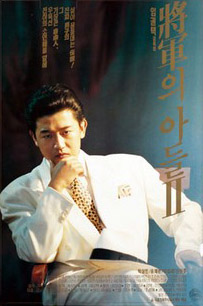
“The General’s Son II” Korean Theatrical Poster
Onscreen the aesthetic is almost like that of a pulpy gangster novel, transferred directly from the imagination to the film reel. The gangs, portrayed as tough yet righteous, come decked out in trilby hats and tailored suits with oversized shoulder pads. The Japanese yakuza spend most of their time running around decked out in black robes, katana in hand, barked at in a gravelly low pitched voice by their leader, portrayed by Shin Hyun-jun (of Bichunmoo and Shadowless Sword fame). It was an aesthetic that would come to define Korean action cinema in the 90’s, spawning countless imitations (notably 1992’s Sirasoni – another famous Korean freedom fighter from the same era), and a wave of high kicking gangster action that would only come to an end with Shiri’s international breakthrough.
Pulpy in its nature as it may be, the imagery in The General’s Son is undeniably arresting. A fight takes place in the far reaches of the screen, as a pair of trams slowly cross each other in the foreground, a gang members face is framed, so that only one piercing eye is shown looking out from beneath the brim of his hat, and the sets, though dated, are a joy to look at. The care that’s gone into constructing these shots, is indicative that Kwon-taek was a director enjoying his return to the gangster genre, while at the same time setting out the tropes that it would come to follow for the rest of the decade. The whole trilogy is one of unapologetic machismo, and equally unapologetic patriotic chest thumping, with Kwon-taek’s female-centric work of the 80’s such as The Surrogate Woman replaced by a world of Taekwondo kicks to the face and bloody noses.
https://youtu.be/BsMJ9QxSayU?t=385
Indeed perhaps it was the influx of Hong Kong action cinema that made Kwon-taek pay the level of attention that he did to the fight sequences in The General’s Son, and if that is the case then it’s just one more thing we have Hong Kong cinema to thank for. The action is distinctly Korean in its flavour, and while the multiple assailant brawls are still a staple of the Korean gangster genre today, a large part of the pleasure in watching The General’s Son trilogy is in the number of one on one fight scenes they contain. In the first instalment in particular, there’s a real focus on the style of the opponent – we get a Korean double blade master, a Japanese Judo practitioner, and a Taekwondo fighter cut from the same cloth as Doo-han. The fight with the Judo master even goes so far as to incorporate a training sequence, in which Doo-han spends his time practically theorising as to how his kicks can beat Judo’s throws.
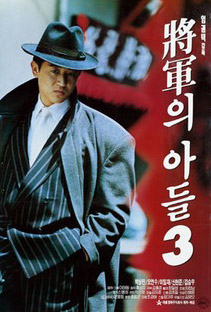
“The General’s Son III” Korean Theatrical Poster
Despite being made across a period of 3 years, all 3 of The General’s Son movies look as if they’ve been filmed back to back, with only subtle details such as Shin Hyun-jun’s changing hair length being indicative of them being made at different times. Apart from revitalising the Korean action genre, the trilogy is also notable for giving a start to several familiar names in the Korean film industry who are still active today. Out of everyone, perhaps the most recognizable is a young Hwang Jung-min (Veteran), who makes his screen debut in the first instalment as a bar tender, one with barely more than a couple of lines. Ironically Jung-min and Park Sang-min are the same age, and while Jung-min has gone on to be one of Korea’s top leading men, Sang-min remained largely relegated to the 90’s, with only a brief handful of appearances post-2000, one of which was as the villain in the poorly received 2003 action flick Tube.
In the 1991 sequel, Korea’s most well-known action director Jung Doo-hong turns up in one scene, for the sole purpose of laying a beat down on a pair of gang members. One of his first appearances in front of the camera, Doo-hong is most recognizable for his turn as the co-lead in Ryoo Seung-wan’s City of Violence, from 2006. Indeed the scene in question is an appropriate microcosm of what The General’s Son II is all about – the action. While in the first instalment Kwon-taek showed a deft hand at world building amongst the macho posturing, showing an obvious joy in exploring the sets in which the Mapo-gu of old was faithfully recreated, the sequel is keen to get straight down to business. It’s a gangster flick in the purest sense of the word, and enjoyed the same success as the original.
https://youtu.be/2-kHCbiTXkw?t=189
The sequel kicks off in identical fashion to its precursor, with Doo-han being released from prison, this time for the damage he inflicted during one his infamous brawls against the Japanese. Things are different now though, gone is the shabby clothed beggar, and in his place is the sharply dressed gang boss who’s become a hero to the local Korean community. Plot clearly takes a backseat in the second instalment, with more of an emphasis on getting from one mass brawl or one on one fight to the next. Presumably Kwon-taek was working under the assumption that Korean audiences would be familiar with events in Doo-han’s formative years, as sometimes the timeline erratically jumps forward from one scene to the next.
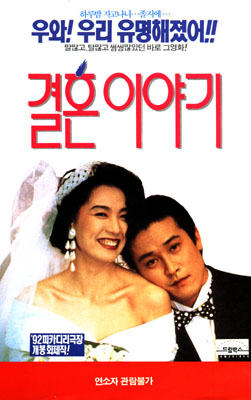
“Marriage Story” Korean Theatrical Poster
He gets thrown into prison, and in the next scene is released, with no real sense of how much time he’s spent inside, and the various women who enter Doo-han’s life are given the same treatment. In one scene he’ll be with one woman, and a few scenes later she’ll have completely disappeared and be replaced with another. Clearly in addition to being an excellent fighter, fearless patriot, and gang leader, he was also quite the Casanova. While for those unfamiliar with the life of Doo-han (which includes myself), such a structure may sound contrived (which it arguably is), but it’s never confusing. It comes across more like Kwon-taek felt an obligation to include certain events that took place in Doo-han’s life, however never gave much thought to how they fit into the bigger picture of the story he wants to tell. So we just get these chronologically inserted tangents which move the timeline along, but do little for the stories narrative.
Despite it lacking the narrative strength of its predecessor, The General’s Son II delivered on what the fans of the original wanted to see more of, and that was Doo-han kicking Japanese posterior. If we use that as a measurement of success, then it’s easy to see why the sequel delivered the goods, and a third round was quickly ushered into production. However the third time wasn’t quite the charm this time around, and The General’s Son III was beaten at the 1992 box office by Marriage Story, a romantic comedy about a warring couple that served as an early template for movies like My Sassy Girl. It was a time of gradual shifting in Korean cinema, with Kwon-taek himself switching focus to the type of movie he’d become best known for with 1993’s Sopyonje, which steeped itself in the traditions of Korean traditional folk singing (and notably became the first Korean flick to clock over one million admissions in Seoul).
While the third instalment may be the weakest of the trilogy, it’s still far from being a bad movie, especially for those clocking in purely for the spectacle of watching sharply dressed gangsters kick people in the face. Interestingly The General’s Son III seems keen to broaden its scope, with proceedings initially opening with an exiled Doo-han eventually ending up in Manchuria, when he and his series rival/friend (played by Lee Il-jae) find themselves attempting to make money from the opium trade. In the end though it all feels like a precursor for Doo-han to return to Mapo-gu and finally face off against Shin Hyun-jun. Although in all fairness, the series never feels like it’s building up to such a confrontation, and could well be debated to end things in such a way because those involved realised there wasn’t going to be a fourth.
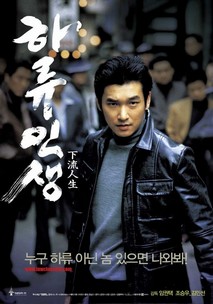
“Raging Years” Korean Theatrical Poster
Both the structure and tone of the closing chapter feels more loose than its predecessors. There’s a running joke of Doo-han and his love interest (well, actually just his love interest) being excessively vocal during their nights together, which is supposed to be comedic, but somehow doesn’t sit well with the overall tone. It’s ironic then, that the love interest here is the most fleshed out in terms of backstory and character, more so than any other female character in the series. Kwon-taek had already proven himself to be a capable director of female-centric stories during the 80’s, so his handling of the material here is perhaps indicative of his uncertainty of how to insert such content, into what was an overwhelmingly macho series to date.
The General’s Son III also wears its Hong Kong influences on its sleeve more than any of the previous entries. Throwing any sense of realism to the wind, when Doo-han is (once again) thrown in prison for his brawling, he’s offered a chance to be released if he can defeat 3 Japanese fighters consecutively. Precursing a similar setup in Ip Man by 16 years, the fight is staged in the prison hall with the guards overseeing proceedings, while the hall itself is surrounded by kneeling Japanese decked out in their white gi’s. Doo-han takes them on adorned in a black shirt and trousers, before the judo master’s constant takedowns makes him throw his shirt off. The sight of a bare chested, black trousered hero facing off against a room full of Japanese masters, marking a clear nod to a similar scene in Bruce Lee’s Fist of Fury.
While audiences are right to expect the series closer to build to a suitable climax, the ending of The General’s Son III finishes much the same as the previous instalments, leaving Doo-han’s adventures with an avenue to continue along. Looking at them in retrospect, personally I feel that the closing scenes of the trilogy are what Kwon-taek intended, regardless of if a fourth outing would be commissioned or not. The early 90’s was a time when the international market was a distant consideration, and Korean movies were very much being made strictly for a Korean audience, with no thought paid to overseas distribution. From that perspective, the domestic demographic would already have been familiar with the life of Doo-han, and would have been content knowing he’d continue on to become a politician.
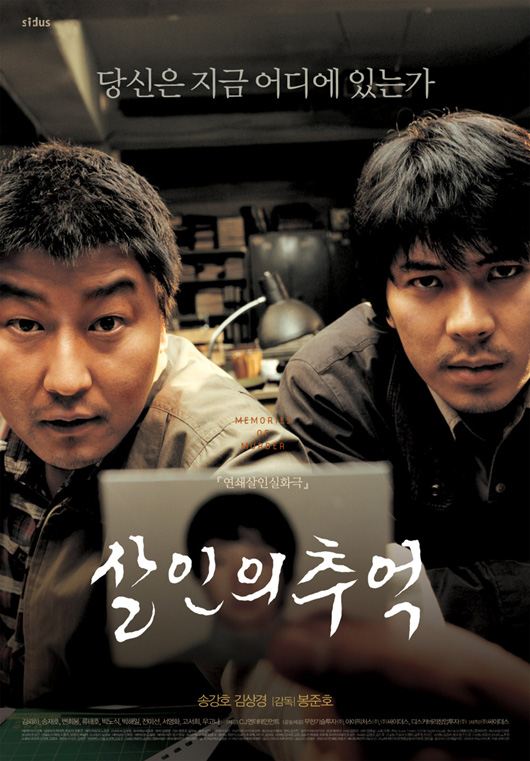
“Memories of Murder” Korean Theatrical Poster
On a similar note, watching the trilogy today in 2019, the thought of viewing any of the entries as a standalone exercise doesn’t seem appropriate. Each one of The General’s Son movies feels intrinsically linked to the other, and as such feel like they should be viewed as a 5+ hour binge watch, or at least 1 per night. They’re a unique snapshot of early 90’s Korean cinema, at a time when the industry was trying to find its feet again after being repressed for so long. Kwon-taek, or anyone else for that matter, could have no idea that a little over 10 years later movies like OldBoy, Memories of Murder, and A Tale of Two Sisters would kickstart The Korean Wave, which saw the whole world paying attention to its cinematic output. By this time Korean cinema wasn’t just back on its feet, it was running full spring.
But for every mass brawl witnessed in the likes of A Dirty Carnival, The New World, and Gangnam Blues, their blueprints can be traced back to The General’s Son. Kwon-taek himself couldn’t resist revisitng the gangster genre one last time for 2004’s Raging Years (aka Low Life). With a story that follows another rags to riches gangster through the tumultous 15 year period spanning 1957 – 1972, while the time period may be different, in every other way Raging Years feels like a spiritual continuation of The General’s Son series. The trilby hats, leather jackets, and high kicking action is all present and accounted for, and while for all intents and purposes it was a production out of time with where the industry was in the mid-00’s, there can be little doubt that fans of Doo-han’s adventures will find plenty to enjoy.
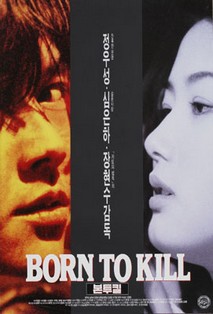
For the remainder of much of the 90’s though, the influence of The General’s Son saga was inescapable. It’s dynamic high kicking fight scenes became the go-to flavour for Korean action, and many of Korea’s biggest stars today had their careers kicked off through headlining gangster movies, that at some point involved unleashing an array of kicking fury. From the likes of Park Joong-hoon in 1994’s The Rules of the Game, to Jung Woo-sung in 1996’s Born to Kill, to Lee Jung-jae in Fire Bird from the same year. Thanks to Taekowndo being taught at school and a compulsory military service, most of Korea’s young leading men are proficient at throwing a kick, and its 90’s cinema output frequently proved this.
“Born to Kill” Korean Theatrical Poster
The influence wasn’t only limited to the industries fresh faces, with many of the Korean martial arts stars who’d found fame working in the kung-fu genre of the 70’s and 80’s, now turning their attention to how they could transpose their talents to the local gangster scene. While the likes of Dragon Lee, Casanova Wong, and Hwang Jang Lee where all past their high kicking prime by the time the 90’s rolled around, that didn’t prevent them from getting in on the action. Casanova Wong made his final screen appearance, as well as directing, the 1994 gangster flick Bloody Mafia, in which he unleashed his kicks for the last time for our viewing pleasure, while Dragon Lee and Hwang Jang Lee would reunite to work on Emperor of the Underworld (which Hwang also directed) from the same year. Seeing some of the old school kung-fu genres most familiar faces decked out in trilby hats and oversized coats is a pleasure in itself.
For many of us viewers in the west the influence of The General’s Son trilogy on Korea’s gangster genre has largely been an invisible one, mainly thanks to their lack of availability. While Kwon-taek’s seminal works such as Soponje and Jagko have received Blu-ray releases thanks to the stellar work of the Korean Film Archive, for a long time it seemed these pulpy slices of gangster mayhem were destined to receive short thrift. Thankfully that changed in early 2019, when the complete trilogy was given the 4K remastering treatment, and released as a boxset on both Blu-ray and DVD, allowing a new generation to appreciate what can be considered as the original modern Korean gangster flicks. If you’re a fan of Korean cinema and you’ve yet to see them, do yourself a favour and go check them out.
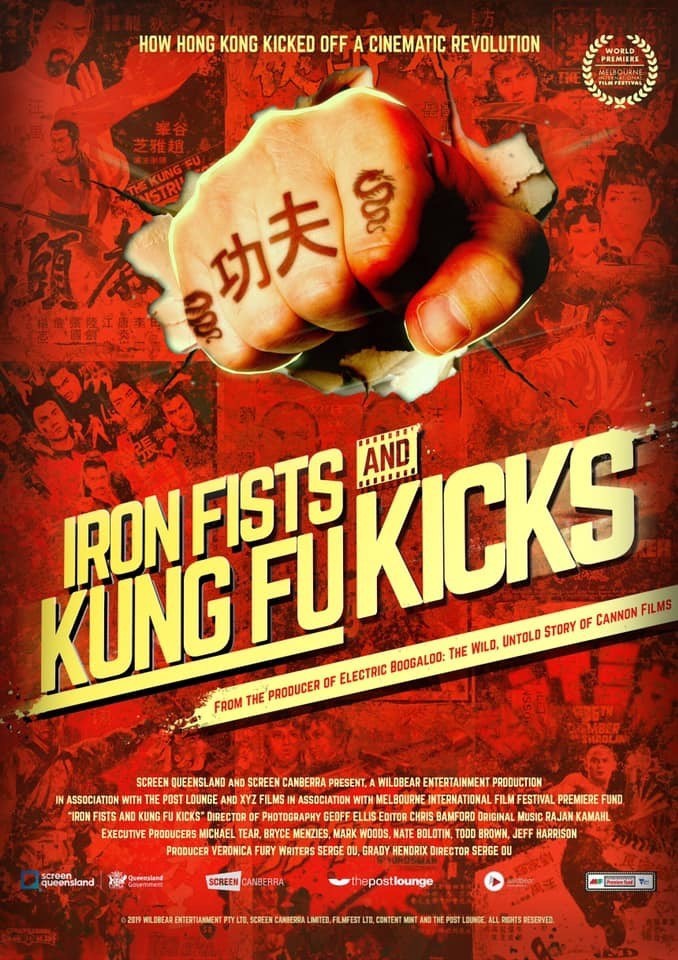
From the producers of Electric Boogaloo: The Wild, Untold Story of Cannon Films and Machete Maidens Unleashed – Exploitation Films Made in the Philippines, comes Serge Ou’s Iron Fists and Kung Fu Kicks, which celebrates the martial arts film sub-genre.
Check out the official details below:
From Hong Kong to Hollywood, the Shaw Brothers to The Matrix, iron fists and kung fu kicks have been busting box offices and breaking barriers since the 1960s. This the wild untold story of how the way of the dragon became a global phenomenon.
Disclaimer: cityonfire.com does not own any of the photos contained in the blog. cityonfire.com was made merely to pay homage to these films, directors, talent, etc. and not for any profit or commercial reasons. No copyright infringement intended. The photos are copyrighted and courtesy by their respective owners.
“Copyright Disclaimer, Under Section 107 of the Copyright Act 1976, allowance is made for “fair use” for purposes such as criticism, comment, news reporting, teaching, scholarship and research. Fair use is a use permitted by copyright statue that might otherwise be infringing. Non-profit, education or personal use tops the balance in favor of fair use.”


 RELEASE DATE: October 29, 2019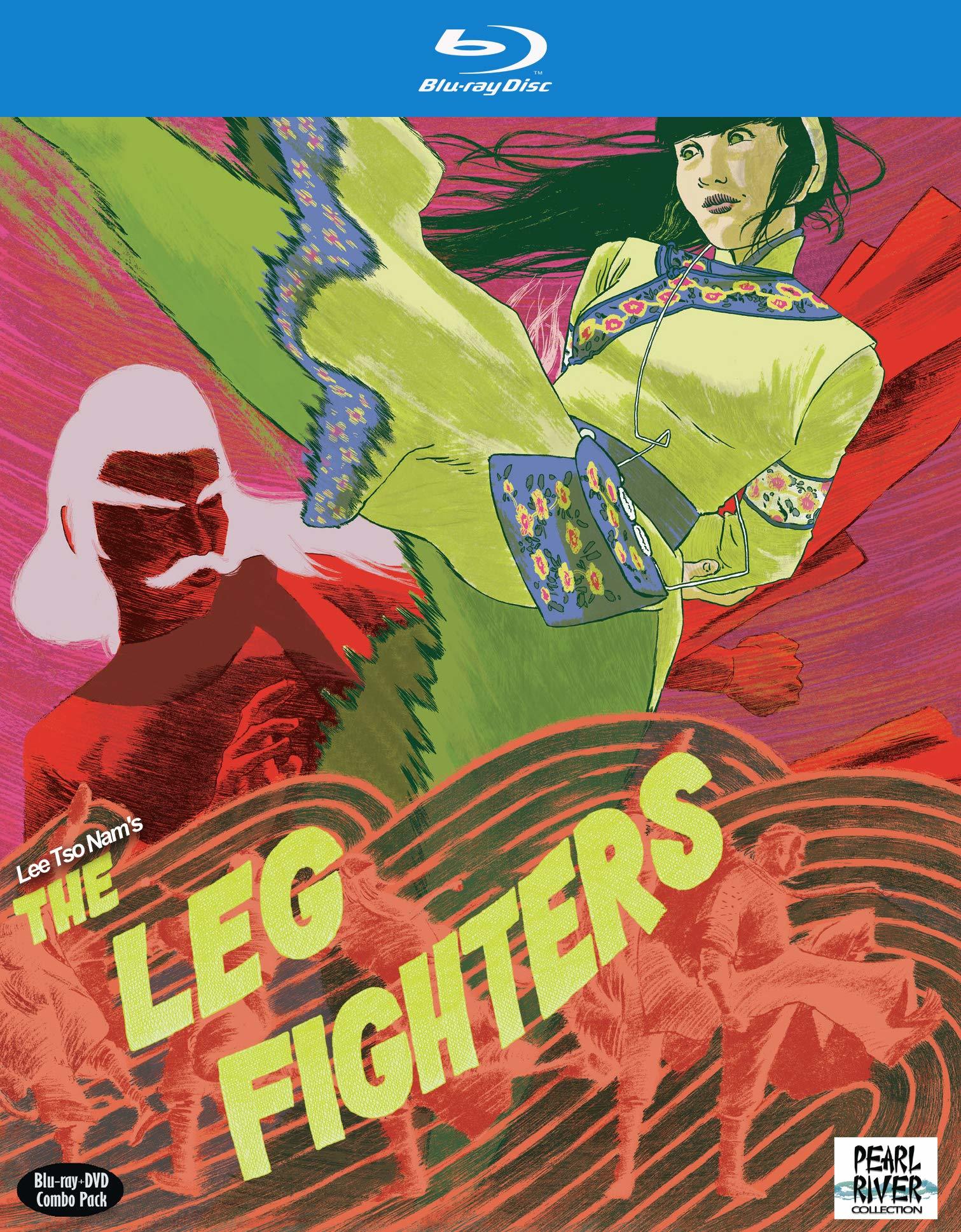

 While today many would consider the Korean film industries output to be some of the best in the world, it wasn’t always this way. Just 30 years ago, Korean cinema was in crisis, going through what could easily be argued to be one of its darkest periods. To fully understand why, it’s important to consider the situation the country was in at the time.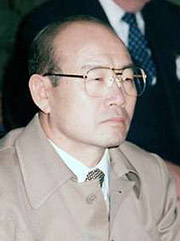



Be the 1st to Comment