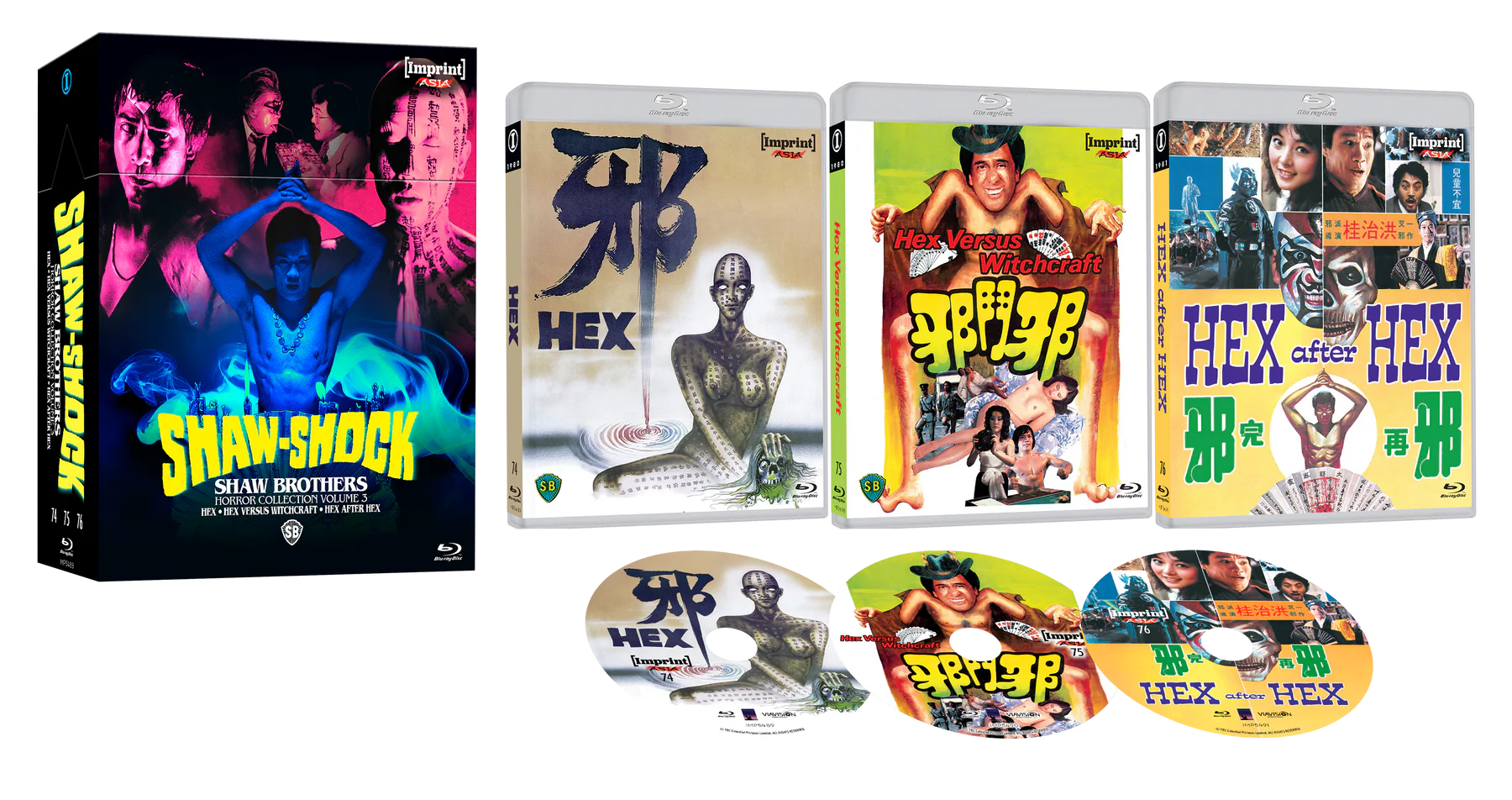
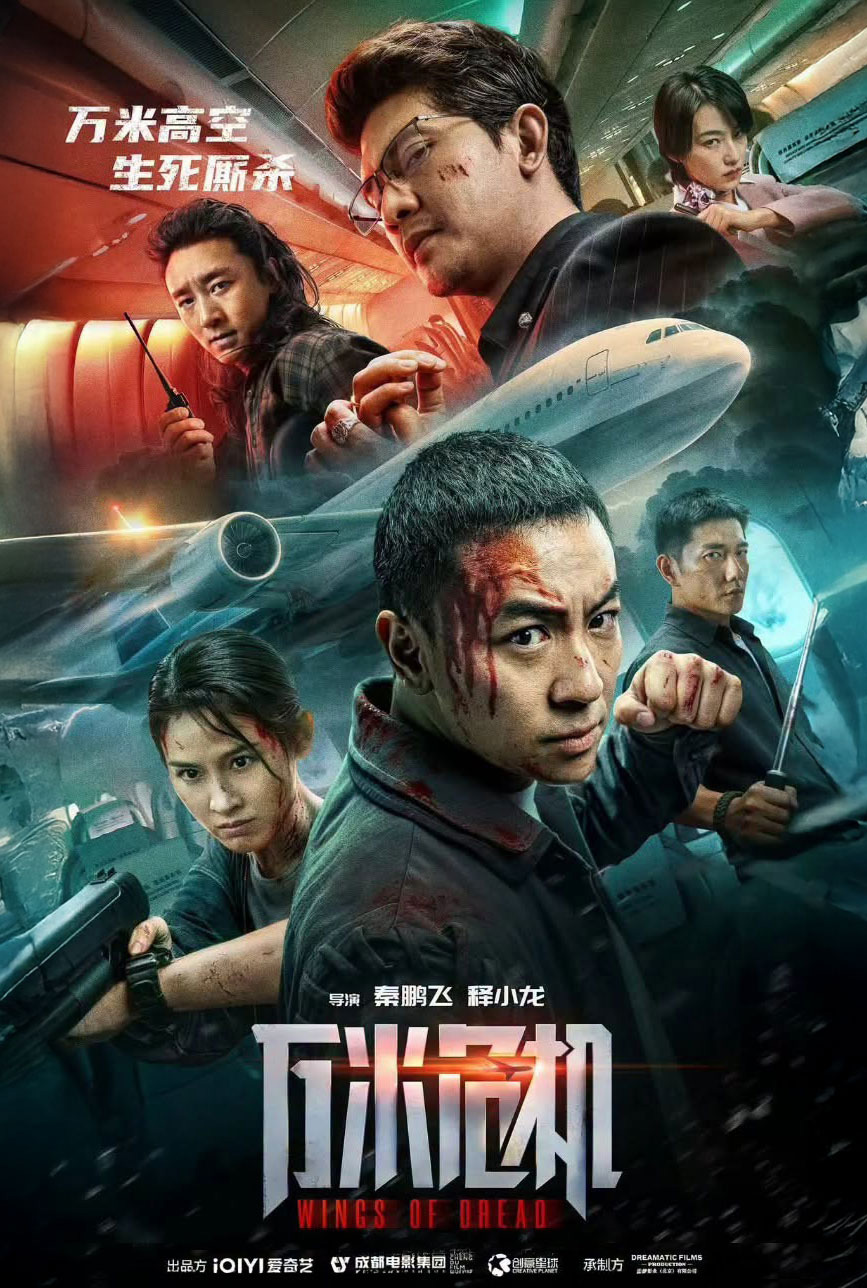
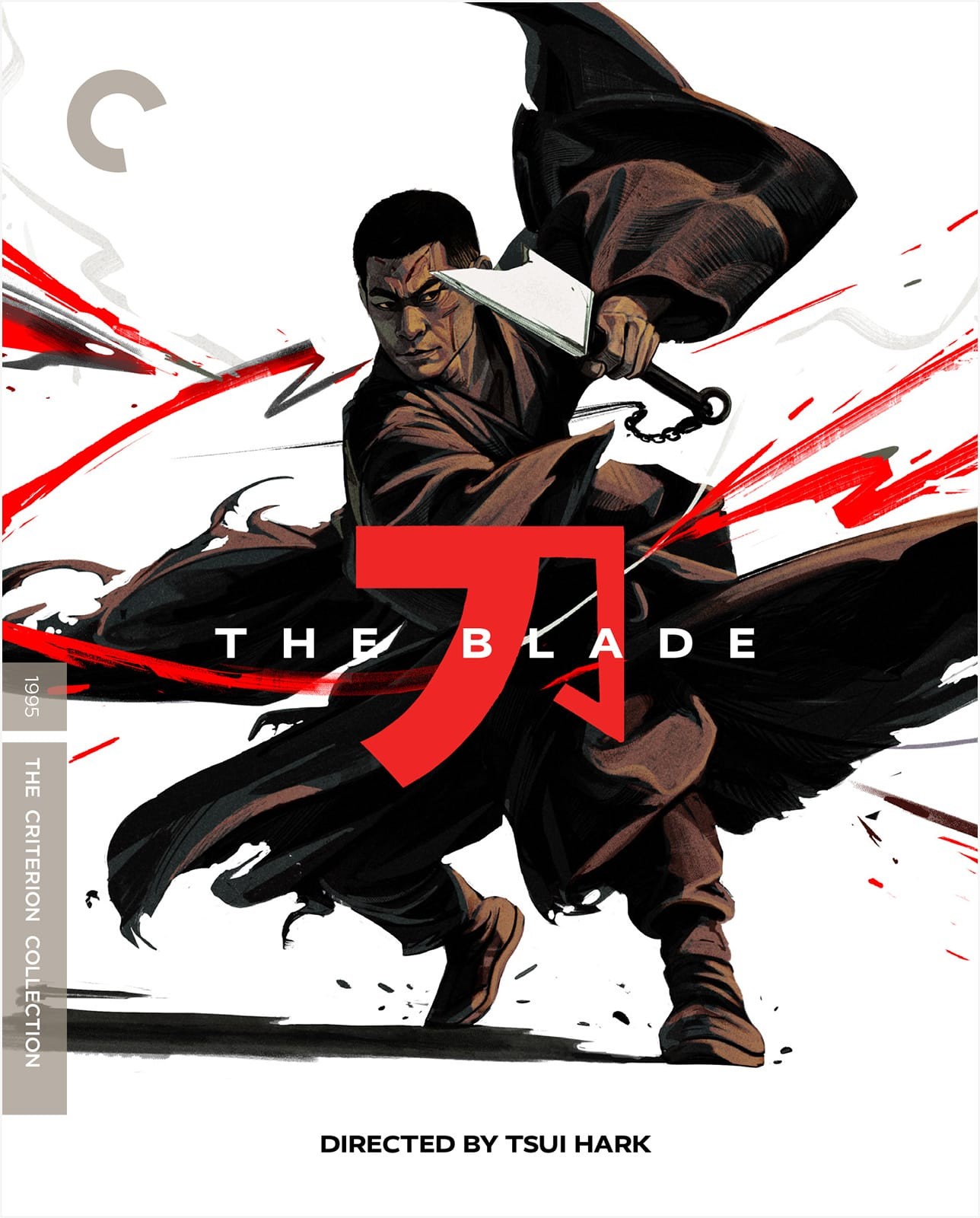
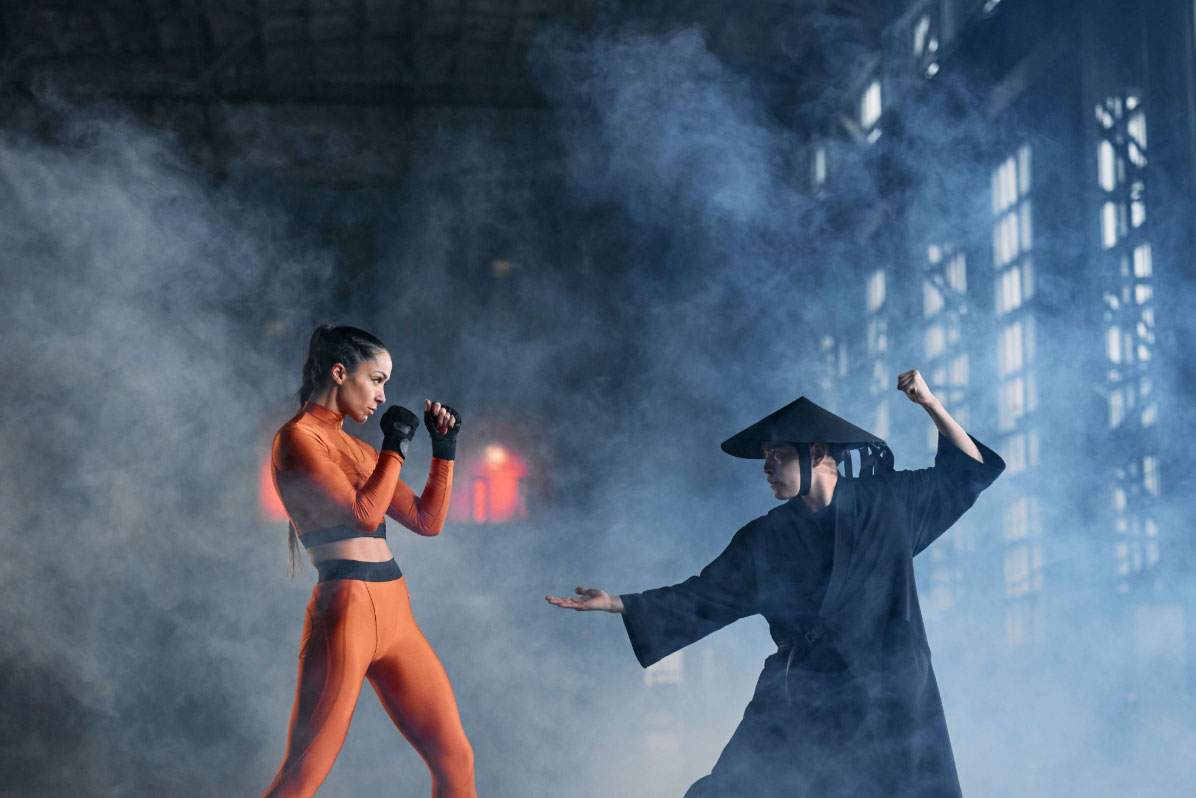
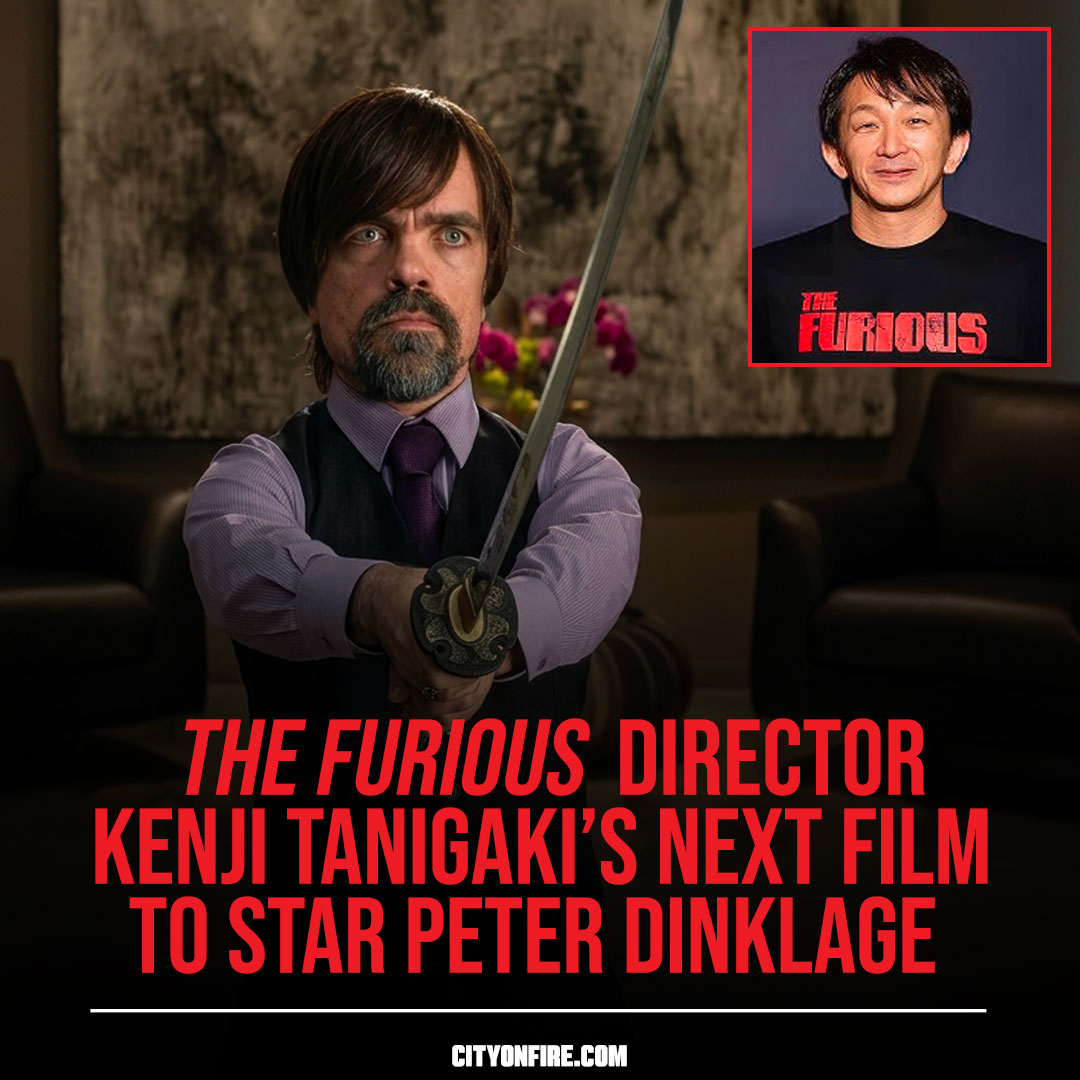
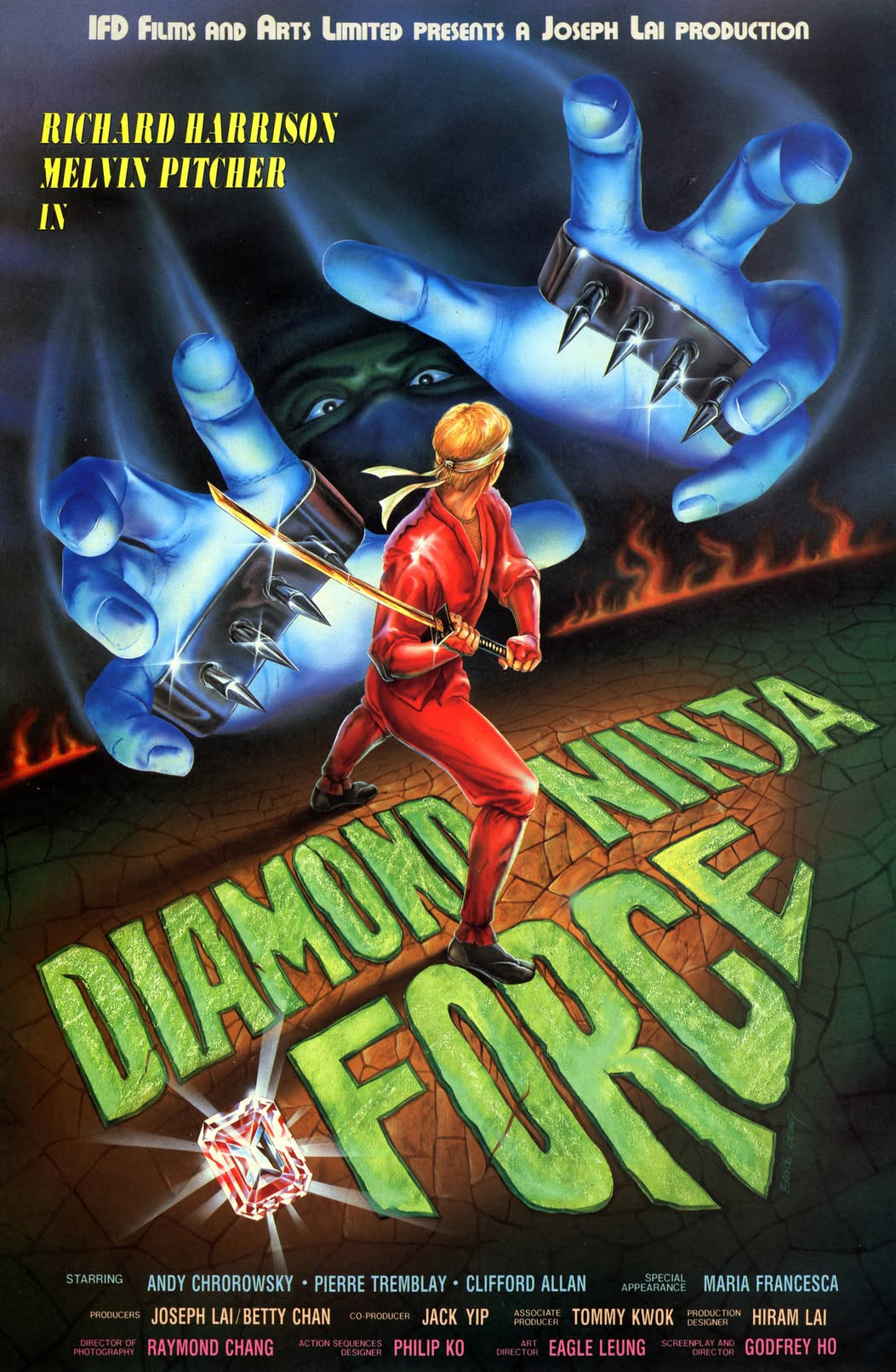
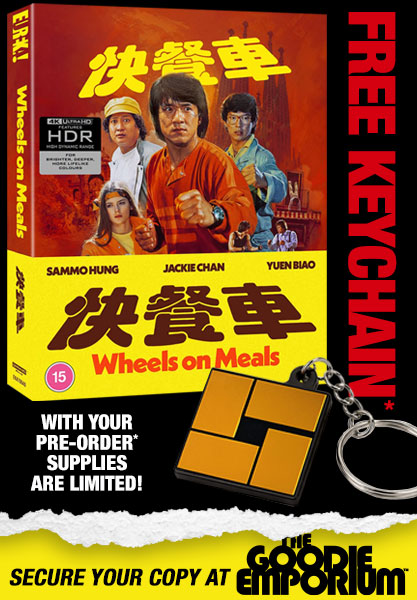
Video killed the ninja star! Visual Vengeance’s ‘Born a Ninja’ and ‘Commando the Ninja’ double feature NOW SHIPPING!

Born a Ninja

Now shipping from Goodie Emporium is Visual Vengeance’s Blu-ray for Born a Ninja and Commando the Ninja (aka American Commando Ninja), two martial arts films from 1988 that star Meng Fei (Face Behind the Mask) – secure your Limited Edition copy today from Goodie Emporium!

This shot-on-video martial-arts double feature from Joesph Lai and IFD Films unleashes pure 1980s ninja chaos as two unlikely heroes are dragged into a war over stolen germ-warfare secrets. Featuring disappearing ninja assassins, endless waves of Continue reading

Posted in News |

Tiger on the Beat 2 (1990) Review

"Tiger on the Beat 2" Poster

“Tiger on the Beat 2” Poster

Director: Lau Kar Leung
Cast: Danny Lee Sau Yin, Conan Lee Yuen-Ba, Ellen Chan, Roy Cheung, John Cheung, Chim Bing Hei, Norman Chu, Maria Cordero, Mark Houghton, Phillip Ko, Gordon Liu, Mai Te-Lo, James Wong, Xiong Xin Xin
Running Time: 94 min.

By Z Ravas

Producer A: Hey, we’re doing a sequel to Tiger on the Beat, but Chow Yun-fat doesn’t want to come back. What should we do?

Producer B: Just get the other guy from The Killer!

Do you imagine that’s how it went down? The other guy from The Killer being, of course, the Super Infra-Man himself, Danny Lee! Tiger on the Beat 2 is one of those sequels in name only that doesn’t have any story connection to the first installment, it’s really just an excuse to do another buddy-action flick co-starring Conan Lee. I’d call it a ‘buddy cop flick’ except that Conan Lee doesn’t even play a cop this time around. Danny Lee, of course, plays a cop—please show me an 80’s or 90’s Hong Kong movie where he doesn’t—one who’s tasked with finding his California-born nephew a wife while he visits Hong Kong. This simple set-up very soon finds them bumping into an escort/scam artist played by Ellen Chan, who is on the run from a vicious drug dealer (Gordon Liu, also returning from Tiger on the Beat but playing a different character). This ends up being the perfect excuse for a string of dynamic action setpieces, courtesy of director Lau Kar-Leung…

…though not every setpiece went according to plan: Tiger on the Beat 2 tends to be overshadowed by its predecessor, but chances are if you’ve heard of the sequel it’s because of its reputation as the film that put the kibosh on Conan Lee’s career. There’s an outrageous stunt gone wrong that occurs fairly early in the movie’s runtime—and, this being Hong Kong action cinema, the footage was kept in the film!—in which Conan Lee suffered a severe injury. The complications Continue reading

Posted in All, Chinese, News, Reviews | Tagged , , , , , , , , |

Deal on Fire! The Champions | Blu-ray | Only $16.99 – Expires soon!

The Champions | Blu-ray (Eureka)

The Champions | Blu-ray (Eureka)

Today’s Deal on Fire is Eureka’s Blu-ray (Region A/B) for The Champions, a 1983 soccer-infused, action-comedy directed by Brandy Yuen (In the Line of Duty III) and starring Golden Harvest legend, Yuen Biao (Circus Kids).

Sports, action and comedy collide in Golden Harvest’s The Champions, the precursor to Shaolin Soccer from the first family of Hong Kong martial arts cinema: the inimitable Yuen Clan!

Lee Tong (Yuen Biao, Dreadnaught) is a young farmer who has grown up in an isolated rural community. When an indiscretion lands him in hot water, he leaves his home in the countryside and heads for the big city – where he meets Suen (Cheung Kwok-keung, Eastern Condors), a street footballer who recognises Tong’s Continue reading

Posted in Deals on Fire!, News |

Classic Films Made Poker a Cinematic Staple

A five-card draw hand in a dimly lit saloon became one of the most repeated images in American film before anyone involved thought of it as a poker scene. Westerns from the 1930s through the 1960s placed card games in the background of nearly every saloon sequence. Characters wore hats, carried revolvers, and sat at poker tables. The game was scenery. It became something more when filmmakers started using it to reveal character, build suspense, and compress an entire conflict into a single hand.

Poker in the Western Canon

Early westerns treated poker as atmosphere. A table of players in the corner of a saloon signaled that the setting was authentic. The cards did not matter. The characters at the table served the same function as the bartender or the piano player. The game was visible but uninvolved in the story.

That changed as the genre developed. John Ford’s Stagecoach placed a gambler among its central characters and used his presence at the card table to communicate status and morality. The gambler’s willingness to sit at a card game told the audience something about his composure and his comfort with risk. Ford did not need dialogue to establish those traits. The table did the work.

By the 1960s, directors were writing poker into the plot rather than the set design. A Big Hand for the Little Lady, starring Henry Fonda and Joanne Woodward, built its entire narrative around an annual high-stakes poker game in Laredo. The poker was the plot, not a backdrop. The film’s twist depended on the audience understanding the stakes and the rules well enough to follow the deception. That required the screenplay to teach the game as part of the story.

Card Games and Their Place in Competitive Formats

Poker appears in more formats than most audiences realize from watching films. Five-card draw dominated westerns because it was the game of the era. Stud poker drove the climactic hand in The Cincinnati Kid. Texas holdem replaced both in modern poker films because its community card structure allows the camera to show shared information while keeping hole cards hidden. Bridge, gin rummy, and cribbage have appeared in smaller films, but none offers the same combination of hidden information, escalating bets, and visible tension that poker provides.

The Cincinnati Kid as a Turning Point

The 1965 film was the first to place poker at the absolute center of a dramatic feature. Steve McQueen played a young stud poker player challenging Edward G. Robinson’s reigning champion, Lancey Howard. The final hand between them runs for several minutes and uses dialogue, close-ups, and bet sizing to communicate the psychological battle between the two men.

Before The Cincinnati Kid, poker scenes existed inside other stories. After it, poker could be the story. The film demonstrated that a card game contained enough dramatic architecture to sustain a third act on its own. Every poker film since has built on that foundation, using the game’s structure as a container for whatever conflict the screenplay needed to resolve.

The production also established visual conventions that persisted for decades. The tight close-up on a player’s eyes during a bet. The slow reveal of a card. The silence in the room before a call. These became standard grammar for filming poker. Directors who came after McQueen’s performance inherited a visual language that the film helped codify.

California Split and the 1970s Realism

Robert Altman’s 1974 film approached poker from the opposite direction. Instead of a climactic showdown, the film followed two gamblers through a loosely structured series of games, bets, and conversations. The poker scenes in California Split feel improvised. The camera observes rather than directs. The result is a portrayal of gambling culture that prioritizes texture over plot.

Altman’s approach matched the direction of 1970s filmmaking as a whole. New Hollywood directors valued authenticity over spectacle. The poker in California Split looks like real poker. The wins are modest. The losses accumulate. The characters play for hours and leave the table neither triumphant nor destroyed. The film treated poker as daily labor rather than dramatic spectacle. That choice gave audiences a version of the game that no studio film had attempted before and few have attempted since. The mundane rhythm of a long session became the subject itself.

How Bond Brought Poker to the Mainstream Audience

The James Bond franchise used baccarat as its card game of choice for decades. Casino Royale, in Ian Fleming’s original 1953 novel, centered a baccarat game between Bond and the villain Le Chiffre. When the 2006 film adapted the story, the screenwriters replaced baccarat with Texas Hold’em because the game’s structure was more familiar to contemporary audiences and more visually legible on screen.

The switch was a concession to poker’s dominance in popular culture during the mid-2000s. Hold’em provided a game that the audience could follow beat by beat. Each community card dealt onto the table raised the tension visibly. The filmmakers could show the audience exactly how close each player was to winning or losing, which baccarat’s mechanics do not allow.

The Casino Royale poker sequence runs roughly 30 minutes across three separate sessions in the film. The final hand involves four players holding increasingly improbable hands. The math is unrealistic, but the filmmaking compensates with pacing and performance. Daniel Craig’s composure at the table communicates Bond’s character more efficiently than any action sequence in the film. The card game functions as a character study disguised as a set piece.

Why the Game Keeps Returning to Screen

Poker gives filmmakers something that most competitive activities do not. The game is slow enough for the camera to capture every reaction. The rules generate a natural three-act structure within each hand. The stakes are literal. The money on the table quantifies what each character is willing to risk.

A director can use a poker scene to establish who has power, who is desperate, who is bluffing, and who is in control without writing a single line of exposition. The game does the work.

Other competitive formats lack the same flexibility. A chess scene requires the audience to understand the board. A boxing scene depends on choreography. A poker scene requires only a table, two or more faces, and something at stake. The visual requirements are minimal. The dramatic potential is high. A film with no budget can stage a poker scene as effectively as a studio production because the tension comes from the players, not the production value.

The format aged into permanence because nothing else compresses character, conflict, and resolution into a single table the way poker does. It has done so since the first saloon appeared on a studio backlot, and it continues to do so because the underlying mechanics have never needed updating. The game arrived on screen as furniture. It became a storytelling device. It remains one because no filmmaker has found a better way to put two characters in opposition across three feet of felt.

Posted in News |

This you can trust: Cameras set to roll in 2027 for ‘King Conan’ starring Arnold Schwarzenegger

For more than a decade, King Conan, also known as Legend of Conan or Conan the Conqueror, has been stuck in development limbo. The film was meant to be a true sequel to John Milius’ 1982 classic Conan the Barbarian, with Arnold Schwarzenegger returning to the role that made him a star. But after more than 25+ years of announcements, studio hopping and interviews, the project kept stalling… until now.

City on Fire has been following this story since day one, and for a while it really seemed like the movie was finally happening… until it wasn’t. Then it was back on again. And off again. You get the idea. Here’s the breakdown:

In 2001, Milius himself had completed a script, titled King Conan: Crown of Iron, centering on an older, settled King Conan, weary and softened by years on the throne, who is drawn into one last, reluctant quest. Milius was set to direct and Continue reading

Posted in News, Top 4 Featured |

David A.R. White DIES HARD in ‘Straight Shot’ also starring Dolph Lundgren, Tyrese Gibson and William Forsythe

"Straight Shot" Poster

“Straight Shot” Poster

Iconic action star Dolph Lundgren (Hellfire, Castle Falls) is back in Straight Shot, a Die Hard-esque thriller from writer/director Gabriel Sabloff (Beckman).

The film is headlined by David A.R. White, an actor, producer and director who is perhaps best known for 2025’s A Line of Fire, 2022’s Nothing is Impossible and 2020’s Beckman.

A bodyguard past his prime (White) fights through a skyscraper full of mercenaries to save his ex-fiancée trapped in an experimental coffin.

Lundgren is part of an ensemble cast that also includes Rachael Leigh Cook (She’s All That), Tyrese Gibson (2 Fast 2 Furious) and William Continue reading

Posted in News |

The Deadly Kung Fu Factor | Blu-ray (Dark Force)

The Deadly Kung Fu Factor | Blu-ray (Dark Force Entertainment)

The Deadly Kung Fu Factor | Blu-ray (Dark Force Entertainment)

On July 14, 2026, Dark Force Entertainment is releasing the Blu-ray (Region A) for The Deadly Kung Fu Factor (aka The Delivery), a 1975 kung fu classic directed by Chui Dai-Chuen (The Owl).

The Deadly Kung Fu Factor stars Michael Chan Wai-Man (City Ninja), Charles Heung Wah-Keung (The Mysterious Footworks of Kung Fu), Susanna Au-Yeung Pui-San (Bat without Wings) and Na Na (Mysterious Lady Killer).

A down-on-his-luck young man takes a job as a delivery runner for a powerful criminal syndicate, believing he’s simply transporting routine packages. He soon discovers he’s being used as an unwitting courier in a dangerous drug trafficking operation. When a shipment is compromised, rival gangs move in and the syndicate turns on its own to cover their tracks. Caught in Continue reading

Posted in Asian Titles, DVD/Blu-ray New Releases, Martial Arts Titles, News | Tagged |

Scott Adkins vs Lewis Tan rematch? Two martial arts stars collide in ‘Deadlocked’ from ‘Hard Target 2’ director

Just over a week after Brawler was announced, Scott Adkins (Prisoner of War, John Wick 4, Ip Man 4) and Lewis Tan (Wildcat, Mortal Kombat II) already have another project lined up together with Deadlocked, an upcoming thriller that reunites Adkins with Hard Target 2 director Roel Reiné.

Deadlocked revolves around a routine jury site visit that turns into a bloodbath when a mercenary team led by Hewitt (Adkins) storms the location in search Continue reading

Posted in News |

‘Rush Hour 4’ is moving ahead as director Brett Ratner hitches a ride with President Trump to scout filming locations in China

For over a decade, Jackie Chan and Chris Tucker have kept the door open for Rush Hour 4 — and even without a set production date, the fourth film is starting to feel like a sure thing, but not without some speed bumps.

Rush Hour 4 is still in motion, with President Donald Trump reportedly giving things a push by encouraging the Ellisons to move forward, something that ultimately helped secure the green light from Warner Bros, who hold the rights.

On top of it, Brett Ratner – the director of the previous Rush Hour films, as well as the recent pro-Trump Melania documentary – is back in the director’s seat Continue reading

Posted in News |

Donald Gibb, the larger than life actor known for ‘Revenge of the Nerds’ and ‘Bloodsport’, dies at 71

Donald Gibb, an actor best known for playing Ogre in Revenge of the Nerds and Ray Jackson in Bloodsport 1 and 2, has died at 71 due to health complications. Before acting, Gibb was a collegiate athlete, later becoming a familiar face in films and TV throughout the 1980s and 1990s. Fans will remember him for his larger than life personality and memorable cult film roles.

Our heartfelt thoughts and prayers go out to his family and loved ones.

Watch interviews and Trailers of his most memorable roles Continue reading

Posted in News |

Demon Dancer: Sua/Nara (2026) Review

"Demon Dancer: Sua/Nara" Poster

“Demon Dancer: Sua/Nara” Poster

Director: Attila Korosi
Cast: Jiyeon Han, Anita Korosi, Won Hee Lee, Isabella Rose, Wondae Son, Shinyoung Moon, Eunhee Jeong, Joseph Kim, Jayden Moon-Dell, Hyonkuk Pak
Running Time: 83 min. 

By Paul Bramhall

In 2025 audiences were hit with the double whammy of the John Wick spin-off Ballerina, and the massively popular Netflix movie KPop Demon Hunters, so it was perhaps only a matter of time before someone thought to combine the 2 and create a ballet dancing demon hunter. That someone comes in the form of Yugoslavia born filmmaker Attila Korosi, who’s created the U.S. and South Korean co-production Demon Dancer: Sua/Nara as a self-proclaimed “love letter to anime.” Indeed the quote “No matter how many people you lose, you have no choice but to go on living.” is the first thing we see onscreen, credited as an ‘Anime Proverb’ (even though it’s actually taken from a character in the popular Demon Slayer anime series).

While Ballerina and KPop Demon Hunters had the backing of a major studio and streaming giant respectively, Demon Dancer: Sua/Nara doesn’t have the luxury of either, instead being an ambitious low budget indie production. The budget limitations are evident to see onscreen, and in a world which has gotten used to streaming gloss and seamless greenscreen work, for some audiences the gap may be a jarring one. However Korosi wisely kicks things off with Continue reading

Posted in All, Asian Related, Korean, News, Other Movies, Reviews |

The Filipino connection! K-pop boy Nam Woo-hyun hangs tough in the Trailer for Jeong Jang-hwa’s ‘The Guardian’

"The Guardian" Poster

“The Guardian” Poster

South Korea and the Philippines collide in Jeong Jang-hwa’s The Guardian, an upcoming action thriller starring Nam Woo-hyun, best known as a member of the K-pop boy band Infinite.

The Guardian follows Park Do-jun (Nam), a former Taekwondo prospect who has since relocated to the Philippines with his mother, sacrificing his dreams to be by her side despite the strain her gambling addiction puts on their relationship. When she suddenly disappears, Park learns she’s been kidnapped by a notorious Korean gang operating in the region and has forty eight hours to save her (via FCS).

This South Korean-Philippines co-production stars Park Eun-hye (Dream of Warrior), Han Continue reading

Posted in News |

And I’ll form the head! Amazon MGM Studios’ live-action ‘Voltron’ to debut straight-to-streaming later this year

I wanted Macross, but this will do for now. We’ll soon see the most popular giant robot come to life in Voltron, a sci-fi actioner directed by Rawson Marshall Thurber, who is perhaps best known for 2018’s Skyscraper and 2021’s Red Notice.

The upcoming film, which wrapped production last year, is a live-action take on the 1984 cartoon Voltron: Defender of the Universe, which was originally adapted for American audiences from Toei’s 1981 anime Beast King GoLion. The U.S. version was dubbed Continue reading

Posted in News |

Deal on Fire! Blade of the Immortal | Blu-ray | Only $7.52 – Expires soon!

Blade of the Immortal | Blu-ray & DVD (Magnet Releasing)

Blade of the Immortal | Blu-ray & DVD (Magnet Releasing)

Today’s Deal on Fire is the Blu-ray for Takashi Miike’s (13 Assassins, Terra Formars) live-action movie adaptation of Hiroaki Samura’s manga, Blade of the Immortal.

This period samurai film (read our review) stars Takuya Kimura (2046), Hana Sugisaki (Mozu: The Movie), Sota Fukushi (Library Wars), Hayato Ichihara (Yakuza Apocalypse), Erika Toda (Goemon), Ebizo Ichikawa (Hara-Kiri: Death of a Samurai), Tsutomu Yamazaki (As the Gods Will) and Min Tanaka (The Eternal Zero).

Manji, a highly skilled samurai, becomes cursed with immortality after a legendary battle. Haunted by the brutal murder of his sister, Manji knows that only fighting evil will regain his soul. He promises to help a young girl named Rin avenge her parents, who were killed by a group of master swordsmen Continue reading

Posted in Deals on Fire!, News |

Smartphone Entertainment Now Revolves Around Instant Feedback and Interaction

Image by Magnific

Smartphones changed entertainment far beyond simple convenience. What once involved passive viewing and scheduled media consumption now revolves around constant interaction, rapid responses, and highly personalized digital experiences available within seconds. Modern users no longer engage with entertainment only during dedicated leisure time. Instead, digital interaction happens continuously throughout the day through apps, livestreams, games, social media platforms, and mobile-first entertainment ecosystems.

This shift transformed how audiences respond to digital content. Platforms increasingly compete not only through what they offer, but through how quickly and smoothly users can interact with them. Instant notifications, swipe-based navigation, real-time reactions, personalized recommendations, and immediate visual feedback all became central parts of modern smartphone entertainment.

The broader digital economy increasingly rewards experiences built around speed, responsiveness, and continuous engagement.

Instant Feedback Changed User Expectations

One of the biggest changes shaping modern entertainment involves the expectation of immediate response. Users are now accustomed to apps reacting instantly to every action, whether they are scrolling through social feeds, streaming content, shopping online, or interacting with mobile games.

Entertainment platforms adapted quickly to these behavioral changes.

Modern digital environments increasingly prioritize rapid transitions, dynamic visual effects, fast-loading interfaces, and reward systems that maintain continuous interaction. Delayed responses or overly complicated navigation structures often create friction that modern mobile audiences no longer tolerate easily.

This trend is especially visible among users exploring slot games at MrQ alongside animated reel systems, rapid bonus triggers, live promotional features, instant-win mechanics, themed gameplay environments, and touch-responsive mobile interfaces designed to create continuous interaction throughout shorter smartphone entertainment sessions. Rather than functioning as slow or isolated gaming experiences, many modern entertainment platforms now operate around fast cycles of action, visual stimulation, and immediate user feedback optimized specifically for mobile behavior.

The pace of interaction itself became part of the entertainment value.

Smartphones Created Shorter Entertainment Cycles

The rise of smartphone culture also changed how long audiences engage with entertainment at any given moment. Earlier digital experiences often involved longer sessions centered around desktop browsing, television programming, or dedicated gaming periods.

Modern mobile behavior operates differently.

Users now frequently move between multiple apps and content streams throughout the day in shorter bursts of interaction. Entertainment platforms increasingly design systems around these fragmented attention patterns by emphasizing fast accessibility, minimal loading times, and continuous engagement loops.

This shift strongly influenced gaming, streaming, social media, and interactive entertainment industries alike.

Convenience and instant stimulation increasingly shape how users spend time online.

Real-Time Interaction Became More Important

Another major trend involves the growing role of real-time interaction across entertainment platforms. Audiences increasingly expect apps and digital systems to feel active, dynamic, and continuously responsive.

Live notifications, multiplayer features, instant reactions, interactive leaderboards, livestream comments, and personalized updates all contribute to stronger engagement because users feel directly connected to ongoing activity.

This responsiveness helps create more immersive entertainment environments where users are constantly participating rather than simply observing.

Modern smartphone entertainment increasingly revolves around active interaction rather than passive consumption.

Visual Stimulation Drives Engagement

Visual feedback also became a defining part of mobile entertainment culture. Smartphone platforms increasingly rely on animation, motion design, color transitions, interactive effects, and dynamic interface behavior to maintain user attention.

Every tap, swipe, or action now often triggers some form of visual response.

This design philosophy influences industries far beyond gaming alone. Social apps, streaming services, shopping platforms, and interactive media ecosystems all increasingly incorporate fast visual feedback systems designed to reinforce user engagement.

Entertainment platforms now compete heavily through sensory responsiveness and interface fluidity.

The smoother and more reactive the experience feels, the stronger user retention often becomes.

Personalized Systems Increased User Participation

Modern entertainment platforms increasingly use behavioral data to personalize interaction systems around individual users. Recommendations, rewards, notifications, and interface layouts are often adjusted dynamically based on user activity.

This personalization creates entertainment environments that feel more responsive and relevant.

Users increasingly expect platforms to anticipate their preferences and simplify interaction automatically. The broader digital economy increasingly revolves around experiences tailored to individual behavior patterns in real time.

This shift strongly influences how mobile entertainment ecosystems maintain long-term engagement.

Streaming Culture Accelerated Interactive Behavior

Livestreaming and short-form video platforms also influenced the broader expectation for constant interaction. Audiences became accustomed to reacting instantly to content while participating in real-time discussions, live chats, and community-driven engagement systems.

This culture normalized continuous participation.

Modern users now expect entertainment experiences to feel immediate, socially connected, and responsive regardless of the platform itself.

The distinction between watching, interacting, and participating continues becoming less defined across smartphone entertainment ecosystems.

Faster Interfaces Became Essential

As competition for attention intensified, entertainment platforms increasingly invested in reducing friction throughout the user experience.

Fast onboarding systems, simplified menus, swipe-based navigation, instant payments, and seamless app performance all became critical competitive advantages.

Users now compare every entertainment app against the smoothest experiences available on their phones. Slow interfaces or complicated interaction flows can quickly reduce engagement within highly competitive digital environments.

The broader shift toward frictionless usability continues shaping modern platform design.

Responsible Digital Engagement Still Matters

As smartphone entertainment becomes more immersive and interaction-driven, conversations around healthier digital behavior remain important.

Organizations such as the Center for Humane Technology continue examining how digital platforms influence attention, engagement patterns, and user behavior across modern technology ecosystems.

Balancing innovation and engagement with healthier digital design practices remains an important challenge throughout the entertainment industry.

As platforms increasingly compete for continuous attention, responsible interaction design will likely become even more relevant.

Instant Interaction Will Continue Defining Smartphone Entertainment

The evolution of smartphone entertainment reflects much broader changes happening across digital culture. Modern audiences increasingly expect experiences that feel immediate, responsive, visually engaging, and continuously interactive.

Entertainment ecosystems built around fast feedback loops, personalization, real-time participation, and seamless mobile usability will likely continue shaping how users interact with digital platforms in the years ahead.

The future of mobile entertainment will not revolve solely around content itself. It will revolve around how quickly, smoothly, and interactively users can engage with it.

Posted in News |