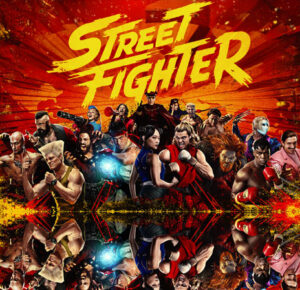
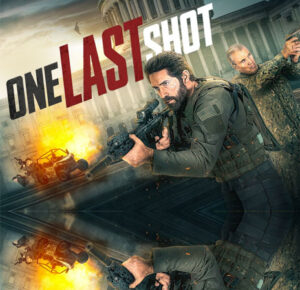

Wandering Ginza Butterfly Collection | Blu-ray (Arrow)

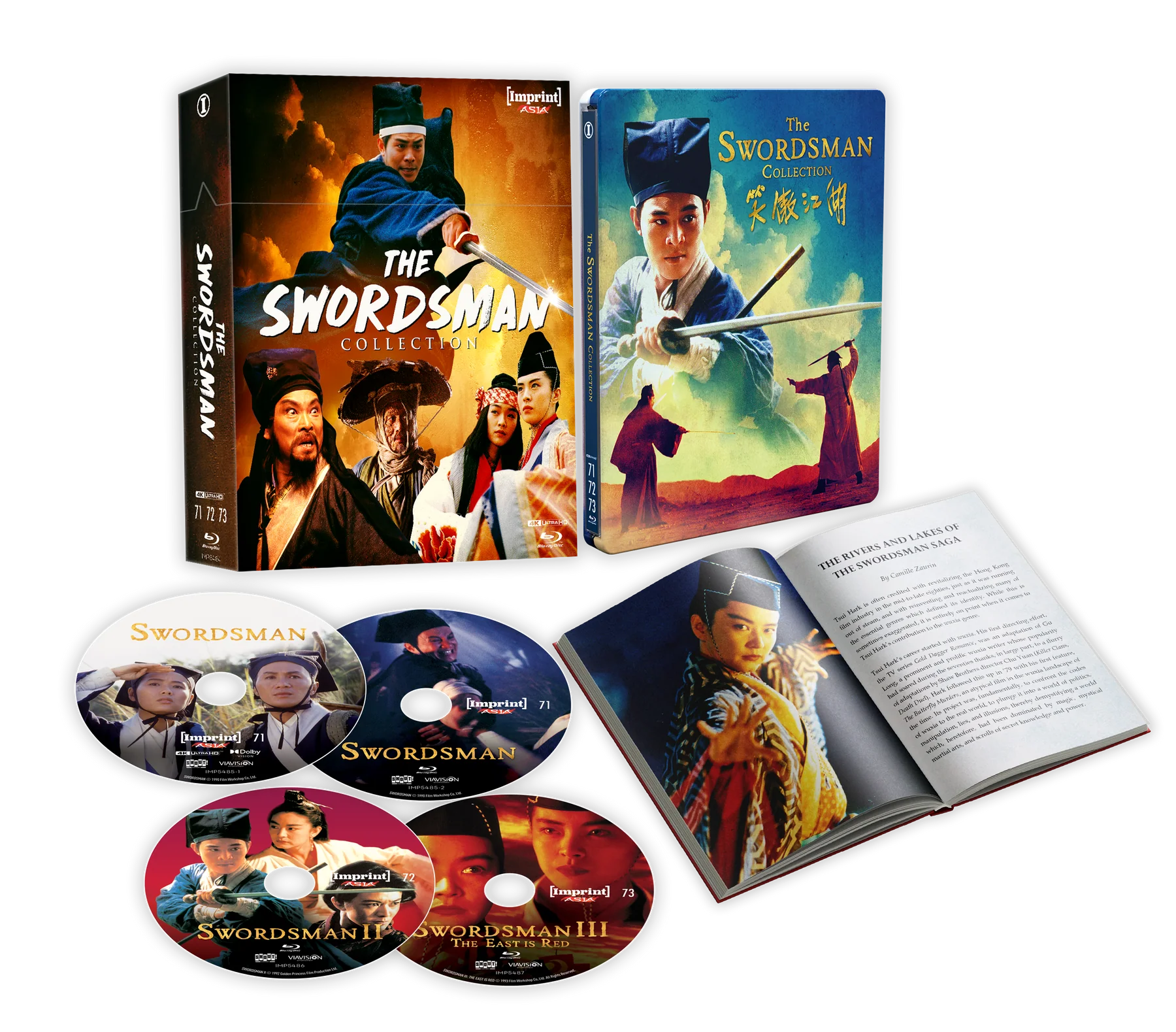
On April 6, 2026, Arrow is releasing the Blu-ray (Region A/B) for Wandering Ginza Butterfly Collection, which includes 1971’s Tokyo: Wandering Ginza Butterfly and 1972’s She Cat Gambler.

On the same year that she defined the action heroine with her role in the Female Prisoner Scorpion series, Japanese screen legend Meiko Kaji (Lady Snowblood) teamed up with future Sister Street Fighter director Kazuhiko Yamaguchi for a diptych Continue reading

Posted in Asian Titles, DVD/Blu-ray New Releases, Martial Arts Titles, News | Tagged |

The Base and The Base 2 | Blu-ray (Kino Lorber)

On May 19, 2026, Kino Lorber is releasing a Mark L. Lester (Commando, Showdown in Little Tokyo) Blu-ray double feature that includes 1999’s The Base and its 2000 sequel, The Base 2: Guilty as Charged.

The Base (1999) – When an officer is gunned down on the Camp Tillman Army base, the Pentagon sends in their top Army Intelligence man, John Murphy (Mark Dacascos, John Wick 3). Murphy discovers that a senior sergeant (John Abell, Rapid Assault) and his men Continue reading

Posted in DVD/Blu-ray New Releases, Martial Arts Titles, News, Other Notable Titles | Tagged |

Which is worse: Cop killer or killer cop? ‘Drive’ director Nicolas Winding Refn to shoot ‘Maniac Cop’ this year?

Nicolas Winding Refn, the writer/director behind The Pusher Trilogy (1996-2005), 2009’s Valhalla Rising and 2011’s Drive is reportedly moving forward with his long-awaited remake of William Lustig’s 1988 cult classic, Maniac Cop.

In an interview with Icons of Fright, Lustig – who is producing the remake – revealed that filming is set to begin this fall. He also confirmed that a distributor Continue reading

Posted in News |

Always bet on WHITE! Martial arts star Michael Jai White joins Taimak in the upcoming martial arts thriller ‘Paper Made’

Martial arts star Michael Jai White (Triple Threat, Accident Man) has joined the cast of Paper Made, an upcoming thriller from writer/director Ryan Watson (Paper Line).

The story centers on Tavon Watkins (Myles Truitt, Dragged Across Concrete), whose life takes a turn after a brutal hazing lands him inside an underground Continue reading

Posted in News |

I Love Maria | 4K Ultra HD + Blu-ray (Shout!)

On May 26, 2026, Shout is releasing the 4K Ultra HD + Blu-ray for I Love Maria, a 1988 sci-fi actioner from director David Chung Chi-Man (Royal Warriors, Magnificent Warriors).

The Hero Gang, a nasty group of thugs, are terrorizing Hong Kong with their killer robots. But when one of the robots gets damaged during a mission to kill an outcast, an inventor on the police force takes her and changes her programming. The new code, plus Continue reading

Posted in Asian Titles, DVD/Blu-ray New Releases, Martial Arts Titles, News | Tagged |

Lethal human experimentation? Well Go USA goes all in with the gripping 731′ arriving on Digital April 7th

"731" Theatrical Poster

“731” Theatrical Poster

History’s darkest experiment arrives on Digital on April 7th from Well Go USA! Directed by Linshan Zhao (The Assassins), 731 (aka Evil Unbound) revolves around a real-life facility that was responsible for large-scale biological and chemical warfare research, as well as lethal human experimentation.

731 will most definitely be compared to the similarly themed 1988’s Men Behind the Sun, as being one of the most controversial movies ever made.

731 is set against the backdrop of the bacterial experiments conducted by the Japanese Imperial Army’s Unit 731 in Northeast China, and reveals the crimes of Unit 731 through the turbulent fate of Continue reading

Posted in News |

Samurai, Swords, and Steeds: Equestrian Symbolism in Japanese Cinema

Photo by cottonbro studio: https://www.pexels.com/photo/shallow-focus-of-a-man-and-woman-in-their-game-character-costumes-7780083/

When we think of Japanese samurai films, we often imagine that the focus is on the warrior who appears on screen, sword in hand, honor on the line, and the story unfolds through duels. But for Japanese samurai movie lovers, another presence subtly shapes the atmosphere.

We’re talking about the horse.

A true samurai always has a horse on his side. In many samurai stories, horses may appear only briefly, often carrying the warrior into battle. But these moments are not accidental, that’s for sure.

In Japanese cinema, the horse often represents something deeper than just a transport companion. It signals status, loyalty, tone with nature, movement through history, and the bond between the warrior and the world.

And once you start noticing equine scenes in such films, the symbolism becomes impossible to ignore.

Horses and the Image of the Samurai

When we go back in history, the connection between samurai and horses goes back thousands of years. Yes, before the katana became the finest weapon of the samurai class, mounted archery was all they had.

In fact, the practice of yabusame (ceremonial horseback archery) is still performed in Japan today and reminds us of that tradition and paints a different picture of these warriors.

Since Japanese cinema often draws inspiration from history when portraying warriors on screen, we can see a lot of samurai-horse connections.

It’s just like horse racing that goes back centuries, where the symbolism was so powerful that it took over the world. Nowadays, people are using racehorses as symbols of power, thrill, freedom, and excitement. That’s mainly because of how the sport shaped culture and probably because of how betting on racehorses became so popular.

Nowadays, people are using the best bets for horse racing by TwinSpires to get an advantage and improve their winning chances.

So, samurai warriors on horses share a similar history, and directors often use that to give the story some emotional value, symbolism, and context.

Akira Kurosawa and the Power of the Horse

When it comes to visual symbolism, there is no one better than Akira Kurosawa. In films like Seven Samurai and Ran, horses were used not simply as props but as emotional anchors with huge battle scenes. Kurosawa managed to frame riders charging across a wide landscape, just so they can communicate chaos, scale, and urgency.

In fact, many people don’t know that Ran was actually inspired partly by Shakespeare’s King Lear, where horses carried armored warriors through massive battlefields. So, what does the movement of the horse symbolize? Well, it often mirrors the collapse of order as the story unfolds.

Plus, horses are sensitive animals and get easily spooked, and they are not really designed for battle. But this also adds to the self-control that usually surrounds samurai warriors.

Horses as Status Symbols

Another interesting layer appears when you look at how horses signal hierarchy.

In many samurai films, the highest-ranking warriors arrive on horseback, while foot soldiers move behind them. It’s a visual shorthand that audiences immediately understand.

Ownership of a horse historically required wealth and training. Maintaining one was expensive. That reality carried into storytelling.

When a character rides confidently into a scene, viewers instinctively recognize authority before a single line is spoken.

It’s subtle but effective.

Movement Through Landscape

Japanese cinema has always been about huge landscapes and their connections. Directors love to frame characters that go against mountains, through forests, or across huge open fields.

Why? Well, this symbolizes isolation, journey, and reflection. These are all the main characteristics of a true samurai warrior. That’s why horses naturally fit into this style of visual storytelling.

When a samurai rides across an open field alone, there is something eerie and spooky about that scene. You cannot help but wonder, “What’s going on in his mind?”

So, horses aren’t only about combat. In Japanese cinema, they are also used for self-reflection, emotional balance, and mental strength. This means that samurai are also about wandering, searching, and confronting personal choices.

Horses in Battle Scenes

Of course, the battlefield remains one of the most dramatic places where horses appear.

When we’re talking about Japanese historical films, we often imagine cavalry charging and moments of sudden disruption. Everything is calm until the horses start charging into the battlefield.

These battle scenes are a great way to add some excitement to such films. The horses are there just to amplify the excitement and to build on the hype. They are, without a doubt, part of that chaos.

Final Thoughts

Even though we usually imagine samurai warriors to be alone and one versus the entire world, this doesn’t mean that there isn’t a horse on their side. After all, we are talking about a timeline where horses were used for everything, so it kind of makes sense for a samurai warrior to have one.

But horses often carry a deeper meaning. They represent status, freedom, self-control, emotional balance, and the connection between the warrior and the animal.

Posted in News |

Donnie Yen, nuns, priests, exhumed bodies and real kung fu! Here’s what’s streaming on Hi-YAH for the month of March

Hi-YAH!, Well Go USA’s very own Asian/martial arts streaming channel has just announced their New Releases for the month of March.

If you want to give Hi-YAH! a go, visitors of this site can use the promo code “CITYONFIRE” for a FREE 30 Day trial!

Read on for the full list of New and Exclusive Continue reading

Posted in News |

Gambling Ghost, The (1991) Review

"The Gambling Ghost" Poster

“The Gambling Ghost” Poster

Director: Clifton Ko Chi-Sum
Cast: Sammo Hung, Meng Hoi, Nina Li Chi, Teddy Yip, James Wong Jim, Norman Ng, Lam Ching-Ying, Wu Ma, Corey Yuen, Paul Chun, Richard Ng, Stanley Fung, Robert Samuels, James Tien, Billy Chow, Chung Fat
Running Time: 93 min. 

By Z Ravas

This is not your typical Sammo Hung vehicle! By 1991, Sammo Hung’s place in the Hong Kong film industry was firmly established: the actor/director had cemented his status as an icon with blistering action films like 1987’s Eastern Condors and 1989’s Pedicab Driver (arguably his masterwork), not to mention his frequent collaborations with his fellow Three Dragons, Jackie Chan and Yuen Biao. During the early 90’s, Sammo often delivered the action that fans expected of him by playing cop characters as in Skinny Tiger, Fatty Dragon and Pantyhose Hero. All of which serves to make ’91’s The Gambling Ghost feel like an outlier: this is foremost a comedy, with the martial arts put on the backburner, featuring Sammo Hung and Mang Hoi as two slacker valet drivers who can’t seem to catch a break. As such, it more closely resembles a Stephen Chow movie repurposed for Sammo Hung or something that would have come out earlier in Sammo’s career, back when he was doing broader comedy fare like Carry On Pickpocket.

Case in point: the film opens with a parody of the popular God of Gamblers movies and their many imitators, which would have been fresh in viewers’ minds in 1991. Sammo Hung stars as a character named, what else, Fatty, who is perpetually searching Continue reading

Posted in All, Chinese, News, Reviews | Tagged , , , , , , , , , , , |

WTF? Watch the NEW blood-soaked Trailer for Joko Anwar’s Indonesian martial arts-horror-comedy ‘Ghost in the Cell’

"Ghost in the Cell" Poster

“Ghost in the Cell” Poster

Joko Anwar, the writer and director of films such as 2019’s Impetigore and Gundala, comes Ghost in the Cell, an upcoming Indonesian horror-comedy (despite being sub-labeled a comedy, this one looks brutal!).

Inside a notorious prison, an unseen force begins slaughtering inmates in brutal fashion, forcing rival gangs and corrupt guards to unite in a desperate fight to survive the escalating bloodshed.

The film features an ensemble cast that includes Abimana Aryasatya (The Big 4), Bront Palarae (Belukar), Danang Suryonegoro (Risky Business 2), Lukman Sardi (212 Warrior), Morgan Continue reading

Posted in News |

Five Major Aspects To Keep In Mind When It Comes To Picking Your Next Online Casino Platform Gambling Experience

Have you heard about how popular the online casino market has become? You have? Well, that’s fair because it is a fact. No matter which country or state’s stats you look at, you’ll notice that the figures are consistently rising in their revenue amounts. This is because online casino platforms are more accessible than ever. They are also safer and more secure than before and platforms often offer a large range of games, which means that no matter what your preference is as a player, you will most likely find a game that works for you. So, if you’re reading all of this and you’ve been thinking about getting started with online casino gaming, hold your horses for a second and first think clearly. You should not go in without doing your research. You need to ensure you’re playing with responsibility in mind. There are five major aspects to consider, which you will learn more about below. 

The first element to think of is the site’s game selection and variety to make sure you can find a game that matches your interests. Then, you must spend some time identifying the licensing and regulations of the site, both of which need to be in tip-top condition. Additionally, taking time to peruse the user interface, mobile experience, payment methods, transaction speeds and customer service is key. All of these elements come together to create the full experience you’re going to have and if any of them are lacking, this can pull your experience down. So, take your time, read through the points below carefully and then make an informed decision.

Game Selection And Variety

The diversity and quality of games heavily influence enjoyment. A robust platform like Jackpot City offers a wide range of slots, table games, live dealer options and newer formats like crash or hybrid games, which is why they’re considered highly in the casino world. Variety keeps sessions fresh and allows exploration without hopping between multiple sites.

You should also look for innovative gameplay features. Gamified elements, progressive jackpots, themed slot series and seasonal content add replay value. The interface should make navigation between categories intuitive so that discovering new favorites feels seamless rather than cumbersome.

Licensing And Regulation Must Be In Order

The most important aspect of any online casino platform is licensing and regulatory compliance. Operating under a recognized license from authorities such as the UK Gambling Commission, Malta Gaming Authority or other reputable bodies ensures that the platform adheres to legal standards and responsible gambling practices. You see, licensing affects more than legality. It guarantees fairness, enforces payout reliability and often requires periodic audits to verify that games operate correctly. Platforms without proper licensing may still function but the risk of unfair outcomes, delayed payments or data security issues increases – this is not worth it. Ensuring the regulatory framework is solid provides peace of mind and a safer environment for wagering.

User Interface And Mobile Experience

An intuitive user interface is critical for enjoyment and efficiency. Menus should be clear, search functions responsive and key information such as balances, open bets and bonus conditions easily accessible. Poor UI design can really put a bad taste in your mouth and make you feel like you don’t want to play on that platform again.

Mobile optimization is equally important. Many users now engage primarily through smartphones or tablets, so layouts must adapt to smaller screens without compromising clarity or function. Quick loading times, responsive touch controls and smooth animations all contribute to a polished mobile gambling experience.

Payment Methods And Transaction Speed

Ease of deposits and withdrawals affects both convenience and confidence. Flexible options accommodate a wide range of users, from casual players to high rollers. Additionally, speed and reliability of transactions matter. Slow withdrawals or unclear processing timelines can be frustrating to experience. Transparency around fees, limits and verification requirements also improves trust. Players are more likely to remain engaged when they know their funds are handled efficiently and securely.

Customer Support And Responsible Gambling Features

Support quality and responsible gambling tools are often overlooked but critical. Issues arise in any digital service and responsive, knowledgeable customer service ensures problems are addressed quickly. Platforms should offer multiple contact channels, including live chat, email and clear FAQ resources.

Responsible gambling features demonstrate commitment to user wellbeing. Deposit limits, session reminders, self-exclusion options and risk monitoring tools all help players maintain control. Platforms with strong support and protective measures tend to build higher loyalty because users feel secure while exploring and playing.

Summary Checklist For Choosing A Platform

To simplify evaluation, consider a quick checklist of key indicators:

  • Valid licensing and regulatory compliance
  • Wide range of high-quality games
  • Intuitive interface with strong mobile compatibility
  • Multiple secure payment options with clear processing times
  • Reliable customer support and comprehensive responsible gambling tools

Checking each item ensures that the platform meets fundamental expectations rather than relying solely on marketing or promotional offers. Following this structured approach reduces surprises and enhances overall enjoyment.

There You Have It

Selecting an online casino platform is more than picking the site that looks appealing; you also have to dig a little deeper to make sure that all of your needs are met. Focusing on licensing, game variety, usability, financial efficiency and support creates a more enjoyable and reliable gambling experience. Players benefit from smoother engagement, safer transactions and an environment that balances fun with responsible practices.

Posted in News |

How Asian Action Cinema Shaped the Modern Language of Fight Choreography Worldwide

Watch a good fight scene today and you can almost read it like a sentence. The camera shows you where the bodies are, the movement has a beat, and the action can easily tell you who is confident, who is desperate, and who is changing.

That shared sense of what reads as good action did not appear by accident. It traveled. In the same way people now connect across borders through niche corners of the internet like video chat with bbw, film fans and filmmakers have spent decades swapping tapes, discs, clips, and behind-the-scenes stories, then rebuilding what they saw in their own movies.

Asian action cinema, especially from Hong Kong, taught the world a practical language for choreography. It showed how to make movement readable, how to use rhythm to build emotion, and how to treat a fight as storytelling instead of noise.

Fight Choreography As A Shared Language

When people say modern action looks like it has martial arts DNA, they usually mean three things.

First is clarity. You can tell where bodies are in the frame and why a move works. Second is rhythm. Hits do not come at a flat pace. There are beats, pauses, and bursts that feel like a conversation. Third is consequence. The scene shows effort, pain, and adaptation, so the action feels tied to character.

Hong Kong and other Asian industries refined these ideas because they had to. Budgets were often tighter than Hollywood, and the films lived or died on action quality. If a fight felt messy, there was nowhere to hide.

Why Hong Kong Became The Training Ground

Hong Kong cinema had a long history, but martial arts films surged in the mid 1960s and became a dependable engine for the industry. When American audiences discovered these films in the early 1970s through stars like Bruce Lee, the export market expanded fast. That outside demand rewarded the filmmakers who could deliver clean, exciting movement again and again.

A key advantage was the talent pipeline. Many performers came through traditions that already valued timing, precision, and physical control, including Chinese opera training and serious martial arts schools. Those backgrounds made it normal to treat a fight like a rehearsed performance, not an improvised brawl.

The Stunt Team Method That Hollywood Borrowed

One of Hong Kong’s biggest exports was not a single style of punching. It was a way of working.

Action was planned early. Choreography was rehearsed like dance. Stunt teams developed a shared vocabulary so performers could learn sequences quickly. The best teams built fights from simple rules: establish distance, show the setup, land the move, then pay it off with a reaction.

That approach also created a specific job identity. The action director or fight choreographer was not just a technician. They shaped storytelling. They decided how a character’s personality shows up in movement, whether that means crisp technique, dirty shortcuts, or panic when plans fall apart.

As Hollywood began hiring more Asian choreographers and stunt teams, it also started adopting this workflow.

Editing Rhythm and the Art of Letting a Move Land

Editing is where fights often succeed or fail. Asian action cinema treated editing like percussion. If the cut comes too early, the hit feels light. If it comes too late, the rhythm drags.

Good action editing also respects screen direction. If a punch travels left to right in one shot, the next shot should not flip the geography unless the film clearly resets the space. That simple discipline is a big reason older Hong Kong fights still feel easy to follow.

This is also where sound matters. Impact sounds, footfalls, and cloth movement help the brain read weight and speed. Even when a hit is staged safely, the right audio cues make it feel physical.

The Hollywood Shift From Copying to Collaboration

For a long time, Hollywood borrowed Asian action in a shallow way. It copied poses, camera angles, or a few signature moves. What changed the game was collaboration.

When major productions brought in top Asian choreographers and committed to serious training, the action started to feel earned. Actors learned combos and footwork. Directors learned how to shoot for clarity. Editors learned to preserve rhythm.

This also opened the door for different kinds of action heroes, including more prominent women fighters. Asian cinema had long featured women who could fight as equals, and Hollywood eventually built major franchises around that model.

How to Watch Fight Choreography With Fresh Eyes

If you want to see this influence clearly, watch for three things. First, how often you can see the whole body, including the feet. Second, how the scene uses rhythm, with pauses and accelerations that match the story. Third, how the environment forces choices, turning the fight into a series of problems.

Asian action cinema helped teach the world that choreography is character, plot, and emotion expressed through motion.

Posted in News |

Heroes Two | Blu-ray (88 Films)

On May 25, 2026, 88 Films is releasing the Blu-ray (Region B) for Heroes Two (aka Bloody Fists), a 1974 martial arts film from legendary Shaw Brothers director, Chang Cheh (Five Element Ninjas).

The Shaolin Monastery has been destroyed. The rebels are on the run. The invaders are winning. But don’t give up hope: legendary freedom Continue reading

Posted in Asian Titles, DVD/Blu-ray New Releases, Martial Arts Titles, News | Tagged |

PRAISE THE LORD! 88 Films’ jam-packed 4K Ultra HD + Blu-ray for Jackie Chan’s ‘Dragon Lord’ is NOW shipping

Now shipping from U.S. retailer Goodie Emporium is 88 Films’ 4K Ultra HD + Blu-ray (Region B) for Dragon Lord (aka Young Master in Love), a 1982 kung fu film directed by and starring Jackie Chan (The Shadow’s Edge).

Dragon Lord was originally conceived as a sequel to Young Master (hence its alternate title), but Jackie Chan and his team reworked it so heavily during Continue reading

Posted in News |

The Valiant Ones | 4K Ultra HD | Only $24.99 – Expires soon!

The Valiant Ones | 4K UHD (Eureka)

The Valiant Ones | 4K UHD (Eureka)

Today’s Deal on Fire is the 4K Ultra HD for Eureka’s The Valiant Ones, a 1975 film by celebrated Taiwanese filmmaker King Hu, an undisputed master of the genre!

Shot back-to-back with The Fate of Lee Khan (but not released until two years later), it stands as a worthy follow-up to his earlier works Come Drink with MeDragon Inn and A Touch of Zen.

During the reign of the Jiajing Emperor (Chao Lei), China’s coastal regions have come under attack by wokou – Japanese pirates under the leadership of the infamous Hakatatsu (Sammo Hung). To combat this threat, the Emperor tasks a trusted general, Zhu Wan (Tu Kuang-chi), with assembling a group of skilled warriors to find and eliminate the pirates. Under the command Continue reading

Posted in Deals on Fire!, News |