
There’s a scene in 2025’s From the World of John Wick: Ballerina in which Ana De Armas, playing the ballerina assassin of the title, is forced to fend off an attack from an axe wielding assailant. It’s a frantic sequence, with De Armas eventually snapping her attacker’s arm, hacking his back to shreds with the axe, and for the pièce de résistance- with his head slumped over a smashed car door window, she graphically thrusts the axe into his forehead to finish him off. It’s the kind of hyper violent finishing move that would have once been saved for the final boss fight, delivered as a kind of cathartic exclamation point to the misdeeds the villain has committed throughout, offering up the kind of gratuitous crescendo that every finale should come with.
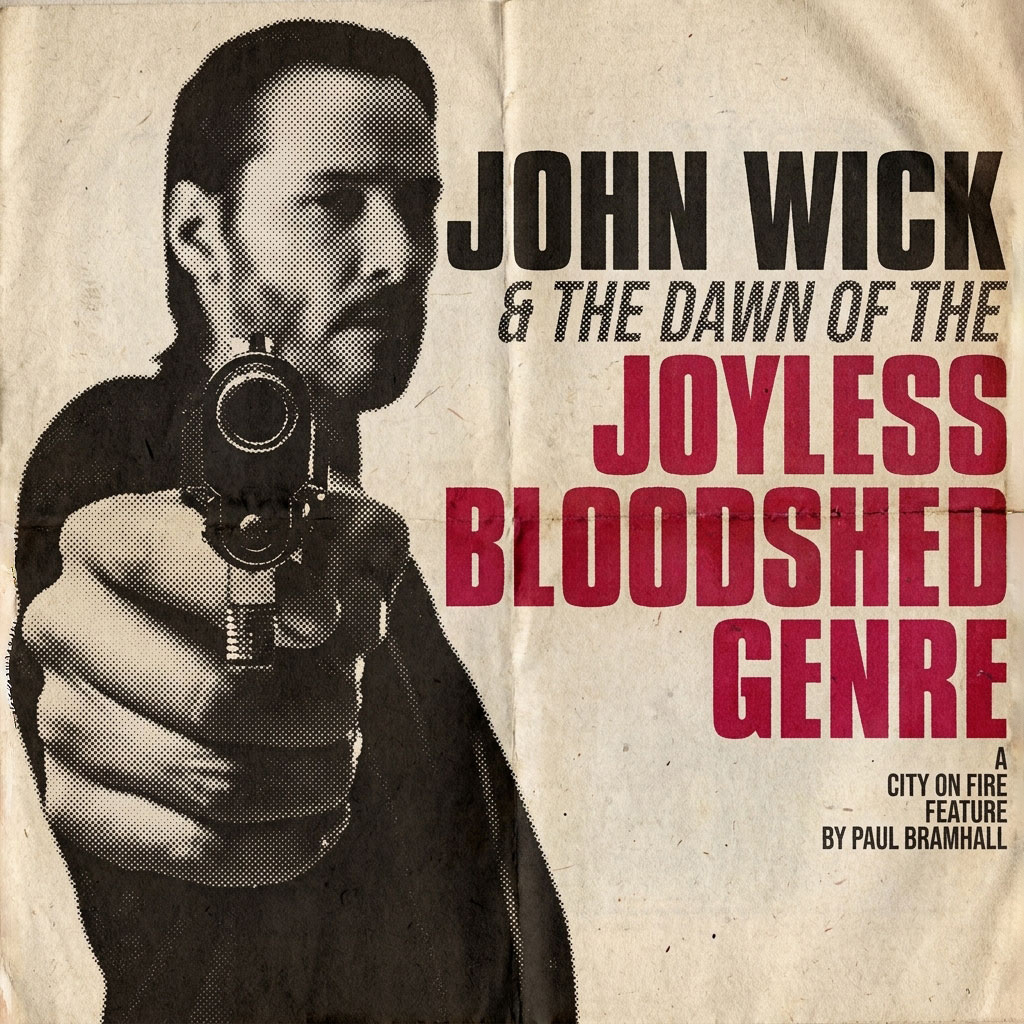
However in the case of Ballerina the scene is almost superfluous, included as a throwaway moment during one of De Armas’ early missions, and not even a third of the way through the movie. For me it’s the perfect example of what I like to call the joyless bloodshed genre. A genre aesthetic which is defined not by the emotional content or relevance of violence within a scene, but rather solely on the fact of how creatively shocking the violence within a scene can be, regardless of context. I lay the blame at the feet of the character that Ballerina is a spin-off from – John Wick. I intentionally say character rather than movie, as I don’t believe the birth of the joyless bloodshed genre started with the unexpected 2014 hit John Wick.
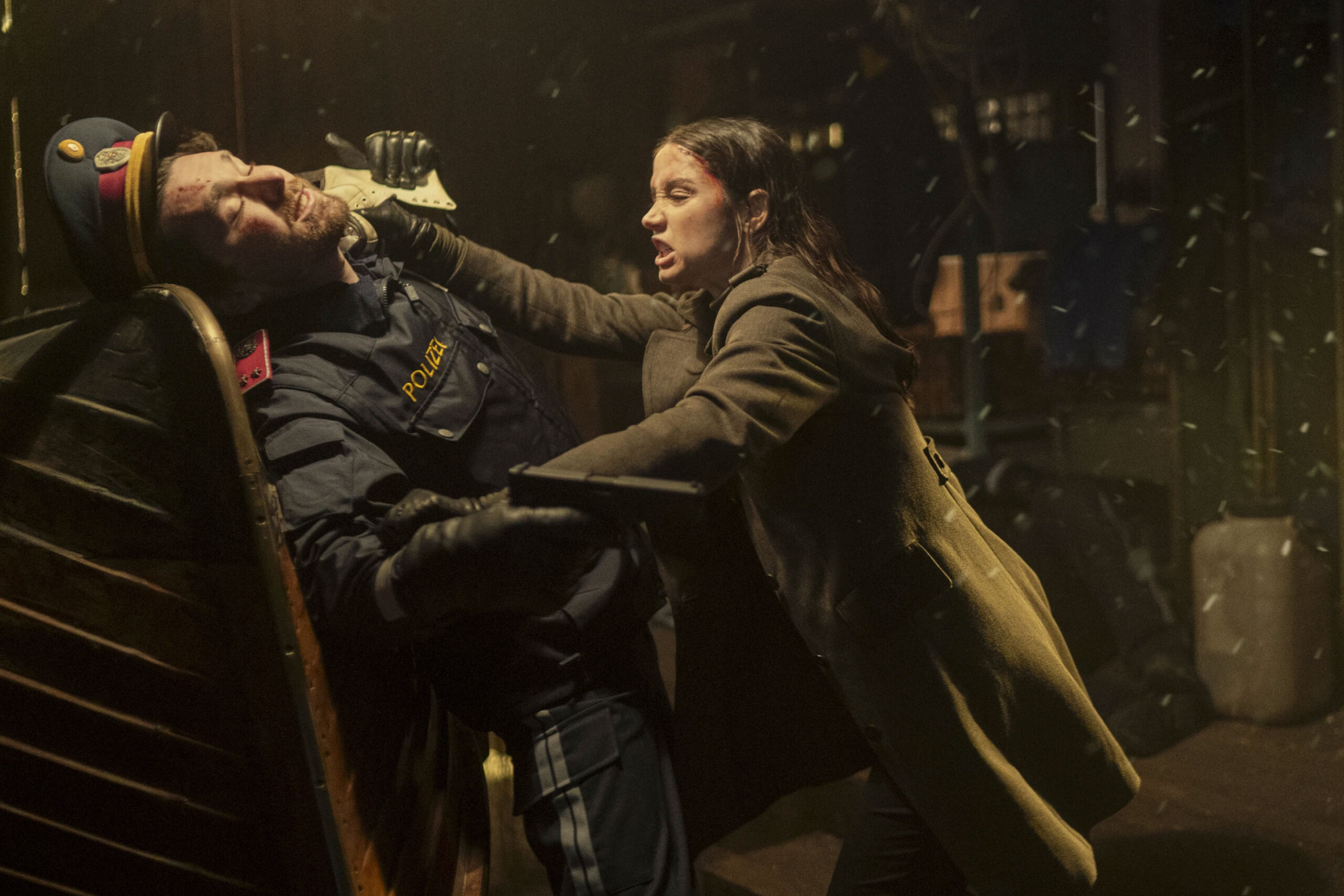
Ana De Armas in 2025’s From the World of John Wick: Ballerina.
In that movie Keanu Reeves plays a retired hitman grieving the loss of his wife, finding comfort in the puppy that she gifted to him during her final days. However when a home break-in from a gang of Russian mobsters sees the puppy meet a premature end, Reeves comes out of retirement to go on a vengeance fuelled rampage against anyone with even a slight connection to those responsible for killing the pup. A medium budget production, John Wick was pure pulp, and never pretended to be anything else. Its existence was there for frequent Reeves stunt double and 87Eleven action team founder Chad Stahelski to prove his worth as a director, delivering a kind of antithesis to the shaky cam action style that dominated the previous decade, and to that end if fulfilled its duty with aplomb. Nobody was expected to approach the tale of Keanu Reeves rampaging around to take revenge for a puppy so seriously, and nobody did.
However the workings of the Hollywood machine require that every successful movie demands a sequel, so it was in 2017 we got John Wick: Chapter 2. In 2019 we got John Wick: Chapter 3. And in 2023 we got John Wick: Chapter 4. It’s within the sequels that the origins of joyless bloodshed can be traced, with a character who, having avenged the one living thing that he found some solace in, essentially finds himself at a point in life where he no longer has anything to live for. Rather than find ways to continue the pulpy nature of the first outing, writer Derek Kolstad opted for a left of field, almost existential, approach. Creating a whole universe of assassins who end up out to kill John Wick, despite having little to live for, he carries on regardless, offing anyone who happens to cross his path will ill intentions in increasingly violent and creative ways.
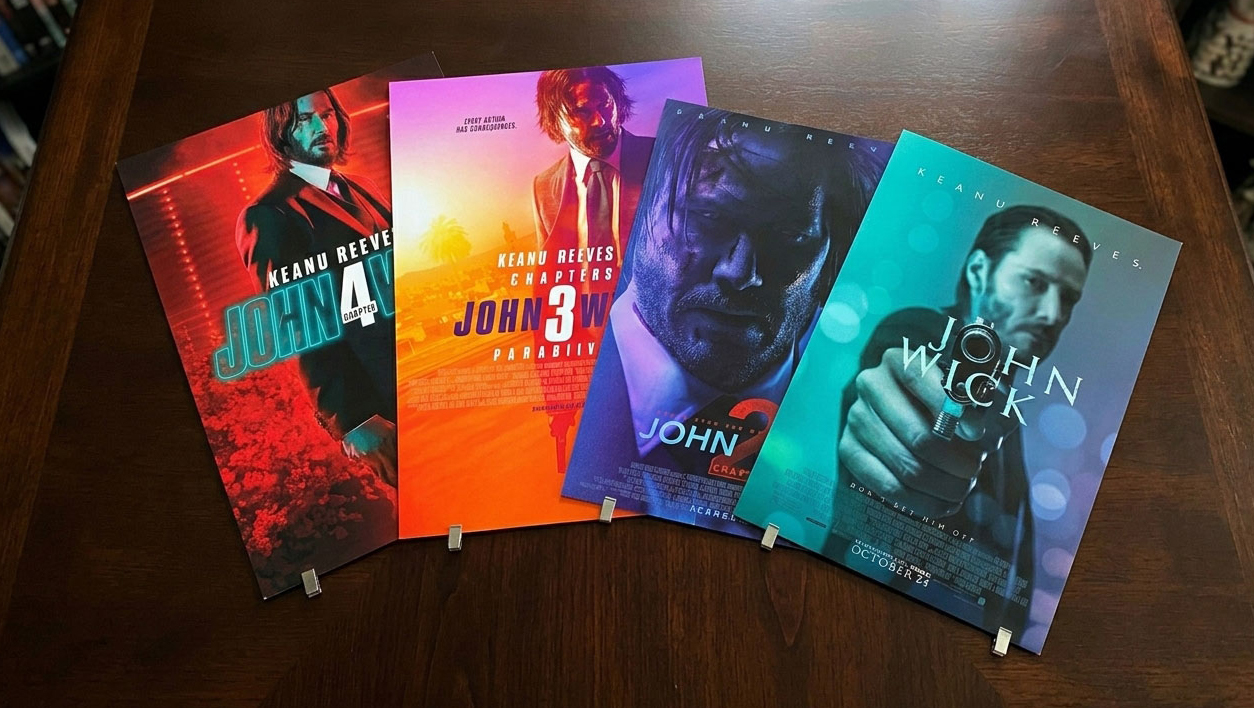
The origins of the joyless bloodshed genre started here.
By the time it got to the fourth chapter audiences found themselves clocking in to watch hapless lackeys be violently dispatched for almost 3 hours, with Reeves himself reducing his lines in the script to a monosyllabic 380 words, an alarming amount of which are simply one-word deliveries of “yeah”. There is of course, nothing inherently wrong with crafting a story about a hitman with nothing to live for violently dispatching countless enemies in poker faced fashion (even if the combined length of the sequels involves him doing so for more than 7 hours). The issue I have is more around the fact that the nihilistic, joyless approach the John Wick sequels take to bloodshed is one that’s permeated throughout the action genre over the past 10 years.
When the phrase heroic bloodshed was coined by Eastern Heroes founder Ricky Baker in the 1980’s, it referred to the transition Hong Kong action cinema was making away from traditional martial arts, and more towards stylized gunplay, spearheaded by directors like John Woo. Much like the John Wick movies the heroic bloodshed genre frequently found bodies riddled with bullets, and in the case of John Woo, usually in slow motion with liberal use of blood squibs. While the heroic bloodshed genre was undeniably violent, the key difference is that it never felt like joyless violence. Think of almost any heroic bloodshed production and the characters had something to live for, and therefore something that the audience could have an emotional connection to.
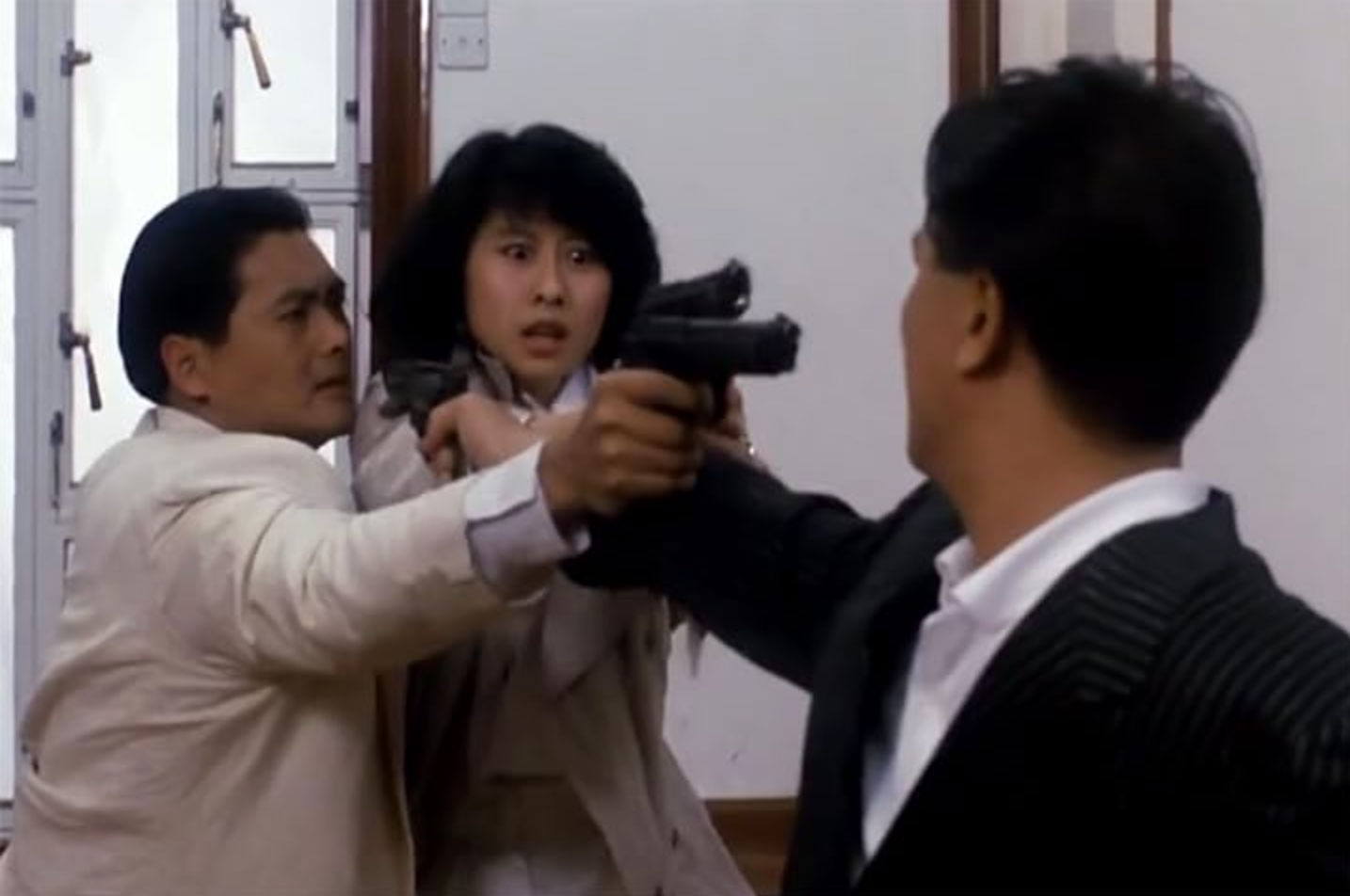
Chow Yun Fat, Sally Yeh and Danny Lee in 1989’s The Killer.
Whether it be Chow Yun Fat’s killer saving up for Sally Yeh’s eye operation in The Killer, or Kenny Bee and Tony Leung competing for the love of Joey Wong in My Heart is that Eternal Rose, characters went in guns blazing with emotions running high and something larger at stake than simply living for another day. While the movies that have been inspired by John Wick don’t all have such a nihilistic protagonist at their centre (although some of them definitely do), many have taken the same joyless and poker-faced approach to violence as the go-to aesthetic for their action beats. From Nobody, to Kate, to Extraction, to Sisu, the approach often seems to be one of – a. Take a non-martial artist and put them through an intensive training course prior to filming, then b. Smooth over any of the rougher edges by making the kills as violent as possible with the latest CGI advancements.
When it comes to the action genre there’s been no other period like the past 10 years when it comes to witnessing knives be graphically lodged into/through skulls, or decapitated limbs flying across the screen, technology now making such physical damage relatively easy to portray onscreen. The result is one that’s been a confounding factor in the evolution of the joyless bloodshed aesthetic, with gratuitous moments of violence (the previously mentioned axe in the forehead from Ballerina being a case in point) no longer staged as wow moments to a crescendo of escalating action beats, but rather something that can be portrayed with relative ease at any point in a story. Much like many recent creature features, when there are no longer limitations on what can and can’t be portrayed onscreen, the concepts of gradual build up and escalation can often become lost in the freedom.
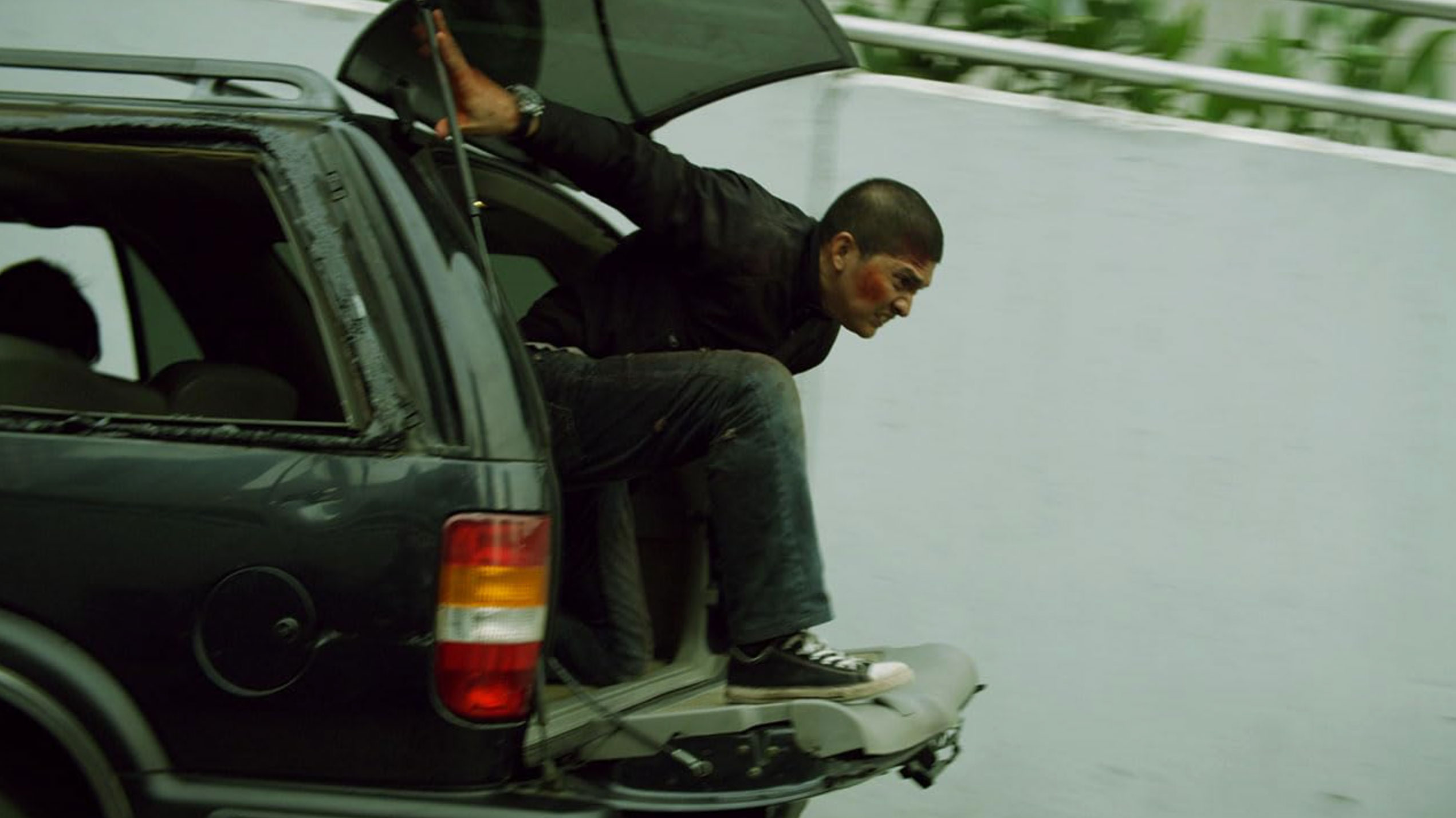
Iko Uwais in 2014’s The Raid 2.
Based on this logic, it may sound like it would be an easy argument to pitch the 2010’s era of Indonesian action cinema as the purveyors of joyless bloodshed. The Gareth Evans directed double whammy of 2011’s The Raid and its 2014 sequel The Raid 2 both raised the bar in terms of how much graphic violence could be shown within the context of the action genre, however there’s a key difference between The Raid franchise and true joyless bloodshed productions. First and most importantly, is that the violence never once overshadows the martial artistry on display, with Iko Uwais, Yayan Ruhian, Joe Taslim, and Cecep Arif Rahman’s devastating displays of silat being the primary reason for anyone to clock in. With The Raid and its sequel the violence compliments the martial artistry, it’s not there to compensate for a lack of it.
Secondly the main character of Rama, played by Iko Uwais, has a family, with his wife, kid, and brother all playing a role in how he navigates the situations he finds himself in. This alone makes The Raid movies closer to heroic bloodshed thematically. Sure, in the latter half of the 2010’s the Mo Brothers would take the mixture of silat and violence to new levels with 2016’s Headshot and 2018’s The Night Comes for Us (and it would be remiss not to mention 2024’s The Shadow Strays), however their background in horror makes these productions more akin to watching a horror flick through a martial arts movie lens. The joy of watching comes precisely from witnessing the ridiculously over the top gore that’s delivered when filmmakers known for their horror output decide to tackle the action genre.
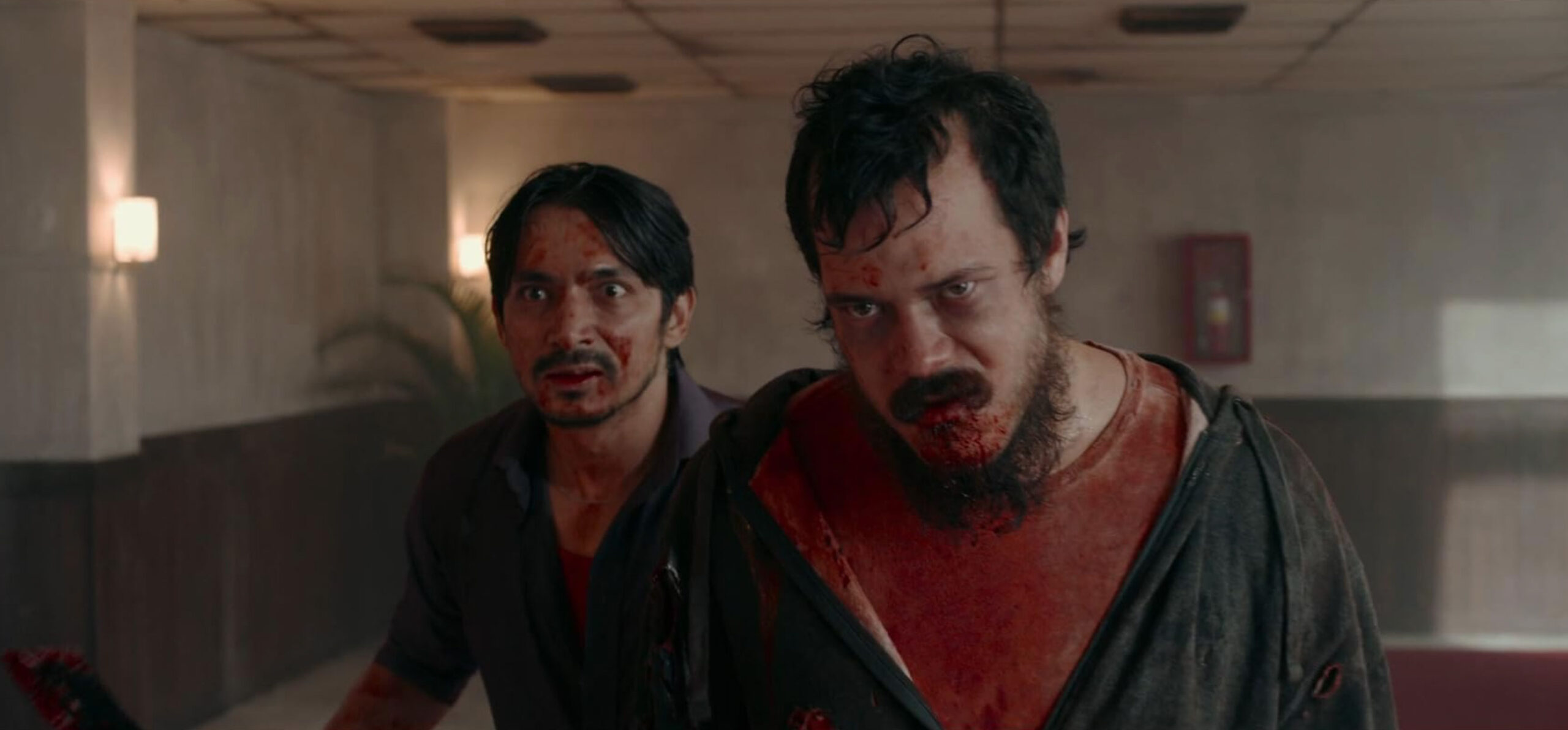
Abimana Aryasatya and Zack Lee in 2028’s The Night Comes for Us.
Perhaps it’s only the perspective of an action movie fan whose origins can be traced back to Hong Kong action cinema during the 1970’s, 1980’s, and 1990’s, however I don’t feel like its only nostalgia talking (and I started watching HK action in the late 90’s) when I say that the action movies then were more fun. Not every bad guy needed to be dispatched in the most violent way imaginable, it wasn’t seen as being inferior if you mixed action and comedy together, and the concept of taking out adversaries in as poker faced efficient manner as possible was yet to be introduced. You could watch a ten-minute fight scene knowing it didn’t bare a semblance of truth to reality and still find your adrenaline pumping, and it’s for this reason why I’d still choose to watch a Hong Kong classic versus a guy decked out in a black suit shooting 5 people in the face within 3 seconds.
So have there been any Hollywood productions in the last 10 years that haven’t opted for the joyless bloodshed approach when it comes to the action genre? While the original Expendables trilogy concluded with the third instalment in 2014, the same year John Wick was released, Sylvester Stallone and the gang did return in 2023 for a 4th outing that kept to the recipe of wisecracking and 80’s style explosive action. Unfortunately it was terrible. Perhaps then the last holdout of a franchise (with a small caveat: I’m not going to touch on the MCU or DCU) that proved action didn’t need to be such a poker faced affair is the Mission: Impossible franchise, of which the last 4 entries (Rogue Nation, Fallout, Dead Reckoning Part One, and The Final Reckoning) all landed in a post-John Wick world, delivering large scale stunts and laced through with a welcome sense of humor.
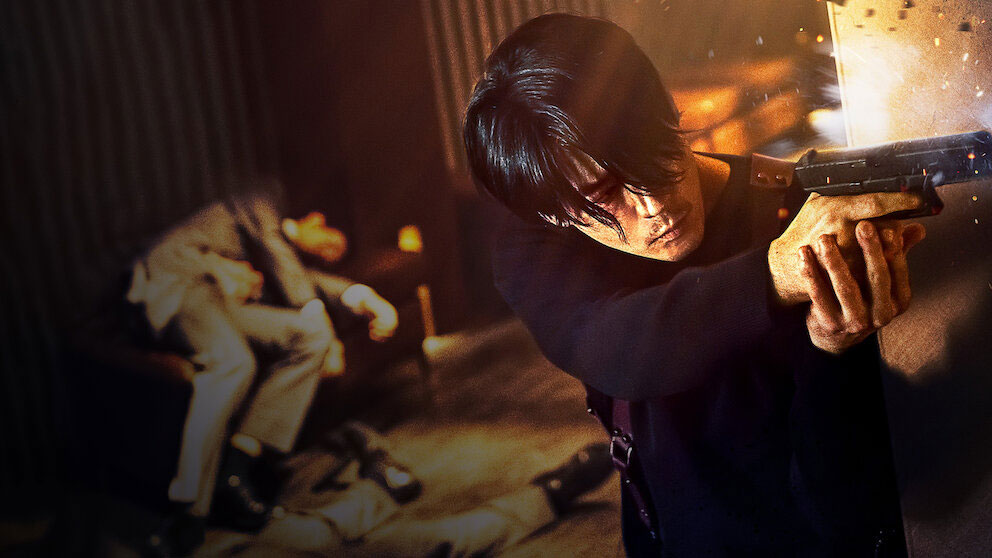
Jang Hyuk in 2022’s The Killer: A Girl Who Deserves to Die.
However these feel like the exceptions more than the rule, and in 2027 another John Wick spin-off will land in the form of Caine, a Donnie Yen vehicle that’ll effectively bridge the action talents of Hollywood and Hong Kong. Indeed Asian cinema has been just as influenced by the concept of joyless bloodshed, with the likes of Korea’s Spiritwalker and The Killer: A Girl Who Deserves to Die both being classic examples. In the case of Korea specifically the approach has even bled into its TV series output, with So Ji-sub practically becoming the poster boy for joyless bloodshed thanks to his turns in Mercy for None and Agent Kim Reactivated. As an ironic sidenote, I’ve always referenced the So Ji-sub starring 2012 movie A Company Man as being the inspiration for the direction the John Wick franchise would head in, with the story of a hitman who works for an agency that’s essentially treated like any other white-collar job.
However overall in Asia there seems to be more of a balance when it comes to the action genre. In Japan for every joyless bloodshed production like Enju, you have a series like Baby Assassins, and similar in Hong Kong for every The Furious, you have a movie like Walled In: Twilight of the Warriors. What can’t be denied though, is that next time an action movie hits, we shouldn’t be too surprised if it involves a poker-faced protagonist dispatching the bad guys in as shockingly violent manner as possible, and that as an audience, we should be satisfied that that’s enough. At least in my case, over the past couple of years I’ve come to accept the fact that it’s not, with the rise of joyless bloodshed feeling increasingly like exactly that – joyless.
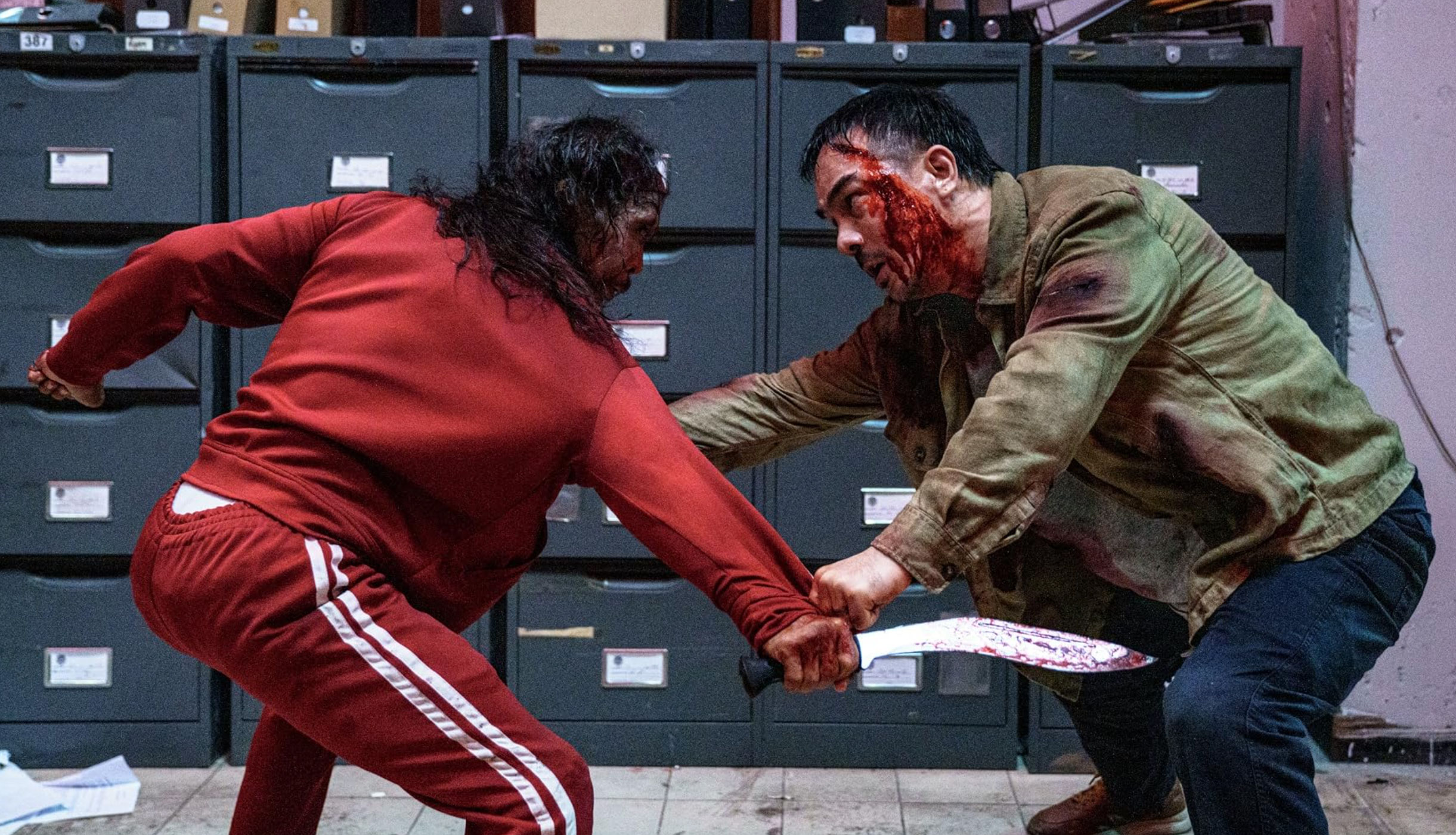
Joe Taslim and Yayan Ruhian in 2026’s The Furious.
Thankfully there are plenty of remedies out there. Give me Tom Cruise scaling the Burj Khalifa, give me Jackie Chan sliding down a pole from the top floor of a shopping mall, give me Keanu Reeves dodging bullets on a skyscraper rooftop. Heck, for that matter give me Jean Claude Van Damme attempting to save the world from exploding counterfeit jeans. Most of all, give me a reminder of a time when action movies where fun, and not just about how many lackeys need to violently meet their demise before a final villain meets theirs even more violently. While it’s true to say there have always been darker action movies out there, it was the John Wick sequels that made that darkness the norm, and by doing so, action movies also lost their ability to be fun. Here’s hoping that one day they find it again.






Do you think the proliferation of this joyless bloodshed genre is because its aimed at a different audience. I know for a fact lurking on different forums theres is a section of the audience that calls bullshit on the movies we love whether that be Jackie Chan or John Woo. The critism levelled is this is bullshit I’ll just pull out a gun and cap everyone.
And this is what John Wick does. Yes there are inventive scenes like the library fight in JW3 but most of the scenes just involve Keanu doiong headshots, rolling on the ground and then doing reloads which mimics the motion of these real life militia gun nutters jerking off. They literally write hundreds of comments about how accurate the reload is. This tactical gunplay boredom is also intrinsically linked to JW and therefore the joyless bloodshed genre.
In this genre we will never get the highs of people throwing guns in slow motion while Van Damme catches in beautiful slomo before blasting away at the bad guys. The movies that I love have a rhthym and are edited in a way to show this. In contrast in JW its usally a medium shot with Keanu doing headshots, rolling around more headshots then the scene just arbitarily ends when theyve run ut of stunt guys to fake CGI kill. Which leads to my next point. This joyless subgenre and its use of CG instead of squibs. From the Wild Bunch to John Woo and all of the Hollywood action movies of the 80s and 0s seeing bad guys get a hole the size of a small watermelon burst throught heir bodies multiple times was so damn satisfying. I don’t know if JW was the first to do CG bullet hits but it probably popularised it.
Nobody is expecting deep ruminations of the human condition like in a Bergman or Fellini but throwing endless monotnous action scenes one after another doesn’t paper over the cracks. Ballerina is the most blatant example of this. Action is most satisying as a result or consequence of story/character and this is where most of these movies totally fail as well.
JW was a response to the shakycam bs that Greengrass popularised and that shakycam aesthetic is still bullshit. But go back to movies like Bourne 2 and 3 and the movie has so much to offer besides the action. In constrast JW 2 and 3 have nothing besides boring action for the most part. At least JW4 tried to humour the Walter Hill cinephiles in us who adore/worship The Warriors.
A different audience yes, but a different genre no – the action genre is still the action genre, it’s just become a lot more clinical (or perhaps tactical is a better expression!) in the last 10 years, largely driven by the JW approach. I feel like in some ways the JW style of efficiency mirrors the swordplay style you’d find in Japanese chambara flicks of old, when it was all about how efficiently an enemy could be struck down with as few a blade strokes as possible. However those movies usually had compelling stories and characters to back them up, with the action serving as exclamation points to a wider narrative, and weren’t just monosyllabic characters executing grim faced headshots for 3 hours.
Part of me does admittedly wonder if the continuing popularity of the joyless bloodshed genre is partly driven by the fact it’s positioned as the antithesis to the omnipresent superhero genre, which I get. Still, give me a dose of PM Entertainment any day of the week over the latest CGI assisted infliction of bodily trauma.
Maybe you’re right. Superhero movies went woke according to some people so you have these blank slate charismaless heroes you can project you self onto hence the minimal dialogue and lack of story/character cos that shit is woke…apparently.
But these JW tactical joyless movies can’t hold a candle to what Robert Downey Jnr did during the Phase 1-3 of the MCU. I love you 3000 hits harder than 3 hours of Keanu headshots.