


There’s a scene in 2025’s From the World of John Wick: Ballerina in which Ana De Armas, playing the ballerina assassin of the title, is forced to fend off an attack from an axe wielding assailant. It’s a frantic sequence, with De Armas eventually snapping her attacker’s arm, hacking his back to shreds with the axe, and for the pièce de résistance- with his head slumped over a smashed car door window, she graphically thrusts the axe into his forehead to finish him off. It’s the kind of hyper violent finishing move that would have once been saved for the final boss fight, delivered as a kind of cathartic exclamation point to the misdeeds the villain has committed throughout, offering up the kind of gratuitous crescendo that every finale should come with.
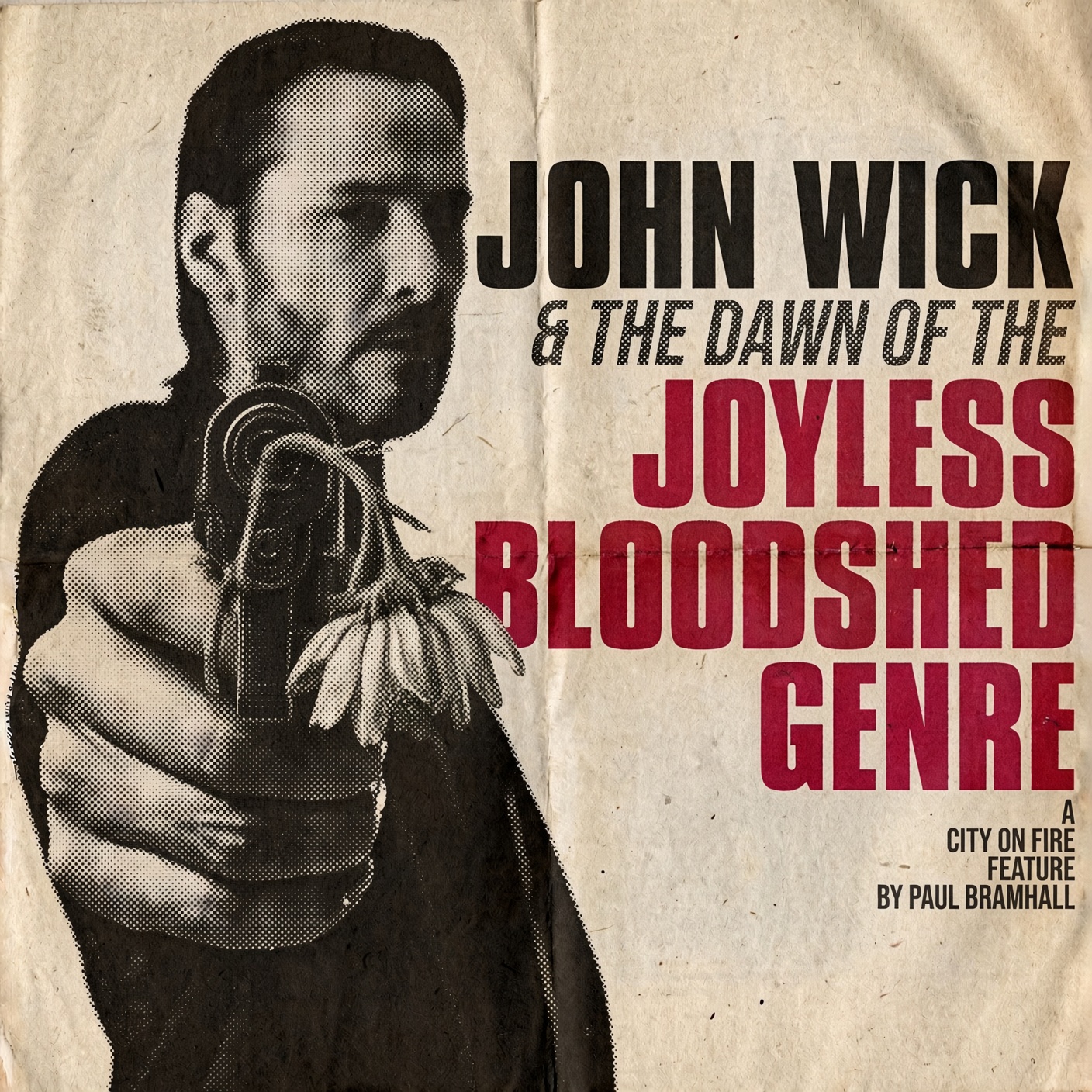
However in the case of Ballerina the scene is almost superfluous, included as a throwaway moment during one of De Armas’ early missions, and not even a third of the way through the movie. For me it’s the perfect example of what I like to call the joyless bloodshed genre. A genre aesthetic which is defined not by the emotional content or relevance of violence within a scene, but rather solely on the fact of how creatively shocking the violence within a scene can be, regardless of context. I lay the blame at the feet of the character that Ballerina is a spin-off from – John Wick. I intentionally say character rather than movie, as I don’t believe the birth of the joyless bloodshed genre started with the unexpected 2014 hit John Wick.
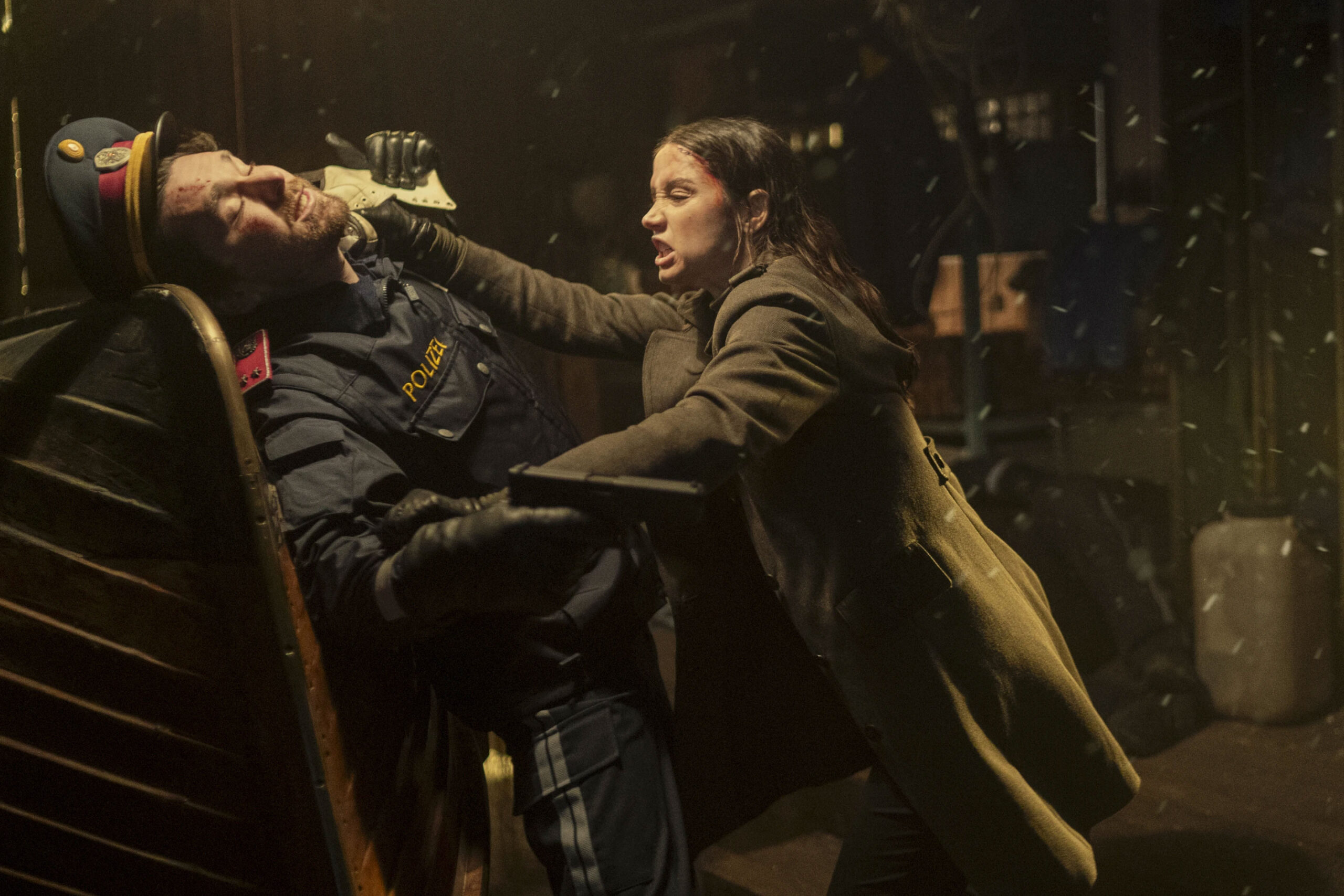
Ana De Armas in 2025’s From the World of John Wick: Ballerina.
In that movie Keanu Reeves plays a retired hitman grieving the loss of his wife, finding comfort in the puppy that she gifted to him during her final days. However when a home break-in from a gang of Russian mobsters sees the puppy meet a premature end, Reeves comes out of retirement to go on a vengeance fuelled rampage against anyone with even a slight connection to those responsible for killing the pup. A medium budget production, John Wick was pure pulp, and never pretended to be anything else. Its existence was there for frequent Reeves stunt double and 87Eleven action team founder Chad Stahelski to prove his worth as a director, delivering a kind of antithesis to the shaky cam action style that dominated the previous decade, and to that end if fulfilled its duty with aplomb. Nobody was expected to approach the tale of Keanu Reeves rampaging around to take revenge for a puppy so seriously, and nobody did.
However the workings of the Hollywood machine require that every successful movie demands a sequel, so it was in 2017 we got John Wick: Chapter 2. In 2019 we got John Wick: Chapter 3. And in 2023 we got John Wick: Chapter 4. It’s within the sequels that the origins of joyless bloodshed can be traced, with a character who, having avenged the one living thing that he found some solace in, essentially finds himself at a point in life where he no longer has anything to live for. Rather than find ways to continue the pulpy nature of the first outing, writer Derek Kolstad opted for a left of field, almost existential, approach. Creating a whole universe of assassins who end up out to kill John Wick, despite having little to live for, he carries on regardless, offing anyone who happens to cross his path will ill intentions in increasingly violent and creative ways.
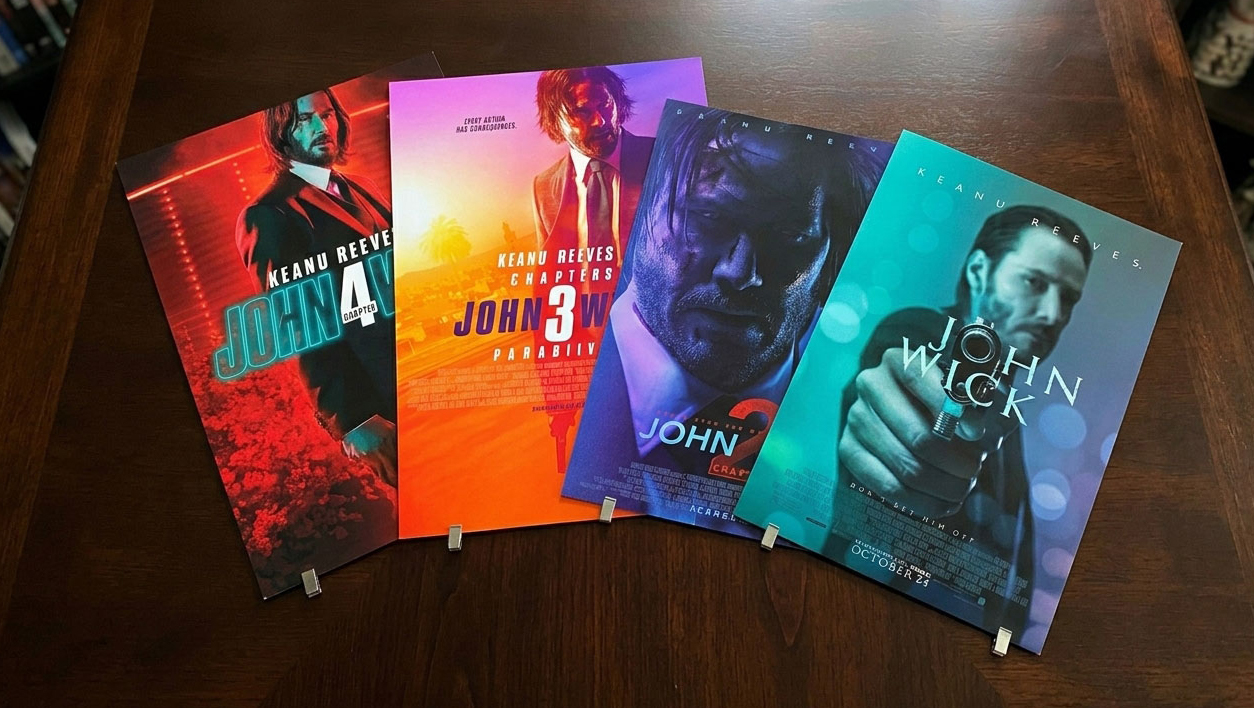
The origins of the joyless bloodshed genre started here.
By the time it got to the fourth chapter audiences found themselves clocking in to watch hapless lackeys be violently dispatched for almost 3 hours, with Reeves himself reducing his lines in the script to a monosyllabic 380 words, an alarming amount of which are simply one-word deliveries of “yeah”. There is of course, nothing inherently wrong with crafting a story about a hitman with nothing to live for violently dispatching countless enemies in poker faced fashion (even if the combined length of the sequels involves him doing so for more than 7 hours). The issue I have is more around the fact that the nihilistic, joyless approach the John Wick sequels take to bloodshed is one that’s permeated throughout the action genre over the past 10 years.
When the phrase heroic bloodshed was coined by Eastern Heroes founder Ricky Baker in the 1980’s, it referred to the transition Hong Kong action cinema was making away from traditional martial arts, and more towards stylized gunplay, spearheaded by directors like John Woo. Much like the John Wick movies the heroic bloodshed genre frequently found bodies riddled with bullets, and in the case of John Woo, usually in slow motion with liberal use of blood squibs. While the heroic bloodshed genre was undeniably violent, the key difference is that it never felt like joyless violence. Think of almost any heroic bloodshed production and the characters had something to live for, and therefore something that the audience could have an emotional connection to.
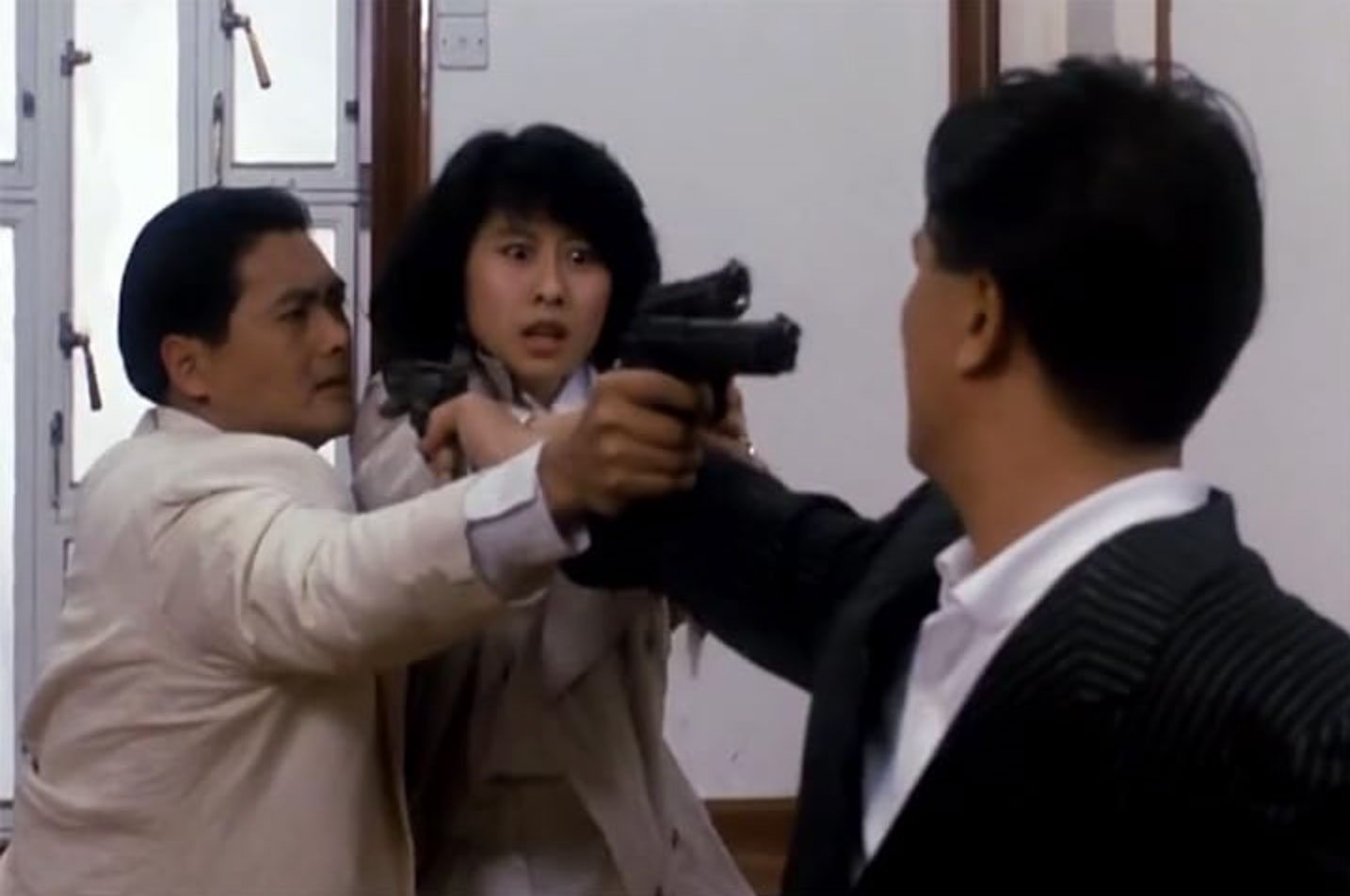
Chow Yun Fat, Sally Yeh and Danny Lee in 1989’s The Killer.
Whether it be Chow Yun Fat’s killer saving up for Sally Yeh’s eye operation in The Killer, or Kenny Bee and Tony Leung competing for the love of Joey Wong in My Heart is that Eternal Rose, characters went in guns blazing with emotions running high and something larger at stake than simply living for another day. While the movies that have been inspired by John Wick don’t all have such a nihilistic protagonist at their centre (although some of them definitely do), many have taken the same joyless and poker-faced approach to violence as the go-to aesthetic for their action beats. From Nobody, to Kate, to Extraction, to Sisu, the approach often seems to be one of – a. Take a non-martial artist and put them through an intensive training course prior to filming, then b. Smooth over any of the rougher edges by making the kills as violent as possible with the latest CGI advancements.
When it comes to the action genre there’s been no other period like the past 10 years when it comes to witnessing knives be graphically lodged into/through skulls, or decapitated limbs flying across the screen, technology now making such physical damage relatively easy to portray onscreen. The result is one that’s been a confounding factor in the evolution of the joyless bloodshed aesthetic, with gratuitous moments of violence (the previously mentioned axe in the forehead from Ballerina being a case in point) no longer staged as wow moments to a crescendo of escalating action beats, but rather something that can be portrayed with relative ease at any point in a story. Much like many recent creature features, when there are no longer limitations on what can and can’t be portrayed onscreen, the concepts of gradual build up and escalation can often become lost in the freedom.
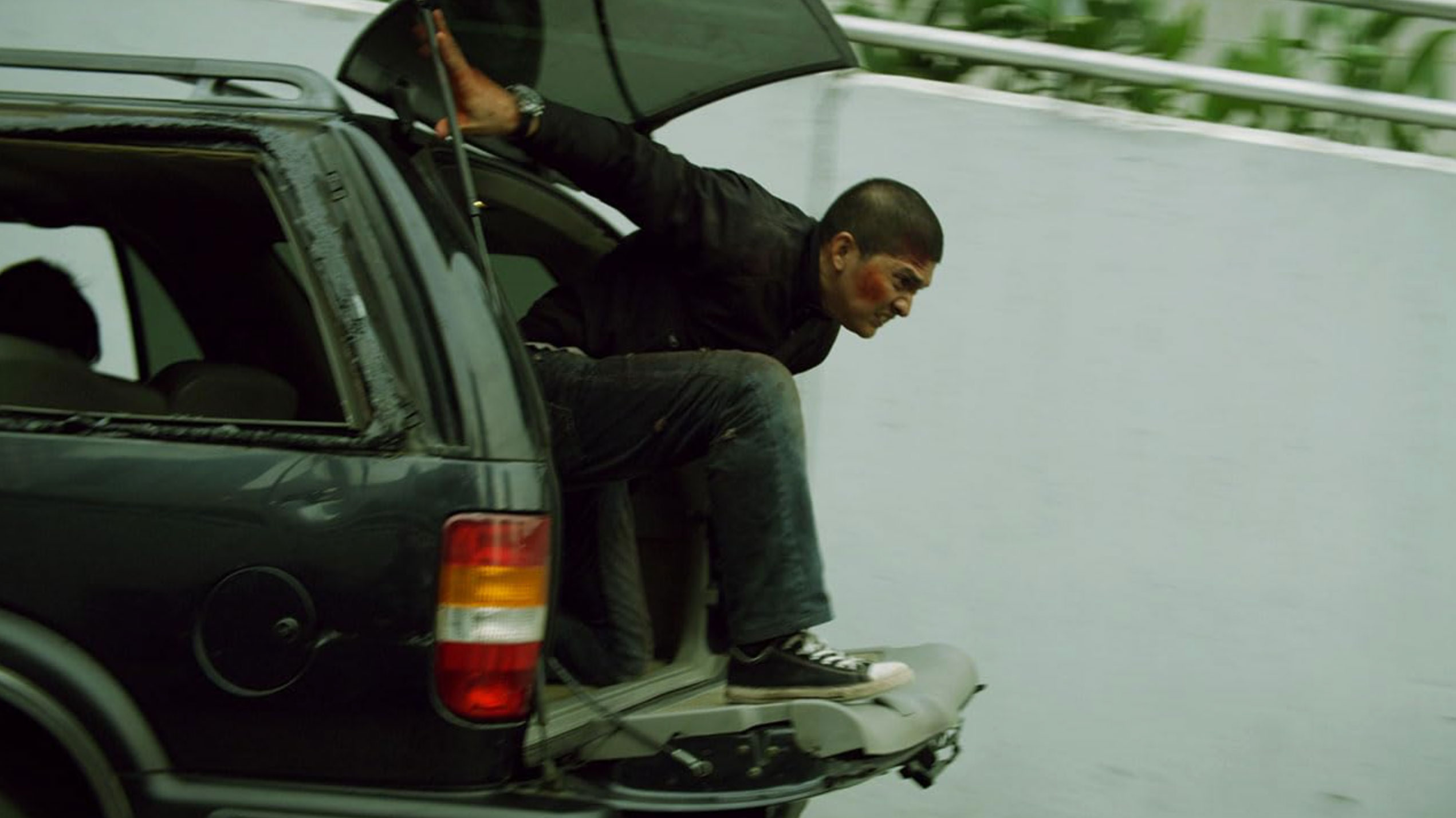
Iko Uwais in 2014’s The Raid 2.
Based on this logic, it may sound like it would be an easy argument to pitch the 2010’s era of Indonesian action cinema as the purveyors of joyless bloodshed. The Gareth Evans directed double whammy of 2011’s The Raid and its 2014 sequel The Raid 2 both raised the bar in terms of how much graphic violence could be shown within the context of the action genre, however there’s a key difference between The Raid franchise and true joyless bloodshed productions. First and most importantly, is that the violence never once overshadows the martial artistry on display, with Iko Uwais, Yayan Ruhian, Joe Taslim, and Cecep Arif Rahman’s devastating displays of silat being the primary reason for anyone to clock in. With The Raid and its sequel the violence compliments the martial artistry, it’s not there to compensate for a lack of it.
Secondly the main character of Rama, played by Iko Uwais, has a family, with his wife, kid, and brother all playing a role in how he navigates the situations he finds himself in. This alone makes The Raid movies closer to heroic bloodshed thematically. Sure, in the latter half of the 2010’s the Mo Brothers would take the mixture of silat and violence to new levels with 2016’s Headshot and 2018’s The Night Comes for Us (and it would be remiss not to mention 2024’s The Shadow Strays), however their background in horror makes these productions more akin to watching a horror flick through a martial arts movie lens. The joy of watching comes precisely from witnessing the ridiculously over the top gore that’s delivered when filmmakers known for their horror output decide to tackle the action genre.
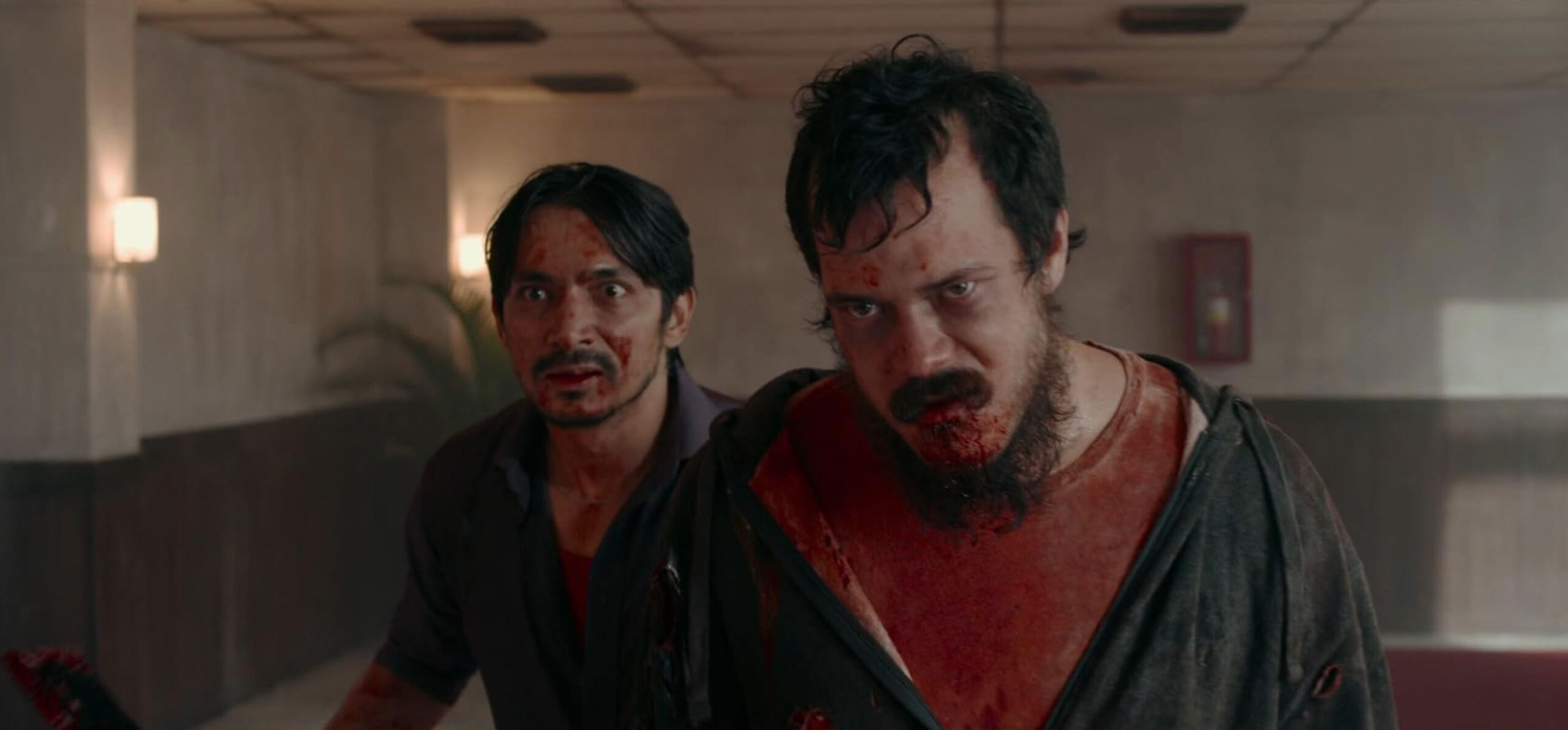
Abimana Aryasatya and Zack Lee in 2028’s The Night Comes for Us.
Perhaps it’s only the perspective of an action movie fan whose origins can be traced back to Hong Kong action cinema during the 1970’s, 1980’s, and 1990’s, however I don’t feel like its only nostalgia talking (and I started watching HK action in the late 90’s) when I say that the action movies then were more fun. Not every bad guy needed to be dispatched in the most violent way imaginable, it wasn’t seen as being inferior if you mixed action and comedy together, and the concept of taking out adversaries in as poker faced efficient manner as possible was yet to be introduced. You could watch a ten-minute fight scene knowing it didn’t bare a semblance of truth to reality and still find your adrenaline pumping, and it’s for this reason why I’d still choose to watch a Hong Kong classic versus a guy decked out in a black suit shooting 5 people in the face within 3 seconds.
So have there been any Hollywood productions in the last 10 years that haven’t opted for the joyless bloodshed approach when it comes to the action genre? While the original Expendables trilogy concluded with the third instalment in 2014, the same year John Wick was released, Sylvester Stallone and the gang did return in 2023 for a 4th outing that kept to the recipe of wisecracking and 80’s style explosive action. Unfortunately it was terrible. Perhaps then the last holdout of a franchise (with a small caveat: I’m not going to touch on the MCU or DCU) that proved action didn’t need to be such a poker faced affair is the Mission: Impossible franchise, of which the last 4 entries (Rogue Nation, Fallout, Dead Reckoning Part One, and The Final Reckoning) all landed in a post-John Wick world, delivering large scale stunts and laced through with a welcome sense of humor.
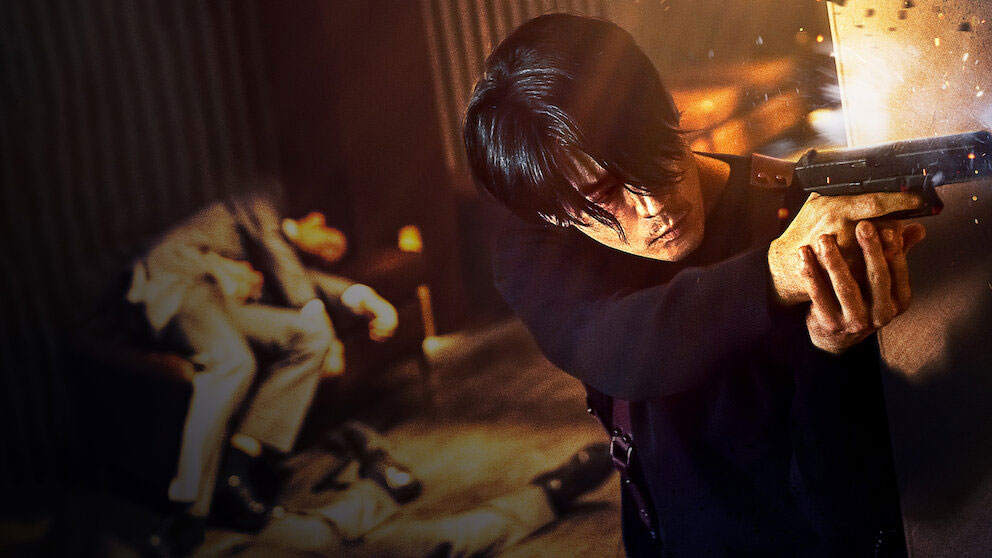
Jang Hyuk in 2022’s The Killer: A Girl Who Deserves to Die.
But these feel like the exceptions more than the rule, and in 2027 another John Wick spin-off will land in the form of Caine, a Donnie Yen vehicle that’ll effectively bridge the action talents of Hollywood and Hong Kong. Indeed Asian cinema has been just as influenced by the concept of joyless bloodshed, with the likes of Korea’s Spiritwalker and The Killer: A Girl Who Deserves to Die both being classic examples. In the case of Korea specifically the approach has even bled into its TV series output, with So Ji-sub practically becoming the poster boy for joyless bloodshed thanks to his turns in Mercy for None and Agent Kim Reactivated. As an ironic sidenote, I’ve always referenced the So Ji-sub starring 2012 movie A Company Man as being the inspiration for the direction the John Wick franchise would head in, with the story of a hitman who works for an agency that’s essentially treated like any other white-collar job.
However overall in Asia there seems to be more of a balance when it comes to the action genre. In Japan for every joyless bloodshed production like Enju, you have a series like Baby Assassins, and similar in Hong Kong for every The Furious, you have a movie like Walled In: Twilight of the Warriors. What can’t be denied though, is that next time an action movie hits, we shouldn’t be too surprised if it involves a poker-faced protagonist dispatching the bad guys in as shockingly violent manner as possible, and that as an audience, we should be satisfied that that’s enough. At least in my case, over the past couple of years I’ve come to accept the fact that it’s not, with the rise of joyless bloodshed feeling increasingly like exactly that – joyless.
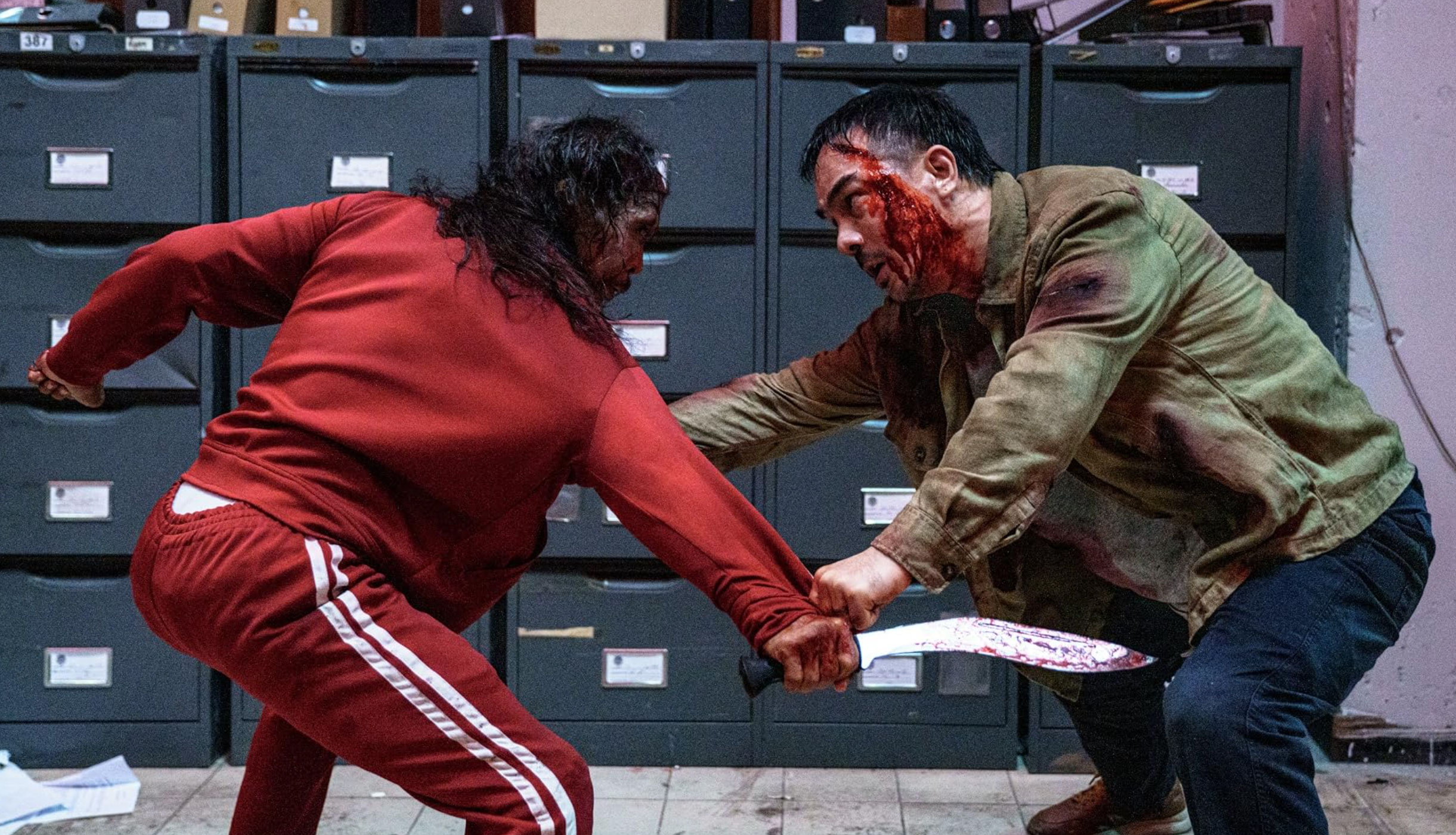
Yayan Ruhian and Joe Taslim in 2026’s The Furious.
Thankfully there are plenty of remedies out there. Give me Tom Cruise scaling the Burj Khalifa, give me Jackie Chan sliding down a pole from the top floor of a shopping mall, give me Keanu Reeves dodging bullets on a skyscraper rooftop. Heck, for that matter give me Jean Claude Van Damme attempting to save the world from exploding counterfeit jeans. Most of all, give me a reminder of a time when action movies where fun, and not just about how many lackeys need to violently meet their demise before a final villain meets theirs even more violently. While it’s true to say there have always been darker action movies out there, it was the John Wick sequels that made that darkness the norm, and by doing so, action movies also lost their ability to be fun. Here’s hoping that one day they find it again.





Do you think the proliferation of this joyless bloodshed genre is because its aimed at a different audience. I know for a fact lurking on different forums theres is a section of the audience that calls bullshit on the movies we love whether that be Jackie Chan or John Woo. The critism levelled is this is bullshit I’ll just pull out a gun and cap everyone.
And this is what John Wick does. Yes there are inventive scenes like the library fight in JW3 but most of the scenes just involve Keanu doiong headshots, rolling on the ground and then doing reloads which mimics the motion of these real life militia gun nutters jerking off. They literally write hundreds of comments about how accurate the reload is. This tactical gunplay boredom is also intrinsically linked to JW and therefore the joyless bloodshed genre.
In this genre we will never get the highs of people throwing guns in slow motion while Van Damme catches in beautiful slomo before blasting away at the bad guys. The movies that I love have a rhthym and are edited in a way to show this. In contrast in JW its usally a medium shot with Keanu doing headshots, rolling around more headshots then the scene just arbitarily ends when theyve run ut of stunt guys to fake CGI kill. Which leads to my next point. This joyless subgenre and its use of CG instead of squibs. From the Wild Bunch to John Woo and all of the Hollywood action movies of the 80s and 0s seeing bad guys get a hole the size of a small watermelon burst throught heir bodies multiple times was so damn satisfying. I don’t know if JW was the first to do CG bullet hits but it probably popularised it.
Nobody is expecting deep ruminations of the human condition like in a Bergman or Fellini but throwing endless monotnous action scenes one after another doesn’t paper over the cracks. Ballerina is the most blatant example of this. Action is most satisying as a result or consequence of story/character and this is where most of these movies totally fail as well.
JW was a response to the shakycam bs that Greengrass popularised and that shakycam aesthetic is still bullshit. But go back to movies like Bourne 2 and 3 and the movie has so much to offer besides the action. In constrast JW 2 and 3 have nothing besides boring action for the most part. At least JW4 tried to humour the Walter Hill cinephiles in us who adore/worship The Warriors.
A different audience yes, but a different genre no – the action genre is still the action genre, it’s just become a lot more clinical (or perhaps tactical is a better expression!) in the last 10 years, largely driven by the JW approach. I feel like in some ways the JW style of efficiency mirrors the swordplay style you’d find in Japanese chambara flicks of old, when it was all about how efficiently an enemy could be struck down with as few a blade strokes as possible. However those movies usually had compelling stories and characters to back them up, with the action serving as exclamation points to a wider narrative, and weren’t just monosyllabic characters executing grim faced headshots for 3 hours.
Part of me does admittedly wonder if the continuing popularity of the joyless bloodshed genre is partly driven by the fact it’s positioned as the antithesis to the omnipresent superhero genre, which I get. Still, give me a dose of PM Entertainment any day of the week over the latest CGI assisted infliction of bodily trauma.
Maybe you’re right. Superhero movies went woke according to some people so you have these blank slate charismaless heroes you can project you self onto hence the minimal dialogue and lack of story/character cos that shit is woke…apparently.
But these JW tactical joyless movies can’t hold a candle to what Robert Downey Jnr did during the Phase 1-3 of the MCU. I love you 3000 hits harder than 3 hours of Keanu headshots.
“Joyless Bloodshed” must depend on the individual watching. For me, I’m getting plenty of joy from modern action films with poker faced protagonists dispatching henchmen in increasingly violent ways. With the John Wick franchise, my joy waned with Part 4 due to its lack of creativity after Osaka and the needlessly bloated runtime. With Ballerina, it was back to being fast paced, creative, and giving me my fix.
It’s good that you notice that the Raid films aren’t violent for the sake of being violent, because many people don’t. Those people are so fixated on the idea of the violence overshadowing the martial arts, that they equate the films to porn, which shows how closed-minded they are. They would blindly throw around the term “Joyless Bloodshed.”
For me, an action film is only truly joyless if I don’t care about the protagonist or the story that leads up to the action. I’m sure lots of people have their own idea of what makes poker faced protagonists likable or unlikable, but one of the great things about film (as you know) is that there’s so much to choose from that appeals to different tastes.
I suppose that the best kills should be reserved for the openings and finales of these films, but I was okay with how Ballerina mixed it up. The axe scene should have been reserved for the main villain, but I’m still one of the fools in the audience going “Wooo! Yeah!” when seeing it happen in the theatre.
Thank you for this. I also personally just prefer kung fu, TKD, karate, etc. vs. the close-quarter combat we see in The Raid and the other similarly-styled Indonesian films. I appreciate that many of the leads are well-trained martial artists, but I prefer kicks. The more acrobatic the better. That’s the main reason I keep coming back to 80’s/90’s HK.
The CGI blood looks terrible. Ditto for the over the top bone crunching side effects every time someone lands something that looks even a little like a joint lock or a choke. The Furious was especially egregious with this. And the CGI was HORRIBLE. Different strokes for different folks, but I really didn’t enjoy that movie. Joey Iwanaga was my favorite part, and clearly has some legit skill, but his choreography was also confined to close quarters instead of widening the shots and the staging and showcasing his athleticism
Lastly, a lot of the monotony with JW (for me) is the runtime. 2.5 hours is totally unnecessary. There is some impressively executed choreography, even though it’s not my cup of tea, but it would be much more impactful if there was just less of it. 90 minutes is more than enough to tell a morally serious story with interesting characters and have 3 or 4 amazing fight scenes.
I love kicking in movies, but I do love close quarters combat as well. We need a balance of the styles. As much as I appreciate more film makers embracing close quarters combat, they need to be careful that it doesn’t get stale.
The Furious did have a lot of that, but I thought the bone crunching sounds were only reserved for the worst impact hits. I don’t care for CGI blood and gore either, but I prefer that to CGI stunt doubling, so I’m willing to overlook it from time to time.
The Furious was fine for what it was – a straight to streaming Mainland chinese action thriller. The main issue with this movie and all movies that are directed by former 2nd unit / action directors – they have no clue on how to tell an interesting story. I’ll include Donnie in that list. When he’s taken full control of a movie the result are underwhelming/disappointing. Sakra and The Prosecutor should have been so much better. I dont want to bring it up again but some member of the John Wick family directed Love Hurts and it was so bad it killed off all of the goodwill Short Round got from Everything Everwhere and Loki Season 2
Good points. I realize it may sound contradictory for me to refer to The Furious as an example of “joyless bloodshed” when I highlighted the likes of The Raid flicks as being examples of “violence never overshadowing the martial artistry on display”.
However for me it still fits the bill since, based on joyless bloodshed being action “which is defined not by the emotional content or relevance of violence within a scene, but rather solely on the fact of how creatively shocking the violence within a scene can be”. Every fight went on a little too long, and sometimes got lost in the cleverness of the choreography, to the point I started to feel the purpose of the fights was more to be in awe of their execution than having an emotional investment in how they’d help Xie Miao be reunited with his daughter.
Bill Kong is a seasoned producer with many S-tier movies to his filmography. He should have been more hands on with this movie and said to the director.
“Mate we need less fighting and we need to beef up the setup or else redditors and other assholes are gonna call this an iqiyi movie.”
How can we get joyless bloodshed trending. It needs to be next to heroic bloodshed in the HK action cinema directory.
Heroic bloodshed – Mark Gor tears up while eating chicken and rice when his bestie finds out he is poor and a cripple
Joyless Bloodshed – emotional beats N/A
I think one of the biggest problems with action movies today is that we still don’t have enough genuinely strong female leads. That’s what the article should have focused on because likewhatothers say, it is a matter of opinion. When we finally do get one, Hollywood often casts another pretty face who has little or no martial arts experience instead of someone who actually understands the genre and the culture.
Rothrock is nice and all, but she’s just another culture stealing white girl who wouldn’t have a career if it wasn’t for my culture. Same with De Armas. But this is what we get when white America votes for Trump.
Michelle Yeoh used to be super fun but now she has bowed down to white hollywood. She is old too.
Hope was the perfect film because Jung Ho-yeon was a real woman with real culture and real abilities, evident in behind the scenes. I do like what Maria Tran is doing but the problem with her is she puts her husband in everything she does lately.
You sound like a dumb ABC femcel version of Jordan Petersen with a sprinkling of self-loathing
Actually, Rothrock was and is a legit martial artist who impressed H.K. filmmaker/martial artist/stuntman/actor Sammo Hung way back in the mid-’80s enough to put her into some films he made—-which is why she became, for a brief time, one of the very few white female martial arts action stars in H.K. films. Meaning, she was invited to come there, and she earned her way into the H.K movie business, too—she didn’t “steal” from anyone’s culture. I get where you’re coming from, but that wasn’t the case with her.
As for Michelle Yeoh, who’s been one of my favorite kf stars for years now, the truth is, Hollywood didn’t know what to do with her, and never found her in any parts worth a damn because she was Asian and a woman—-which is why she wound up going back to Hong Kong and made the classic Crouching Tiger, Hidden Dragon. She’s also a good actress, and she made a major comeback in Everything Everywhere At Once (an indie film, not a Hollywood film, btw.) In fact she’s actually done very few Hollywood films—you can count the actual ones she’s done on literally one hand, which is only about four of them—including the two Wicked films. And so what if she’s older? Both Jackie Chan and Sammo Hung are older than her, and they’re still doing kf movies to this day.
Both Rothrock and Yeoh have made major contributions to the kf action movie genre, and they deserve more props than you’re given them for that. I quit looking for good female action leads in Hollywood films a long time ago—-that’s why I watch kung fu films, where I’ll see a hell of a lot more of them in there.
100% agree with this article, though I do understand that people have different tastes. But there’s no reason why the John Wick films can’t have the creative violence they have while still maintaining some kind of emotional content or relevance to the violence. This would make them so much better! This is why The Deer Hunter, which has only a few minutes of violence, is respected by some of those acclaimed Hong Kong action directors, such as Sammo Hung and John Woo. It’s largely a drama, but that one Russian roulette scene, not to mention the escape scene, is a standout experience.
Not once while watching The Furious or any John Wick movie have I felt a sense of danger for the characters I’m watching, not even the children. Even in a popcorn flick like Hope, where people are getting punched and kicked around 50 feet into the air, I can still feel an emotional attachment to the danger and threats those characters face.
Heck, there are even some Bruceploitation films that give me a sense of emotional attachment, rather than feeling like a circus stunt show.
But what do you expect? We’re at that stage where the stuntman or action choreographer turned filmmaker is a ticket selling fad. More power to them.
It’ll be interesting to see which route CAIN takes, but given that it’s being made to follow the formula of Lionsgate’s cash cow, we’ll probably be getting another Ballerina.
All I need to care about the protagonists is if they’re likable or interesting, and if the villains all deserve what they’re going to get. While it’s not as deep an emotional investment as in The Killer or A Bittersweet Life, I still have an investment with the first 3 John Wicks and The Furious. Naturally, there’s always going to be room for improvement.
You may be the first person ever to say that some Bruceploitation films don’t feel like a circus stunt show since that’s what they all were intended to be. You should be famous.
Caine may be following in the footsteps of the previous films in the franchise, but I’m sure there will be some difference if Donnie Yen was given free reign. If Flash Point wasn’t another SPL, Caine won’t be another Ballerina. Even if it were, I’ll still buy my ticket on the first day.
After all those Twilight movies with Bella and Edward Lionsgate needed another cash cow franchise and then comes John Wick.Twilight is to supernatural horror what John Wick is to action for me. People who don’t like/understand the genre. As Paul mentions in the article instead of taking Keanu on an emotional rollercoaster in the sequels they doubled down on the ridiculous lore with low chairs and medium to high tables and coins that you can’t even use in a vending machine.The filmmakers even thought they could rinse us even further with that terrible prequel tv show about the hotel. Hell wasn’t Ballerina held back over a year so they could fix it? If you can call a patient with a broken leg going to hospital and then coming out with a broken leg, a broken wrist and then partial blindness, then sure thats a fix.
Well, I certainly don’t see that connection. John Wick being made for people who don’t understand or appreciate the genre is a far cry from what I experienced. The Wick is Pain documentary really got deep into what made the earlier films good, and gave me more of an appreciation for the film makers.
The way kung fu films evolved from being made by martial artists with no film experience to the many variations we have now is really not that dissimilar from how western stunt people are taking the reigns in the action genre. With time, it will evolve as well.
As far as high tables and coins go, that’s just dressing and not what I focus on. JW4 focused too much on it, but I only revisit parts of that movie. Ballerina was solid so I don’t know how the behind the scenes fixings made things worse, especially if I got a ton of well shot and choreographed action there.
The only problem I had with Ballerina was the stupid family plot twist.
I havn’t seen the documentary and they probably are good guys but to spend 3 movies on boring world building and fetch quests suggests they know a stunt or two but as filmmakers theyre’s still some learning to do. I’d argue the lore is more than set dressing. There’s literally nothing in the sequels except world building and headshots.
Maybe its a me thing but the action is so repetitive and boring. Yes theres the occasional exciting one like the library in part 3 but most of the time its just Keanu doing headshots, rolling around, more headshots, clearing the room then moving onto the next room. I probably like Part 4 more than others not cos its a great film but I did chuckle a bit when they did the homage /ripped off The Warriors for the second half of the movie.
And yeah Ballerina. You can see the meme in your head.
I’m your long lost sister
2 seconds later
I’m dead
I’m on team Andrew with regards to the JW franchise, which I note doesn’t get a lot of love around these parts. To say it’s made by people who don’t like or understand the action genre and the action is just “headshots & 2 rolls in the ground” is a tad reductive. So I don’t ramble all over the place, here’s KayKay’s Top 5 reasons why the JW movies kick all kinds of ass
1) JW revitalized action cinema on the big screen.
Let’s face it, when JW came along, the glory of days of action cinema where Uzi strapped musclemen strode across a carnage strewn landscape was long gone. And so called successors haven’t measured up. Arnie may have passed the baton to Dwayne Johnson in THE RUNDOWN, but The Rock has proven time and again he isn’t a movie star, let alone an action one, more a facsimile of one, a solid supporting character but has all the charisma of a piece of abandoned furniture as lead. Stalwarts like Jason Statham, Liam Neeson and Gerard Butler still put out action fare that get a cinema release, bless them, but their efforts are pretty hit and miss depending on the budget. Stallone attempted a revitalization with THE EXPENDABLES franchise, but I’ve ranted enough elsewhere on how badly they fumbled the ball on that. Outside of that, what passed for action was mainly found in Superhero IPs, heavily augmented by CGIs and extremely obliging stunt doubles. Action beloved of true fans of the genre and crafted by true lovers of it like Scott Adkins and Michael Jai White working alongside directors like Isaac Florentine and Jesse V Johnson were still locked up in DTV dungeons.
Even John Hyams’ terrific rejuvenation of the Universal Soldier franchise via REGENERATION & DAY OF RECKONING , a duology of expertly crafted dystopian sci-fi which merged action and horror and delivered some of the best hand to hand combat will forever exist, vaguely, in many people’s minds as “some cheap DTV sequels to an old Van Damme/Lundgren movie”, like they were operating at the same levels of SCORPION KING 3: BATTLE FOR REDEMPTION or SCORPION KING 4: QUEST FOR POWER.
Then along comes John Wick, which revitalized big-screen action by returning to the fundamentals: great stunt work, clear visual storytelling, physical performance, and meticulous filmmaking. It spawned it’s own franchise and made such an impact on the cinematic landscape, anytime a new movie slaps a gun and a half decent suit on an assassin character, it gets tagged as “John Wick-like”. Perhaps most importantly, John Wick inspired a broader industry shift. Films such as Nobody, Atomic Blonde, Extraction, Bullet Train, and others embraced clearer action photography, practical stunt work, and performer-driven combat.
2) The John Wick movies are CINEMA
The JW films aren’t just action movies. Beyond choreography, the John Wick films demonstrated that action films could be visually sophisticated. Its neon-drenched cinematography, elegant production design, and stylized world-building elevated the genre from simple spectacle to cinematic art. Every action sequence was designed not only to thrill but also to look beautiful. From rain-soaked city streets to the dazzling interiors of the Continental, from underground raves to elegant Halls Of Mirrors, from sweeping desert vistas to intimate Japanese Gardens, the lighting creates atmosphere, mood, and visual identity. I’m glad I splurged on the blu-rays.
3) The World Building
Your mileage may vary on how much world building you like in your action movies, but for me, it’s what sets the JW films apart.
The High Table, the Adjudicators, the Bowery King’s network, and the various Continental branches across the globe all suggest a vast civilization operating according to its own centuries-old code, not to mention the retro charm of it’s comms network still utilizing old school switchboards, message chutes and blackboards, it’s unique currency such as the gold coins and markers, for me they add some amazing texture to what would otherwise be one of many other “Assassin flicks”
4) Veterans of DTV fare got a chance to be seen on the big screen.
The JW movies gave DTV veterans like Daniel Bernhardt, Mark Dacascos, Scott Adkins and Marko Zaror key roles, as opposed to Henchman#3 who gets knocked out by some has-been which is how most mainstream fare utilize them.
5) The JW movies are morality tales
The 1st JW could broadly be viewed as a Revenge Tale( Kill My Dog, I obliterate You) but taken as a whole, the 4 films represent for me, a surprisingly powerful morality tale disguised as a stylish action spectacle. Beneath the gunfights, assassins, and elaborate world-building lies a story about consequences, loyalty, grief, and the price of one’s choices.
At its core, John Wick is a man trying to escape a life of violence. He leaves the criminal underworld behind because of the love his wife brought into his life. Her death leaves him devastated, but the puppy she leaves him represents hope, healing, and a path towards reclaiming his humanity. When that final connection to his wife is destroyed, John chooses revenge. That choice sets the entire saga in motion.
The films repeatedly emphasise a central moral lesson: violence creates endless consequences. Every person John kills leaves friends, allies, employers, and debts behind. Each attempt to solve a problem through force creates even greater problems. What begins as a personal vendetta spirals into a conflict that engulfs an entire hidden society. The story becomes a cautionary tale about how difficult it is to escape the repercussions of past actions.
The world itself reinforces this theme. Assassins live according to strict codes of honor, obligation, and reciprocity. Blood markers must be honored. Debts must be paid. Rules cannot be casually ignored. The entire underworld operates on the principle that actions carry consequences. Even John, arguably the most capable figure in that universe, cannot simply break the rules and walk away without paying a price.
The films also explore the tension between vengeance and redemption. John continually seeks peace, yet repeatedly resorts to violence to achieve it. This contradiction traps him in a cycle from which there is no easy escape. The more he fights for freedom, the more deeply entangled he becomes in the world he is trying to leave behind. Like many classical tragic heroes, his greatest strength becomes his greatest curse.
In this sense, John Wick resembles an ancient myth or Greek tragedy more than a conventional action film. Its message is not that revenge is glorious. Rather, it suggests that revenge is consuming, that violence perpetuates itself, and that even the strongest individual cannot escape the moral weight of his choices.
In that sense alone, I maintain the JW movies definitely have some spiritual ties to the Golden Age of “Heroic Bloodshed”
Thanks for the friendly nudge. We may not agree on everything, but you present your opinions in a respectful manner.
People I know who didn’t watch many action films before were encouraged to check out more of them after John Wick. Whenever they bring the movies up with me, I always tell them “If you like that, you should look at these titles…”
The best thing the franchise did was get movie-goers to appreciate the genre more, give action junkies their fix, and encourage other film makers to evolve the formula and be more creative.
Before the so-called revitalization of action films, other people have carelessly thrown around the term “joyless bloodshed” or some variation of that phrase, and they’re people who can’t see anything beyond people getting shot and beaten up.
It’s a novel idea for that phrase to be used constructively, but other movie watchers may continue to dismissively use it for any action films
i’d rather blame the Taken films than John Wick.
The Taken sequels can be blamed for a lot of things, but not joyless bloodshed!
probably it’s just me, but i can’t picture anything more joyless than liam neeson’s face.
Any joy that face takes away, that amazing “whisky and cigar” baritone gives it back in spades. That voice could read the fucking phone book and make it sound amazing!
As bad as the taken sequels were, the first Taken, The Grey and all of the B-movies Neeson did with Jaume Collet Serra punch well above thier weight. They are elevated and beyond critism! The Commuter, Run All Night, Unknown and especially Non Stop, because he managed to drag Juilanne Moore into the sillness, will be re-evluated 20 years from now as peak 2010s action thrillers.
And BTW, a great article Paul! While I don’t necessarily agree with all your points, you make a stand and articulate your points clearly which makes the essay itself a pleasure to read. Your Enter The Dragon takedown is a still a favorite of mine and a few friends, one of whom remarked..”This guy has no issues slaughtering Sacred Cows and that takes some balls!” 🙂
Cheers KayKay, really enjoyed reading your take on the JW franchise as well, the world would be a boring place if we all liked the same stuff. Ha ha, the classic Enter the Dragon feature of 2018, I should start prepping now for its 10 year anniversary in 2028! Never realized that one would be such a big deal, but since then it’s been the subject of a YouTube video, and comments are still being posted on it even this year! (Of course, if this was a JW movie, I would simply have replied to your comment with “Yeah” 😛 )