Timu(r) Genghis Khan? Watch an action-packed clip from Well Go USA’s ‘Rise of the Conqueror’ now available on Digital

"Rise of the Conqueror" Poster

“Rise of the Conqueror” Poster

Now on Digital from Well Go USA is Rise of the Conqueror, an upcoming period actioner from Jacob Schwarz (co-director of Artifact War).

Filmed on the breathtaking steppes of Uzbekistan and Kazakhstan, this Uzbekistan-United States-Kazakhstan produced film is a historical thriller with a global cast and epic scale.

Rise of the Conqueror tells the story of Timur Barlas, a battle-scarred ruler who brought order to a fractured land.

The film stars Christian Mortensen (The Candidate), Mahesh Jadu (Marco Polo), Yulduz Rajabova (Scorpion) and Joshua Jo (The Full Monty series).

Stunt and action Continue reading

Posted in News |

He’s a real nowhere man! ‘Raid’ star Joe Taslim to team up with ‘Furious’ director for ‘The Man From Nowhere’ remake?

Noted action director Tanigaki Kenji (Raging Fire, Enter the Fat Dragon) is in talks to helm an Indonesian remake of the 2010 Korean box office hit The Man From Nowhere. If Kenji accepts, it will reunite the filmmaker with his Furious star Joe Taslim (The Raid, The Night Comes for Us), who has reportedly signed on.

This Indonesian The Man From Nowhere remake is one of the many films being produced by Asia Media Alliance Group and Jakarta-based Nation Continue reading

Posted in News |

La femme RAID? Livi Ciananta tears through gangsters in the Final Trailer for the Iko Uwais-produced ‘Ikatan Darah’

"Ikatan Dara" Poster

“Ikatan Dara” Poster

Indonesian director Sidharta Tata (Quarantine Tales)  – the filmmaker behind the 2024 horror film Soul Reaper (released by Well Go USA earlier this year) – is back with Ikatan Darah (aka Blood Bond), a martial arts actioner spearheaded by Raid star Iko Uwais’ film company, Uwais Pictures.

In the film, a former martial arts athlete must face a network of loan sharks to save her younger brother, who is trapped in online gambling debt and risking their family’s safety.

Ikatan Darah stars Livi Ciananta (Bonnie), Derby Romero (Cult), Ismi Melinda (Wira), T. Rifnu Wikana (Night Bus), Abdurrahman Arif (Impetigore), Rama Ramadhan (stuntman who worked on The Raid) and Continue reading

Posted in News, Top 4 Featured |

Marlowe | Blu-ray (Arrow)

On June 7, 2026, Arrow Video is releasing the Blu-ray (Region A/B) for 1969’s Marlowe. Following in the footsteps of Dick Powell (Murder, My Sweet) and Humphrey Bogart (The Big Sleep), James Garner (The Great Escape) brought iconic private investigator Philip Marlowe into the Age of Aquarius in this 1969 neo-noir based on Raymond Chandler’s classic novel The Little Sister.

When Orfamay Quest hires Philip Marlowe to find her brother, it seems like just another missing persons case. But soon enough Marlowe’s investigation Continue reading

Posted in DVD/Blu-ray New Releases, Martial Arts Titles, News, Other Notable Titles | Tagged |

Deal on Fire! Half a Loaf of Kung Fu | Blu-ray | Only $14.99 – Expires soon!

Half a Loaf of Kung Fu | Blu-ray (88 Films)

Half a Loaf of Kung Fu | Blu-ray (88 Films)

Today’s Deal on Fire is the Blu-ray (Region B) for Jackie Chan’s first ever “comedy” kung fu film, Half a Loaf of Kung Fu.

This 1978 oddity comes from director Chan Chi Hwa, who helmed Jackie’s Snake and Crane Arts of Shaolin (1978) and Shaolin Wooden Men (1976).

The film marks the first time Lo Wei’s production company let Jackie have creative control over a project. In fact, Lo Wei thought so highly of Jackie’s artistic vision that he refused to release the film (at least not until 1980, when Jackie was well on his way to become a megastar).

Critics and fans alike have bashed the film for its silliness, but nobody Continue reading

Posted in Deals on Fire!, News |

O impacto da tecnologia no futuro dos jogos de azar

No espaço digital brasileiro, o jogo não é mais percebido como uma forma isolada de entretenimento, mas antes como parte de um ambiente tecnológico e cultural mais amplo. Então, a pergunta “Qual o significado da música é o Brazino?” se encaixa naturalmente na discussão sobre como a cultura popular, a tecnologia e o jogo estão interligados. Plataformas modernas, dispositivos móveis e algoritmos estão mudando não somente o formato dos jogos, como também o próprio significado da participação, transformando o jogo de um evento único em um elemento estável do lazer digital, intimamente ligado às emoções, hábitos e vida cotidiana dos jogadores brasileiros.

Digitalização e a mudança no formato da participação

Uma das principais mudanças foi a imersão completa do jogo no ambiente digital. Plataformas online e aplicativos móveis removeram as restrições geográficas e de tempo, tornando a participação disponível praticamente a qualquer momento. O jogo não exige mais um espaço separado ou preparação, ele está integrado ao ritmo digital familiar do usuário.

Para o público brasileiro, onde os smartphones são o principal meio de acesso à internet, isso significa uma mudança radical nos padrões de comportamento. As sessões de jogos estão se tornando mais curtas, porém mais regulares, e o próprio processo está se tornando mais flexível e adaptável às tarefas diárias e ao lazer.

Inteligência artificial e experiência personalizada

Cada vez mais a inteligência artificial está desempenhando um papel importante na definição do futuro dos jogos de azar. Algoritmos analisam o comportamento do usuário, suas preferências e estilos de interação para adaptar o conteúdo e a mecânica a cada indivíduo, isso resulta em uma experiência de jogo personalizada. Os jogadores sentem que a plataforma “entende” suas expectativas e oferece um ritmo, formato e apresentação visual adequados. Essa abordagem reduz a sensação de caos e torna a participação mais confortável, especialmente para um público amplo com diferentes níveis de experiência.

Tecnologias em tempo real e envolvimento emocional

O desenvolvimento de tecnologias em tempo real aprimora o aspecto emocional dos jogos de azar. Atualizações instantâneas, eventos dinâmicos e reações visuais criam a sensação de um processo ao vivo, no qual cada ação possui uma resposta imediata.

Isso muda a percepção dos jogos de azar fazendo com que eles se tornem menos estáticos e mais orientados a eventos. O usuário não se envolve somente com o resultado, como também com o processo de antecipação, tensão e resolução, o que aprimora o componente emocional e mantém a atenção.

Interação social, segurança e o ecossistema tecnológico do futuro dos jogos de azar

Cada vez mais o futuro dos jogos de azar está ligado ao desenvolvimento de recursos sociais e ao aumento da confiança no ambiente digital. Plataformas modernas estão implementando ativamente chats, placares de líderes, torneios e atividades colaborativas, transformando a participação individual em uma experiência coletiva. Na cultura brasileira, onde emoções e experiências compartilhadas são especialmente valorizadas, esse formato faz dos jogos de azar parte do lazer social. Discutir resultados, comparar conquistas e participar de eventos compartilhados aumenta o senso de pertencimento e transforma os jogos em uma forma de interação coletiva.

Ao mesmo tempo, a tecnologia desempenha um papel fundamental na garantia da segurança e da estabilidade. Sistemas de segurança modernos, monitoramento automático e ferramentas analíticas ajudam a identificar anomalias, proteger contas e manter a transparência de todos os processos. Para os jogadores, isso significa menos ansiedade e mais confiança, pois, quando a plataforma opera de forma previsível e tranquila, os jogos de azar são percebidos não como uma atividade arriscada, mas antes como um serviço digital controlado, comparável a outras plataformas online.

Quando analisamos as principais tendências tecnológicas que irão moldar o futuro dos jogos de azar, podemos identificar os seguintes fatores:

  • Digitalização profunda e foco no acesso móvel;
  • O uso de inteligência artificial para personalizar a experiência;
  • Tecnologias em tempo real e eventos de jogo dinâmicos;
  • Desenvolvimento de formatos de interação social e colaborativa;
  • Fortalecimento dos sistemas de segurança e da análise de dados;
  • A integração do jogo no ambiente digital e cultural em geral.

Todos esses elementos trabalham juntos para formar um ecossistema unificado no qual o jogo se torna mais estruturado, compreensível e adaptado às expectativas dos jogadores modernos.

A tecnologia está mudando não apenas a forma, mas também o significado do jogo. Hoje, não se trata mais simplesmente da esperança de ganhar, mas antes de uma forma de vivenciar emoções, um elemento da cultura digital e parte do lazer cotidiano. O jogo se torna menos espontâneo e mais consciente, integrado aos padrões familiares da vida online.

Resultados e perspectivas

A tendência que observamos indica que a tecnologia se tornará um fator determinante no futuro dos jogos de azar, alterando não apenas a mecânica e as interfaces, mas também a atitude dos jogadores em relação a essa forma de entretenimento. No contexto brasileiro, a digitalização, a personalização, a interação social e a segurança estão transformando os jogos de azar em uma atividade de lazer mais previsível, emocionalmente envolvente e culturalmente integrada. Essa abordagem permite que os jogos de azar evoluam junto com a sociedade, se mantendo relevantes e compreensíveis em um mundo digital em rápida transformação.

Posted in News |

Man vs. Machine: Who wins at poker in 2026?

The old story still works

The man-versus-machine story still has life in it because it gets to something basic. We like watching a human being go up against something colder, faster, and seemingly more precise than they are. It works in science fiction, in action films, in sport, and now, increasingly, in digital competition. The machine does not panic. It does not get tiring. It does not doubt itself. The human does all of those things, and that is exactly what makes the contest interesting.

In 2026, one of the stranger and more revealing places to watch that fight unfold is poker. At first that sounds like a mismatch. Poker still carries a very old image with it: cards, chips, faces around a table, somebody trying not to give too much away. But underneath that familiar picture, it has become one of the clearest stages for the wider argument about human judgment and machine logic. It is a game built on incomplete information, pressure, timing, and the ability to make decisions while never knowing quite enough. That makes it a very good place to ask a very modern question: when the machine keeps getting better, what exactly is left for the human?

What humans still do well

The answer starts with the part of poker that does not fit neatly into numbers. A strong human player does not only calculate odds. They read the atmosphere. They notice when somebody’s timing changes. They pick up on tension, fake confidence, hesitation, frustration, all the little things that sit around a hand rather than inside it. Humans are messy, but sometimes that messiness is an advantage. People improvise. They react to the room. They make instinctive adjustments before they could ever explain them properly.

That matters in poker because the game is not just technical. It is social. A table has a mood. It has rhythm. Some players shrink under pressure, others become too aggressive, others try to bluff their way out of discomfort and end up giving themselves away. Human players can feel that shift. They can lean into it. They can create it.

That is the case for the human side. Not some sentimental “man will always beat the machine” argument, but a real one: people are still harder to fully model than we like to admit. A machine may process more, but a human can still make a strange, timely, unpredictable decision that changes the whole shape of a table.

What the machine does better

But there is no point pretending the machine does not have serious advantages. It does not tilt. It does not get emotionally attached to bad outcomes. It does not lose focus because it is tired, annoyed, overconfident, or rattled by what just happened five minutes ago. It works through patterns relentlessly, and it keeps doing so without the little mental slippages that make human performance so unreliable.

That alone would be enough to make it formidable. But in poker, it goes further than that. The machine is not just calmer. It is more consistent. It can hold a strategic line for longer than most people can. It can process vast amounts of information without needing a break, without needing reassurance, and without slipping into self-doubt. That is what makes the contest so tense now. The machine is not simply powerful in the abstract. It is powerful in exactly the places where human players often fail themselves.

The real clash is not as simple as instinct versus math

It is tempting to reduce the whole thing to instinct versus calculation, but that is a little too neat. Poker is not chess. It is not a game where everything is visible and the stronger analytical system simply crushes the weaker one. Poker stays interesting because information is hidden, psychology matters, and uncertainty never leaves the room. The math matters enormously, but so does the fact that people are still sitting there trying to interpret each other.

That is why the machine-versus-human question in poker remains alive in a way it does not in every competitive environment. Machines dominate clean systems very quickly. Poker is less clean than it looks. There is still enough ambiguity in it, enough pressure, enough room for misdirection and discomfort, that the human contribution does not disappear. At least not yet.

The machine wins on consistency, structure, and precision. The human still wins in those strange live moments where context changes quickly, emotions distort behaviour, and the right response is not obvious even if the numbers are good. That is a narrower edge than it used to be, but it is still an edge.

Why 2026 feels different

This is where the current moment starts to matter. The battle is not new. People have been worrying about bots and machine-assisted decision-making for years. What feels different now is the level of sophistication on both sides. The machine is not only better at playing. It is better at blending in. It can mimic timing, vary pace, and behave in ways that look much less obviously artificial than older forms of automation.

That changes the tone of the whole conversation. The question is no longer simply whether machines are strong. It is whether digital environments can still tell, with confidence, who is actually doing the thinking. That is part of why conversations around online poker feel bigger now than the game itself. Poker has become one of the clearest testing grounds for a much wider issue: how digital systems preserve trust when automated intelligence is good enough to hide inside human spaces.

And that is why 2026 feels like a threshold year. Not because everything changes overnight, but because it is getting harder to treat this as some side issue at the edge of the system.

What the future probably looks like

The future is unlikely to deliver one clean winner. It is much easier to imagine a messier outcome. In one version, machine-assisted environments become so sophisticated that human-only competition turns into something niche, maybe even premium. In another, people increasingly train and compete alongside AI tools until the line between human judgment and machine-assisted judgment becomes hard to separate. In a third, platforms split into different types of spaces altogether: some built around verified human play, others more openly shaped by automation and analysis.

All of those futures feel plausible. They can probably all exist at once. What feels less plausible is the old fantasy that one side simply ends the contest for good. Humans adapt. Machines improve. Rules change. Detection gets better. New loopholes appear. The edge moves. That is usually how these rivalries work.

So who wins?

That is still the question, and it is still the wrong question if asked too simply. If you mean who is more consistent, the machine has the advantage. If you mean who is better at surviving uncertainty when the emotional temperature changes, humans still have something the machine has not fully swallowed. If you mean who owns the future outright, it is too early for that. For now, the more honest answer is that the fight itself is the story.

The machine keeps getting stronger. The human keeps refusing to become irrelevant. And poker, strangely enough, remains one of the best places to watch that tension play out because it forces both sides into the same uncomfortable space: incomplete information, rising pressure, and the need to act before certainty arrives. That is what keeps it interesting. Not that the battle is over, but that it clearly is not.

Posted in News |

Best Upcoming Horror Movies in 2026

Horror in 2026 is shaping up to be one of the strongest years the genre has seen in a long time. Big names, cult directors, and some genuinely unsettling concepts are all landing within the same twelve months. From internet folklore brought to the big screen to a period werewolf film from one of the most precise directors working today, there’s something here for every kind of horror fan.

Here’s a ranked look at the films worth marking on your calendar, ordered from most anticipated to least.

1. Backrooms (May 31, 2026)

Director: Kane Parsons

If you’ve spent any time in internet horror communities, you already know what Backrooms is. The concept was born on May 12, 2019, on 4chan. Someone described “noclipping” out of reality and falling into a parallel void: endless office rooms, yellow wallpaper, damp carpet, humming fluorescent lights, and nothing else. No exits. No people. Just space that keeps going forever.

From that single post, a full mythology grew. A wiki with numbered levels from the relatively calm Level 0 to genuinely hellish depths. Creatures like Facelings and Hounds. An entire aesthetic built around liminal spaces, places that feel familiar but completely wrong because they’re empty. A school hallway at 3am. A hotel corridor with no guests. A pool with no one in it.

Kane Parsons already explored this world through a web series that earned real traction online. For those tracking every Backrooms movie details — the feature film follows a character named Clark who ends up inside the Backrooms. The plot beyond that is being kept quiet, which is probably the right call, too much explanation would undercut what makes the concept work in the first place.

A still from the Backrooms trailer

Parsons understands this world better than most. He built a following by capturing the specific texture of Backrooms dread, and the trailer suggests he’s carrying that sensibility into something much bigger. Whether a full feature can sustain what worked in short-form content is the real question. But for anyone who’s felt that particular brand of internet horror, this one carries genuine weight.

2. Hokum (May 7, 2026)

Director: Damien McCarthy

Om Bauman writes horror novels. He travels through Ireland to scatter his parents’ ashes — a quiet, personal trip that turns into something else entirely when he checks into a guesthouse and starts realizing the place isn’t empty in the way it should be. Something is there with him. And it’s not leaving.

Damien McCarthy isn’t a household name outside of horror circles, but he made Oddity — a quietly terrifying chamber horror that critics responded to warmly and that found a dedicated audience among genre fans. He knows how to build unease through atmosphere rather than through shock, which makes him a natural fit for a story like this. The Irish countryside, the premise of a horror writer confronting actual horror, the slow creep of realization,  there’s real potential here for something that gets under your skin and stays there long after it’s over.

Adam Scott plays Om Bauman. He’s currently riding considerable goodwill from Severance, where he plays a character permanently caught between two incompatible realities. There’s an interesting parallel in casting him here — a man used to confronting the uncanny, now doing it in a very different genre. He has the kind of face that reads anxiety and quiet disbelief well, which matters enormously in a slow-burn supernatural story where the character is piecing things together in real time.

A still from the Hokum trailer

McCarthy’s script and direction are both his own, which usually signals a clearer creative vision than films built by committee. Hokum doesn’t have the franchise recognition or the star power of some other entries on this list. But among horror fans who follow directors rather than brands, McCarthy’s involvement makes this one genuinely exciting.

3. Evil Dead Burn (July 22, 2026)

Director: Sébastien Vaniček

The Evil Dead franchise has a long and complicated history with continuations and spinoffs, and audience trust in any new entry depends heavily on who’s involved. Here, the answer is reassuring: Sam Raimi is producing. So is Lee Cronin, who directed Evil Dead Rise. And Bruce Campbell is on board too. That’s a meaningful vote of confidence for a director most mainstream audiences don’t know yet.

Sébastien Vaniček is French, and his previous horror work — Infested, a claustrophobic creature feature built around spiders in a Paris apartment block, showed he can generate sustained tension and physical revulsion without leaning on nostalgia or name recognition. Evil Dead Burn is a spinoff and continuation rather than a direct sequel. The specifics of the plot are being kept under wraps, but the framework is familiar: the Necronomicon gets opened, deadites emerge, and people start doing terrible things to each other. What changes is the setting, the characters, and the particular flavor of brutality the new director brings.

A still from the Evil Dead Burn teaser

The Evil Dead franchise at its best is absolutely committed, not just to scares, but to a specific kind of escalating, almost relentless violence that somehow never loses its horror edge. Evil Dead Rise pulled that off with confidence. Whether Vaniček can do the same is the central unknown here.

The fact that Raimi, Cronin, and Campbell all signed on suggests they believe he can handle it. And a July release gives it space to breathe as a summer horror event, a slot that suits the franchise’s go-big-or-go-home energy perfectly.

4. Other Mommy (October 9, 2026)

Director: Rob Savage

A girl named Bela tells her family she’s been talking to something. She calls it the “other mommy.” Her parents assume it’s an imaginary friend — the kind of thing kids invent when they’re processing something they don’t have words for. They dismiss it, rationalize it, wait for her to grow out of it. They’re wrong to.

The film is based on Josh Malerman’s novel House of the Incidents. Malerman wrote Bird Box, which means he has a proven ability to build dread around something you can’t fully see or name. The “other mommy” concept works on a specific register of horror,  the corruption of something that should be safe and comforting. A mother figure that isn’t quite right. Something that knows how to wear a familiar shape. That tends to hit differently than straightforward monster horror, because the wrongness is harder to locate and harder to shake.

Rob Savage directed Host —  a genuinely impressive piece of pandemic-era horror built entirely through video calls, made under severe constraints and still scarier than most big-budget productions from the same period. He also directed The Boogeyman, which worked considerably better than most Stephen King adaptations tend to. He understands how to calibrate fear: when to hold back, when to commit, how much to show and when.

Jessica Chastain plays the lead. She’s one of the stronger dramatic actresses working right now, and she brings a grounded, intelligent presence to whatever she’s in.

October is exactly the right release window for this film. It’s quieter and more psychological than outright aggressive horror.

5. Werwulf (December 25, 2026)

Director: Robert Eggers

Robert Eggers has made four films. The Witch, The Lighthouse, The Northman, and Nosferatu. Every single one of them is the kind of film that critics and audiences keep returning to, but because they’re built with a level of craft and intentionality that’s genuinely rare in any genre. Each one is set inside a specific historical world rendered in obsessive, almost suffocating detail.

Werwulf is set in 13th-century England. Something is moving through the countryside and killing people. The villagers slowly understand they’re not dealing with an ordinary predator. Aaron Taylor-Johnson plays the creature — early behind-the-scenes footage shows him in full practical wolf makeup, covered in blood, and it looks like exactly the kind of image that sticks with you. Eggers has said publicly that this will be his darkest film. Given that The Lighthouse ends with a man driven to complete madness and torn apart by seagulls, that statement carries real weight.

A still from the Werwulf trailer

The werewolf as a horror creature has been seriously underused in recent decades. Most modern takes go action-heavy or lean into CGI spectacle, and in doing so lose the primal, folkloric quality that makes the myth genuinely unsettling in the first place. Eggers works in exactly the opposite direction. He strips things back to the historical and the elemental. A medieval English setting means no rational safety.

Practical effects, period-accurate production design, a director who has never once compromised his vision to make something more accessible — Werwulf has everything it needs to deliver. A Christmas Day release is an unusual choice for the genre, but Eggers has never operated by conventional logic, and the timing actually suits the film’s world: midwinter, shortened days, firelight, and the sense that something old is moving through the dark outside.

The Bottom Line

2026 is a genuinely strong year for horror across almost every register.

Backrooms brings internet folklore to the feature format with a director who built his entire career inside that world and who understands exactly why the concept works. Hokum offers quiet, atmospheric supernatural dread from a filmmaker operating at the top of his game. Evil Dead Burn keeps one of horror’s most committed franchises alive with new blood and a producer lineup that knows what the franchise needs to be. Other Mommy takes a psychologically rich premise, a skilled director, and one of the best actresses working today and aims them at something that should linger. And Werwulf, sitting at the end of the year, like a patient, inevitable thing, could be exactly the kind of horror film people are still arguing about long after the credits roll.

Not every year gives horror fans this much to look forward to. 2026 does.

Posted in News |

JASON LIVES! Watch the Trailer for Jason Statham’s ‘Mutiny’ from ‘Blood Father’ director Jean-François Richet

"Mutiny" Poster

“Mutiny” Poster

Action star Jason Statham (The Meg, The Expendables) teams up with director Jean-François Richet (Blood Father, Mesrine) for Mutiny, an upcoming action-thriller that releases in August from Lionsgate.

After his billionaire industrialist boss is murdered in front of him, Cole Reed (Statham) is set up to take the fall for the crime – leaving him on the run as he works to uncover an international conspiracy.

The film – written by J.P. Davis (Plane) and Lindsay Michel – also stars Annabelle Wallis (The Mummy), Roland Møller (Skyscraper), Ramon Tikaram (Love Rat), Arnas Fedaravičius (The Last Kingdom), Jason Wong (Jarhead 2: Field of Fire) and Continue reading

Posted in News |

Deal on Fire! The Wailing | 4K Ultra HD + Blu-ray | Only $13.53 – Expires soon!

Wailing | 4K Ultra HD (Well Go USA)

Wailing | 4K Ultra HD (Well Go USA)

Today’s Deal on Fire is the Blu-ray for The Wailing, a South Korean thriller directed by Na Hong-jin (The Chaser, The Yellow Sea).

When a series of unexplainable, gruesome murders take place in a rural village, an incompetent cop starts a chaotic investigation. Things get seriously personal when his young daughter is directly affected by this deadly phenomenon. The only suspect is a Japanese hermit who recently relocated from Japan at the very same time slaughters began to happen; and the only clue is a poisonous mushroom which turns up at every crime scene. Are these murders committed by a human being or sparked by a mysterious force of nature?

The Wailing stars Continue reading

Posted in Deals on Fire!, News |

Why the Final Duel Matters More Than the Plot in Martial Arts Cinema

Arguing that the climactic battle has more meaning and relevance than the overarching story of most martial arts movies sounds like a damning assessment of the entire genre. However, prioritizing action over narrative isn’t unique to this cinematic niche. In fact, many mainstream Hollywood franchises take the same approach.

The likes of Mission: Impossible and Fast & Furious choose their big set pieces first, then hang the plot beats around them. The same approach being taken in Asian cinema makes total sense. The question is, why is this the case, and what can we learn from it?

Patience & The Payoff

Martial arts cinema balances long periods of inaction with explosions of violence. The audience needs to be patient to get to that final showdown, or else the impact won’t be the same.

It’s a lot like how you need to put the work in when playing online slots games, holding your nerve in pursuit of that eventual big payout. The spins in between starting a session and winning don’t matter in isolation, but sitting through them builds tension and gives you more of a sense of achievement.

The Standard Story Framework

Another reason the plot of many martial arts movies is secondary to the final duel is the stories themselves. Many use plots that share the same framework. Often, revenge drives things forward. Or, it’s a young hero’s journey from immaturity to experience that’s the basis. Frequently, they’re based on folk tales and well-known figures who are already in the public consciousness.

These long-established, regularly reused plots and characters don’t matter, since they rarely say anything new. Where the filmmakers want to showcase their originality and inventiveness is in the fight choreography and practical effects.

Jackie Chan’s early career is full of these examples. The likes of The Little Tiger of Canton and Drunken Master have boilerplate plots. What made them stand out was their action and Chan’s skill.

Even quirky, higher-brow martial arts films like Takeshi Kitano’s Zatoichi are less about clever plotting and more about putting everything in place for a satisfying climax. The final fight in this 2003 classic might be very brief, but it’s still incredibly memorable.

Engaging the Audience

Cinema can be an efficient medium for telling a story. Still, a lot of time must be spent on establishing characters, filling in backstory, and broader worldbuilding to make us care about what happens. Martial arts movies use their recycled plots as a shortcut to get to this point earlier. Audiences are up to speed automatically, saving a lot of time.

Timing matters because final duels and other set-piece sequences can eat into much of the movie’s total runtime. If you’re going to have your characters going toe to toe for 20 or more minutes, you can’t afford as much room for exposition early on.

So, don’t worry that martial arts cinema isn’t always plot-heavy, and that the emphasis falls on final duels. It’s a strength of the genre, and why we all love it.

Posted in News |

A White comedy? Watch the Trailer for ‘Special Op: Rent-a-Cop’ starring Michael Jai White, Chuck Liddell and Billy Zane

"Special Op: Rent-a-Cop" Promotional Poster

“Special Op: Rent-a-Cop” Promotional Poster

Arriving in April from Indie writer/director William Butler (Furnace) is Special Op: Rent-a-Cop, an upcoming action-comedy starring Michael Jai White (Black Dynamite), Chuck Liddell (Kick-Ass 2) and Billy Zane (Titanic).

In the film, former Special Ops agent Belfry (White) escorts seniors on a Vegas trip, unaware his enemies plan to eliminate him during the journey. When he realizes the danger, a battle of wits ensues to protect the oblivious elderly travelers.

The picture also features Colleen Camp (Game of Death), Jim O’Heir (Bad Times at the El Royale), Dave Sheridan (Ghost World), Ken Foree (Dawn of the Dead) and Jim O’Heir (Middle Man).

🔥 Hot Take: Love the cast, but this looks like total garbage. But at least Michael Continue reading

Posted in News |

Timur (2025) Review

“Timur” Poster

“Timur” Poster

Director: Iko Uwais
Cast: Iko Uwais, Aufa Assagaf, Macho Hungan, Andri Mashadi, Yusuf Mahardika, Yasamin Jasem, Prabowo Subianto, Jimmy Kobogau, Bizael Tanasale
Running Time: 101 min. 

By Z Ravas

It’s surprising that Iko Uwais’ 2025 directorial debut Timur dropped Stateside on VOD this week with little to no fanfare. One might lay the blame on the film’s North American distributor, Cineverse, for not utilizing social media to hype the movie’s release. There should be hype for Timur, right? Iko Uwais’ name is all over this thing, including the pre-credits logos for both his production company Uwais Pictures and his stunt team (Uwais Team, naturally), and I have to think the Indonesian actor still possesses a sizable following in the West. After all, he was the leading man for The Raid and The Raid 2, two movies that helped revive global interest in the martial arts genre and served as many viewers’ introduction to Indonesian cinema.

And guess what: you will think of The Raid early and often while watching Iko Uwais’ Timur. While the storyline here is loosely based on a real life hostage situation that occurred in Indonesia in 1996, the movie might be best described asThe Raid in the jungle.’ To the point that Timur also opens with Iko’s character saying farewell to his wife before departing on a mission…where he engages in combat alongside his fellow unit of black-clad soldiers…and has a secret Continue reading

Posted in All, Indonesian, News, Reviews | Tagged |

Ready to pull the trigger? Watch the Trailer for the martial arts actioner ‘Assassin’ starring veteran Hong Kong actor Ray Lui

"Assassin" Poster

“Assassin” Poster

On April 17, 2026, Film Movement is releasing Assassin, a 2025 martial arts thriller from director Zhou Jiuquin (Crazy Tsunami). 

Shanghai. 1930s. Occupied and on the brink of war. When elite fighter Mubai is recruited for a top-secret assassination, he’s thrown into brutal battle against the Japanese military machine. Hunted through city streets, train lines, and enemy strongholds, Mubai fights his way through ambushes, explosions, and brutal close-quarters combat to reach a single target who could change history. With time running out and bodies piling up, survival depends on speed, skill, and nerve.

The film stars Jinhao Guo (Wo shu 123), Ray Lui (The Prosecutor), Di Wang and Ming Wang. The action is choreography by Zhengguang Lu, who Continue reading

Posted in News |

Bruce Lee returns! Check out the thrilling New Trailer for the ‘Game of Death’-focused documentary ‘Broken Rhythm’

"Broken Rhythm" Poster

“Broken Rhythm” Poster

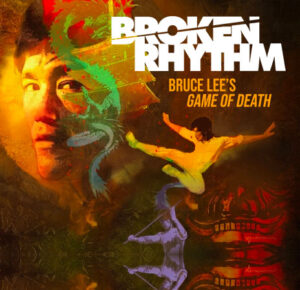
A new documentary exploring Game of Deathcovering both the unfinished 1972 production and the 1978 “completed” version – is currently being prepped for release by Alan Canvan, the independent filmmaker behind Game of Death Redux and the highly anticipated, as-yet-unreleased Game of Death Redux 2.0.

Read the official details below:

Bruce Lee’s unfinished film Game of Death has long captivated audiences. The footage he shot before his untimely passing – later reworked and incorporated into a film bearing the same title – carries a mysterious, almost mythic allure. Within these fragments lies a striking cinematic language and rich symbolic intent, revealing Lee’s ambitions not merely as a martial artist, but as a visionary actor, writer and director. What was he striving to express through Continue reading

Posted in News, Top 4 Featured |