
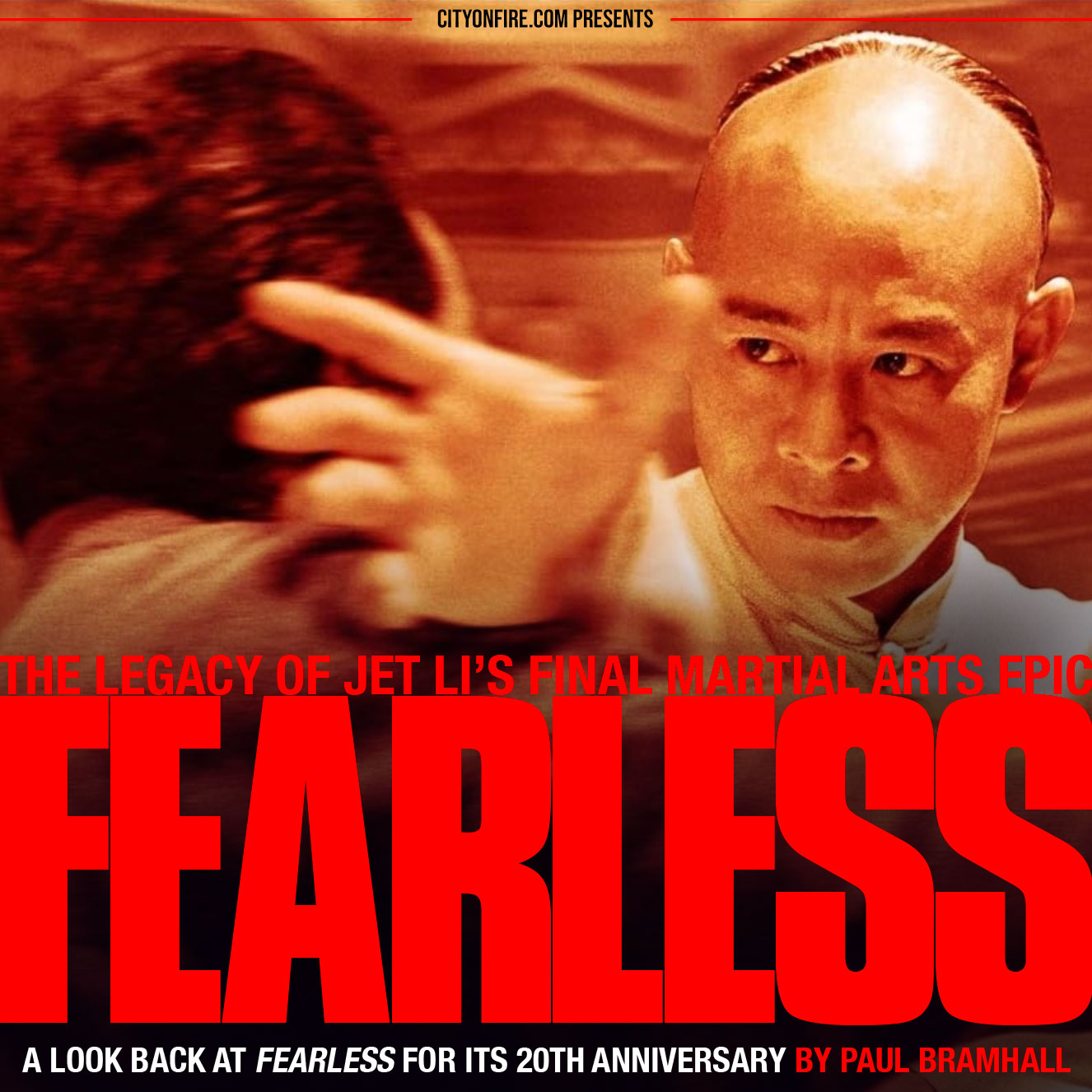
On 13th February 2026 director Ronny Yu recalled the meeting he had with Jet Li and the producers 20 years earlier to show them his completed version of Fearless. As the credits rolled the room was silent for a few moments, before Jet Li expressed his delight at the movie Yu had created, concluding that it would be pointless for him to make any more martial arts movies after its release, as nothing else he could do would be able to top it. Although intended as a compliment to Yu’s talent as a director, the producers intentionally took Li’s words literally for the sake of a perfect marketing opportunity – bill Fearless as “Jet Li’s Final Martial Arts Epic”. Learning of this anecdote 20 years after its release suddenly made those post-Fearless years make a lot more sense, and it was impossible not to smile at the ingenuity of the marketing team to use the way Li chose to express his admiration for Yu to their advantage.
I still recall the outrage (even though, looking back, there wasn’t any real reason to be!) my friends and I felt when War was released in 2007, which featured Jet Li and Jason Statham as co-stars. The general consensus was one of “How dare Jet Li make another martial arts movie, he said he was done!” I guess we were young and quite highly strung. Indeed it seemed even Li himself felt a need to clarify his stance around his continued presence in action movies post-2006, stating in interviews at the time that he considered Fearless to be his last “pure” martial arts movie, however he intended to keep on appearing in action movies.
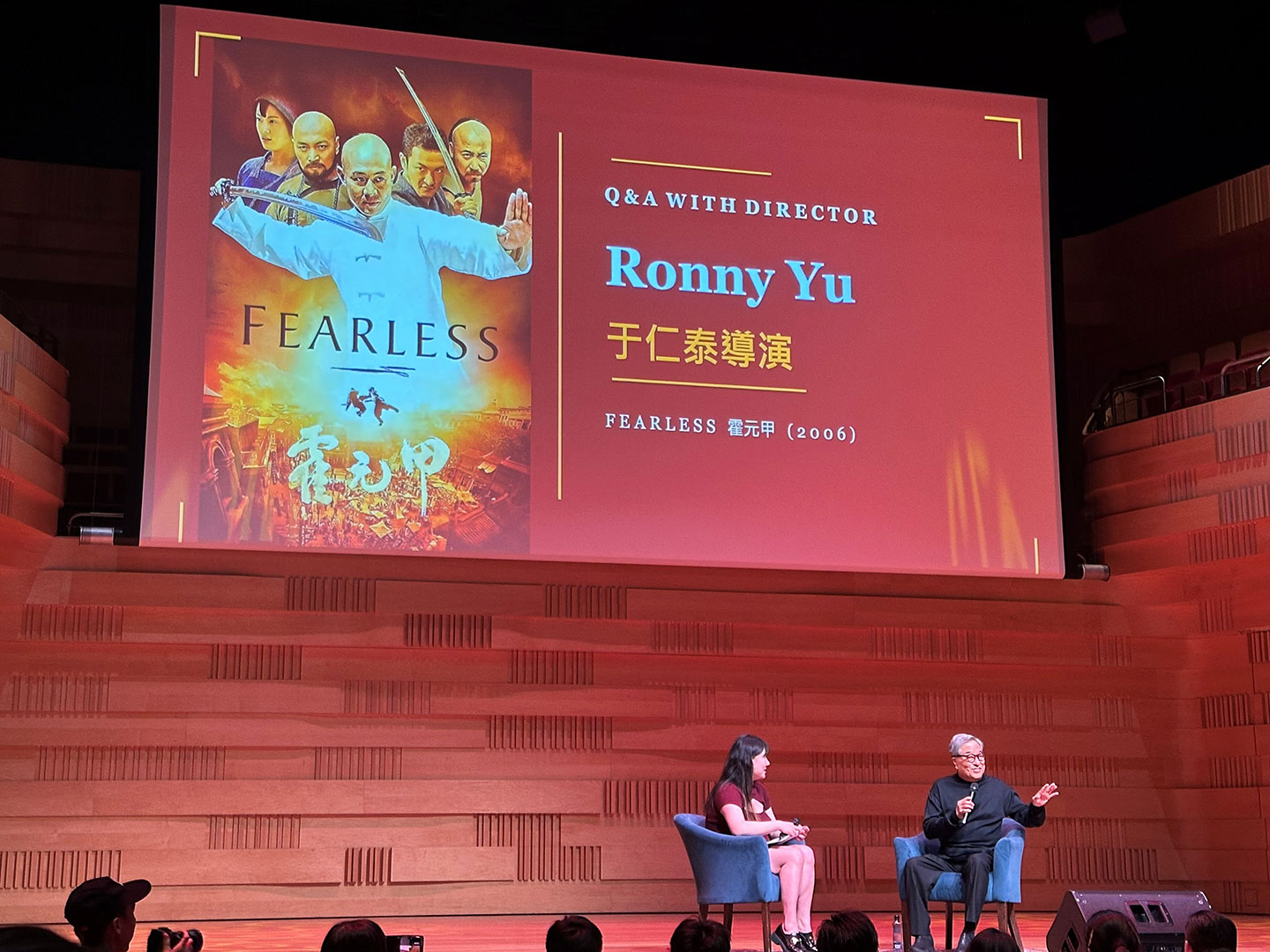
Ronny Yu holds court in Sydney, Australia for the 20th anniversary screening of Fearless.
Twenty years later and I’m now not so young (or highly strung hopefully), however I am still a fan of kung-fu cinema, so was surprised when a notification popped up in my social medial algorithm promoting a 20th anniversary screening of Fearless with director Ronny Yu in attendance. What’s more, it was taking place just a couple of days later, so clearly whatever AI goes into curating my algorithm was lagging. But still, thankfully 48 hours was enough time to ensure I could be in attendance. The screening was part of the 2026 Lunar New Year celebrations and held in Chatswood, a suburb in Sydney, Australia with a large Chinese population. What Ronny Yu was doing in Australia was another question all together – where we finally getting a sequel to his 1997 slice of antipodean-fu Warriors of Virtue!? I’m still not sure, however in any case it was an opportunity not to be missed to see Fearless on the big screen for the 2nd time!
As the end credits rolled director Yu joined the stage, and as the audience watched him being assisted into his seat due to being on crutches from an undisclosed injury, I was reminded that we were in the presence of a director whose last work was already 13 years ago with 2013’s Saving General Yang. I began to wonder if perhaps he was vacationing in Australia, and somehow someone got wind of his presence and cajoled him into appearing onstage, the 20 years that have passed since the release of Fearless making it an offer that was difficult to refuse. However once sat down Yu became a lively and engaging presence, still clearly full of passion for filmmaking, and providing lengthy responses to the questions he was asked. With a fluent grasp of English, ironically the main job of the interpreter who accompanied him became to translate the questions posed in Chinese from certain audience members for the English speakers!
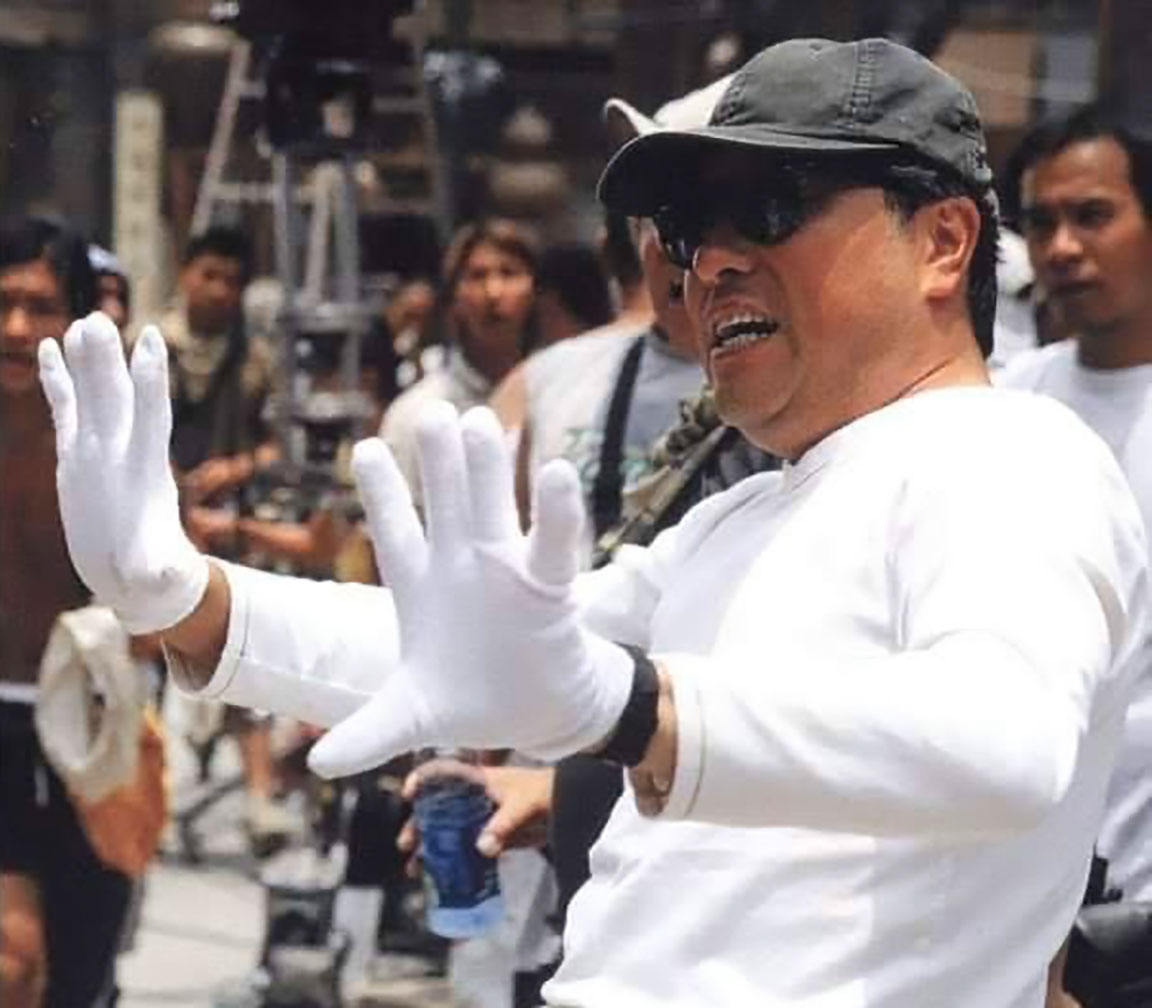
Ronny Yu onset during the making of Fearless.
I have fond memories from the original theatrical run Fearless received in 2006. Back then I was spending a year living back in my hometown of Liverpool in the UK having spent 3 years in Australia, and while on my lunch break in the city there was something reassuring about seeing double decker buses drive by advertising Fearless on their sides. If smartphones had been around I’ve no doubt I would have taken a photo of one. I watched it in the local cinema with a group of friends, and we all really enjoyed it, even those who weren’t kung-fu cinema enthusiasts like some of us where. I was back in Australia the following year when the director’s cut came out on Hong Kong DVD, which I was able to pick up from one of the many DVD stores that populated Sydney Chinatown back then, and I distinctly recall having mixed feelings on the extended version.
On the one hand it fleshed out the characters by spending more time with Li when he’s in the village, but at the same time the inclusion of opening and closing scenes set in modern-day Shanghai felt like a distraction. Awkwardly shoehorning in Michelle Yeoh addressing an Olympics Committee in English petitioning for Wushu to be included as a discipline in the Olympics, the inclusion of these scenes frames the story from Yeoh explaining the history of wushu to the cynical audience members. Obviously included due to the fact Beijing was hosting the 2008 Summer Olympics, and made at a time when discussion around Chinese government influence in film production was still minimal, I’d hoped to ask director Yu what his feelings were towards these scenes during the Q&A. Sadly, I wasn’t chosen for a question, but maybe that’s for the best, just in case his answer may have caused him difficulties to return to China!
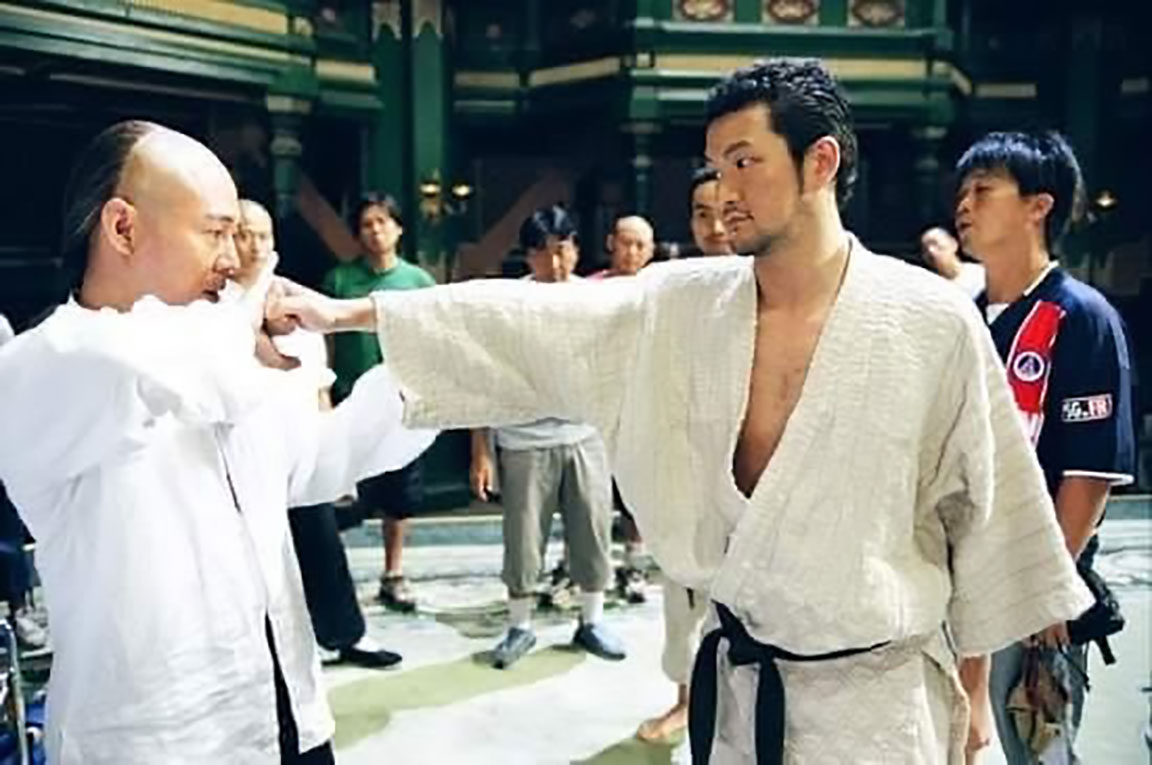
Jet Li offers his input during the filming of his fight against Shidou Nakamura.
Representing a kind of down under Fearless reunion, he did point out that one of the Thai actors who fought against Li was in the audience, having also immigrated to Australia since it was released, seemingly unaware that the scene of Li against the pair of Thai boxers isn’t included in the theatrical cut (I just hope the Thai actor wasn’t too disappointed that his appearance was a no-show!). The confusion is perfectly understandable though, since Fearless was one of those productions that ended up having multiple versions released – there’s the HK theatrical version, the international version, the director’s cut version, and even a Thai version for good measure!
For the 20th anniversary screening the production was given the suitably grand treatment, preluded by a live performance from the Sydney Conservatorium of Music’s Chinese Music Ensemble, which included them belting out such hits (completely the wrong expression I know) as the Fearless theme and the iconic Wong Fei Hung theme. If you weren’t in the mood to watch a kung-fu movie before listening to them, you definitely were after. Watching Fearless itself felt like being in a mid-2000’s time capsule, an era when, at least for a while, it seemed like Chinese language cinema had struck a chord with global audiences.
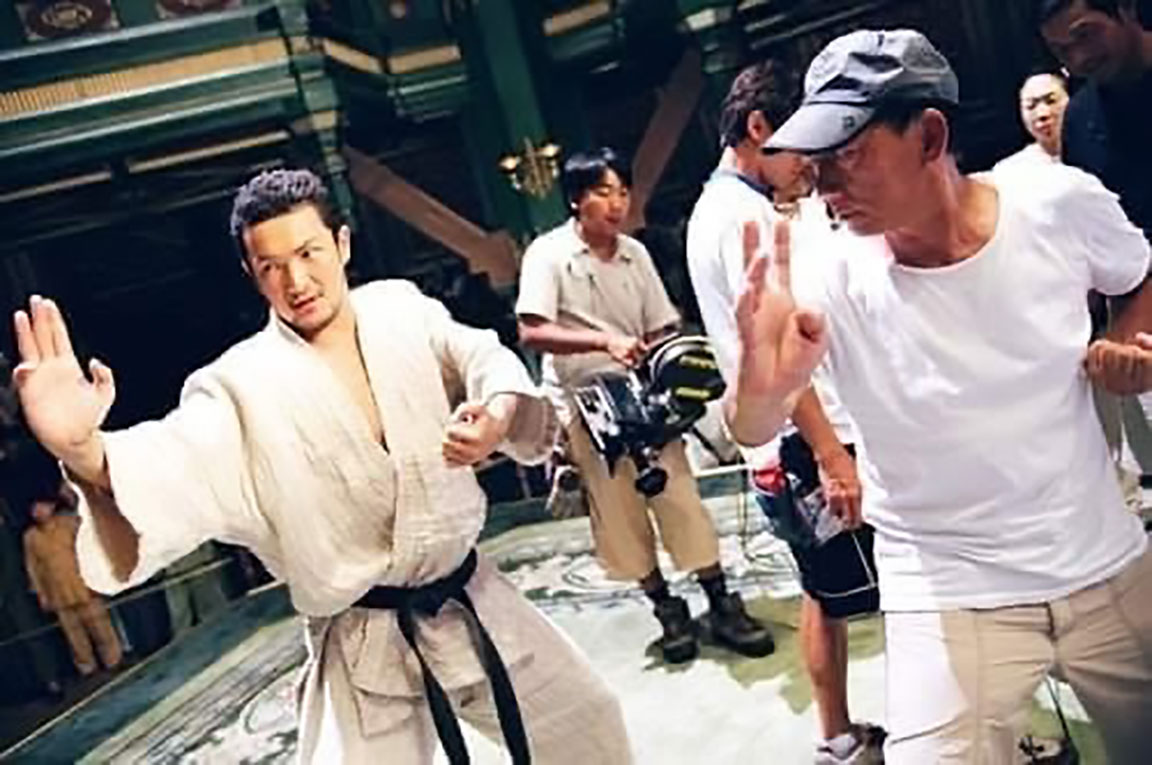
Yuen Woo-Ping putting Shidou Nakamura through his paces.
The likes of Crouching Tiger, Hidden Dragon, Hero, and House of Flying Daggers all gained international exposure in the wake of the post-Matrix and Kill Bill kung-fu boom, receiving both theatrical releases and critical acclaim from western critics. Director Yu said himself in the post-screening discussion that he was proud of the fact whenever critics discuss the key Chinese martial arts movies that crossed over into the mainstream during the 2000’s, the big 3 that get mentioned are always CTHD, Hero, and Fearless. Interestingly it was Jet Li who approached Yu to direct, with the latter having been in final discussions to helm Snakes on a Plane following the success of 2003’s Freddy vs. Jason, and it was also Li that convinced him to step away from another Hollywood venture and take on the story of Fearless.
Much like director Yu had made a successful transition to working in Hollywood (the movie he directed prior to Freddy vs. Jason, The 51st State, was filmed in my hometown of Liverpool!), similarly Li had also primarily been spending his time in overseas English language productions. By 2006 the last time he’d worked with a Hong Kong director was with Stephen Tung Wai on 1998’s Hitman, however thanks to the cross migration of talent between Hong Kong and Hollywood in the early-mid 2000’s, the degrees of separation weren’t as significant as they may appear. Fight choreography legend Yuen Woo-Ping was brought onboard to handle the action, who Li had only just worked with the year prior on Louis Leterrier’s Unleashed, and while it would be the first time for director Yu to work with Woo-Ping, he had worked with Yuen Clan members Yuen Shun-Yi and Brandy Yuen before on 1982’s The Postman Strikes Back.
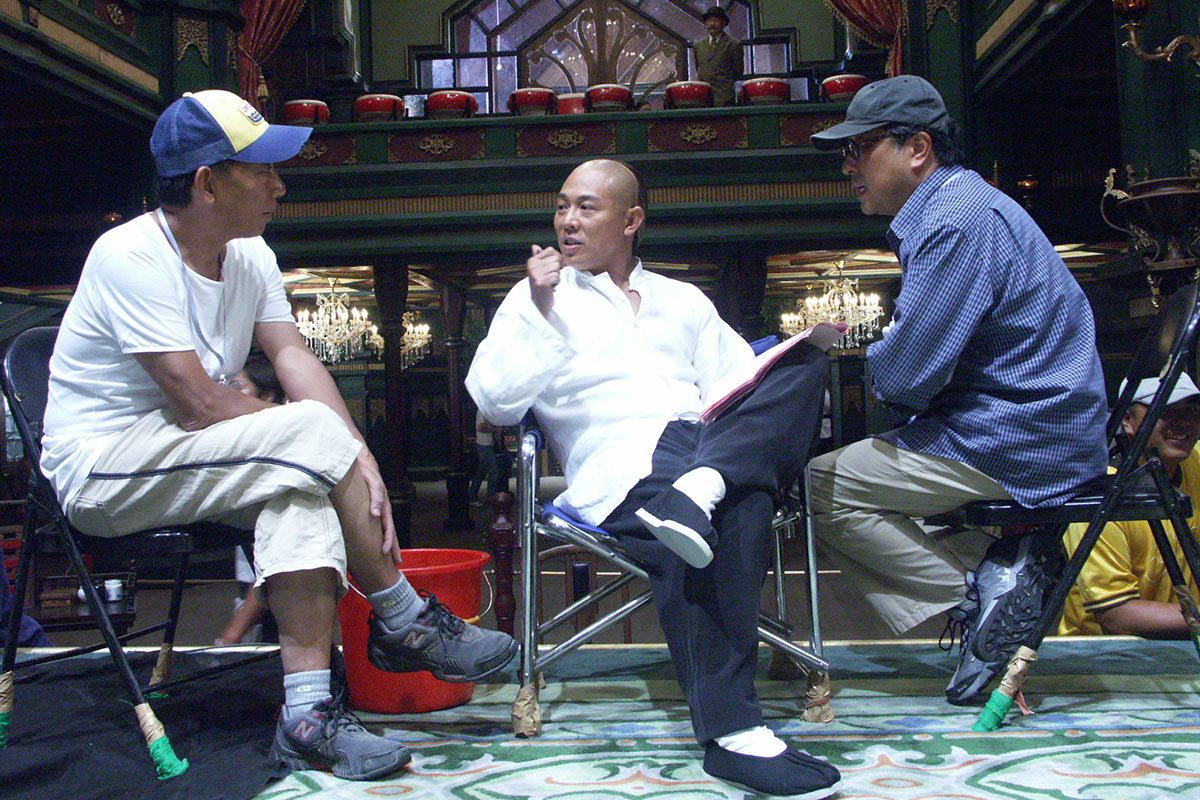
The Magnificent Trio – Yuen-Woo Ping, Jet Li, and Ronny Yu talk business.
For Fearless Li already had the basic story in his head, having decided he wanted to convey his martial arts philosophy onscreen, and believed the best way he could do it was through adapting the tale of Huo Yuanjia. A martial artist and co-founder of the Chin Woo Athletic Association, Yuanjia was born in 1868 and became a heroic figure thanks to his habit of defeating foreign fighters in an era of colonial imperialism. Unsurprisingly, Li’s portrayal of Yuanjia is not the first, with notable turns from the likes of Wang Yin in 1971’s The Great Boxer (which he also directed) and Leung Kar-Yan in 1982’s Legend of a Fighter (notably directed and choreographed by Yuen Woo-Ping). However for many Yuanjia may be best known from a movie in which he doesn’t even appear. Blurring the line between reality and fiction, in 1972’s Fist of Fury Bruce Lee played Chen Zhen, a fictional student of Yuanjia investigating the suspicious death of his teacher.
In Fearless Li’s approach is far removed from a factual biopic, instead leaning more towards using Yuanjia’s role as a martial artist and key events in his life to create a tale that conveys his own beliefs, particularly around how martial arts are a way of creating social harmony. Transitioning from an arrogant headstrong fighter obsessed with the adulation of his students, after he accidentally kills one of his opponents, the victim’s son murders Li’s wife and daughter as revenge. The grief over his loss sets him on a path of healing and enlightenment, eventually washing up in a rural village where he’s taken in by Betty Sun Li (Painted Skin, The Lost Bladesman), here in her sophomore role playing a blind member of the village.
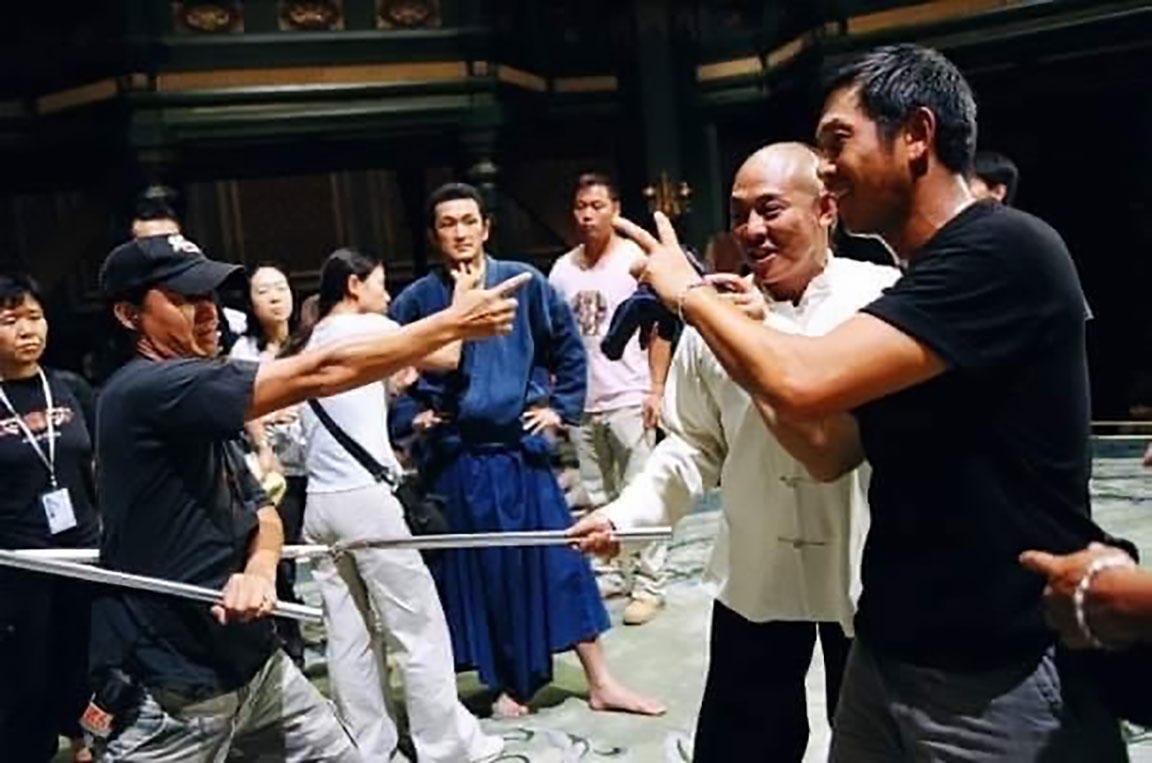
A three-section staff needs three choreographers!
It’s the scenes in the village that form the heart of Fearless, as Li adjusts to the simple rhythms of village life where nature dictates the priorities, eventually returning to the city to represent the Chinese against a selection of foreign fighters. Yuen Woo-Ping’s choreography during the tournament sequence (which, depending on which version you watch, either kicks off or ends the story!) is as crisp as ever and has lost none of its impact in the subsequent years, although listening to director Yu I was surprised to hear one of the most beautiful martial arts sequences had no involvement from Woo-Ping at all! A sequence when Li is still in the village has him performing wushu movements in the fields at night, lit only by the moon and the stars, offering up the opportunity for Li to show off his physical prowess in much the same way we saw during the training sequences in his breakthrough Shaolin Temple from 1982.
The result is a memorable tracking shot as Li shows off the beauty of wushu’s movements, and was created on the initiative of director Yu, who told Li to simply express what was in his heart and he’d capture it on camera. A poignant recollection quickly turned into a humorous anecdote when Yu revealed it took Li several takes and stop-starts to express what was in his heart, which at a time before the era of digital cameras, end up using almost 1000 foot of film! The end result was arguably worth it though, considering the fact that despite the sequence involving no fighting whatsoever, it remains one of the most enduring moments of the production.
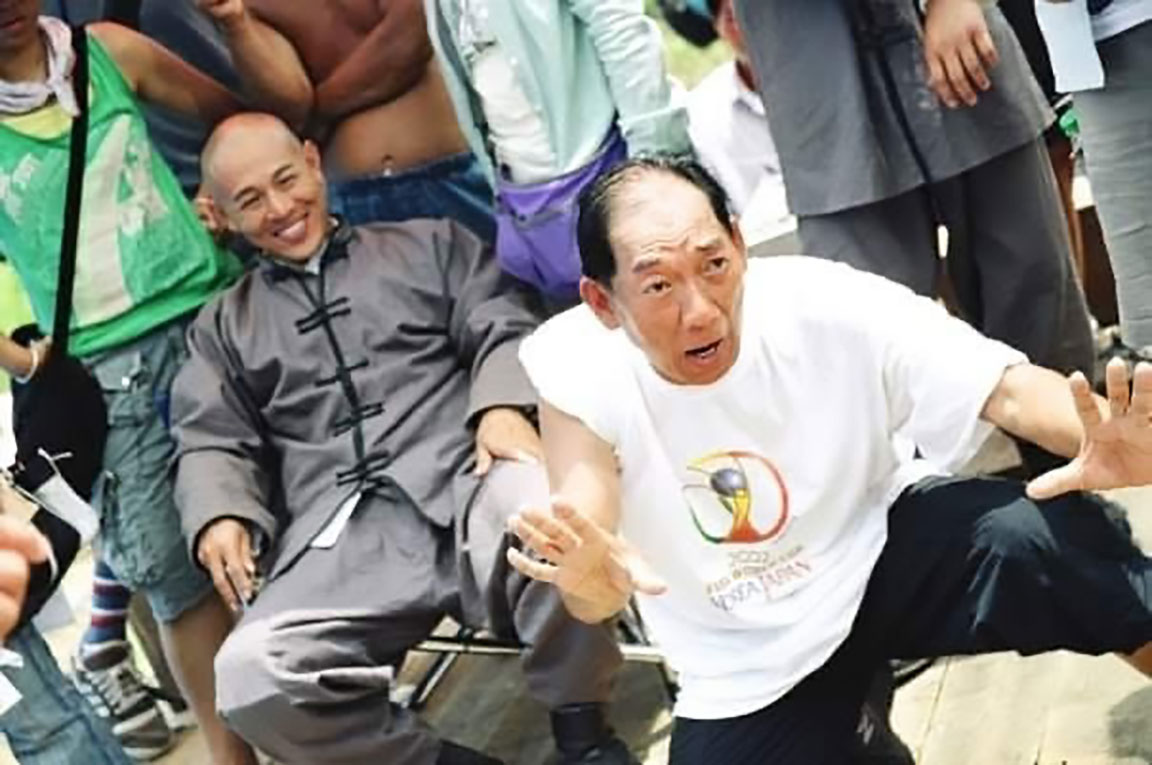
Yuen Woo-Ping’s attempt to rile up Jet Li’s nationalistic spirit by wearing a Japan t-shirt didn’t go as planned.
It feels like an even more meaningful moment when you consider both where martial arts cinema was at the time, and the direction it would take just a few years later. During the 2000’s action trends heavily leaned into either high impact Muay Thai or MMA infused Hong Kong style choreography, with Tony Jaa and Donnie Yen at the forefront respectively. Fearless landed on cinema screens less than a year after the release of the Tony Jaa starring Tom Yum Goong (ironically shot in Sydney) and the Donnie Yen headlining Sha Po Lang. To put it bluntly, the traditional period kung-fu movie was no longer in vogue, and it’s a testament to director Yu’s vision that the final product worked so well. Utilising his background in Hong Kong and his recent experience of working in Hollywood, the result was a movie that resonated with martial arts cinema fans and newcomers alike.
In one of life’s great coincidences, 2026 offered up the opportunity to see Jet Li choreographed by Yuen Woo-Ping on the big screen twice within the same week, as Woo-Ping’s Blades of the Guardians would open on cinema screens on the 19th February. Despite being 20 years apart, both productions prove how much of a timeless genre martial arts cinema can be when done correctly, and watching Fearless once more in 2026 undoubtably proved it’s stood the test of time.