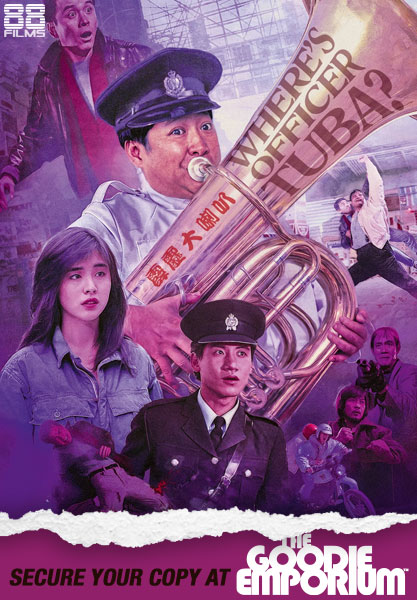



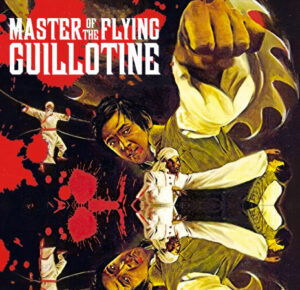
If you have spent any time watching Hong Kong kung fu films — the kind City on Fire was built to celebrate — you already know that what a fighter wears tells a story before the first punch lands. The rival schools in the Ip Man series are visually distinct long before their first exchange. The Five Deadly Venoms are color-coded into memory. In martial arts cinema, matching gear is a psychological declaration. It turns out sports science agrees entirely, and the research behind why it works is more compelling than most coaches and athletes realize.
This is not about looking good on the mat. It is about the documented, measurable ways in which matching team gear changes how combat sports athletes think, perform, and bond — and why the decision of what to wear together is one of the most psychologically significant choices a fighting team can make.
What Clothing Does to the Mind: Enclothed Cognition
The scientific foundation here is a concept called enclothed cognition, developed by researchers Hajo Adam and Adam D. Galinsky in 2012. Their core finding: clothing doesn’t just express identity — it actively shapes the cognitive and emotional state of the person wearing it. The influence works on two levels simultaneously — the physical experience of wearing the garment, and the symbolic meaning attached to it. Both must be present for the full psychological effect to activate.
Applied to combat sports, when an athlete pulls on a team gi, a coordinated rashguard, or a matching competition uniform, something shifts neurologically. A 2019 study from Yonsei University used fMRI scans to confirm this, finding that viewing oneself in a team uniform triggered significant activity in brain regions linked to emotion regulation and group identity — with a strong correlation to team cohesion. The brain responds differently when it perceives itself as part of a uniformed collective. That is not a motivational language. It is neuroscience.
What Matching Gear Does to a Combat Sports Team
The psychological benefits of matching uniforms in combat sports operate across several reinforcing dimensions.
Unity and collective identity. When every member of a team wears the same kit, the psychological transition from “I” to “we” is accelerated. Cohesion significantly affects performance through adherence, motivation, resilience, and efficient communication — and matching visual identity is one of the fastest routes to building it. In combat sports, where individual performance under pressure is the ultimate test, collective grounding is precisely what enables athletes to execute when it counts most.
The equality effect. Matching gear removes visible status markers. In martial arts gyms where belt rank creates a built-in hierarchy, coordinated team gear for competitions creates an equalizing layer above those internal distinctions. Everyone who competes under the same colors is a representative of the same system — regardless of where they sit in the academy’s pecking order. That shared identity builds trust and mutual accountability that internal hierarchy alone cannot create.
Raised standards and accountability. An athlete competing in team colors is not just representing themselves. They carry the reputation of every teammate wearing the same gear. This shared accountability is a behavioral motivator with no equivalent substitute — and it begins the moment the uniform goes on, not when the bout starts.
The Color Effect: A Documented Combat Advantage
One of the most rigorously studied aspects of combat sports gear is the effect of uniform color on both the wearer’s psychology and opponent perception. A landmark 2005 study by Hill and Barton examined boxing, taekwondo, and wrestling outcomes at the 2004 Olympics, where competitors were randomly assigned red or blue uniforms. Their finding: athletes in red won significantly more often — and in closely matched bouts, red-clad competitors won 62% of the time.
The mechanism is psychological. Research confirms a deep implicit association between red and dominance — participants process dominance-related concepts faster when they appear in red, demonstrating a pre-conscious priming effect. Red elevates perceived aggression, sharpens arousal, and signals threat before any physical exchange takes place. For evenly matched competitors, this psychological edge is real — and in combat sports, margins are everything.
This psychological advantage is why many professional fighters are highly selective about the color of their gloves during championship bouts. Traditional brands have long understood this connection and often make their most iconic equipment in bold shades of red. For instance, fighters looking for classic leather equipment often choose the Cleto Reyes range at FightGear to find gloves that match this competitive mindset. Having the right gear helps an athlete feel prepared before they even step into the ring. When a fighter wears equipment that carries a reputation for power, it builds their own confidence and sends a clear message to their opponent.
Color strategy is therefore not aesthetic preference. It is a performance decision backed by empirical data that serious teams should be making deliberately.
What the Cinema Already Knew
City on Fire’s readers have always understood this intuitively, because martial arts cinema has been built on the visual language of faction and uniform identity for decades. The rival school dynamics of classic kung fu films — their distinct training gear, their recognizable color schemes — are not storytelling shorthand. They are a faithful reflection of how martial arts schools have always used shared visual identity to declare values, communicate standards, and prime every member for the psychological state the tradition demands.
When Donnie Yen squares up as a Wing Chun practitioner in simple, coordinated clothing against an opponent in flashier gear, the visual contrast is doing real psychological work — for the audience, and for the fighters. The films got the science right before the science existed to confirm it.
What This Means for Teams Building for Competition
For coaches and team managers, the practical conclusion is straightforward: gear selection is a psychological tool, not an administrative afterthought. The colors, design quality, and consistency of what your team wears together actively shapes how athletes train, compete, and bond across an entire season.
Fabric performance is part of the equation too. Gear that fits well, manages moisture effectively, and maintains its visual integrity through repeated competition use is doing its psychological job. Gear that doesn’t fit, fades, or varies between teammates erodes the very cohesion it is supposed to reinforce. Suppliers like USportsGear — which produces sublimation-printed, moisture-wicking team uniforms built for performance across combat and team sports — reflect the growing recognition among serious programs that competition gear is a training investment, not a uniform expense.
Involve athletes in the design process. Research consistently shows that teams with input into their own gear develop stronger emotional ownership of it — and that ownership translates into the kind of pride and accountability that shows up under pressure.
The Uniform Is Part of the Performance
The next time you watch a martial arts film where two factions square off — visually distinct, coordinated, declaring everything about who they are before a single technique is thrown — recognize what you are actually seeing. You are watching the cinematic expression of a psychological truth that sports science has spent two decades validating.
Matching gear in combat sports is a technology of belonging, accountability, and mental preparation that martial arts culture has understood for centuries. The decision of what your team wears together is one of the most consequential decisions you will make before competition begins. Make it deliberately.