

Training Like a Martial Arts Action Star: What Real Athletic Preparation Looks Like

When you see Donnie Yen cut through a room of opponents in Ip Man, or when you witness Tony Jaa launch a Muay Thai knee strike as razor-sharp as candlelight in Ong-Bak, something deep inside your body registers that as real — because it is. Unlike a lot of Hollywood action that’s digitally enhanced, the best martial arts cinema is fundamentally based on real athletic preparation — something the vast majority of viewers will never witness. The interesting question is not how did they film that? — how did they assemble a body and mind capable of doing so in the first place?

The divide between the elements onscreen and all that is required to arrive at them is massive. Goes. Film fight scenes are choreographed over the course of weeks, optimized for camera angles, lighting and dramatic timing — not athletic efficiency. But the actual physical platform those performances are built upon? That takes years. This is what real martial arts athletic preparation looks like: the disciplines, the science, and the day-to-day unglamorous work that prepares a performer for becoming a legend on screen.

The Difference Between Combat Choreography and Real Life Fighting Conditioning

The first thing that you should understand is that cinematic martial arts and competitive martial arts conditioning are made for completely different results. There are film sequence choreographies that appear lethal and smooth from a specific camera position, hit marks in a given order, repeat safety through twenty takes. True athletic conditioning for martial arts is made to keep up explosive force, quick response and technical precision in true fatigue — and to repeat it, without a director calling a cut.

This distinction is important because it dictates everything about the seriousness of martial arts training. They’re not rehearsing for the performance. They are preparing for a function. A fighter’s body is built over years of progressive overload, repetition of skills and disciplined recovery, not a six-week prep cycle before the gun goes off.

How the Legends Really Built Their Physiques

To understand real martial arts preparation, we start by considering the athletes who made the training method famous — and how they actually built their physical potential.

Bruce Lee is the founding father, and his methodology of training was groundbreaking in ways that may not have yet even truly been appreciated. His philosophy was anti-muscle size = strength. Instead, he focused on what he called usable power — strength that might turn directly into speed, or precision, or endurance. Decades before people learned about the merits of cross-training, he got it. Where most martial artists of his generation trained only on technique, Lee included weightlifting, calisthenics, running and even meditation in his regimen. He ran three days a week, usually for four miles at a time and alternating his pace in what closely resembles modern HIIT training. It produced a composition that Chuck Norris once called “muscle upon muscle” — not for looks but designed for functional output.

Jet Li exemplifies elite, structured athletic development. His training started in the structured Chinese national sports system — starting at the Beijing Wushu Academy at age eight, racking up five gold medals at the Chinese nationals (the first came when he was eleven years old), and becoming a national coach before he hit his teens. The athleticism people see on screen is the product of a decade of daily competitive training before he even got in front of a camera.

Also a product of pure martial discipline is Tony Jaa. A Muay Thai fighter who began training at 10, under the tutelage of his father, Jaa worked on a stunt team before making his film debut — there was nothing in it for him except years of bodily discipline, not practice for a single role. When he runs up a wall in Ong-Bak, it’s from fifteen years of physical training, not a film school gimmick.

Jackie Chan epitomizes a different, but equally uncompromising approach. He was trained as a child by the punishing acrobatic requirements of the Peking Opera school — a system that combined martial arts disciplines with gymnastic conditioning. The flexibility, balance and spatial awareness that would help him give the appearance of doing his stunt work effortlessly were developed over thousands of hours of physical conditioning that preceded his career by years.

Conclusion: The Five Pillars of Athletic Preparation for Real Martial Arts

What do these athletes share in common? Their prep — no matter style or era — broke down on five consistent pillars that sport science is now validating as the basis of elite martial arts conditioning.

Functional Strength and Explosive Power

Real martial arts conditioning builds functional strength that supports movement, not glamor muscles through isolation exercises. Bruce Lee established the initial link between enhancing strength and conditioning with the aim of being better in martial arts by focusing on improving muscular endurance, cardiovascular endurance, strength, and flexibility — it was all about balance. The aim is power derived from the complete kinetic chain: ground up, through the hips, through the core, and out through the limbs. Squats, deadlifts, explosive plyometrics and kettlebell movements that replicate athletic demands of the real world are the tools of choice — not a commercial gym machine.

Cardiovascular Endurance and Anaerobic Capacity

Two different energy systems are used at a high rate in martial arts. Aerobic endurance underpins the ability to maintain effort through a long training session or battle. Anaerobic capacity fuels the explosive bursts — the takedown attempt, the combination of strikes, the sudden explosion from a clinch. Lee felt that a great martial artist must also be a great athlete, one who could retain speed and precision late into a fight — nearly every morning started with a four-mile run followed by bursts of steady pace and sprints. Serious martial arts practitioners train both systems intentionally: steady-state cardio building the aerobic base; high-intensity interval work developing fight-specific conditioning.

Flexibility and Mobility

That means that the high kicks, ground grappling transitions, and evasive footwork that characterize elite martial arts all require a kind of joint mobility that must be consciously trained and then maintained. This is not some passive bit of preparation — it is worked on every day. Bruce Lee was very dedicated to his flexibility routine, doing many high kicks, forward bends, side bends, waist twisting and alternate splits progressively every day. His capacity to kick a man over a foot taller than him in the head wasn’t a gift it was the result of years of intentional flexibility training. The science supports dynamic stretching ahead of training sessions to prepare the body and passive stretching post-sessions to enhance long-term range of motion.

Skill Drilling and Technique Repetition

In martial arts, technique is not learned — it’s installed, through thousands of intentional repetitions until the movement becomes automatic under duress. Lee intended to throw five hundred punches each day, threw some of those punches with light weights in his hands and would concentrate on speed and endurance in his kicking and punching workouts while also training power on a heavy bag. It is this volume of deliberate practice that produces the muscle memory that endures the cognitive overload of real competition. Pad work, shadow drilling, sparring, positional grappling rounds — these are the primary vehicles to achieve actual skill development and they can’t be fast-tracked.

Recovery and Body Management

This is the axis that distinguishes serious practitioners from casual ones — and it’s also the one most often underestimated. The pressure gradient created by a compression sleeve manipulates the arteries and veins to improve circulatory efficiency — increasing blood pressure to some areas, delivering more oxygenated blood to muscles, removing lactic acid faster and increasing venous return to minimize inflammation and swelling; all which help facilitate workout recovery.

For martial arts athletes who train twice a day/6 days a week, the limiting factor in how much quality work can be accumulated from now until eternity is how fast their body will recover between training sessions. That is why serious practitioners take sleep, nutrition timing and active recovery as seriously as they do training. The body does not adapt during training, it adapts during recovery — which makes recovery not optional but the point of the whole thing.

For athletes training outdoors — at parks, rooftop dojos and open-air martial arts schools — there’s an added recovery and protection concern: ultraviolet exposure. Compression arm sleeves can serve as an extra layer of UV protection for those that train outdoors regularly when their sunscreen sweats off during tough sessions. Brands such as 4inbandana, which makes UPF50+ athletic arm sleeves that cross from combat to outdoor sports, highlight how athletes are increasingly aware that the prospect of sun protection while training is a real performance concern — not an afterthought. Up to date with some data only until October 2023.

What Non-Lifelong Martial Artists Actors Seem to Do

It’s fair to be honest about what preparation looks like for actors coming to the art from behind the lens instead of vice versa. Now, many Hollywood productions invest sincerely in preparing their talent — and the result is extremely impressive. But the gulf between months of preparation and a lifetime of practice is wide, and it’s why the most exciting martial arts cinema still tends to be constructed around people who are the thing they show onscreen.

When actors approach martial arts in serious fashion, they tend to study with professional coaches across different disciplines for months at a time, blending combat practice with conditioning as an athlete. It trains up genuine skill — sufficient to work credibly on screen. What it can’t pull off is the automatic, reflexive aspect of technique drilled for years. That special thing — the kind that makes Donnie Yen’s Wing Chun look like it requires zero effort, even when he’s receiving a strike — is born out of the first 10 years of practice, not the last six months.

This is not to knock any actor who prepares seriously for a role.) It’s just an acknowledgment of what the long road of real martial arts development builds — and why audiences with a trained eye can always tell the difference.

What That Means for Anyone Who Trains

The concepts that explain elite-level extra work are not limited to elite participants. They telescope down to every level of practitioner. Those same five training pillars — functional strength, cardiovascular conditioning, flexibility, skill drilling and recovery — are equally applicable to someone coming in twice a week at your local Cheadle MMA gym down the road as a professional fighter in a full-time training camp. It’s just the intensity that changes — not the structure.

The point of Bruce Lee, Jet Li, Jackie Chan and Tony Jaa is not that they trained like gods. It was systematic, and consistent, and unglamorous. Lee ran the same four miles, punched the same bag, stretched the same muscles — day in and day out, for years. That is because of everything that happened off screen.

Next anyone who has been training can do the same logic. (From consistent lifting, with movement goals in mind.) Develop both energy systems. Be flexible with the same discipline you have on hard training days. Theory can help explain why we do things this way, but technique is accumulated through repetition, not theory. And treat recovery properly — this is where adaptation really occurs.

The real show takes place before the camera starts rolling

The next time you see Donnie Yen run down a hallway to effortlessly take out 10 baddies in succession, or spot Tony Jaa delivering an elbow strike that’s so precise it looks like Wong did the calculations himself, remember what you’re actually witnessing. You are witnessing the product of childhood training, day in and day out conditioning, purposeful skill work, decades’ worth of accrued athletic commitment. That was not created by the camera. The years preceding the camera did.

Martial arts cinema at its best is compelling exactly because it’s real — not least because the bodies we see on screen have actually been constructed to do what they are being asked to do. It’s that authenticity that City on Fire readers have always had a sense of — the thing that sets the genre’s greatest films apart from all other digitally assisted action. The actual show, however, occurs well before the camera rolls. And it certainly doesn’t resemble the movies.

Posted in News |

How Film Festivals Use Lanyards and Credential Badges | And What They Represent

There’s a moment, known to anyone who has ever headed through the entrance gates of a big film festival, when you cross over into the colors of the world around you. Not the colors of movie posters or neon signage, but the colors people wear around their necks — the lanyards. At Busan, at Fantasia, at the Hong Kong Asian Film Financing Forum, it was a moving mosaic of credential badges — each one telling an exact story about who that person is, what do they do and how far exactly they are allowed to venture into the galaxy of this particular festival’ universe.

The vast majority of those attending don’t read that story. The lanyard fades away — just another thing slung around your neck, something to either climb into the drawer when you get home. But to anyone working in the film industry or trying to get into it, knowing what those badges mean is even more crucial than you might think. This is understood well by companies like 4inlanyards that create lanyards and credential systems for large shows; every element — color, material, attachment hardware, badge holder design — has meaning many times deeper than just the visuals of its appearance. A film festival’s credential system is, for all intents and purposes, its organizational chart made visible and wearable.

The evolution of through punch-card to paper tickets to color-coded systems

The first festivals were held on much more informal terms. When the Venice Film Festival started in 1932, or Cannes staged its first edition in 1946, access control was a relatively straightforward business — pieces of paper invitation, formal dress codes and a fair bit of social gatekeeping overseen by ushers and publicists who could put names to faces.

But that informal model began to collapse under the weight of its own success as festivals grew in size and cultural ambition through the 1970s and 1980s. Cannes, which now, across its market and festival programs, accredits about 40,000 people a year, knows it could not run on handshakes and recognition alone. Nor could the Toronto International Film Festival, which attracts hundreds of thousands of viewers every autumn. The physical credential — the badge on a lanyard — turned out to be the most practical answer to a very real logistical problem: How do you communicate access permissions instantly, across dozens of venues, to hundreds of security personnel who don’t know each other?

When Asia’s flagship festivals started gaining international prominence in the 1990s — the Busan International Film Festival was launched in 1996, although the Hong Kong International Film Festival had been running since 1977 and the Tokyo International Film Festival gained significant traction through the late eighties — they largely inherited and honed credentialing models developed in Europe. What they created, though, was arguably more complex, in part because Asian film markets and festivals often parallel each other — and fulfill radically divergent missions for different classes of attendees.

The Making of a Festival Badge

Before explaining what the colors actually mean, it’s worth knowing what a festival credential is even like as a physical thing. A full-fledged credential system typically includes three interacting components.

Typically, the badge itself is a laminated card printed with the holder’s name, the organization or outlet they are representing, and the festival name and year, as well as a machine-readable element — historically a barcode, but now almost universally a QR code — that makes electronic scanning possible at entry points to venues. The badge is inserted into a holder, connected to the lanyard.

It’s not just a strap, it’s the lanyard. In a properly functioning festival credentialing system, the first thing you actually see is the color of someone’s lanyard. It can be read at a glance from 10 feet (3 meters) away, enabling security personnel to instantly make yes/no decisions at venue doors without having to decipher fine print or wait for a scanner. The design of the badge holder itself might communicate information, too — rigid holders are usually intended for higher-level credentials, soft plastic for widespread access.

QR code verification is a deeper layer second to that. Where the lanyard color is category, scan is identity. It verifies that this particular individual—not just someone found in the hallway wearing a borrowed badge—is allowed to enter. At big festivals, scan data is also used to track attendance patterns — helping with both security and for understanding how people move through a festival’s programming.

The Tier System — What Each Color Means

Each major film festival has its own unique color assignments, but the fundamental tier logic is surprisingly uniform across the industry. Knowing about the categories provides insight into why a single film screening might be open to one lanyard holder and completely off-limits to another.

Badges for Industry and Market sit at the core of the festival’s commercial role. These credentials are granted to film buyers, distributors, sales agents and co-production executives who attend the market component of a festival — you know, like the Hong Kong Filmart that takes place alongside the Hong Kong International Film Festival and draws thousands of industry professionals from across Asia (and beyond). Holders of the market badges may enter the film market floor, private screening rooms and meeting suites that members of the general public never glimpse.

Press and Media Badges are given to accredited journalists, critics, trade reporters and even sometimes established online publications or video essayists. Press credentials may afford the opportunity to see a film before its public screening, access to press conferences or entry into interview suites where filmmakers and talent are brought in for back-to-back meetings with journalists. The crucial word here is “accredited” — festivals screen press applications, and credentials aren’t automatically given to someone just because they write about film.

Filmmaker and Guest Badges — Awarded to directors, producers, writers, and principal cast of films selected for the festival program. These credentials tend to have higher access than press badges, granting entry to industry parties, filmmaker dinners and other events intended as meet-and-greets between creative talent and the industry professionals who may finance or distribute their next project.

The jury badges tend to be the most visually unique credentials in the entire system. Members of the jury — filmmakers, critics and cultural figures who cast votes for official competition awards — must have access to each competition screening, to deliberation rooms and to formal ceremonies. Their lanyard is generally instantly identifiable, indicating some kind of institutional authority inside the festival.

Staff and Volunteer Badges are working credentials. They spotlight personnel toiling through the festival — venue managers, ticketing staff, hospitality crews, plus the hundreds of volunteers that are the lifeblood of any large festival’s daily operation. The presence of these badges can allow a person access to backstage, operational areas, space rejection from industry and press.

General Public and Festival Pass badges cover the broadest cross-section of attendees — from season pass holders who see dozens of screenings, to single-film ticket buyers who might get a temporary day credential. These are the most prevalent credentials by volume and usually provide the least amount of access.

The Access Map: Where Your Badge Actually Gets You

The physical geography of a film festival is more complex than its surface suggests. Most festivals function on what is essentially a series of concentric circles of access, and your lanyard decides which circles you can enter.

The outermost circle is public — ticketed screenings for general audiences. The majority of folks never progress past this layer, and within it is the festival’s most culturally valuable content: the films themselves.

The next circle includes press screening rooms, which usually have the same films as public screenings but showing at different times and in smaller, dedicated venues. For one, press screenings enable critics to write reviews before or during a festival, which is why you’ll often find reviews of Busan competition titles ahead of the close of the festival. Access requires a press credential.

The world of the industry layer is entirely different. Film markets function as professional exchanges where the commerce of cinema unfolds in real time — deals are Haggled, acquisitions are revealed, co-pros are outlined on napkins. For example, the Hong Kong Filmart is one of the most significant film market events that takes place on the continent, drawing buyers from across Asia and further afield. You can’t break into this space without an industry credential.

Beyond even the industry floor, some spaces are reserved for very small groups — the jury’s deliberation rooms, the green rooms where talent bides time before press conferences and interviews, the backstage areas of awards shows. These areas are credentialed at multiple points — usually you need a specific lanyard color and a successful QR scan.

The Social Life of the Lanyard

There’s a second layer of festival credentialing that no official documentation will explain, but any savvy festival-goer will be able to spot in an instant: the lanyard as social signal and networking device.

Zeroing in on the compressed, high-octane outer universe that is a film festival, where thousands of industry parasites overlap their existence in identical hotels, screenings and parties for a window of 10 days — your credential is your introduction before you utter so much as a syllable. Industry people rattle each other’s lanyards before choosing to step forward or step back. A sales agent at Busan will take notice when a prospective buyer’s badge shows they represent one of the major distribution companies. A first-time filmmaker will notice which critics at the press screening come from major trade outlets.

This has created a parallel culture of badge collecting. One sign of experience is how old your lanyard is: Many longtime festival attendees preserve theirs from year to year — not exactly as trophies of movies watched, but as reminders of access acquired, years spent entering and disappearing more fully into the festival culture. The lanyard from your first Fantasia, from your first Busan, from the first time you ever got a press credential — those are imbued with a slightly greater weight than just standard fairground chachki.

Are Physical Badges Going Away?

The pandemic years accelerated such experimentation with digital credentials — app-based QR systems, NFC wristbands, wholly virtual market accreditations. Numerous festivals operated hybrid models during this time as a matter of survival. The question since then has been whether the tried and true lanyard, battle-tested over decades, would withstand the digital challenge.

So far the evidence suggests it will. The hybrid model — a physical lanyard bearing a QR code that could access an online profile — has become the dominant method at large festivals. In public, the physical badge serves a social role that apps don’t do easily: it’s viewable, detectable and scannable without anyone having to lift a phone. In our agentic second-smart world of networking time, the immediate understandability of a colored kind lanyard around somebody’s neck remains honestly useful.

What This Means for Fans of Asian Cinema

For those readers tuned into Asian cinema — tallying Busan’s competition lineups before they’re announced, aware that Fantasia in Montreal is the historical hotbed for new Korean and Japanese genre cinema by extension — this knowledge of festival credentials is practical info.

Like many film festivals in Asia, they offer passes easily available for fans that take you far beyond a single ticket to one movie. Busan, for instance, has traditionally provided passes that allow enthusiastic nonprofessionals a chance to see a large share of the festival’s programming. By understanding the credential hierarchy, you’ll know what to apply for and can anticipate when you show up as far as navigating the festival environment with confidence.

For context, the press credential application process at many Asian festivals is less daunting than it looks to us serious — or even semi-serious — film writers. Festivals require coverage, and credible online voices with real audiences are often welcomed — especially at mid-size festivals that want the kind of international exposure.

Final Thoughts

For a filmmaker at Busan, the lanyard around their neck embodies — in concentrated form — years of creative toil reaching an actual international audience. That one, around the neck of a critic, signifies a dedication to writing about cinema seriously enough that there was something for a festival to notice. An industry badge worn by a buyer signifies the power of decision-making to take your film into new territories and reach new audiences.

And none of that shows in the fabric itself. But it’s all right there, printed on laminated cards and hanging from the necks of the people who make the global film industry go. The next time you watch coverage from a major Asian film festival — all the red carpets, press conferences and crowded market floors — pay attention to the lanyards. You’re seeing the festival’s full organizational logic encoded in a garment.

Posted in News |

Team Identity in Combat Sports: Why Matching Gear Matters More Than You Think

If you have spent any time watching Hong Kong kung fu films — the kind City on Fire was built to celebrate — you already know that what a fighter wears tells a story before the first punch lands. The rival schools in the Ip Man series are visually distinct long before their first exchange. The Five Deadly Venoms are color-coded into memory. In martial arts cinema, matching gear is a psychological declaration. It turns out sports science agrees entirely, and the research behind why it works is more compelling than most coaches and athletes realize.

This is not about looking good on the mat. It is about the documented, measurable ways in which matching team gear changes how combat sports athletes think, perform, and bond — and why the decision of what to wear together is one of the most psychologically significant choices a fighting team can make.

What Clothing Does to the Mind: Enclothed Cognition

The scientific foundation here is a concept called enclothed cognition, developed by researchers Hajo Adam and Adam D. Galinsky in 2012. Their core finding: clothing doesn’t just express identity — it actively shapes the cognitive and emotional state of the person wearing it. The influence works on two levels simultaneously — the physical experience of wearing the garment, and the symbolic meaning attached to it. Both must be present for the full psychological effect to activate.

Applied to combat sports, when an athlete pulls on a team gi, a coordinated rashguard, or a matching competition uniform, something shifts neurologically. A 2019 study from Yonsei University used fMRI scans to confirm this, finding that viewing oneself in a team uniform triggered significant activity in brain regions linked to emotion regulation and group identity — with a strong correlation to team cohesion. The brain responds differently when it perceives itself as part of a uniformed collective. That is not a motivational language. It is neuroscience.

What Matching Gear Does to a Combat Sports Team

The psychological benefits of matching uniforms in combat sports operate across several reinforcing dimensions.

Unity and collective identity. When every member of a team wears the same kit, the psychological transition from “I” to “we” is accelerated. Cohesion significantly affects performance through adherence, motivation, resilience, and efficient communication — and matching visual identity is one of the fastest routes to building it. In combat sports, where individual performance under pressure is the ultimate test, collective grounding is precisely what enables athletes to execute when it counts most.

The equality effect. Matching gear removes visible status markers. In martial arts gyms where belt rank creates a built-in hierarchy, coordinated team gear for competitions creates an equalizing layer above those internal distinctions. Everyone who competes under the same colors is a representative of the same system — regardless of where they sit in the academy’s pecking order. That shared identity builds trust and mutual accountability that internal hierarchy alone cannot create.

Raised standards and accountability. An athlete competing in team colors is not just representing themselves. They carry the reputation of every teammate wearing the same gear. This shared accountability is a behavioral motivator with no equivalent substitute — and it begins the moment the uniform goes on, not when the bout starts.

The Color Effect: A Documented Combat Advantage

One of the most rigorously studied aspects of combat sports gear is the effect of uniform color on both the wearer’s psychology and opponent perception. A landmark 2005 study by Hill and Barton examined boxing, taekwondo, and wrestling outcomes at the 2004 Olympics, where competitors were randomly assigned red or blue uniforms. Their finding: athletes in red won significantly more often — and in closely matched bouts, red-clad competitors won 62% of the time.

The mechanism is psychological. Research confirms a deep implicit association between red and dominance — participants process dominance-related concepts faster when they appear in red, demonstrating a pre-conscious priming effect. Red elevates perceived aggression, sharpens arousal, and signals threat before any physical exchange takes place. For evenly matched competitors, this psychological edge is real — and in combat sports, margins are everything.

Color strategy is therefore not aesthetic preference. It is a performance decision backed by empirical data that serious teams should be making deliberately.

What the Cinema Already Knew

City on Fire’s readers have always understood this intuitively, because martial arts cinema has been built on the visual language of faction and uniform identity for decades. The rival school dynamics of classic kung fu films — their distinct training gear, their recognizable color schemes — are not storytelling shorthand. They are a faithful reflection of how martial arts schools have always used shared visual identity to declare values, communicate standards, and prime every member for the psychological state the tradition demands.

When Donnie Yen squares up as a Wing Chun practitioner in simple, coordinated clothing against an opponent in flashier gear, the visual contrast is doing real psychological work — for the audience, and for the fighters. The films got the science right before the science existed to confirm it.

What This Means for Teams Building for Competition

For coaches and team managers, the practical conclusion is straightforward: gear selection is a psychological tool, not an administrative afterthought. The colors, design quality, and consistency of what your team wears together actively shapes how athletes train, compete, and bond across an entire season.

Fabric performance is part of the equation too. Gear that fits well, manages moisture effectively, and maintains its visual integrity through repeated competition use is doing its psychological job. Gear that doesn’t fit, fades, or varies between teammates erodes the very cohesion it is supposed to reinforce. Suppliers like USportsGear — which produces sublimation-printed, moisture-wicking team uniforms built for performance across combat and team sports — reflect the growing recognition among serious programs that competition gear is a training investment, not a uniform expense.

Involve athletes in the design process. Research consistently shows that teams with input into their own gear develop stronger emotional ownership of it — and that ownership translates into the kind of pride and accountability that shows up under pressure.

The Uniform Is Part of the Performance

The next time you watch a martial arts film where two factions square off — visually distinct, coordinated, declaring everything about who they are before a single technique is thrown — recognize what you are actually seeing. You are watching the cinematic expression of a psychological truth that sports science has spent two decades validating.

Matching gear in combat sports is a technology of belonging, accountability, and mental preparation that martial arts culture has understood for centuries. The decision of what your team wears together is one of the most consequential decisions you will make before competition begins. Make it deliberately.

Posted in News |

The Incredible MMA Legends Who Conquered the Action Cinema World

The creative world of competitive sports and the silver screen always had an electric bond. Fans enjoy watching real-life powerhouses go fully choreographed chaos.

Modern combat has come a long way, and the likes of ufabet are now able to captivate fans with the madness of live matches around the world! And as a result, fighters have become more than athletes; they’re global brands.

Many combatants discover that the focus demanded inside the cage carries over brilliantly to the punishing demands of a film set. It’s not only about hitting hard, but timing and presence too.

The Influence of Sports and UFABET

Digital sports platforms now provide athletes with incredible global visibility long before they touch a film set. The global reach afforded by ufabet helps illustrate why fans are so loyal to these stars.

That loyalty carries over from the arena to the cinema. Only when a fighter embodies gritty reality in a role does the audience feel every punch thrown.

It’s a trend that shows no signs of abating. As there is a need for high-octane action, fighters will keep showing the way in Hollywood and beyond.

Randy Couture: The Natural Leader

Randy is a pioneer of the sport. He showed that the grind of a wrestler can lead to a multifaceted acting career.

He has since become a mainstay in the Expendables franchise. His presence brought a layer of real-world toughness few trained actors could ever aspire to replicate.

WHAT DID THE FIGHTER DO: Switching from the UFC Octagon to acting alongside Sylvester Stallone.

Ronda Rousey: The Judo Specialist

Ronda was a game changer for women in sports. Her off-the-wall armbars were the stuff of legend before she went Hollywood.

From Furious 7 to Mile 22, she proved that a female fighter could be just as box-office and badassized as her male peers.

Point of Interest: Her Olympic Judo background gave her an entirely unique style of movement that could be seen on film.

Georges St-Pierre: The Technical Master

This man, known as “GSP,” is often referred to as the greatest of all time. His involvement in the Marvel Cinematic Universe was a huge treat for fans.

To many athletes, watching him go toe-to-toe with Captain America was a Rite of Spring. He adds a level of “technical precision” to his stunts.

Key Point: From here on out, he embodies the brainy side of brawling, rendering his characters a bit more considered and therefore more lethal.

Quinton “Rampage” Jackson: The Mammoth Scientist

Rampage is a personality too big for just a cage. His part as B.A. Baracus in The A-Team suited him to a tee.

He didn’t so much play a tough guy as lend a raw energy that felt dangerous and intimidating. There was no pretending he could fight, as in “acting.”

Yes, His natural charisma is his biggest weapon in sports and the big screen.

Michael Bisping: The British Bruiser

Bisping has, quite possibly the beat of the bunch  a never say die attitude. He went on to keep fighting; he lost an eye and won a world title.

Such resilience makes him an ideal action villain or hero. He has also had roles in Triple Threat and Den of Thieves, showing wide range.

Key Point: He’s just as good at delivering sharp dialogue as he is throwing a high kick.

Gina Carano: Homegirl, the Face of Women’s MMA

Long before she was in Deadpool or The Mandalorian, Gina was the first true superstar of female fighting.

She has a great screen presence that is extremely difficult to teach. Her fight scenes feel heavy and down to earth, the very thing contemporary viewers want.

Your response: She blazed the trail for every other female athlete hoping to get into the industry.

Anderson Silva: The Spider

Silva’s like a ballet dancer in the ring. His movements are fluid but also unpredictable, allowing for incredible choreography.

Though he himself has spent most of his career making international movies, his impact on the way martial arts fights are shot is inescapable. He turns violence into art.

Key Point: Everything he does on screen looks like CGI, but his incredible reflexes make sure it’s100% real.

Why the Marriage of Sports and Cinema Works

The crossover works, because both worlds demand a supercharged liminal storytelling. You don’t have to speak the same language to understand a knockout.

Their movies are matched with a global audience from day one because they bring a built-in fanbase from platforms like ufabet. For the studios, it is a win-win.

Moving into the future, we’re probably just going to see fighters step up even further. The divide between athlete and entertainer grows thinner by the year.

Summary of Fighter Achievements

Athlete Name: Randy Couture

Sporting Background: Wrestling/MMA

Breakout Movie: The Expendables

Primary Fight Style: Dirty Boxing and Clinching

Athlete Name: Ronda Rousey

Sporting Background: Judo

Breakout Movie: The Expendables 3

Key Fighting Style: Specialized Grappling

Athlete Name: Georges St-Pierre

Sporting Background: Karate/MMA

Breakout Movie: Captain America: The Winter Soldier

Key Fighting Style: Kyokushin Striking

Athlete Name: Michael Bisping

Sporting Background: Kickboxing

Breakout Movie: xXx: Return of Xander Cage

Key Fighting Style: High-Volume Striking

The Future of Action

The journey from the mats to the movies  “Incredible”  is testament to human willpower. These athletes show, you can reinvent yourself.

For fans watching a legend reinvent himself in a new field, it’s inspiring. It indicates that the “warrior spirit” can extend to every craft or profession.

Posted in News |

🇺🇸 🐼 Jackie Chan’s ‘Panda Plan 2: The Magical Tribe’ arriving to U.S. theaters in April from Well Go USA

"Panda Plan 2 : The Magical Tribe" Poster

“Panda Plan 2 : The Magical Tribe” Poster

Martial arts superstar Jackie Chan (Hidden Strike, Ride On) re-teams with “Hu Hu” for Panda Plan 2: The Magical Tribe, an upcoming release that will hit theaters on April 17th from Well Go USA.

This time around, Derek Hui (Coffee or Tea?) replaces Zhang Luan (Panda Plan) as director. Co-stars for Panda Plan 2: The Magical Tribe include Qiao Shan (The Myth), Yinglu Wang (I Am Nobody), Tian Qiu (Land of Broken Hearts), Yang Yu (Ne Zha) and Rongguang Yu (Ride On).

When the giant panda “Hu Hu” (from the original Panda Plan) is about to move into a new panda pavilion, international thieves suddenly strike. Kung fu superstar Jackie (Chan) fights the robbers but falls off a cliff during the struggle. After waking up, he unexpectedly finds himself in a mystical tribe. To return to the panda Continue reading

Posted in News, Top 4 Featured |

King’s Warden, The (2026) Review

"The King’s Warden" Poster

“The King’s Warden” Poster

Director: Jang Hang-Jun
Cast: Yu Hae-Jin, Park Ji-Hoon, Yoo Ji-Tae, Jeon Mi-Do, Park Ji-Hwan, Lee Jun-Hyuk, Ahn Jae-Hong, Kim Min, Lee Joon-Hyuk, Kim Soo Jin, Jung Jin Woon
Running Time: 116 min.

By Paul Bramhall

The latest period piece from Korea has turned into quite the cultural phenomenon on its home soil, one which is continuing to play out as of the time of writing (March 2026). Having recently passed 11 million admissions, that makes it only the 25th movie in Korean history to pass the 10 million admissions mark, but more significant is its impact on the current cinema landscape. Attendance has struggled to get anywhere near its pre-pandemic levels, leading to the local film industry being in the doldrums in a way which hasn’t been seen since the 1990’s. The last time a production hit the 10 million admissions mark was The Roundup: Punishment from 2 years prior, highlighting just how bad the drought is. However while the Ma Dong-seok vehicle had the benefit of being the 4th instalment in an established franchise, The King’s Warden instead opts to tell a relatively unknown (or at least largely forgotten) part of Korean history.

While the story is framed around the events that led to the execution of King Danjong, who reigned from 1452 to 1455, the actual plot itself is focused on the relationship between the deposed king and the chief of the village he’s exiled to. Masterminded by a politician named Han Myeong-hoe, the kings uncle pulled off a successful coup d’état in 1453 which dethroned the then just 12-year-old king, with the councillors who’d been governing the country on his behalf publicly Continue reading

Posted in All, Korean, News, Reviews |

Deal on Fire! Dynasty | Blu-ray | Only $14.99 – Expires soon!

Dynasty | Blu-ray (Kino Lorber)

Dynasty | Blu-ray (Kino Lorber)

Today’s Deal  on Fire is the Blu-ray for 1977’s Dynasty (aka Ming Dynasty or Super Dragon), a groundbreaking, 3-D kung fu feature directed by Mei-Chun Chang (Kung Fu Kids).

Read the official details:

For the first time ever, Dynasty is presented in a New 4K remaster in Compatible 3-D, so you can view it on any system. The package has both BD3D polarized AND anaglyphic (red/cyan) 3-D versions, and contains one pair of anaglyphic 3-D glasses with information on how to acquire additional glasses.

When an emperor’s son is accused of treason against the throne, he ends up Continue reading

Posted in Deals on Fire!, News |

Lone wolf minus the cub? ‘Lone Samurai’ arrives on 4K Ultra HD, Blu-ray and DVD next week from Well Go USA

On March 17, 2026, Well Go USA is releasing the 4K Ultra HD, Blu-ray and DVD for Lone Samurai, a 2025 martial arts thriller from writer/director Josh Waller (Raze, Camino).

After losing his family, a samurai is shipwrecked on an island he believes to be deserted. As he contemplates his existence, a dignified death by his own hand seems like his only solution. But when he is captured by a murderous tribe of cannibals who Continue reading

Posted in News |

James Wan to direct remake of ‘The Gangster, The Cop, The Devil’ with Ma Dong-seok (aka Don Lee) reprising his role

James Wan (Saw, Furious 7) is set to direct Paramount Pictures’ U.S. remake of the 2019 South Korean crime thriller The Gangster, The Cop, The Devil (read our review), with original star Ma Dong-seok, aka Don Lee (Derailed, Unstoppable), reprising his role.

The original film centered around a crime boss Jang Dong-su (Lee), who – after having barely surviving an attack by an elusive serial killer – finds himself Continue reading

Posted in News |

Third time’s a charm? Director Sam Hargrave and Chris Hemsworth to shoot ‘Extraction 3’ this summer

A third follow-up to Netflix’ action film franchise, following 2020’s Extraction and 2023’s Extraction 2, is deep into pre-production from the streaming giant.

The franchise’s director Sam Hargrave (Unlucky Stars) and leading star Chris Hemsworth (Thor) will both be returning for the third outing.

Hargrave, following in the footsteps of stuntmen-turned-directors like David Leitch (Atomic Blonde) and Chad Stahelski (John Wick), will once again deliver Continue reading

Posted in News |

Nothing is over! Sylvester Stallone steps in as Executive Producer for Jalmari Helander’s ‘John Rambo’ prequel

The anctipated Rambo prequel is currently in production in Bangkok, Thailand from Millennium Media/Lionsgate (The Expendables), who enlisted the services of Jalmari Helander (Big Game), a director best known for his celebrated 2022 Finnish action film, Sisu.

Titled John Rambo, the film – scribed from Rory Continue reading

Posted in News |

Blazing Fists | aka Blue Fight (2025) Review

Blazing Fist | Blu-ray (Well Go USA)

Blazing Fist | Blu-ray (Well Go USA)

Director: Miike Takashi
Cast: Kinoshita Danhi, Yoshizawa Kamame, Mikuru Asakura, Gackt, Kuon Chikashi, Mariko Shinoda, Katsunori Takahashi, Susumu Terajima, Riki Sanada
Running Time: 119 min. 

By Paul Bramhall

Over the last year chances are that, if you spend enough time scrolling on social media, you’ll have come across clips of trash talking Japanese fighters yelling at each other and almost coming to blows, set in what appears to be some kind of underground tournament. The clips are likely from the YouTube series Breaking Down, an amateur kickboxing tournament founded by mixed martial artist Mikuru Asakuru, which invites everyone from streetfighters to fellow mixed martial artists to take part in short one-minute rounds (perfect for the social media age!). Asakura himself came from a street-fighting background, eventually finding his way as an MMA fighter, rising up to most famously take on Floyd Mayweather in 2022. In 2025, he decided to enter the film industry, producing (and appearing as himself) in Blazing Fists, which features his Breaking Down series as a prominent part of the plot.

I guess it’s a little like if The Scrapyard where to make a movie in the U.S.. While a production based around a YouTube fighting series may seems like a dubious proposition, Asakura has brought onboard Miike Takashi to sit in the director’s chair, a name guaranteed to grab the attention of any audience who enjoys the wilder side of Asian cinema. For long time fans of Takashi his frequently unhinged 1990’s V-Cinema output casts a long shadow over anything he’s Continue reading

Posted in All, Japanese, News, Reviews | Tagged |

Project A and Project A 2 | 4K Ultra HD (88 Films)

On June 9, 2026, 88 Films (U.S.) will be releasing 1983’s Project A and 1987’s Project A Part II in standard editions. Both films will be released separately and will include both 4K Ultra HD + Blu-ray discs.

In Project A, fighting against pirates at the turn of the 20th century, the Hong Kong navy are failing miserably. It’s up to Sergeant Lung (Jackie Chan) and Continue reading

Posted in Asian Titles, DVD/Blu-ray New Releases, Martial Arts Titles, News | Tagged |

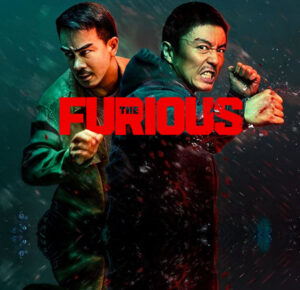
Definitely lives up to its title! Watch the Trailer for FURIOUS starring Xie Miao, Joe Taslim, Jeeja Yanin and Yayan Ruhian

"Furious" Poster

“Furious” Poster

Martial arts stars Xie Miao (My Father is A Hero, Eye for an Eye: The Blind Swordsman), Joe Taslim (The Raid, The Night Comes for Us), Jeeja Yanin (Chocolate, Triple Threat) and Yayan Ruhian (The Raid, Beyond Skyline) team up for the Edko/XYZ Films English-language actioner, The Furious, which hits theaters from Lionsgate on May 29th.

After the daughter of Wang Wei (Miao) is kidnapped by a criminal network and he receives no help from the corrupt police, Wei sets out on a rampage to find her himself. His only ally is Navin (Taslim) – a relentless journalist whose wife has mysteriously disappeared. Fueled by a furious vengeance, the unlikely duo ruthlessly fights against the kidnappers in this explosive martial arts showdown.

Out of all the Continue reading

Posted in News, Top 4 Featured |

Evil Cat (1987) Review

"Evil Cat" Poster

“Evil Cat” Poster

Director: Dennis Yu
Cast: Lau Kar-Leung, Joann Tang Lai-Ying, Mark Cheng Ho-Nam, Wong Jing, Hsu Shu-Yuen, Stuart Ong, Tom Poon Chun-Wai, Teresa Ha Ping
Running Time: 91 min. 

By Z Ravas

A textbook example of the free-spirited Hong Kong genre medley, one of those movies like A Chinese Ghost Story or Mr. Vampire that willfully tosses action, horror, and comedy into a blender and sees what results. The plot of Evil Cat (‘plot’ may be a loose word here) concerns Lau Kar-leung as the latest descendent in a long line of demon hunters who are meant to stop the monstrous Evil Cat as it attempts to break free from its prison and possess humanity every fifty years. There’s one wrinkle: his character is suffering from liver cancer and has just days to live with no male heirs in sight. When the Evil Cat is liberated and begins hopping from body to body a la The Hidden (which coincidentally released the same year), Lau Kar-leung is forced  to team up with Mark Cheng’s corporate driver in an attempt to put the finish on the feline demon.

Evil Cat is a fun movie that still somehow never seems quite as fun as the sum of its parts. I point the finger at Wong Jing. I know, I know: likely target, right? The divisive filmmaker has long been notorious for his sophomoric humor and crude sensibility; at least on Evil Cat, he was only responsible for the script while directing duties went to Dennis Yu  (The Imp). Truthfully, the movie isn’t nearly as scatalogical in its focus as many of Wong Jing’s other Continue reading

Posted in All, Chinese, News, Reviews | Tagged , , |