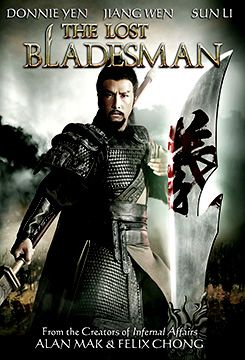
TheLost Bladesman tells the story of legendary Guan Yu (Yen) crossing five passes and slaying six generals. He played a major role in the civil war that led to the collapse of Han Dynasty and the establishment of Shu Han of the 3 Kingdoms, making Liu Bei its first emperor.
Written and directed by Alan Mak and Felix Chong (Infernal Affairs), The Lost Bladesman won several Golden Lotus awards at the 2011 Macau International Movie Festival, including Best Film, Best Director for Mak and Chong, and Best Actor for Donnie Yen. Wen Jiang also won the Best Actor award from the Shanghai Film Critics for his performance in the film.
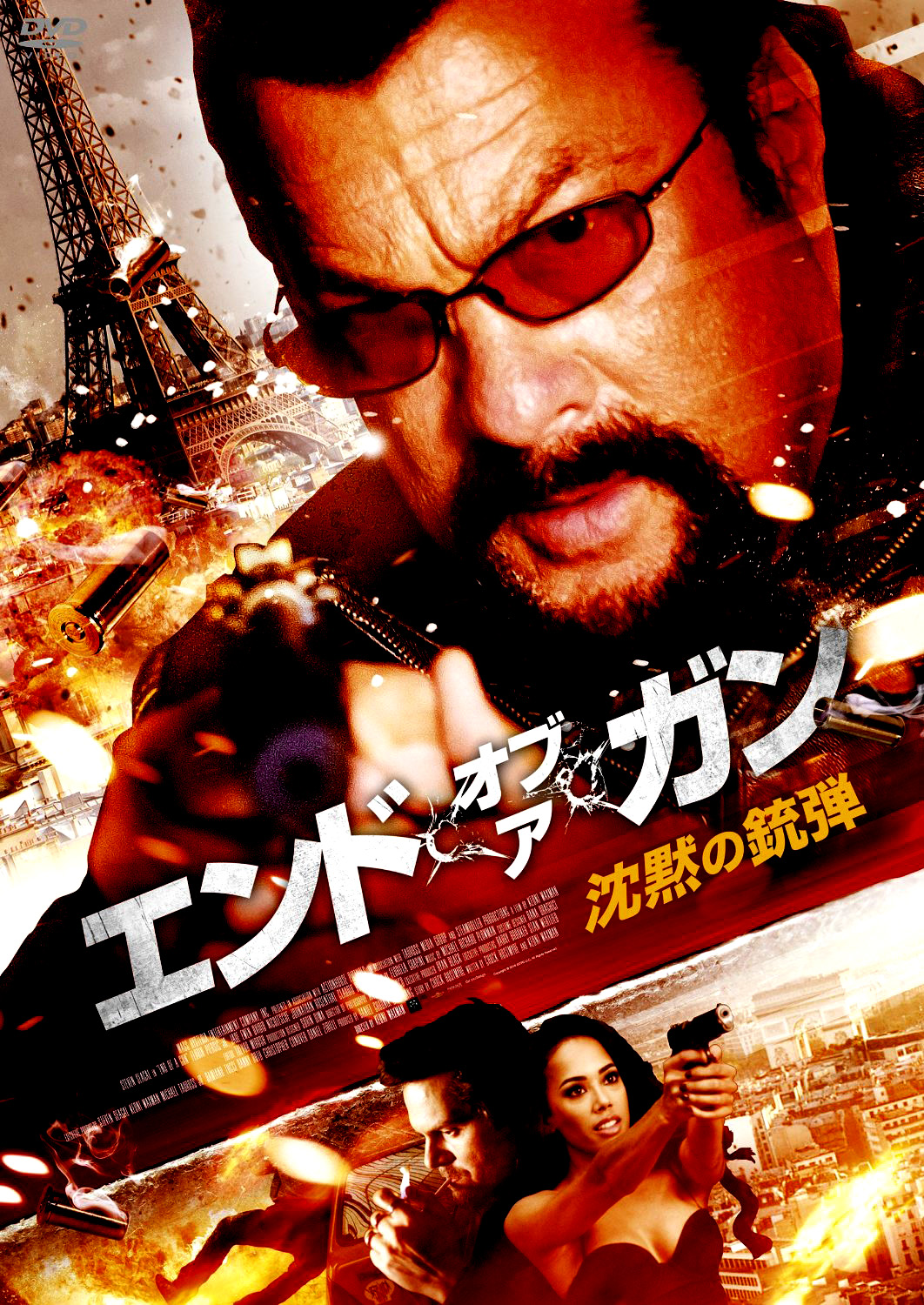
Director: Keoni Waxman Cast: Steven Seagal, Florin Piersic Jr., Jacob Grodnik, Jade Ewen, Jonathan Rosenthal, Radu Andrei Micu, Ovidio Nicolescu, Alexandre Nguyen, Troy Miller Running Time: 93 min.
By Zach Nix
2016 has been a very busy and interesting year for martial artist and action star Steven Seagal. By the year’s end, he will have appeared within six films overall, whether it be in a leading or supporting role. Films like The Asian Connection, Killing Salazar, and The Perfect Weapon feature Seagal in smaller roles than usual, even including villainous parts for the typically heroic action star, although Seagal has dabbled in anti-hero territory several times before. While those films are fascinating anomalies within his lopsided but commendable career, the vehicles in which Seagal is front and center are always the one’s that bring in the fans and get the most attention. Films like Sniper: Special Ops, Code of Honor, and the newly released End of a Gun feature Seagal as the star and lead of the picture. What’s most humorous is that Seagal looks exactly the same within all six of these films, as different as they all are. His current fashion sense comprises of orange tinted sunglasses, a goatee, and occasionally a do-rag. Regardless of whether Seagal is playing a seasoned sniper, a villainous gangster, or a vigilante, it seems that his goatee phase isn’t going away any time soon.
With that introduction and update of ‘The Sensei’ out of the way, let’s now focus our attention to End of a Gun, Seagal’s latest low budget action vehicle. The film is Seagal’s most recent collaboration with his go-to director, Keoni Waxman, whom he has done six or so films with already, including episodes of the television series True Justice, which in and of itself has been re-edited into films, hence the ‘six or so’ technicality that I specified. However, their latest scored not only the typical VOD release, but a surprising limited release in theaters. That’s right, Seagal was back on the big screen. As someone in their mid-twenties, I have to confess that this was my first time seeing a new Seagal movie in the theater, as I had skipped Machete back in 2010. While Seagal releases more than enough films per year for me to keep up with, I made the effort to see this one and drove several miles to a theater instead of watching it on demand, as both a sign of my support for the genre and in order to experience the rarity of Seagal on the big screen. The film is nothing special, as it’s just about your average recent Seagal venture, but at least it was a fun experience seeing Seagal kick some butt on the silver screen, even if it was within one of his most lackluster ventures to date.
I’ll be honest, I had very little expectations going into this film. After all, I have seen nearly all of Seagal and Waxman’s collaborations, and feel that they all feature the same pros and cons. The pros of their films are that Seagal seems dedicated to the projects, as each one features very little body doubles or voice dubbing. They are also somewhat technically proficient, featuring commendable lighting, decent cinematography, and no horrendous computer graphics. However, they still feature the flaws of Seagal’s worst ventures, such as plots that still find a way to overly complicate beyond the simple premise at hand, poorly edited fights that hide the shortcomings of the performers, and an all-around lack of tension or narrative momentum that drives Seagal’s best features. Therefore, it came as no surprise when End of a Gun met all of these pros and cons beat for beat exactly as I expected it too. I am happy to commend Waxman and Seagal for finally keeping a plot mostly simplistic, but their film still crumbles underneath its non-existent tension, morose plotting, and minimal action sequences.
Seagal plays Michael Decker, a former DEA agent who was fired without pay or benefits, and now resides in France. One night, he sees a man beating up a woman, Lisa (Jade Ewen), and steps in to help out. During the ensuing scuffle, Decker shoots and kills the man. Later the next day, Lisa comes to Decker with a proposition: if he can help her steal her now deceased handler’s money, she’ll split it with him. As a man with little money to his name and deadly skills to boot, Decker accepts. However, it turns out that the money belongs to Mr. Vargas, a drug lord who sends his enforcer, Gage, out to reobtain the money. When Lisa is eventually kidnapped by Gage, Decker has to decide whether to take off with his half of the money or intercede and teach everyone a lesson about honor.
The pros of End of a Gun are minimal, but I’d rather be sincere and honest about the picture than rude and cruel, as Seagal fans don’t exactly come to expect the highest of quality with his newer films. A unique pleasure of Seagal’s latest it that it places him into a heist plot, something that isn’t typically done within his films. The joys of placing Seagal within a heist raises the interesting question of his character’s morality while also offering up the undeniably entertaining elements that come with a heist (i.e. the planning, the execution, the big score, etc). Besides that, there’s some stylish font during the opening credits, as well as some funky music throughout, which is more than you can say about most Seagal films. There are also some seeds for potential, such as a somewhat interesting villain and a double cross that comes later on in the picture. Unfortunately, End of a Gun doesn’t fulfill on its heist-like promises, as Waxman once again delivers a lackluster Seagal outing that focuses more so on needless plotting, turning it into more of a dramatic thriller than a pure genre offering.
End of a Gun feels like an episode of a television show like Leverage, as it offers up a safe and basic heist plot, has an energetic soundtrack, and throws in some laughs here and there. However, imagine if one of those episodes were desperately drawn out to feature length, and you would have End of a Gun. There is barely enough narrative here to fulfill an entire feature, which thereby brings the film to a screeching halt at times, as Waxman drags scenes on for far too long in order to add more to the film’s running time. Another problem with the film is its grossly simplistic heist. Although Decker is sold as an extremely skilled and dangerous character, his plan might just be the lamest in heist history. He simply waits until night fall, walks into a parking garage, cuts two locks, beats up two guys, and simply strolls out with the money. It’s as simple as that. Almost anyone could have done what Decker accomplishes, but alas, that’s where some of the humor comes from in watching a movie like this.
As I stated before, the film is more so a dramatic thriller than a pure action film, as there is very little action throughout the entire feature. Therefore, Seagal fans hoping for plentiful beat downs or shootouts won’t find much. The aforementioned heist, which is rather silly, features some hard to make out fight choreography at a few points, which is no surprise given Seagal’s recent pedigree. There is a rather awesome moment though where Seagal kicks a security officer off of a parking garage in what is a rather impressive display of stunt work. There’s also a notable shootout in a hotel, which sports some solid sound design, but doesn’t last long. The finale of the film, which features gun fire, explosions, and melee fights, is honestly the peak of the film’s excitement. Seagal has a lengthy one on one knife fight with a henchman that makes for just about the highlight of the film. While it would have been nice to get more action like this throughout, action fans will find themselves clinging onto these moments as they are all that they will get during the film’s run time.
Fans of Seagal’s cinema will notice recognizable themes within End of a Gun that are consistent with the rest of his work. The obvious ones are honor and loyalty, as Seagal proudly proclaims towards the end to main villain Gage, “I’m not all about the money, I’m all about the honor.” Although these themes are somewhat apparent during the first two thirds of the film, these philosophical beliefs of Seagal come to the forefront during the finale of the film. He even lectures a character on the matter, and goes so far as to recap the same topic in the final scene, almost as a way to make sure that we, the viewer, don’t forget. Well versed Seagal fans will also recognize the theme of Seagal’s frustration with the system that employs him, as his character was fired from the DEA due to an incident that denied him severance pay. Once again, Seagal plays a character who simply wants to do the right thing and protect others, and yet no matter what, he never gets the proper recognition that he deserves. At this point, the most fun in watching a contemporary Seagal film comes in spotting the interconnected themes of his filmography, no matter how good or bad they are.
Seagal is clearly comfortable working with Waxman. He has now worked with him more than any other director in his career. However, I personally believe that Waxman needs to push Seagal more in order to get more out of him. All of their collaborations, from The Keeper, to A Dangerous Man, to their latest, are fairly safe and bland films. They’re not as horrendously inept as some of Seagal’s absolute craziest DTV efforts, such as Out for a Kill, Attack Force, or Kill Switch, but at least Seagal’s greatest train wrecks are more memorable and entertaining simply for how bonkers they are. Than again, some fans think differently, as several have praised Waxman and Seagal’s collaborations as a return to form for the action star. While it’s clear that Waxman is getting better with every film that he makes with Seagal, as his latest features the most simplistic plot and sleekest action he has produced to date, Waxman’s comfortable efforts aren’t going to get Seagal closer to his glory days any time soon.
All in all, End of a Gun is just another low budget Seagal vehicle that represents the woes of his contemporary work. It’s far from horrendous, as there are few body doubles in sight and Seagal’s voice sounds like himself, but its blandness is insulting enough to make it a forgetful action thriller. Die hard Seagal fans may want to check it out in the theater if only for the thrill of seeing him on the big screen again, but at the end of the day, Seagal has starred in several other DTV efforts of his own that are far better and more memorable than this one.
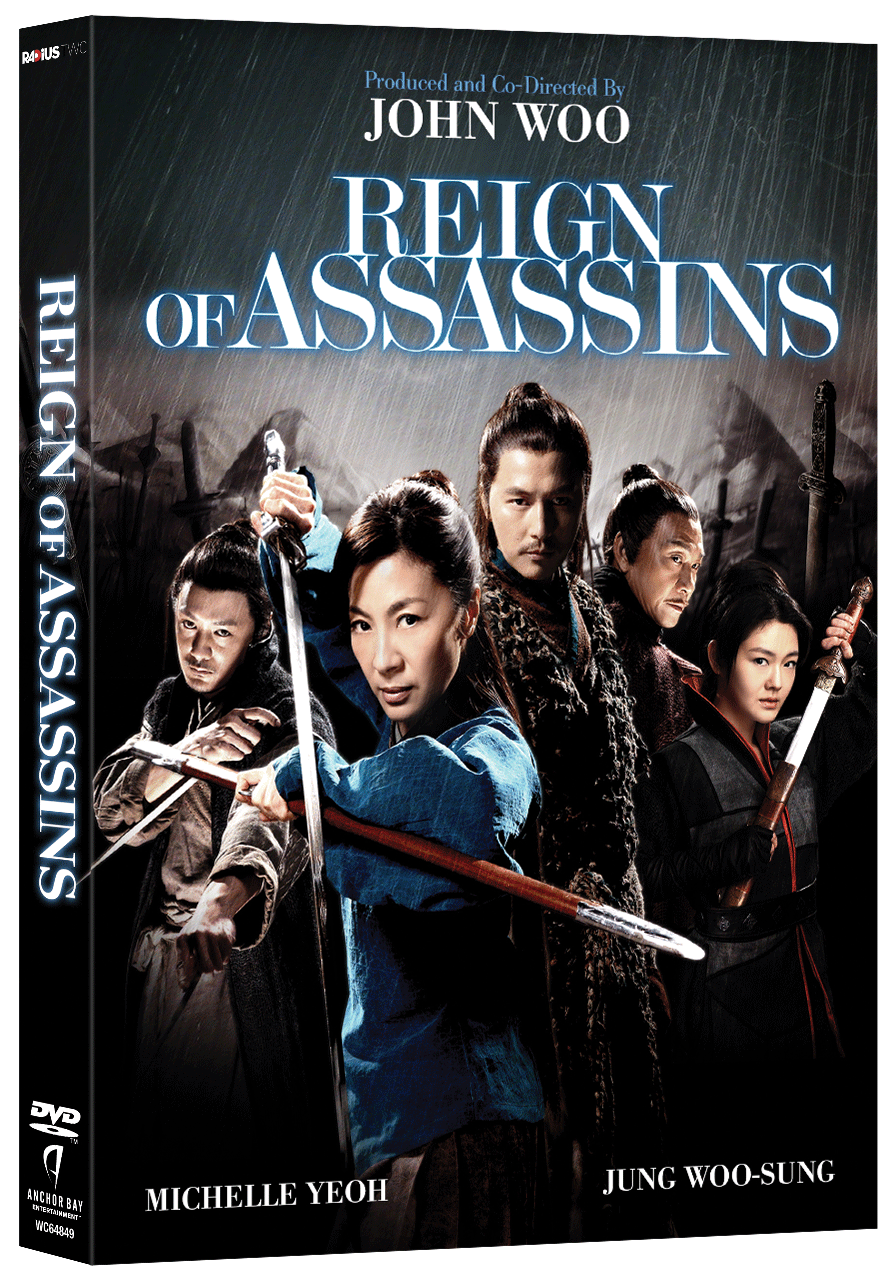
On November 1st, Reign of Assassins, an epic action film starring Michelle Yeoh (Wing Chun, Police Story 3), is finally heading to DVD, Digital HD and On Demand, courtesy of Anchor Bay Entertainment.
The film stars Yeoh as an assassin who is on a mission to return the remains of a mystical monk to their resting place. The remains are believed to hold a powerful secret. Along the way, she falls in love with a man named Jiang, whose father was killed by her gang. Unaware that he also is a trained martial artist, their love blossoms but tensions arise as the truth of her past unravels. Soon, a lethal triangle surfaces between her, Jiang and the team of assassins that are after the monk’s remains.
In 2010, Reign of Assassins took home two Hong Kong Film Critics Society Awards, including Best Director and Film of Merit. It also received 11 Hong Kong Film Award nominations, including a Best Picture nomination.
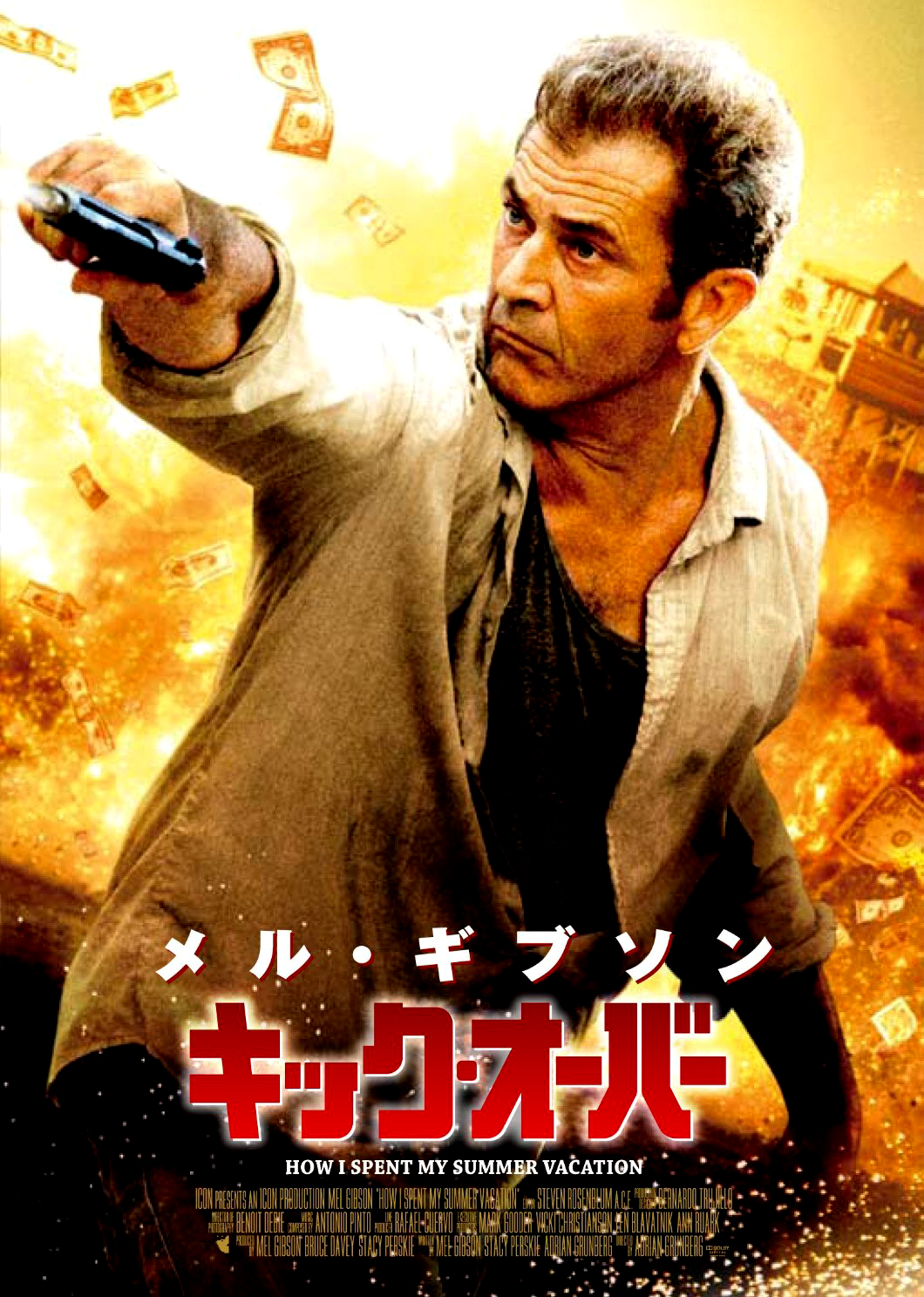
After a string of shoot ’em up titles such as Get The Gringo, Machete Kills, Expendables 3 and Blood Father, Mel Gibson (Edge of Darkness) might be out for more blood in Every Other Weekend, an action/adventure film by French filmmaker Benjamin Rocher (The Sweeney: Paris).
According to TTB, Every Other Weekend centers on a father who has his son convinced he’s a CIA spy with cool missions under his belt but he actually works in the agency’s IT department. However, on a father-son trip in Paris, the two find themselves in a life-threatening adventure in which secrets are spilled. The role Gibson is circling is the grandfather, who is actually a super spy.
The legendary actor/director is also heavily involved with Xiao Feng’s Chinese-language World War II film, titled The Bombing, which has him working behind the scenes as the film’s art director and executive producer. Additionally, extremely positive buzz is circulating for Gibson’s next directorial feature, Hacksaw Ridge, which hits theaters on November 4th 2016. His most recent film, Blood Father(which I actually loved, despite Zach’s recent review) hits Blu-ray & DVD on October 11, 2016.
We’ll keep you updated on this story as we hear more. Just for the heck of it, here’s the trailer for one of Mel’s most underrated movies:
Director: Zhu Mu
Producer: Raymond Chow
Cast: Robert Lee, Sylvia Chang, Nick Lam Wai Kei, Shaw Yum Yum, Lee Kwan, Gam Dai
Running Time: 86 min.
By Jeff Bona
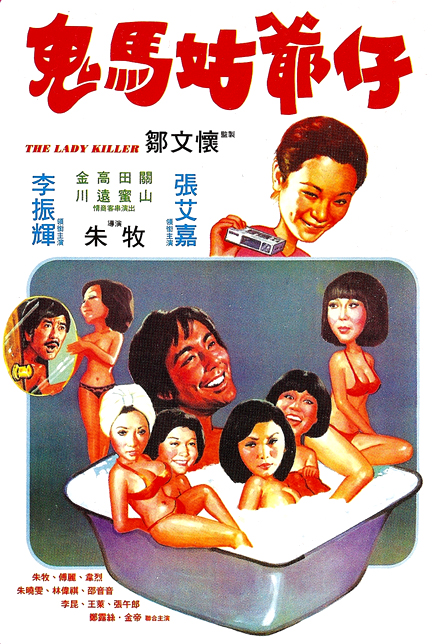
Before Brandon and Shannon Lee stepped into the Hong Kong film industry to make Legacy of Rage (1986) and Enter the Eagles (1998) respectively; Robert Lee, Bruce Lee’s younger brother, was cast to appear in Lady Killer, an extremely bizarre 1977 film that also starred Sylvia Chang (Yellow Faced Tiger).
In The Lady Killer, a popular singer named Ah Hui (played by Robert Lee) is approached by gangsters who want him to perform at their nightclub. When Ah Hui rejects, they set him up by making him believe he murdered an innocent man; Of course, Ah Hui falls for it. With nowhere to turn and the fear of being sent to jail, Ah Hui accepts help from the gangsters. In return, he has to sign an exclusive singing contract with them. Little does Ah Hui know, they have other sleazy plans in store for him.
Watching Robert Lee in The Lady Killer made me realize how much he looks nothing like Bruce. In fact, he’s almost opposite. Unlike Bruce, Robert is feminine, soft, and he doesn’t appear to have any noticeable muscle whatsoever – not to mention – zero martial arts capability.
It’s obvious that Golden Harvest, the film company responsible for all of Bruce’s films (including the posthumously released Game of Death), signed Robert on solely for the fact that he was Bruce’s brother ($$$). Most likely, The Lady Killer was planned to be more of an action film, but when it was realized that Robert was nothing like Bruce – or any other tough/action guy for the matter – the movie ended up being all over the place, genre-wise.
Still, the fact that Robert was nothing like his now-legendary bother didn’t stop the filmmakers from giving the audience a direct reminder that this was Bruce’s blood brother: Early on in The Lady Killer there’s an action scene where Robert’s character gets into a fight; as he gets into stance, Joseph Koo’s iconic soundtrack from Bruce Lee’s Way of the Dragon starts playing. It’s awkward to watch, but remember, “This is Bruce Lee’s brother everybody!” is what they’re marketing, so a moment like this is expected.
As for Robert’s fighting skills? Why don’t we just say that he was doing some basic moves that really don’t require any formal training whatsoever. His fight scenes aren’t laughably bad, but when you’re the brother of the world’s most famous kung fu star, expectations are sky high whether you like it or not. Thankfully (and I think Robert would agree), there’s only one martial arts sequence in the entire movie that involve Robert. From that point on, his character relies more on wit, than physical ability, to wean off his enemies.
Robert’s overall performance is passable, but he just doesn’t have that certain “punch” (no pun intended) or charisma to reach that movie star level. Sylvia on the other hand is amazing, which is a given, considering the acclaimed actress/filmmaker she would become later in her career.
The Lady Killer as a whole isn’t a good movie, but it entertained enough to keep me watching. It’s edgy, goofy and serious – all at the same time. Don’t let the caricature-style illustrations on the film’s poster fool you, because The Lady Killer is filled with partial nudity, sex, forced prostitution, gang rapes and women being smacked around. One minute Robert Lee is singing bubblegum pop songs, the next minute, Sylvia Chang is forced into being a whore.
Gam Dai (Ah Quen from Way of the Dragon) and Lee Kwan (Ah Kun from The Big Boss) briefly appear together on the same screen. For years – thanks to the English dubbed versions of The Big Boss and Way of the Dragon – both actors, who look very similar, were dubbed as “Ah-koon,” so a lot of people actually believed they were the same person. The Lady Killer debunks this theory.
Charles Bernstein’s soundtrack to the Burt Reynolds’ 1976 classic Gator plays in The Lady Killer a lot (and that’s a good thing). The track is called “Flight In the Night,” which has “borrowed” for many kung fu flicks of the 70s. You’ll recognize it once you hear it.
Robert performs all of his own pop songs. This shouldn’t be a surprise, considering Robert is an actual singer/songwriter. In the 60s, Robert was the leader/founder of a successful Hong Kong beat band called “The Thunderbirds.” He also recorded duet tracks with popular Eurasian singer, Irene Ryder. To die hard Bruce Lee fans, he’s mostly known for his 1974 LP, “The Ballad of Bruce Lee.”
Judging from The Lady Killer’s original trailer, the film was cut to shreds. Apparently there was a lot more nudity and even some extended fight sequences. Not sure why these scenes would end up in the trailer and not on the finished feature, but this practice isn’t unusual, especially for a Chinese film.
Following Lady Killers, Robert Lee would appear in two more Hong Kong movies: Con Artists (1978) and A Little Reason (1979) before calling it quits. In 2010, he returned to movies by doing a brief, non-acting introduction to Bruce Lee, My Brother together with his older sister, Phoebe Lee.
More or less, Robert Lee is basically “The Frank Stallone of Hong Kong” – both men are brothers of two famous action stars; and both had semi-successful singing careers. Only Frank one-ups Robert by actually resembling Sylvester.
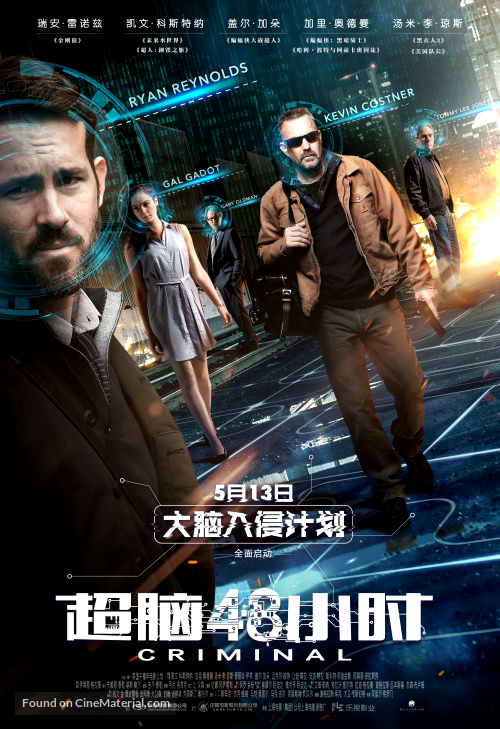
Director: Ariel Vromen Cast: Kevin Costner, Gary Oldman, Tommy Lee Jones, Alice Eve, Gal Gadot, Michael Pitt, Jordi Mollà, Ryan Reynolds, Antje Traue, Scott Adkins, Amaury Nolasco Running Time: 113 min.
By Paul Bramhall
When not on duty in superhero movies, Commissioner Gordon, the father of Superman, Wonder Woman, Deadpool, and Weapon XI, got together in London to make Criminal. The above mesh-up of DC and Marvel luminaries is of course entirely fictional, but what Criminal does do is bring together the impressive cast of actors who play said characters in their respective movies – Gary Oldman, Kevin Costner, Gal Gadot, Ryan Reynolds, and Scott Adkins. Throw the always reliable Tommy Lee Jones into the mix, and you realise that this is a movie with some serious acting talent on-board.
While Israeli born director Ariel Vromen only has a handful of titles under his belt, having directed just 3 full length features beginning with 2005’s Simple Lies, chances are it was the screenwriting pedigree of Douglas Cook and David Weisberg that attracted the stars to this particular production. Cook and Weisberg were responsible for the story and script behind 1996’s bombastic action flick The Rock, and also penned 1999’s Double Jeopardy, which also featured Tommy Lee Jones. However since then the screenwriting partners dropped off the map, and Criminal marks their first script in 16 years. Sadly it would also mark their final collaboration together, as Cook passed away in July 2015.
Criminal sees Ryan Reynolds furthering his attempts to corner the market of the ‘body swap’ genre. While 2015 saw him starring in Self/less, in which the brain of dying businessman Ben Kingsley is transferred into his body, here we experience the opposite, that see’s the brain of Reynolds’ murdered CIA agent being transferred into the body of Kevin Costner. If the pattern continues, then 2017 will likely feature a movie that has Costner’s brain being transferred into the body of an actor that’s played both sides of the superhero studios (Ben Affleck, we’re looking at you).
Criminal opens with Reynolds being pursued by shadowy figures through the streets of London. His CIA agent is delivering a ransom to a mysterious hacker who goes by the name of ‘The Dutchman’, that’s holding up in a location that only Reynolds knows. However when he’s intercepted and killed (his screen-time is comparable to Steven Seagal in Executive Decision), the CIA director (Gary Oldman) calls in a scientist (Tommy Lee Jones), who’s created an experimental procedure that can transfer memories from one human to another. Oldman is hell bent on finding the location of ‘The Dutchman’ before a crazy Spanish anarchist who wants to start World War III (yes you read that correctly), and a suitable candidate is found to absorb Reynolds’ memories in the form of Kevin Costner. Costner plays a violent redneck prisoner, chained up in solitary confinement due to being dropped as a child, which led to his frontal lobe not developing as it should. As a result, he can’t feel emotions, and enjoys beating people to a pulp. Basically, a dangerous guy, but one whose lack of frontal lobe development makes him the perfect candidate for a brain swap. Go figure.
In short, Criminal is a glorified B movie with a slumming it A list cast. From the moment Costner wakes up from the brain surgery, Oldman starts yelling at him a whole heap of exposition as to why he’s there and what he needs to remember. I could essentially copy and paste Oldman’s tirade here, and it would serve as an effective plot summary, but since I already took the effort to write the previous paragraph, I won’t. Indeed whenever Oldman is onscreen he’s at his scenery chewing best, spitting out the lines of the dubious script with a joyous reckless abandon, almost all of which involve him mentioning ‘The Dutchman’. “We need to find ‘The Dutchman’!”, “Lead us to ‘The Dutchman’!”, “Where is ‘The Dutchman’!?” He seems to be aware that the script is beneath him, so simply goes at it like a madman, all the while being followed around by another agent played by Scott Adkins, who gets a few lines here and there but little else.
Costner on the other hand seems genuinely dedicated to his role, and does his best to inject pathos into his performance, even when the script frequently works against him. The role was originally ear marked for Nicolas Cage, who it was reported turned it down, but it’s easy to imagine if he had accepted it what a completely different performance he would have brought to the character. As it is, Costner’s violent redneck is all grunts and twitches, capable only of monosyllabic communication and punching people in the face. However once he has Reynolds’ memories transferred into his brain, he begins to feel emotions for the first time, emotions such as love. Indeed it would be a fair comparison to say that his character follows much the same arc as Jet Li’s Danny the Dog in Unleashed, only instead of Morgan Freeman and watermelons, we have a bunch of memories and Gal Gadot.
Gadot plays Reynold’s widow, and her first encounter with Costner involves him in a home invasion, in which he covers her mouth with duct tape while she sleeps, wrapping her arms and legs with it to restrain her. It’s an uncomfortable scene, and he seems set to rape her, until Reynolds’ memories interfere and he can’t bring himself to do it, ultimately fleeing the scene. It’s somewhat of a massive leap in believability then, when 30 minutes later Gadot is inviting him to sleep on the couch in their house, and her and Reynolds’ daughter is giving him piano lessons (another replicated scene from Unleashed). Gadot urges him to get in touch with Reynolds’ memories of their wedding day and the birth of their daughter, and for the first time Costner’s frontal lobe allows him to experience the feeling of love, and he begins to learn that having feelings isn’t such a bad thing after all.
Costner’s character is best described as a mix of Danny the Dog meets Jason Bourne, but instead of being a Chinese kung fu fighter or a skilled assassin with no memory, we have a redneck with a heap of new memories. He suddenly finds himself able to speak French, and calmly shoot a group of attackers trying to kill him with a precision aim, while at the same time gradually coming to care about Gadot and her daughter. Despite his new found skills though, the way Vromen films them is sadly lacking in any kind of tension or excitement, with the action scenes frequently falling flat. There’s obligatory explosions, car chases, and even a random missile fired from a submarine just for good measure, but none of them come with any real sense of meaning or danger, resulting in it being an easy task to quickly lose interest.
Events culminate in a particularly generic finale which takes place on a runway, that sees all the characters converge in the one location, including Tommy Lee Jones, who’s spent every scene he’s appeared in looking and sounding terminally bored. What sticks out like a sore thumb in particular though, is how lost the script seems to be in terms of what the final outcome should be for Costner’s character. Lest we forget that without Reynolds’ memories, he was a death-row prisoner chained by the neck and ready to put the beat-down on anyone that got too close to him. Unsurprisingly events head in the direction of a happy ending, and when one of Oldman’s fellow agents asks him what he plans to do with Costner, Oldman declares that he’s going to offer him a job, a line which makes about as much sense as the whole brain swapping concept in the first place.
While actors like Kevin Costner, Gary Oldman, and Tommy Lee Jones are always entertaining no matter what production they appear in, Criminal does feel at times that it’s stretching this statement to its limit. For fans of British crime thrillers with a hint of science fiction thrown in, Vromen’s latest could definitely be worth a look, as for everyone else, stick with the stars classic movies. It would be ‘Criminal’ not to.
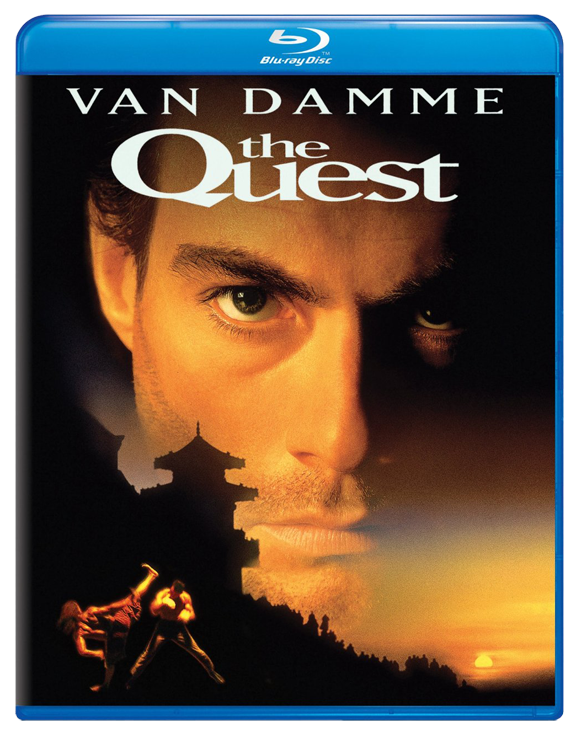
Today’s Deal on Fire is the Blu-ray for The Quest, a 1996 martial arts film directed by and starring Jean-Claude Van Damme.
The Quest revolves around a pickpocket (Van Damme) who heads to the Far East in order to escape police trouble. While there, he meets James Bond (Roger Moore) and gets mixed up in a deadly martial arts competition.
The Quest is based off a 1991 script Van Damme wrote with Frank Dux (the real life martial artist portrayed in Bloodsport) called The Kumite: Enter the New Dragon – but that’s another story.
Director: Albert Pyun Cast: Jean-Claude Van Damme, Deborah Richter, Vincent Klyn, Dayle Haddon, Alex Daniels, Blaise Loong, Ralf Möller, Haley Peterson, Terrie Batson, Jackson ‘Rock’ Pinckney, Chuck Allen, Robert Pentz Running Time: 82 min.
By Kelly Warner
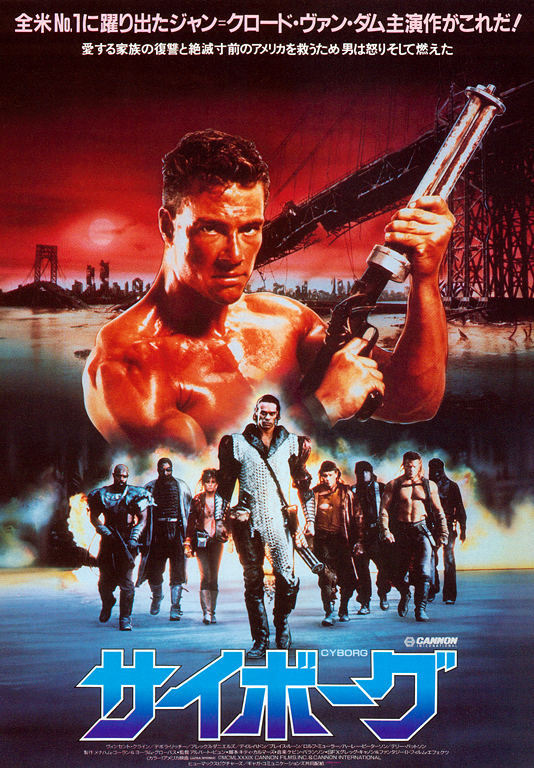
I had never seen 1989’s Cyborg before last night. The film has something of a reputation both here and elsewhere on the net as the one early Jean-Claude Van Damme movie you would be better off skipping. So of course I had to seek it out.
Cyborg has an unlikely story of how it came into being. The Cannon Films production company was dealing with financial troubles after a series of box office bombs, perhaps chief among them being Tobe Hooper’s troubled Lifeforce in 1986. Cannon had plans to make a sequel to Masters of the Universe and a live-action Spider-Man film with director Albert Pyun (The Sword and the Sorcerer), but financial difficulties forced them to cancel their deals with Mattel and Marvel before the cameras started rolling. In order to best make use of all the costumes and sets they’d already created for both abandoned films, Pyun wrote a screenplay, credited the script to his cat, cast the up-and-coming star Jean-Claude Van Damme, and set to work on Cyborg in an attempt to recoup the studio’s losses. (Some TV guides and film databases confusingly still refer to Cyborg as a He-Man sequel. Even RottenTomatoes, where the film sits at 14%, currently lists the film as Masters of the Universe 2: Cyborg)
Considering the unlikely origins, Cyborg is actually better than you’d expect. Which is not to say that Cyborg is a good film – it isn’t – but it’s an interesting and peculiar one. Unlike many of Van Damme’s other lesser efforts, there’s nothing by-the-numbers here. Pyun may never have been a celebrated director (Ed Wood comparisons are apparently not uncommon), but he does show a particular sense of style.
The film takes place in a post-apocalyptic America, where a plague has wrecked the world and only a female cyborg (Dayle Haddon) has the key to finding a cure. But there’s a problem: the most powerful gang in the wastelands will do anything they can from seeing the scientists succeed in saving the world. As Vincent Klyn’s grunting villain Fender explains it in the opening lines of the movie, “Restore it? Why? I like the death! I like the misery! I like this world!” Fender abducts the cyborg and it’s up to a hero with a sad story (Van Damme) to save the day.
What’s odd is that the cyborg of the title is really the least important part of the movie. She’s the film’s MacGuffin, I suppose, the thing that makes the story go and the object that heroes and villains alike are fighting over. Even the fact that she’s a cyborg is barely important to the story. At one point we get to see her reveal her mechanical brain. It’s a scene where the actress steps out and is replaced by an animatronic, rubber face. It’s an odd effect, straddling the line between realistic and fake, resulting in something uniquely unsettling (think: The Polar Express). Other than this scene and one other that reveals a metal eye, we basically forget she’s a robot. Indeed, we basically forget all about her or the cure because… umm… where’s the plague, exactly? I remember one kid covered in boils but other than that I’m pretty sure the plague is already a distant memory. (Cyborg would get two sequels, one starring Angelina Jolie (!), Jack Palance, and Elias Koteas, the other featuring Malcolm McDowell. I’ve not seen either film but by almost all accounts they’re weaker than Pyun’s original. They do appear to make better use of the sci-fi cyborg aspects of the story, though.)
Cyborg ain’t much of a cyberpunk action movie, nor is it an apocalyptic contagion thriller. Instead, Cyborg owes much to George Miller’s idea of the apocalypse, with many of the villains looking like they’d just failed auditions to join Lord Humungus on the set of The Road Warrior. Extreme costumes, hairstyles, and madness reign supreme in Cyborg. Even Van Damme gets in on the fun, with flashbacks revealing him to have a Revolutionary War haircut that’s not at all silly looking, honest…
Filled with decapitated heads, crucifixions, and all manner of ultra-violence, Cyborg has an unexpected mean streak that you don’t see in many Van Damme features. While I wouldn’t say that the violence makes the film more entertaining, it does result in some shocks that add to the film’s peculiar “charm.” Unfortunately, the action seems to have been edited by throwing the movie into a blender and hitting the highest speed, resulting in breakneck cuts that confuse and draw attention to themselves.
Pyun’s budget constraints are readily apparent from the start. In an odd way that’s difficult to explain, it’s like you can actually see the edges of the set at times. Overactive smoke machines and cheap backdrops are difficult to ignore. And some sets are strange and difficult to figure out. When the heroes are chased through a sewer system, sunlight beams in from the walls. But aren’t they underground? So is it sunlight or artificial light? If it’s artificial light, where’s the sewer getting its electricity, and why? Am I not supposed to ask these things? Too bad!
To sum things up: Cyborg is cheap, silly, and weird, but it’s the fun kind of cheap, silly, and weird. I would never call this a good movie but at least it’s never a boring movie. At times, it’s impossible to look away from. And considering the film’s strange pre-production story, it’s really a wonder it makes as much sense as it does. So, it’s my opinion that Cyborg doesn’t really deserve the reputation of being one of Van Damme’s absolute worst.While it may be totally skippable for the casual fan, I’d watch Cyborg over Death Warrant, The Order, The Quest, Derailed, and Second in Command any day of the week. (But please don’t make me.)
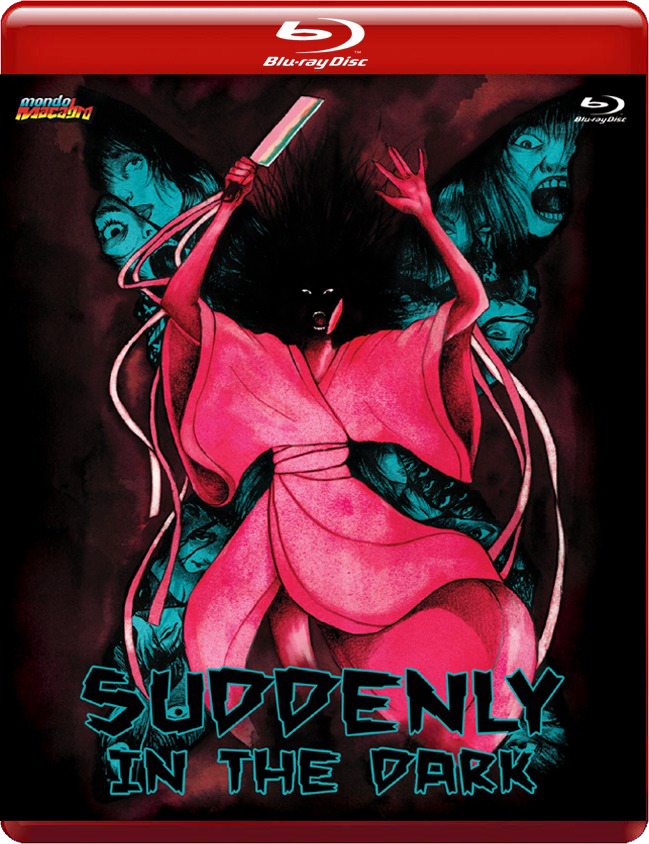
Independent distributor Mondo Macabro will soon release the Blu-ray for 1981’s Suddenly in the Dark(read our review), an obscure, critically-acclaimed Korean thriller directed by Go Yeong-nam (Korean Connection). The upcoming release will feature all-new interviews with Korean film critics and producers.
A Limited Halloween release for Suddenly in the Dark will be available to order on October 31st. It will be limited to 500 copies in a red case edition with an exclusive booklet!* Click here for the retail version.
Koreanfilm.org’s Darcy Paquet cited Suddenly in the Dark as a rare example of 1970s-80s Korean horror that was genuinely frightening, describing it as “a mysterious psychological study… that beguiles the viewer right up to its bizarre closing image.” Cityonfire.com’s Paul Bramhall says “I’m excited at least!”.
Suddenly in the Dark stars Kim Young-ae (Confession of Murder), Yoon Il-bong (Love on a Rainy Day), Lee Gi-seon (Lost Youth), Hyeon Hye-ri (Unconditional Love) and Kim Geun-hui (Encounter).
Product Features:
Interview with producer Suh Byung-gi
Interview with critic Kim Bong-seok on the history of Korean horror films
Classic K-Horror VHS Cover Art Gallery
Teaser Trailer
Mondo Macabro Promo Reel
Brand New Cover Illustration by Naomi Butterfield
Limited edition booklet with brand new essays on the film by Grady Hendrix and Christopher Koenig
*A retail release in a standard case without the booklet will be available sometime Spring 2017. If the LE sells out quickly, it’s possible that we will do another limited red case run, but no more than another 500, and probably un-numbered.
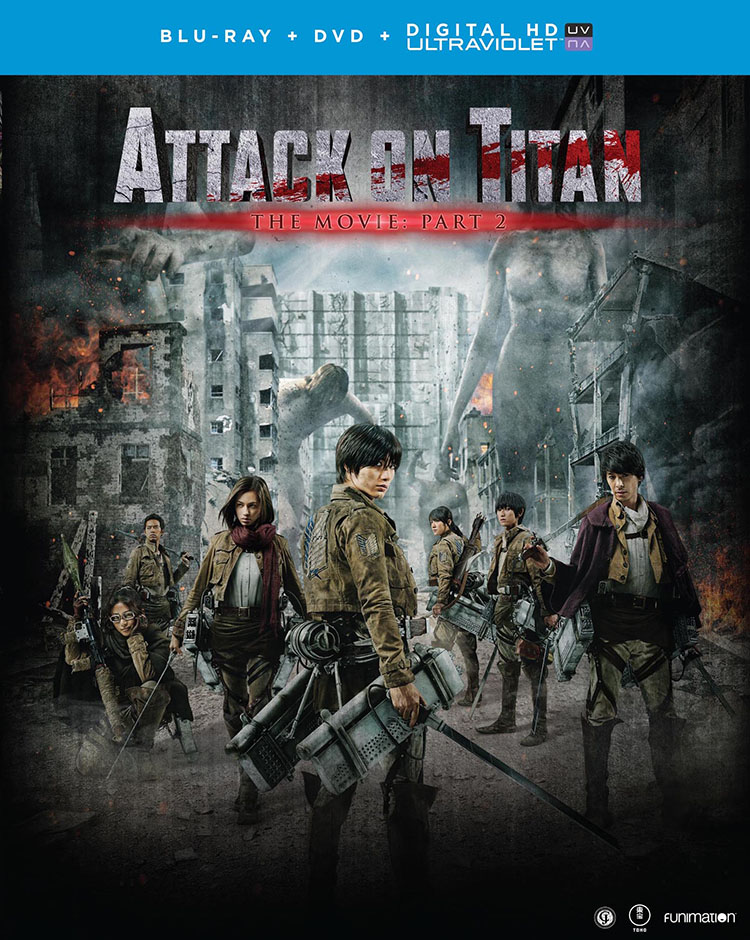
Attack on Titan: Part 2 (read our reviews for Part I and Part II) takes place in a strange, quasi-medieval world in which giant humanoid creatures named Titans appear and threaten the lives of everyday people. Civilization’s only line of defense against the Titans are teenage soldiers who traverse the Titans’ massive bodies using powerful grappling hooks. | Part 1 is also available.
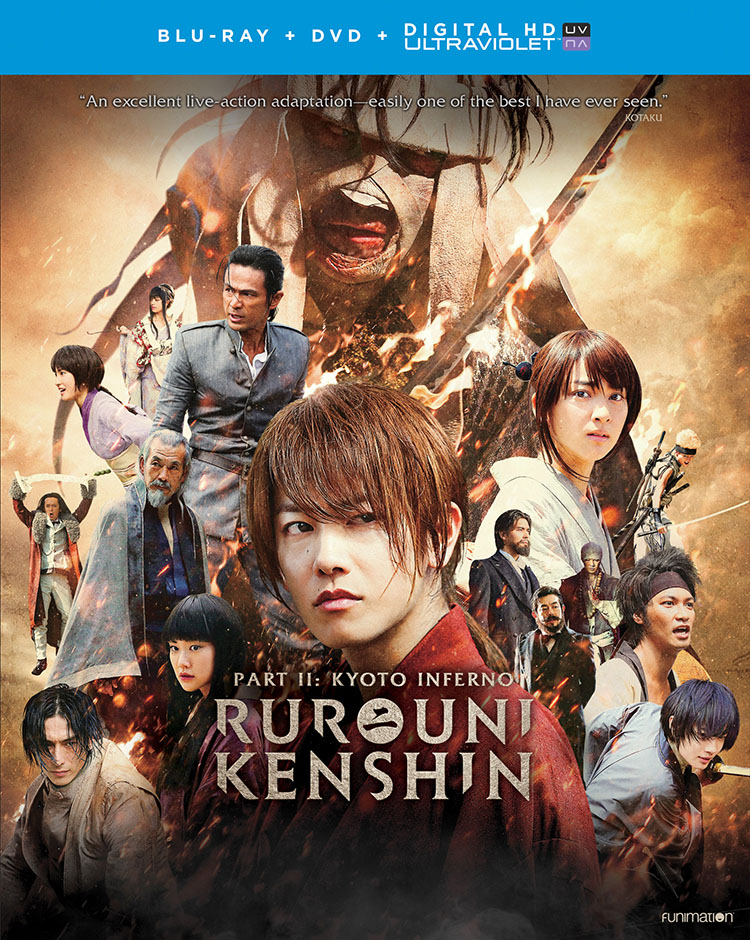
Rurouni Kenshin Part II: Kyoto Inferno | Blu-ray & DVD (Funimation)
RELEASE DATE: December 6, 2016
Funimation presents the Blu-ray & DVD for Keishi Ohtomo’s Rurouni Kenshin Part II: Kyoto Inferno, starring Takeru Satoh (Goemon), Emi Takei (Ai to Makoto), Yusuke Iseya (13 Assassins), Munetaka Aoki (Time Traveller) and Yu Aoi (Space Pirate Captain Harlock).
Former assassin Kenshin Himura and his friends are called back into action when a ghost from the past era rises to wreak havoc across Japan. Makoto Shishio, another ex-assassin, was betrayed, burned, and left for dead at the end of the war. Badly scarred-but very much alive-Shishio has put together an army and aims to overthrow the new government-burning anything and killing anyone who stands in his way. | Part I and Part III are also available.
AKA: Kung Fu of Taekwondo Director: Ulysses Au-Yeung Jun Producer: Lu Ching-Hang Cast: Kim Jin-pal, Sylvester Williams, Lin Chen Chi, Suen Yuet, Fang Mien, Liu Ping, Ma Cheung Running Time: 88 min.
By Paul Bramhall
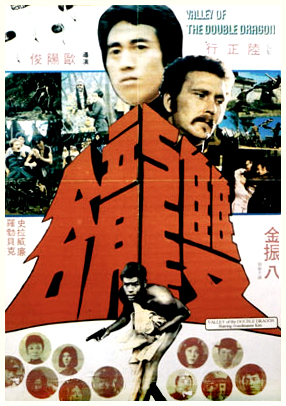
When it comes to the old-school kung fu genre, it’s fairly standard for titles to sometimes go under different aliases. However Valley of the Double Dragon must surely hold the award for the number of different names it goes by, as in addition to its original title, it’s also been released as – Golden Leopard’s Brutal Revenge, Fist Fighter, King of Kung Fu, Taekwondo, and Kung Fu of Taekwondo. My viewing of the movie came courtesy of the Australian released DVD, which goes under the Fist Fighter moniker, and as far as I’m aware remains the only legitimate physical release on a digital format.
Released a year after Brue Lee’s untimely death, Valley of the Double Dragon came at a time when the kung fu genre was scrambling to find its feet in the midst of losing its biggest star. One of the lasting impacts that both Bruce Lee had on the genre, and also Raymond Chow’s recently set up Golden Harvest studio, was their love of Korean martial arts. Fighting techniques such as Hapkido and Taekwondo quickly found favor for their aesthetically pleasing visuals onscreen, with Bruce Lee casting the likes of Grandmasters Hwang In-shik and Ji Han-jae, in Way of the Dragon and Game of Death respectively. Chow continued to cast In-shik and Han-jae in a number of other Hong Kong productions, while also continuing to scout other Korean talent, such as Jhoon Rhee (When Taekwondo Strikes) and Byong Yu (The Association).
While Rhee and Yu only dabbled in the film industry long enough to make one movie each, before returning to their lives as martial arts instructors, one Korean Hapkido master that did stick around a little longer was Kim Jin-pal. A Hapkido instructor under the tutelage of Han-jae, Jin-pal was the real deal, spending the 60’s acting as a bodyguard for both Korean and U.S. presidents, and teaching the U.S. military in Vietnam as part of the army. At the beginning of the 70’s he moved to Hong Kong and opened the Flying Tiger Hapkido Studio, a nickname he’d earned based on his high flying kicks. As fate would have it, after appearing on Hong Kong television in ’73, he was quickly scouted and cast as the lead in 1973’s Tiger. The movie made him an established star, and he’d go onto make a total of 8 movies in Hong Kong over 2 short years, while becoming the Hapkido instructor for the likes of Jackie Chan, Sammo Hung, and Angela Mao.
In Valley of the Double Dragon, Jin-pal plays the leader of a small group of Chinese guerrillas fighting against the Japanese during World War II. Helmed by Ulysses Au-Yeung Jun, the Taiwanese director had a long and varied career, which saw him directing everything from classic kung fu such as Prodigal Boxer, to gritty gangster flicks like Gangland Odyssey. In Valley of the Double Dragon, the wartime setting certainly makes for a unique look and feel, however what makes it even more unique is the inclusion of an African American lead, in the form of Sylvester Williams, here in his one and only movie appearance. Considering Hong Kong cinema is not normally what you’d call ‘racially sensitive’, even over 40 years later Williams role remains the only time a Hong Kong movie has had a black lead.
Proceedings open with a group of U.S. fighter planes being gunned down from the sky by the Japanese. Despite the grainy and worn picture that the movie comes with watching it today, it’s clear that the production appears to have had a decent sized budget behind it. Both Williams and his co-pilot are able to eject and deploy their parachutes, however the co-pilot suffers the misfortune of landing in a brutal tangle of barbed wire, receiving a face full of it, and is captured as a POW. The Japanese also sight Williams coming down, but he manages to land safely and escape immediate capture, instead resulting in the Japanese launching an expansive search to track him down.
It’s while changing clothes that Williams stumbles across the Chinese guerrillas, or rather, they stumble across him. A misunderstanding sees him assume that the guerrillas are the enemy, and, having literally been caught with his pants down, proceeds to get into a fight wearing only a pair of white underpants. Definitely something you don’t see every day. Williams may not be the most graceful fighter, however he knows how to sell his punches, and conveys a considerable amount of power when called upon to throwdown. Thankfully the remainder of his fight scenes involve more clothes. After it’s established that both Williams and Jin-pal’s group of guerrillas are on the same side, they become fast friends, and team up to take down a ruthless Nazi commander, played by none other than Bob Baker.
Baker immortalized himself as the Russian boxer Petrov, who squares off against Bruce Lee in the finale of Fist of Fury, arguably one of the Little Dragon’s most iconic showdowns. His blonde fuzzy afro and handlebar moustache make him instantly recognizable, and off-screen he was in fact a student of Lee’s, which saw the pair develop a close friendship, one that even saw Baker accompany Lee when he went to work in Hong Kong. Unlike the portrayal of his characters in front of the camera though, in reality Baker was much more reserved, and didn’t enjoy the limelight that working in the film industry brought with it. As such, his appearance in Valley of the Double Dragon as a sadistic member of the Gestapo complete with a black leather trench coat, was to be his second and last. He’d go on to be interviewed for a handful of Bruce Lee documentaries, and taught Jeet Kune Do to a small number of private students, however for the remainder of his career up to his passing from cancer in 1993, he stayed out of the spotlight.
While Valley of the Double Dragon marks his final screen appearance, it’s certainly a memorable one. As an imposing member of the Gestapo, he angrily smashes up the contents of a room when he doesn’t get his way, and when spending time with a prostitute, takes it on himself to carve a message into her back with a knife. It’s rare that the villain in an old school movie comes across as intimidating before they’ve even thrown a punch, but Baker’s performance here is one of pure menace, and as an audience you’re rooting to have him get his comeuppance from the moment he’s onscreen.
In many ways Valley of the Double Dragon feels as much of a war time adventure tale as it does an old school kung fu movie, at times perhaps even more so. The action here is far from frequent, with Jin-pal holding off to unleash his kicks until 30 minutes in, and what’s there is far from graceful. However the scarcity of the action only serves to make it more meaningful when it arrives, with each fight scene feeling distinctly rough and intense. The group of Chinese guerrillas eventually disguise themselves as a travelling opera troupe, which also allows for Williams to have his face painted like one of the army generals in Chinese opera, covering his ethnicity (as well as allowing for such clanger lines as, “I never knew a black man could look so authentically Chinese!”). This structuring of the plot is reminiscent of many a western, with character traits like one of the guerrillas having a tiger tattooed onto his body every time he kills a Japanese soldier, also adding to the tone.
Events eventually culminate which see the group of 5 guerrillas holed up in an abandoned house, while surrounded by Baker and a small army of Japanese troops. It’s a satisfyingly brutal finale, which at times resembles a kung fu version of The Wild Bunch, as a bare chested Jin-pal and Williams go for broke empty handed against the multitude of pistol and sword wielding attackers. It’s during these scenes when it’s possible to witness just how powerful Jin-pal’s kicks are, while Williams uses his muscular frame to literally throw his opponents around, and throws in some nice kicks himself. Slow motion is used to great effect, both at highlighting bullet riddled deaths, reminiscent of Sam Peckinpah, but also to emphasise the form of Jin-pal’s kicking. When he’s left to face off against both Baker and a katana wielding Japanese general, there’s a real sense of desperation and urgency, which is rare to see from a 1974 production.
With the benefit of hindsight, it’s clear to see that Valley of the Double Dragon successfully brought together numerous stars from the old-school kung fu era who shined briefly but brightly. The combined filmographies of Kim Jin-pal, Bob Baker, and Sylvester Williams may barely scrape into double figures, but the movies that they’ve left us with are all worthy of a watch, and for that, we should be thankful.
Paul Bramhall’s Rating: 7/10
Beware of spoilers in the following clip from Valley of the Double Dragon:
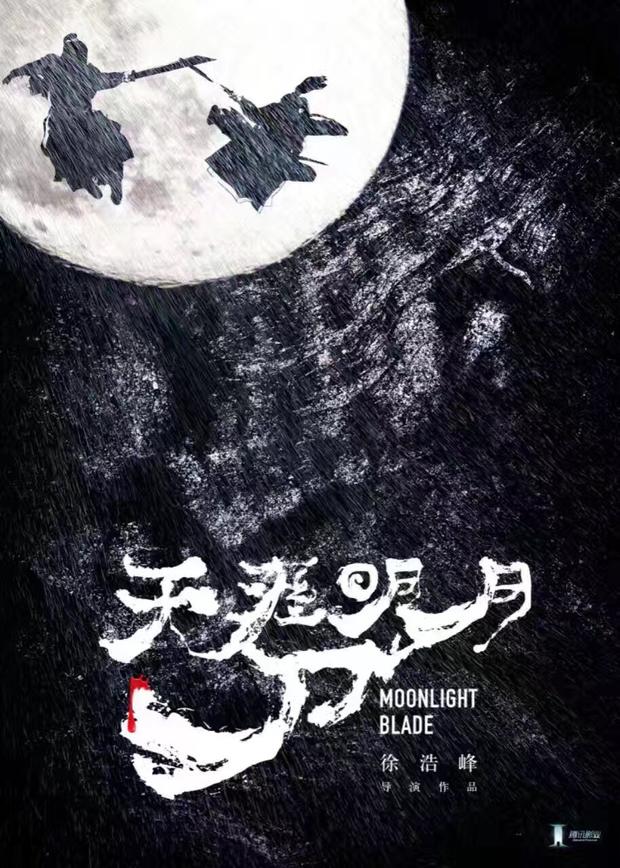
Celestial is partnering with the newly-established Tencent Pictures to produce yet another Shaw Brothers remake titled Moonlight Blade, a re-working of Chor Yuen’s The Magic Blade, a 1976 swordfight-filled martial arts film starring Ti Lung (The Pirate) and Lo Lieh (Bruce’s Deadly Fingers).
Tencent has hired Xu Haofeng (The Master) to direct the project, which he will shoot when he wraps up his current project, Hidden Blade.
Xu made a name for himself by penning the screenplay for Wong Kar-Wai’s The Grandmaster. But it was 2011’s The Sword Identity, his directorial debut, which showed Xu’s true talent. Xu is known for presenting martial arts in a less stylized and more realistic manner.
If you’re curious to see what Xu is capable of, be sure to catch The Master (aka The Final Master, read our review), which was recently released by U.S. release by United Entertainment Partners last May. Additionally, Lionsgate will be releasing the DVD for Xu’s Judge Archer in November.
You can also look forward to Derek Yee’s fourthcoming Shaw Brothers remake of Death Duel (1977), starring Kenny Lin Geng-Xin (Young Detective Dee), Peter Ho Yun-Tung (The Monkey King), Jiang Yi-Yan (The Bullet Vanishes) and Jiang Meng-Jie (Kung Fu Man).
We’ll keep you updated with Magic Blade as we hear more!
Updates: Check out the new teaser poster for Moonlight Blade (via AFS).
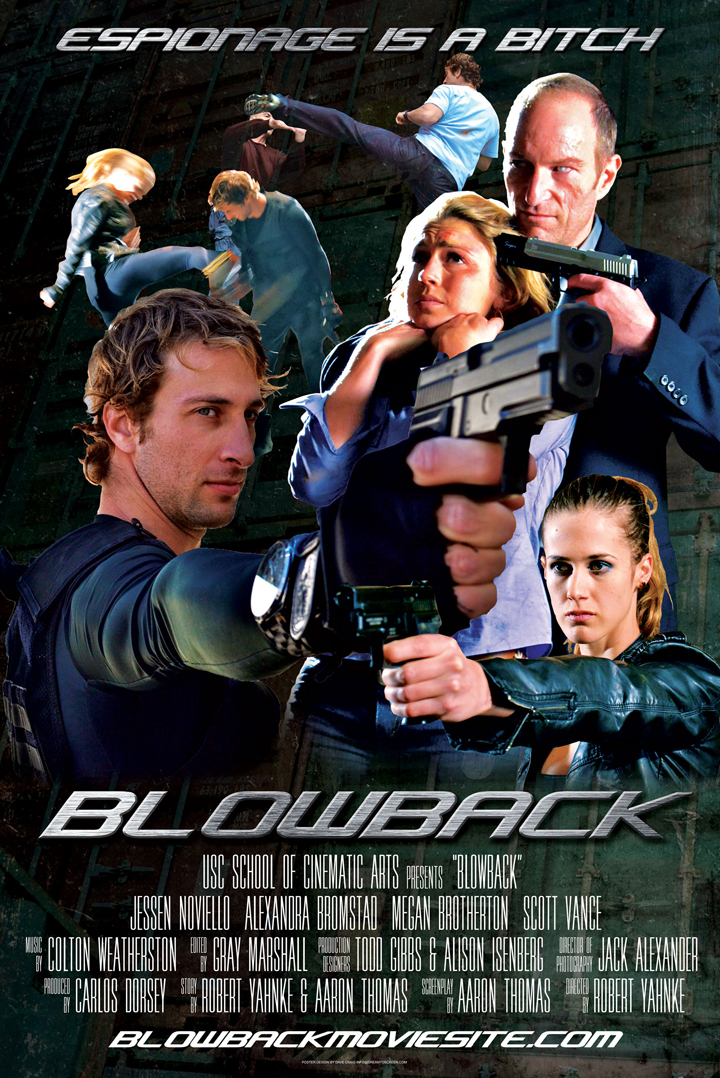
City on Fire is proud to present the action-packed short for Robert Yahnke’s Blowback, which is currently available to watch right now at no charge – and they say nothing is free anymore, not true!
In Blowback, a spy breaks up with his girlfriend after another false accusation of infidelity, and in her rage, she discovers his true occupation as a spy and blows his cover to the arms dealer who is looking for him. Espionage is a bitch…
The film stars Sport Karate Hall of Famer, Jessen Noviello (known for this stuntwork in films such as Universal Soldier: Day of Reckoning and 300: Rise of an Empire), and features action choreography by veteran stuntman Steven Lambert (Ninja III: The Domination).
If the following short generates enough interest, a feature version of Blowback will soon follow. Without further ado… sit back, relax, and press play below…
For more information about Blowback, visit the film’s official site.
Disclaimer: cityonfire.com does not own any of the photos contained in the blog. cityonfire.com was made merely to pay homage to these films, directors, talent, etc. and not for any profit or commercial reasons. No copyright infringement intended. The photos are copyrighted and courtesy by their respective owners.
“Copyright Disclaimer, Under Section 107 of the Copyright Act 1976, allowance is made for “fair use” for purposes such as criticism, comment, news reporting, teaching, scholarship and research. Fair use is a use permitted by copyright statue that might otherwise be infringing. Non-profit, education or personal use tops the balance in favor of fair use.”






2 Comments