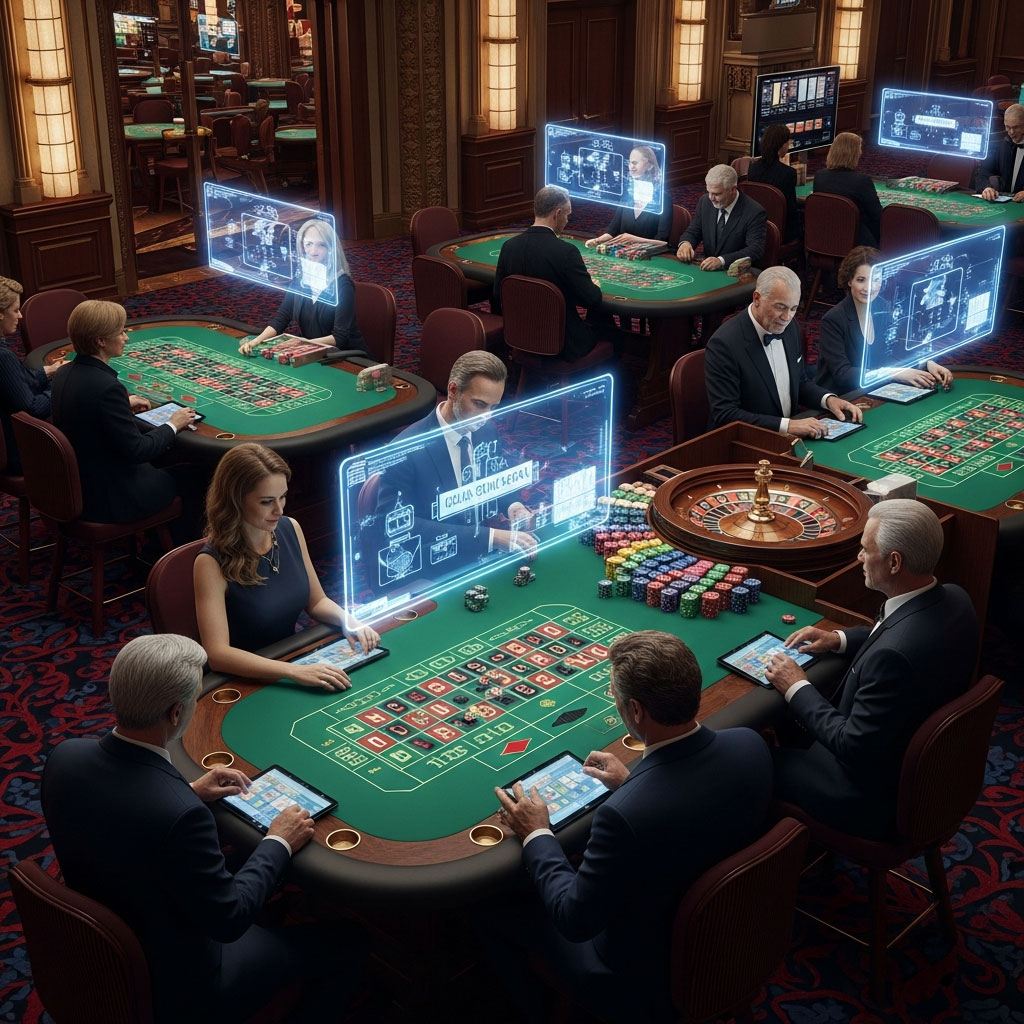




There is something quite particular about the air in Atlantic City. If you’ve ever strolled down that iconic wooden walkway, you’ll know exactly what I mean. It is a mixture of salt spray from the Atlantic, the faint scent of saltwater taffy, and that unmistakable hum of energy coming from the massive resorts lining the shore. For decades, the Boardwalk has been more than just a tourist spot; it has served as the heartbeat of American East Coast gaming.
However, if you were to step onto a gaming floor in one of those storied buildings today, you would notice things look a bit different than they did twenty years ago. The clatter of physical coins is long gone, replaced by digital soundscapes, but the shift goes much deeper than that. We are currently witnessing a fascinating hybridisation of the casino experience, where the physical boundaries of the Jersey shore are blurring into the digital world. It is a transformation that has turned Atlantic City from a regional gambling hub into a global laboratory for gaming technology.
Please remember that gambling should always be a form of entertainment. Only play with what you can afford to lose, and if you feel like things are getting out of hand, seek support from organisations like BeGambleAware.
The Cultural Anchor of the Boardwalk
To understand where we are going, we have to look at where we started. Atlantic City has always been a bit of a rebel. When New Jersey voters approved casino gambling in 1976, it wasn’t just about tax revenue; it was about saving a city that had fallen on hard times. When Resorts International opened its doors in 1978, it sparked a gold rush that defined the aesthetic of American table games for a generation.
I often think about the traditional setup of those early floors. It was all about the physical presence: the weight of the clay chips, the felt of the green baize, and the specific etiquette of the craps table. These traditions didn’t just stay in New Jersey; they helped set the standard for how live games were conducted globally. The “Atlantic City style” of play became a benchmark. It was social, it was loud, and it was deeply rooted in the physical presence of the dealer and the players surrounding the table.
This cultural heritage is exactly why the transition to digital has been so successful here. Rather than trying to replace the physical experience, the industry in New Jersey has sought to bottle that Boardwalk atmosphere and ship it to browsers across the state and beyond.
The Digital Bridge: Studios within Casinos
The real turning point came around 2013 when New Jersey led the way in legalising online gaming. But the clever bit wasn’t just letting people play on their phones; it was the way they linked those phones back to the physical casinos. Many people don’t realise that when they log into a live dealer game in New Jersey, the person spinning the wheel might be standing just a few floors above a traditional gaming pit.
Massive live streaming studios have been built directly inside properties like Hard Rock and Ocean Casino Resort. These aren’t just dark rooms with cameras; they are high-tech broadcast hubs. This “Digital Bridge” has changed the revenue model for the shore. Instead of relying solely on foot traffic, which can be fickle during those biting East Coast winters, casinos can now operate at full capacity twenty-four hours a day, seven days a week, regardless of the weather outside.
It has created a symbiotic relationship. The physical brand gives the online player a sense of security and familiarity, while the online revenue provides the capital needed to keep the physical Boardwalk properties looking sharp. It’s a win-win for the local economy and for players who want that authentic feel without having to find a parking spot.
The Multiplier Effect and RNG Integration
As we moved further into this hybrid era, the industry realised that simply filming a standard game of roulette wasn’t quite enough for the modern audience. We have become accustomed to high-definition visuals and interactive elements in every other part of our digital lives. This led to what I call the “Multiplier Effect,” where the mechanics of traditional table games are fused with Random Number Generator (RNG) software.
In a standard game of roulette, the maximum payout on a single number is 35:1. That is a rule that has been set in stone for centuries. However, by grafting RNG elements onto the live format, developers have broken that ceiling. They’ve introduced games where “lightning” can strike certain numbers, boosting payouts to 500:1 or even more.
A prime example of this evolution is Rainbow Riches, where the game Lightning Roulette has become a staple. It takes the familiar live dealer format that Atlantic City helped popularise and adds a layer of high-volatility excitement that a purely physical table simply couldn’t manage. You still have the real dealer, the real wheel, and the real ball, but the digital overlay allows for a level of variance that satisfies the modern demand for bigger potential outcomes. It’s a brilliant bit of engineering that honours the old while embracing the new.
How Gamification Works in Practice
When we look at platforms like Rainbow Riches, we can see a clear benchmark for how these integrated ecosystems should work. It isn’t just about the game itself; it is about the infrastructure behind it. To make a game like Lightning Roulette work, you need incredibly low latency. If the stream lags even for a second, the immersion is broken.
The success of these titles illustrates how gamification has moved beyond simple leaderboards or badges. In this context, gamification means taking the core “maths” of a casino classic and making it more engaging through visual storytelling and augmented reality. When those multipliers flash up on the screen behind the dealer, it feels more like a high-stakes television game show than a quiet night at a casino.
This shift has been globally influential. While the technology often originates in tech hubs or in the UK gaming market, Atlantic City has become the primary staging ground for proving these concepts in the US. The data coming out of the Jersey shore shows that players aren’t just trying these hybrid games out of curiosity; they are making them their primary way to play.
Future-Proofing the Shore
So, what does this mean for the future of the Boardwalk? There is a lot of talk about how to attract a younger, more tech-savvy demographic. The reality is that this group isn’t particularly interested in sitting at a traditional slot machine for hours on end. They grew up with interactive media and social connectivity.
By pivoting to tech-heavy, hybrid gaming, Atlantic City is essentially future-proofing itself. We are seeing the rise of “stadium gaming” on the physical floors, where players sit at individual terminals but play against a live dealer located in the centre of the room. This bridges the gap between the solitary experience of a mobile app and the social pressure of a high-limits table.
The data suggests that this demographic values transparency and interaction. They like seeing the physical ball drop, but they also want the statistical overlays and the fast-paced nature of digital play. By embracing these RNG-hybrid formats, casinos are ensuring they remain relevant in an age where entertainment options are virtually limitless.
I find it quite heartening to see the old Boardwalk adapting so well. It would have been easy for Atlantic City to become a museum of 20th-century gambling, but instead, it has chosen to become a hub for 21st-century innovation. Whether you are playing from a laptop in a coffee shop in Newark or standing on the floor of a neon-lit resort, the experience is more connected than ever.
A Final Thought on the Hybrid Shift
The evolution from the boardwalk to the browser hasn’t been a replacement of the old ways, but rather an expansion of them. The history and culture of Atlantic City provide the soul, while the new digital tools provide the heartbeat. It is a fascinating time to watch how these two worlds continue to collide.
As we look ahead, we can expect even more integration. Perhaps we will see more virtual reality elements or even more sophisticated social features that allow friends to play together from different locations while still feeling like they are at the same table. The possibilities are, quite frankly, endless.
Just a final reminder to keep your gaming fun and within your limits. The tools and games available today are more exciting than ever, but they should always be enjoyed responsibly. If you need any advice or support, there are many resources available to help you keep things on track.
The Boardwalk might be made of wood, but the future of Atlantic City is definitely digital. And honestly? I think the old city has never looked better.