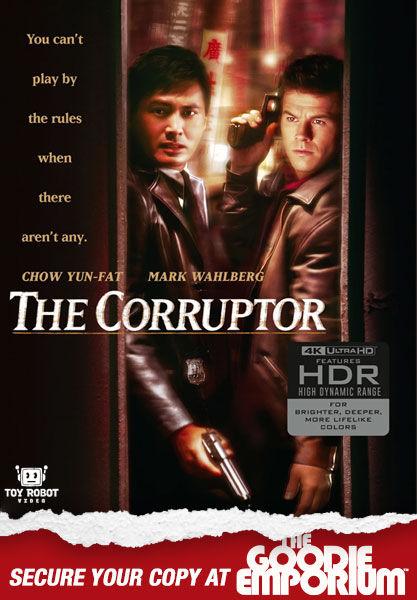

Hong Kong has no casinos. Under the Gambling Ordinance the only legal bets in the city are on Jockey Club racing and football and the Mark Six lottery, and there was even less on offer in December 1989, when Chow Yun-fat sat down at a table on a yacht and unwrapped a bar of Feodora chocolate. God of Gamblers took HK$37 million and was the biggest film in Hong Kong that year. All for the Winner topped 1990. God of Gamblers Returns topped 1994. For most of a decade the most popular genre in a city that couldn’t legally play the games was the gambling film, and Wong Jing and his imitators kept shooting the same climax, Chow Yun-fat at the table more often than not, all the way to From Vegas to Macau 3 in 2016.
That’s where I’d start if anyone asked me why the casino works so well for action cinema. It isn’t the chandeliers. It’s that the table is a duel you can shoot in close-up, in a room the audience has never been allowed into.
The room is the fight
A casino floor hands a director everything a fight needs before the fight starts: a crowd that can scatter, hard surfaces that catch light, formal clothes that will look wrong the second they get torn, and a set of rules everyone in the room is pretending to follow. Roger Deakins lit Skyfall’s Macau casino, built at Pinewood, with what he described as around 300 practical lamps and some 200 fresnels rated at 300 watts each. Cinesite’s Komodo dragons in the pit were textured from real ones at London Zoo. The best-looking casino in the Bond series is a soundstage in Buckinghamshire with a CG lizard in it, which tells you how little the location matters and how much the light does.
John Wick, for the record, never fights across a casino floor. The neon set-piece in Chapter 4 is a Berlin nightclub, 800 dancers and 40,000 gallons of water a minute by Chad Stahelski’s count, and the card game before it is five-card draw, John deals aces and eights. The geometry is the same, though. A big lit room, a crowd, a table, a man who has to get from one end of it to the other.
Blackjack is the wrong duel
The movies and the games they borrow from disagree about which game the duel belongs to. The Hong Kong climax is five-card stud, “show hand”, because stud is a two-player standoff with a reveal built in; Ko Chun’s last card is the whole plot. Bond’s game was chemin de fer in five films and blackjack exactly once, in Licence to Kill, where the point of the scene is that he’s winning too much to be ignored. The cinema of cool calculation runs on games you play against a person.
Blackjack isn’t one of those. You play it against the house, the dealer follows fixed rules, and there’s no one across the table to bluff. Its best film is Croupier, Mike Hodges’ 1998 London picture with Clive Owen dealing rather than playing, which went almost unnoticed in Britain, then took over $6 million in the States and got itself disqualified from the Oscars for having aired on Dutch television first. The dealer’s side of the table is the honest one, and it’s more or less what online blackjack in the UK is now: a dealer on camera in a studio, a real shoe, no villain opposite, the house the only opponent the game ever had. The duel the movie’s stage at a blackjack table comes from stud and baccarat, not from blackjack.
Chips, cards, silence
The sound of a casino scene is mostly what’s been left out. Per Hallberg and Karen Baker Landers, who won the Sound Editing Oscar for Skyfall in a tie with Zero Dark Thirty, talked at the time about the difference between representing a space and representing a moment. The room gets the murmur and the chip clatter. Then the scene turns, all of that drops away, and you get one sound: a card, a shuffle, a chair. The silence is the cue that the etiquette is about to break. The Wong Jing films do it cheaper and just as well, the chatter dropping out a beat before the last card turns.
Whether the trope dies is a question the box office has already answered. Night King, Jack Ng’s nightclub comedy with a Macau casino sequence in the middle of it, became the fourth Hong Kong film ever to pass HK$100 million back in March, in a half-year when local takes rose by a quarter. Paul Bramhall counted the God of Gamblers franchise at roughly thirteen entries when he reviewed The Saint of Gamblers. I’d be surprised if it stopped there.