




Ask most people to picture a sapphire and they will describe a deep, velvety blue. That instinct is not wrong, but it tells only a fraction of the story. Sapphire is one of the most color-diverse gemstones set into fine jewelry, appearing in pink, yellow, green, near-colorless white, and even soft blends that seem to shift as the light moves. For anyone starting to explore rings, necklaces, and pendants built around this stone, understanding its palette is the fastest way to shop with confidence. This guide walks through the main color families, what makes each one special, and the science that ties them all together.
Blue: The Classic That Set the Standard
Blue sapphire earned its fame for good reason. The finest examples show a saturated, slightly violet-tinged blue that stays vivid under both daylight and lamplight, and that steady presence is exactly why the color became shorthand for the whole gem species. When people talk about a “sapphire blue,” they are usually imagining a medium to medium-dark tone that reads rich without turning inky. Lighter blues feel airy and modern, while deeper blues carry a more formal, timeless mood, which makes the family surprisingly flexible across necklaces, pendants, and everyday rings. Because blue is where most newcomers begin, it is worth seeing how the stone fits into the wider world of blue gems before committing to a look; for that broader context, this overview serves as the complete guide to blue gemstones. Once you can recognize a balanced blue, comparing every other hue becomes far easier.
Pink and Padparadscha: Warmth at the Other End
Pink sapphires bring a completely different energy. They range from delicate baby pink to hot, almost neon magenta, and they pair beautifully with warm-toned metals for a soft, romantic effect. Sitting between pink and orange is the rarest and most talked-about member of the family: padparadscha. Named after a lotus blossom, a true padparadscha blends pink and orange into a glowing, sunset-like color that is prized precisely because it refuses to settle into one lane. These stones command attention in a simple pendant or a solitaire-style ring, where nothing distracts from the unusual hue. For a beginner, pink and padparadscha are a reminder that sapphire is not a single color but a spectrum, and that some of its most collectible expressions live far from the expected blue.
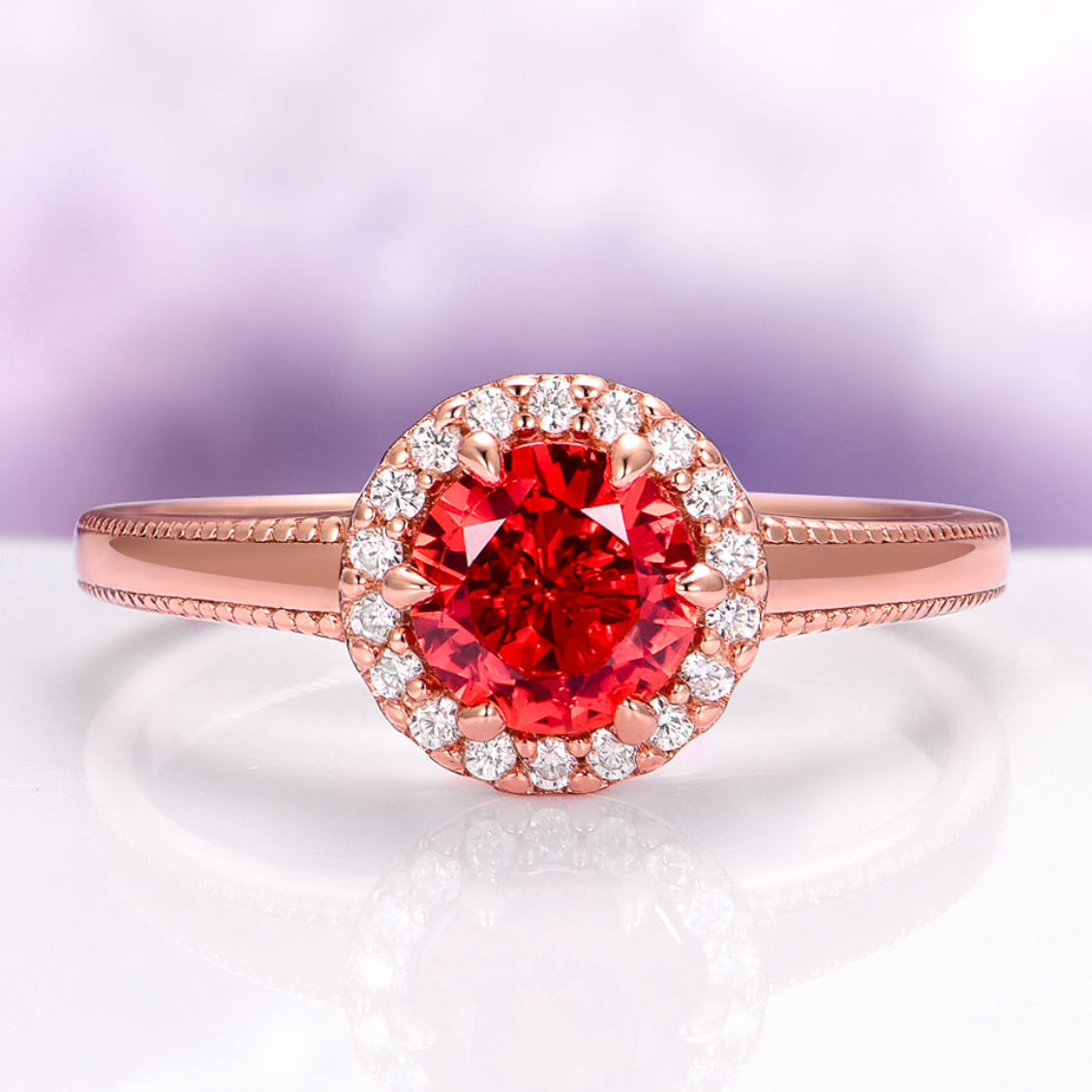
Padparadscha – a pink-orange sapphire far from the expected blue.
Yellow and Green: The Underrated Everyday Hues
Yellow and green sapphires deserve more attention than they usually get. Yellow sapphires span from pale, buttery lemon to a saturated golden canary that looks brilliant against warm metals and holds its color reliably in daylight. They feel cheerful and easygoing, which makes them a natural pick for pieces meant to be worn often. Green sapphires tend toward earthy, mossy, or forest tones, sometimes with a subtle blue or yellow undertone that gives them real depth. Because green is a quieter color, it reads as understated and versatile, sliding easily into a wardrobe without demanding a specific occasion. Together, these two families offer some of the best value and wearability in the entire sapphire world, and they prove that you do not need the headline colors to own something genuinely beautiful.
White and Colorless: The Quiet Alternative
White or colorless sapphire is the stone’s most understated form. With little to no trace element influencing its color, it appears clear and bright, offering a clean, neutral sparkle. It will not throw the rainbow flashes that some other clear stones are known for, but that restraint is part of its charm. A colorless sapphire feels crisp and contemporary, and it works as a supporting accent alongside colored center stones or as a quiet standalone in a minimalist pendant. For anyone who loves the durability and heritage of sapphire but prefers a neutral palette, this is the natural choice. It also pairs cleanly with any metal tone, which makes it one of the easiest sapphire colors to build a versatile collection around.
Star Sapphires: When the Stone Holds a Light
Some sapphires reveal a moving, six-rayed star that glides across the surface as the piece is tilted. This effect, called asterism, comes from tiny needle-like inclusions arranged in an orderly pattern inside the stone, which reflect light into crossing bands. Star sapphires are typically cut as smooth domes, or cabochons, rather than faceted, because that rounded shape is what lets the star float. They appear most often in blue and gray-blue tones but can show up across the color range. There is something quietly mesmerizing about a star that appears to be lit from within, and it gives collectors a reason to appreciate inclusions rather than fear them. If you want to explore this and the other color families in finished pieces, browsing a curated range of sapphire jewelry is a good way to see how each hue translates into rings, necklaces, and pendants.
What Actually Drives the Color
Every one of these colors traces back to the same base mineral: corundum, a crystalline form of aluminum oxide. Pure corundum is colorless. The differences arrive when trace elements slip into the crystal structure. Iron and titanium together produce the classic blues, chromium pushes the stone toward pink, and various combinations yield the yellows, greens, and the delicate pink-orange of padparadscha. This is why a single gem species can span nearly the whole rainbow, and it is also why one important naming convention exists: any gem-quality corundum that is red is called a ruby, while every other color is called a sapphire. Understanding this trace-element story helps a beginner see color not as a random label but as a fingerprint of how each stone formed. Here is a quick way to keep the families straight:
Blue – iron and titanium; the traditional benchmark hue.
Pink to padparadscha – chromium, alone or blended with a hint of orange.
Yellow and green – iron and other trace elements; warm, wearable, often great value.
White / colorless – little to no trace coloration; clean and neutral.
The Takeaway
Sapphire rewards curiosity. What looks at first like a single blue gem turns out to be an entire palette shaped by the same durable mineral and a few trace elements, offering something for nearly every taste and every piece of jewelry. Whether you are drawn to the timeless depth of blue, the glow of a padparadscha, the everyday warmth of yellow and green, the calm of colorless, or the quiet magic of a floating star, knowing the color families lets you choose with intention rather than guesswork. Start with the hue that speaks to you, learn why it looks the way it does, and you will find that shopping for sapphire becomes less about following a trend and more about understanding a genuinely remarkable stone.