
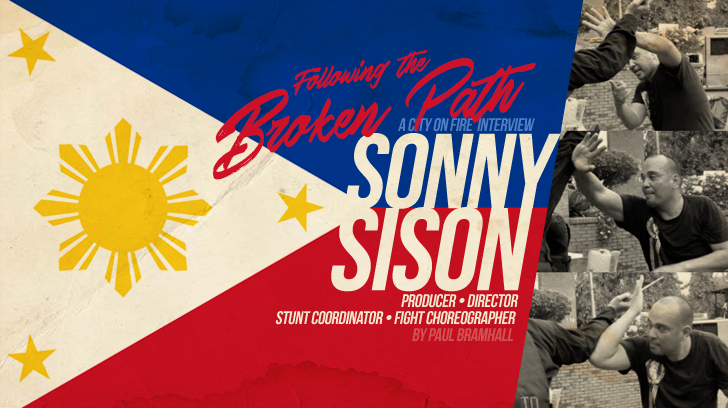
As someone who’s been working in the action movie industry for over 25 years, it’s safe to say that action director Sonny Sison has seen it all. In a career that spans from the Power Rangers to Iron Fist, Sison has gradually developed from his beginnings as a stuntman, to a respected action director, working with the likes of Mark Dacascos, Koichi Sakamoto, Dwayne Johnson, and Johnny Yong Bosch.
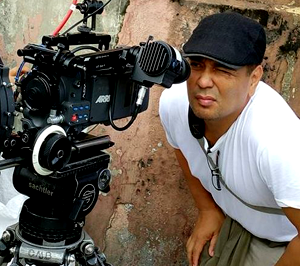
Sonny Sison
In 2014 Sison re-located to his motherland of the Philippines. After having seen the likes of its South East Asian neighbors like Thailand, Vietnam, and Indonesia gain global recognition for their action movies, he decided to make it his mission to put Philippines action cinema on the map. Describing the nation of over 7000 islands as having a massive potential that has yet to be realised, Sison looks to have found a kindred spirit in director Pedring Lopez.
After successfully collaborating together on 2015’s Nilalang, the pair are currently in the pre-production stages of their next feature, an all-out actioner entitled Breach, which plans to cast Mark Dacascos in the lead. Combined with currently being mid-way through shooting Buy Bust, director Erik Matti’s next feature which promises to be equal parts gritty and action packed, Sison could well be very close to realising his goal.
After interviewing Lopez in 2016 (read the interview here) I’d struck up a dialogue with the veteran action director, and we’d agreed to catch up at some point to discuss his latest endeavours. With both Buy Bust and Breach now moving full steam ahead, in early July 2017 it seemed like as good a time as any, so it was we found ourselves sat over a pair of mango shakes in a Manila bar. Discussing everything from his early days in the industry, to his hopes for the future, check out our discussion below –
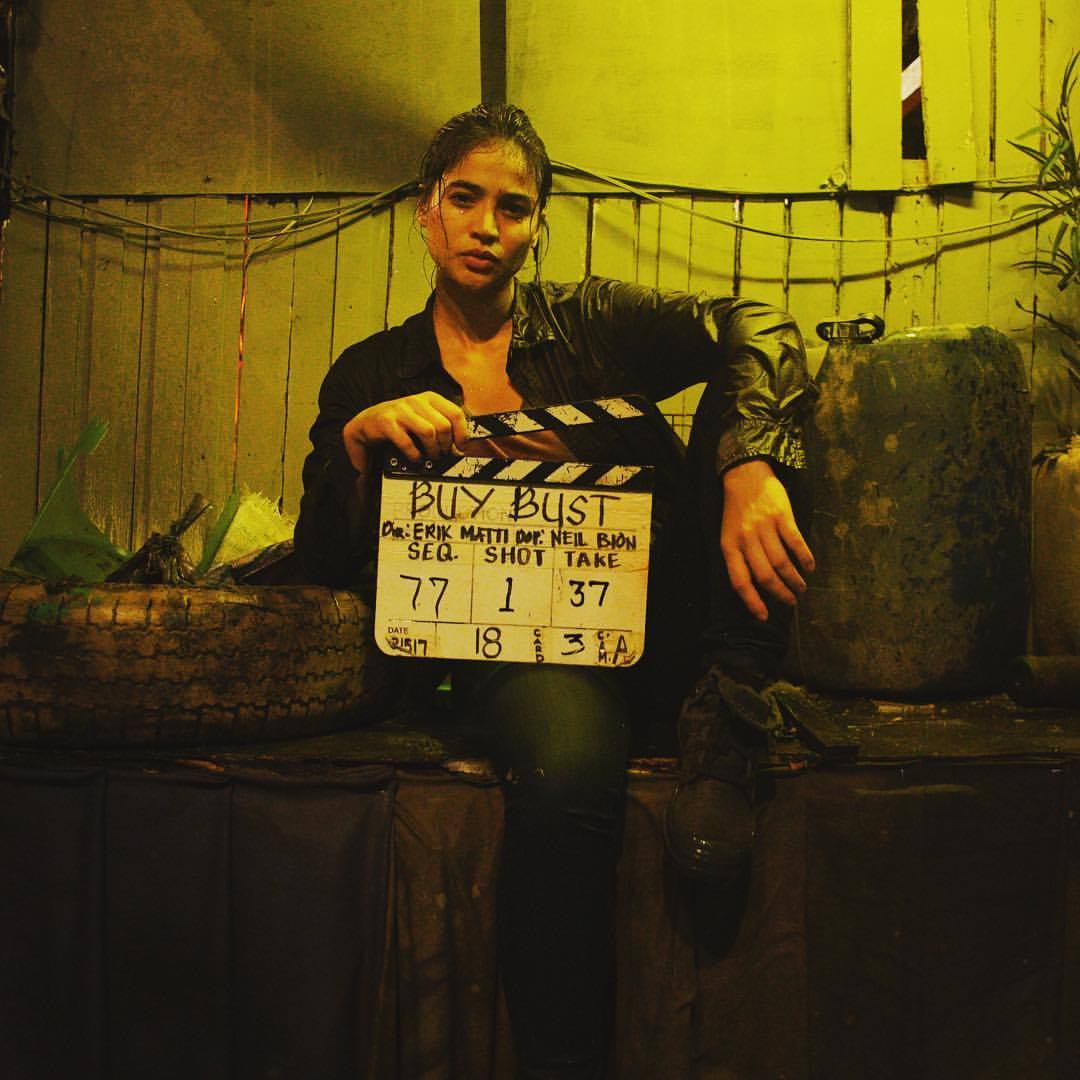
Anne Curtis in-between takes in Buy Bust.
Paul Bramhall: So currently you’re mid-way through filming Buy Bust with director Erik Matti, which promises to prominently feature Filipino Martial Arts, what else can we expect from the finished product?
Sonny Sison: Oh man, so first of all you can expect to see Anne Curtis like you’ve never seen her before. She trained for months with Tuhon Mick Alcaraz in the Kali system of Pekiti Tirisa. Then we adjusted those movements for screen fighting. Beyond the movements, Anne is a great actor and supplies the necessary emotional content to bring the choreography to life. Plus a surprise performance from former UFC star Brandon Vera. You know, I never knew an MMA star could be such a germophobe! We’re shooting in this compound right next to the river, and I confess the place is a very challenging place to shoot in. I’m telling him he has to fall down into this pool of water, and he’s like “What, I gotta lay in that water!?” (laughter)
So it’s going to provide a gritty look at Manila, and it’s an action movie that isn’t an action movie. (laughter) There’s quite a bit of gratuitous violence, but it’s there because that’s the way that Matti thinks and how it fits in with the story. There’s a particular arc he wants with the characters so it’s justified. He’s a director who gets bored with just action that doesn’t support the story, so he always asks how can we present this in a way which is atypical.
https://www.youtube.com/watch?v=qpDZIEg7tKg
Now with action, there are some things you can’t get away with, so you have to get that basic coverage, otherwise if you get too creative you can lose the artistry of the movement itself. But one of the reasons why I like Erik is that he allows me the freedom to be creative, and pretty much direct all the action sequences myself, unless he has his own input on something like say a camera change, or a scene that he wants to submit into my shot list. Otherwise he lets me run the show. It’s a necessity when it comes to a movie like this which is going to have a lot of action, and the guys that we’re working with are all capable and experienced. A lot of directors don’t want to give up that control. I’m telling you I should have a co-director credit on this movie. As of now, out of the 25 days we’ve been shooting, I’d say 18 of them have all been action! (laughter)
But you know here in the Philippines, I’m still learning how the system works, and it’s a system which isn’t going to change which can be frustrating. So that’s why I like working with Matti, he’s someone that’s been to the States and studied the studio system there, so he gets it, plus I like his sensibilities. He’s a well studied and educated director. We talk about the full range of movie genres, who’s our favourite actors and movies. It’s a real pleasure to sit and see how his mind works.
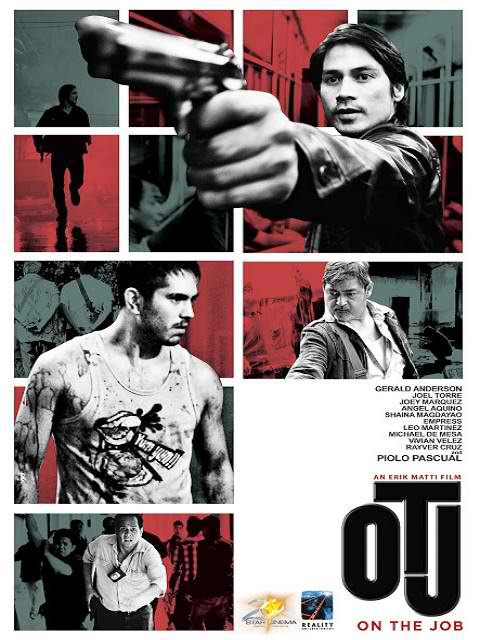
On the Job Theatrical Poster
PB: It sounds promising. I loved On the Job, so to see Matti work on an action movie sounds like a good combination. Of course you also have Breach on the cards, that I’d spoken with Pedring about last year. How’s the progress on this one going?
SS: Right, so me and Pedring worked for the first time together as director and action director on Nilalang (aka The Entity), and we took so many learnings away from that experience. What we’re looking forward to is putting those into practice with Breach, which at the moment is still in the pre-production stages. We’re just waiting to tie up the last few necessary details so that we can get going, and I’m excited for it.
PB: Is Mark Dacascos still attached at the lead?
SS: Yes, Dacascos is still attached as the lead, but also he’s e-mailing me regularly to try and lock down the schedule of when we’ll be filming, which at the moment is still up in the air. So while right now we don’t have a full commitment from him on paper, as he also has a lot of other projects on the table, we’re keeping our fingers crossed the schedules will work out. The story is certainly good enough to warrant any leading man to do the part. However with Dacascos we’ve known each other for so long that I know he’s able to do anything I need from him, and I don’t have to question if he has the physical capability or the training to do it, so I hope it works out.
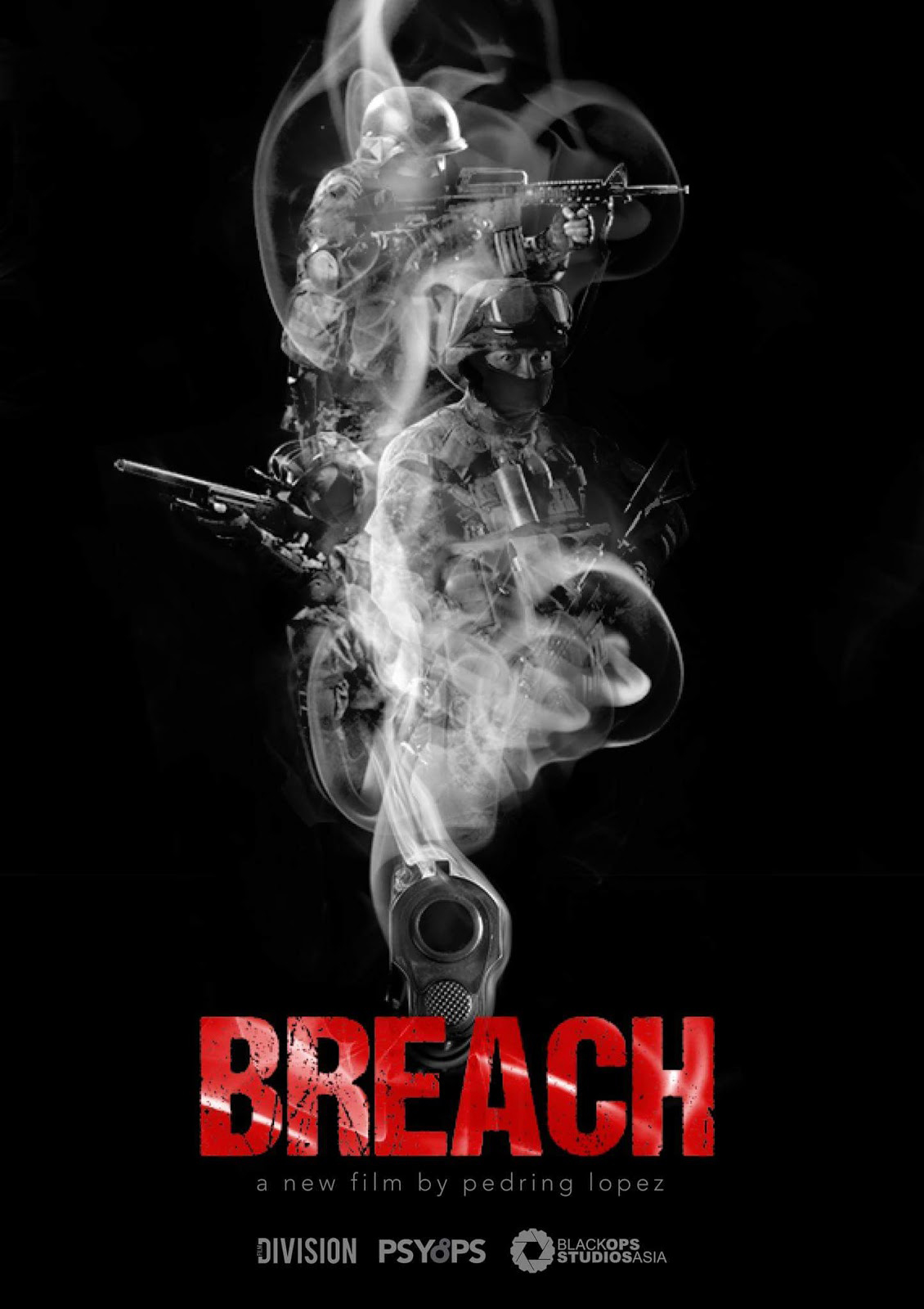
Breach Teaser Poster
There are a bunch of other people who could get the lead role for Breach, some of which I’ve also recommended, but there are certain investors who want the big names. Some of the names these investors have mentioned, I’ve looked at their movies and seen what they can do onscreen, but it’s important for me to see with my own eyes what their capabilities are for an action movie. The core team of characters is a group of 5, so I’d also like to bring in Johnny Yang (assistant stunt/fight coordinator on Iron Fist) and Dan Southworth or Anthony Nanakornpanom, both seasoned action guys and firearms experts.
Lauren Kim, she’ll be our version of Hammer Girl, so man watch out! (Laughter) You can check out her series The Kali Diaries on YouTube to see what I mean. I keep telling Pedz, and he understands too, more than anything I don’t like gratuitous action, and by that I mean action for actions sake. Someone doing a Hong Kong style stunt or fight scene just because it looks cool, unless of course it’s that kind of genre or movie. So with Breach we’re going to be bringing a very real, very intense style of action.
PB: Speaking of Dacascos, you guys got to work on his directorial debut together, Showdown in Manila, where you were the 2nd unit director. It has a dream cast of 90’s American B-movie martial arts stars, can you tell us how such a large number of them came to be involved with Showdown in Manila?
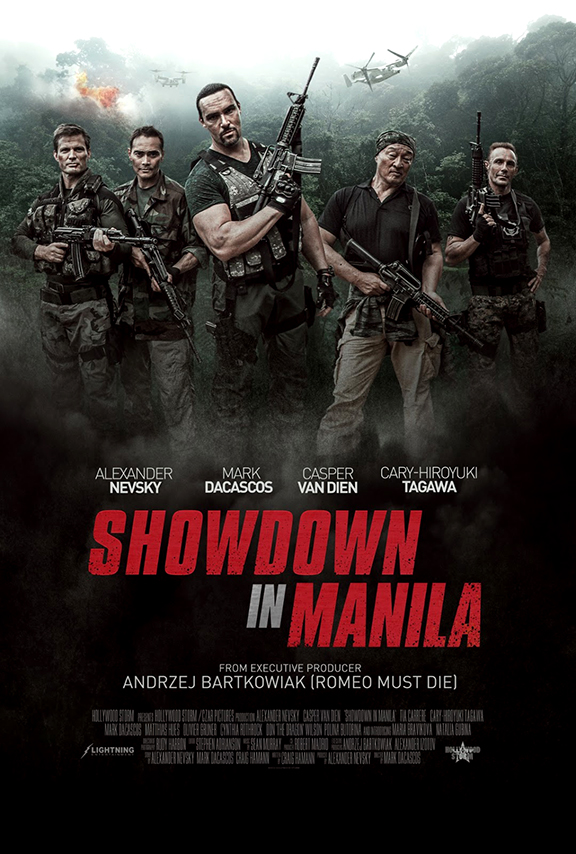
Showdown in Manila Theatrical Poster
SS: You know I had the same question, so I asked Mark how involved he was in the casting, and he said the only people he brought on board were Casper (Van Dien), Tia (Carrera), and Cary (-Hiroyuki Tagawa). Everyone else was brought in by Alex Nevsky, he’s a really big fan of 80’s Hollywood action movies, the likes of Schwarzenegger, Rothrock, all of those guys, however as to how he got them all involved, that I don’t know. From what I understand though, it had its theatrical release in Russia, made its money back there, and they’re now looking for an international distribution deal.
PB: I understand its Alex Nevsky’s story and he’s also in the producers chair, so was it him that brought in Dacascos to direct? And how did you come to be involved?
SS: From what Mark told me it was Alex who offered him the opportunity. Mark and I had been chatting online and he told me that he was coming to Manila to film, as he’d shot quite a few films in the Philippines prior and really liked the work ethic of crews here. He wanted to showcase the locations and culture the country has to offer. At the time, James Lew was attached to stunt coordinate, but he ended up getting the Luke Cage series for Netflix. Mark told me the position was open, though 3 of us were being considered – Danny Kim, a fellow stunt brother and great friend based in Hawaii, who was the stunt double for Daniel Dae Kim on Hawaii Five-0, and the legendary Richard Norton.
It pretty much came down to crunch time, because Mark had already come to Manila for pre-production, and for whatever reason he was unable to get in touch with Alex around that time. So Mark told me he’d bring me on, because obviously with me living here, my work experience, and our long standing friendship, it made sense, although to what capacity he didn’t know yet. But I could at least assist his father, Al Dacascos, who was the fight choreographer. So Sifu Al would create the moves, and then I’d interpret them for the actors and stunt crew in a way that was more adaptable for camera. By the time Alex got to Manila, Mark told him the capacity I was working in, and I officially got the job to stunt coordinate and fight assist. Then later, when filming on location in Batlag Falls, I became the 2nd Unit Director to pick up all the footage that Mark couldn’t due to his prioritizing shots with Alex.
PB: When you were working as the 2nd unit director, did you have an opportunity to action direct the likes of Don ‘The Dragon’ Wilson and Cynthia Rothrock?
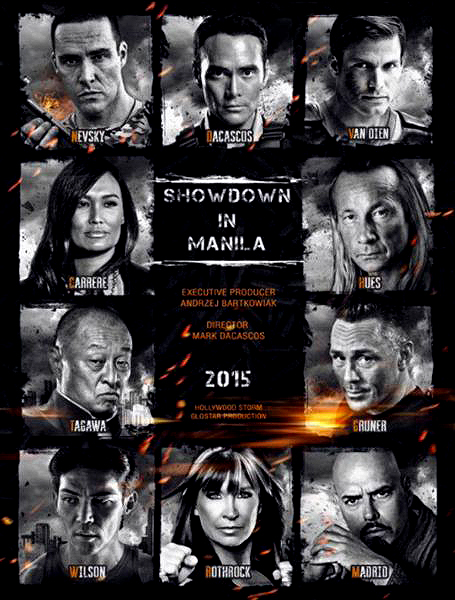
Showdown in Manila Theatrical Poster
SS: Yes, I action directed all of Cynthia’s action, and some of Don’s. The cool thing is that Cynthia and I have been friends for a while now, and she even came out to support the premiere screening of my Filipino Martial Arts documentary. We had talked about her wanting to do FMA on film, so lo and behold, she got to do some for Showdown in Manila.
PB: For those who’ve already seen it there’s certainly been some mixed reactions. Would you say the finished product has more influence of Nevsky the producer and star, or Dacascos the director?
SS: A film is a total collaboration from each production department, talent, etc. Things can often come out differently than the way you’d want or expect. At the end of the day, it’s the producer who has final say. I’ll leave it at that.
PB: Now you and Mark also share the honor of having both worked with Koichi Sakamoto and his Alpha Stunts team, Mark with Drive and yourself on Broken Path (aka Broken Fist). Both of these movies had distribution issues in the U.S., with Broken Path still only having a DVD release in South Africa and the U.K. What went wrong with that one?
SS: Horrible distribution problems. I don’t know why, but it shows me that the producers just didn’t have the necessary contacts or experience, and the way they treated the movie was shocking. Because when I look at Broken Path even now, it holds itself up to other ultra-violent movies. If you talk about the visual action in and of itself, and the hard-core stunts that were involved, the working conditions that we were in made it a lot harder than it could have been. We were working in 100 plus degrees Fahrenheit with 100% humidity, man it was tough. But of all the movies I’ve done to this day, it’s still my favourite to have worked on. To me it’s a real shame that it didn’t get the exposure it deserved.
So, it’s interesting, because when distributors talk about action movies, there’s always 1 or 2 movies which will be the ones that are setting the pace. As of now it’s The Raid when it comes to martial arts, and John Wick when it comes to gun fights. So everyone is asking what’s going to be the next The Raid and what’s going to be the next John Wick? It’s a cycle. So when I watched The Raid I was like, ok this is Hong Kong action, but its Hong Kong action with some elements of silat, and that was my disappointment in The Raid, as I didn’t see too much silat, at least not the type that I’ve been exposed to. The exception was in The Raid 2 when they did the ground fighting in the kitchen fight, but everything else in that movie felt totally like Hong Kong action to me. Now in comparison, when you look at Broken Path, we had a lot of martial arts elements in there, from muay thai, knife fighting, JKD, grappling, the works. But let’s keep in mind of context, these are all movies. Moves have to be adjusted for cinematic purposes.
PB: What’s Koichi Sakamoto like to work with as an action director?
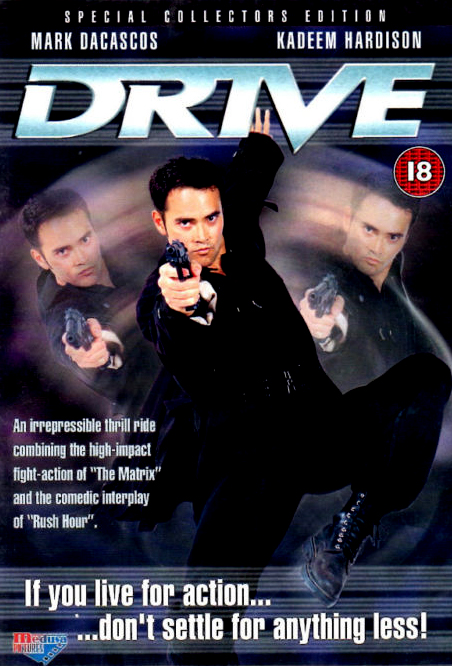
Drive UK DVD Cover
SS: Koichi is a very under exposed guy, I mean just take a look at Drive, c’mon. As a movie, it delivers. I don’t know if you’ve seen the making of, but there’s a part were Kadeem Hardison is talking with Brett Ratner, and Brett tells Kadeem he saw him in this action flick on HBO that has him starring alongside some Asian guy, and wanted to know what it was. So Kadeem tells him “That was Drive man!” Then Brett starts ribbing him about how, at the time, it must have never gotten picked up for U.S. distribution, as when he saw it on HBO that was the first time he’d seen it. He ends up telling Kadeem that he’s thankful it never got picked up, because if it did, there’s no way he’d have ever been able to make Rush Hour. (laughter)
You know Mark told me that Drive was the only movie that he ever got to let loose on, so he was waiting for the next one, and he sometimes said to me about the productions that he worked on after that, “Sonny, I’m starring in this movie, and they’re not using me for everything that I can do.” But of course, Mark is such a gentleman that he’ll never complain, and he respects the director, he knows that he’s the actor and he’s there to follow what the director wants, so he’d never make it about him. But he often says to me that he’s never been able to let loose like he was able to in Drive, and he’s still looking for that movie in which he’ll be able to do so. I think Breach will be it.
PB: You obviously share a long history with Dacascos, you must be looking forward to working with him once Breach is confirmed.
SS: Well you know Mark, in his life experience, he’s reached a point now where it needs to be story driven, and if it’s an action movie that he thinks his wife is going to find boring, then he won’t do it. So for him it’s become story story story, and I get that, as I said I don’t like doing action just for actions sake. He’s asked me before if I’d be interested in getting into directing, but for me, it’s not on the cards just yet. Directing requires a ridiculously high level of motivation and passion, so you have to be completely into what you’re directing if you want to make a good movie. Right now, action directing is enough stress for me. (laughter)
Actually Dacascos was supposed to have done another movie with Koichi called Man of Action, which was going to be directed by Steve Wang, who did Drive together with them. But that fell through for a number of reasons, and then there was another one called Song of the Knife. Now I’ve spoken to Phil (Cruz), who was originally going to write and direct that one, and it’s possible that we’ll bring it back to the table. Song of the Knife can potentially be good, and it had even started filming in Florida back in 2010, but then it lost its investors in the very early stages. They did a promo reel with Willie (Laureano), who I think is excellent and makes a great villain, he has the look and he moves really well. So I think it could be done here in the Philippines, and there have been several people out there who really want to make the definitive FMA (Filipino Martial Arts) movie. Even Gary (Daniels) told me he has a script with a story that heavily incorporates FMA.
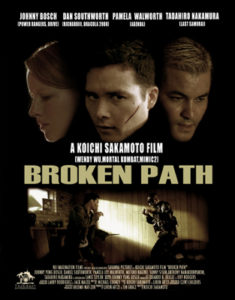
Broken Path Promotional Poster
But I don’t know if it will be something I’m interested in purely as an FMA martial arts movie, as right now I tend to go for a more realistic story. I’d want it to be something like a Man from Nowhere or a Bourne Identity, but it’s been a long time since there’s been an action movie were the focus is purely on FMA. You see it a lot in the behind the scenes stuff, but too often it never makes it onscreen, or you get smatterings of it in Hollywood movies, like a kali fight or the use of a stick that makes people say “That’s Filipino Martial Arts!” But it’s not a Filipino Martial Arts movie per se, so we’ll see. I definitely think Song of the Knife has the potential to be revived.
PB: Staying with the Koichi connection, what are some of your fondest memories from your stint working on the Power Rangers?
SS: Man, so you know the whole of the Broken Path crew did Power Rangers together – Johnny (Yong Bosch), (Dan) Southworth, Anthony (Nanakornpanom), Motoko (Nagino), who’s Koichi’s wife, and (Tadahiro) Nakamura-san. Out of everyone, Koichi was there from day one, but length wise I was there the longest. I actually got Dan his audition for when he became the Quantum Ranger on the Time Force series. We did a travelling Power Rangers show, and it was supposed to go for 2 years, so we’d been on the road already for 4 months when I got a call from my agent who said the production company were auditioning for the TV show.
Of course I was already busy, but I said hey Dan, you’re going to audition for Rangers, and I called Koichi and said you have to look at this Dan Southworth, this guy is really good. Dan didn’t get it that particular year, it went to Mike Chaturantabut, who got the role of Blue Ranger for Lightspeed Rescue. It was the following year when Dan got the role of Quantum Ranger for Time Force. Dan and I had been friends prior to that, since around ’95 or ’96, and we’d been doing a lot of appearances together. I brought in Anthony as well for Ranger appearances around the globe. Nakamura-san came in the 2nd or 3rd season of Mighty Morphin’, then Motoko came in probably in the 5th or 6th season, something like that.
So when it came to Broken Path, because we’d all worked together we know what we can do, and with us having so little time for rehearsals, it was often just make it up on the spot. But the brilliance of it was, with everyone having worked with Koichi, and Koichi being very collaborative, he would say “Sonny can we do some kind of kali thing here”, or “Anthony can we do some kind of JKD or krav maga here”, and we just blended well and didn’t need to do a lot of takes.
PB: Wow, I didn’t realise it was so unrehearsed. Were there any injuries?
SS: You know when Nakamura fell from the 1st floor balcony in the house, that was a mistake, because he was supposed to land on the couch to soften the fall, but he missed it. We rehearsed it, but then on the actual take he said “Move it closer!”, and of course he completely missed it and ended up bam on the floor. Thankfully 5 minutes later he was able to get up, and I was like damn these guys are tough! The only other injury which was fairly serious was by Johnny himself, when he’s fighting with Anthony and gets thrown into the bookshelf, the back of his head hit a corner of the shelf full force, and he had to go to hospital and get stitches. But he came straight back, and we carried on shooting. Johnny is a real trooper.
https://www.youtube.com/watch?v=z6cKz_tFt1I
I remember when Johnny came as a replacement for Walter (Emanuel Jones) in Mighty Morphin’, he was a kid fresh from Texas, no acting experience and very green when he was working on the series. Then, by the time the movie came out, I said wow look at this guy. I mean he’d really been training with Alpha Stunts regularly, and you could see that. That’s the kind of commitment you need to see from an actor that’s going to be doing their own stunts as much as possible. Because when you’re doing B movies or C movies sometimes you can’t afford to get a double, so you need that experience.
PB: I’ve noticed you’re a big advocate of stunt performers and martial artists taking acting lessons, and vice versa. How important do you think this is?
SS: It’s critical. I’m already trying to put it out there in my discussions within the industry, you know if you want this role, then you need to be the one person that steps into the room and has undergone that training and experience. Go for it, and don’t just wait to be hired for a role and the studio to pick up the tab for the training, if you’re going to be that one person, then you better at least have the basics to perform an action role. I offered that same training to one of the actresses I worked with, so I told her she has a lot of potential to do action, but you should be training in order to hone the craft. So she said to me “Ok, are you going to teach me for free?” C’mon! Why would I teach someone for free?! So much for investing in your own career.
PB: A good point. Do you have any favorite roles of your own?
SS: Well, a couple of roles come to mind that I missed out on which make for a good story. A lot of people don’t know but Mark brought me in to meet the director of Only the Strong, to possibly double him. But it was shot in Florida, which at the time was a right-to-work state, meaning they could hire non-union people, and that led to me not getting the gig. But then the role opened up for the young cousin, because the original actor wanted to re-negotiate his contract and the producer declined, and instead decided to re-audition the role. So I went in to read, and the director told me “Man, that was such a good performance, but the problem is you and Mark look too much alike, so it’s going to downplay his character.” So that was an “Aaaargh” moment. But that’s ok, because the friendship we’ve had over so many years makes up for it, and now I get to pay it back in a certain way by hopefully bringing him in for Breach. I owe him that, as he’s done a lot for me.
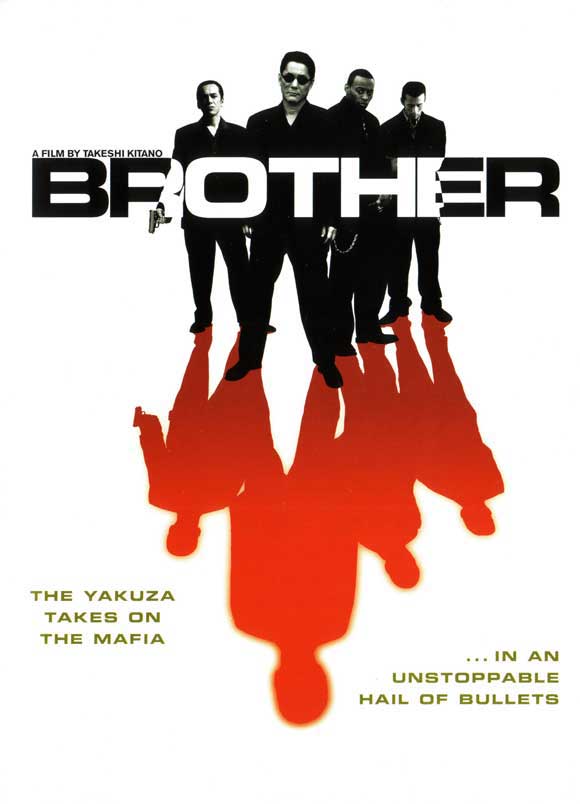
Brother International Theatrical Poster
Another one was for Takeshi Kitano’s Brother. Man I was so pissed about this one. So it happened to me when I went on the road with the 2nd Power Rangers tour, and during a short break I went back to auditioning, and my agent says to me “Go audition for this Takeshi Kitano movie.” So I told the Alpha Stunt guys “I’m going to meet Takeshi!” and they were all like “Oh my God!” So I went and did my thing, got a call from my agent that yeah, they wanted to use me, then about 5 days later my agent calls me again and says don’t take this, they’re downgrading your role to a glorified extra, you’ll be seen, but you know it’s not a good supporting role. So the movie comes out, and the character that I was supposed to be playing is throughout the whole fricking movie, has lines all over the place, and I’m sure got upgraded again at some point back to a supporting role. So that was another “Aaaagh!” moment.
I take it as one of those lessons were I learnt to be more involved in the decision making of what jobs I get. Agents are trying to negotiate the best rate so they can get their percentage, but if it’s a job that I want to do and the money’s not so good, I’ll still do it, I don’t care. I want to do it, and I’ve lost quite a few jobs to agents that did that to me. They’ll say no it’s not as good a money as this one, but forget it, I want that one. So now I haven’t used an agent since the early 2000’s, I negotiate my own pay.
PB: How’s that working out here in the Philippines?
Part of the challenge is to get the executives and directors to respect the position that the stunt department does for these movies, because right now it isn’t a position which is appreciated or respected much, and that reflects in the pay that they get, along with how they’re spoken to. A lot of the stunt crews are talked down to as if they’re extras. The executives will say a stunt was easy, therefore they don’t need any additional pay, so in those cases I’m thinking in my head “Then you do it.”
I’ve reached a point now where, if a local production wants me to work with them, I’m not going to drop my price anymore. You know it’s not really about the money, but it’s about the stress that I have to deal with on set with these people. You know, it’s not that they’re wrong, it’s just that that’s the way they know how to do it, and it affects my purpose for being hired in the first place. You hired me to bring something to the table that this country hasn’t seen before, to push the action to the next level, but if I’m not able to shoot it the way I think it needs to be shot, then now I’ll say they need to find somebody else, who will cater to what they need and what they’re willing to pay them.
Because of this I’ve developed a sort of reputation for being a stuck up guy, and I ask myself why am I being looked at as stuck up, is it because I’m being asked to be paid for 27 years of experience in the business? I’m like, you executives are making bank, are you going to say you’ll take a smaller cut on this movie? Of course they won’t! So I’m like, you don’t go into a Mercedes dealer and say you like one of their cars but only have jeepney (a local form of transport in the Philippines) money, if you go to a doctor and they say you need surgery, do you say give me the cheapest type possible? If you want quality, you need to pay for quality.
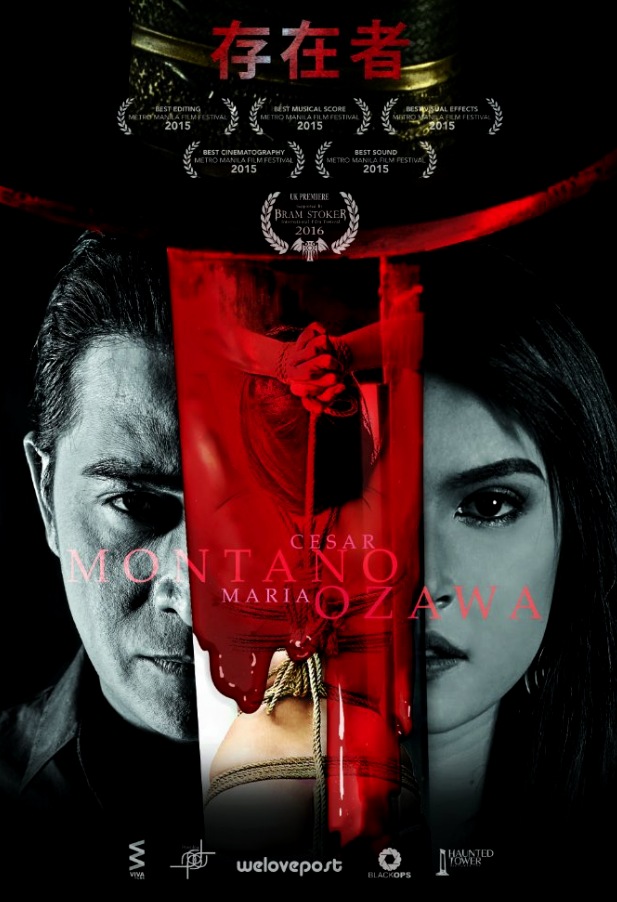
Nilalang Theatrical Poster
I’m not saying I’m the man when it comes to fight choreography, I still have a lot to learn myself, and these kids coming up in the States are brilliant. I admit I don’t think too much of some of these Hong Kong fight style groups, because to me they’re just emulating what we’ve all seen before. I’m not downplaying HK action, the entire genre wouldn’t have evolved where it not for it. They’re fans of it, so I get it, but some of these other amateur groups out there, they’re continually shooting and experimenting, so I find myself motivated by their enthusiasm to do something different. That’s the whole thing at this point, the question is what hasn’t been done? It’s not necessarily fight choreography and the moves themselves that are going to make a difference, for me it’s the camerawork. Not the editing, not the special effects, it’s the camerawork.
PB: What would you say your own learning experience was from Nilalang?
SS: So Nilalang was Pedz first attempt at a full length action movie. From a technical standpoint, because of his background directing commercials, Nilalang looks great, and I mean it cleaned up at MMFF (Metro Manila Film Festival). He has some fantastic ideas, and kind of comes with an M. Night Shamalan type of mindset, he storyboards everything right down to the detail and then applies them to the actual filming itself. He’s also a fantastic pitchman, and his whole family is in the U.S., so he’s able to go back and forth and see those methods that are used in the States. When he attended the AFM (American Film Market) it was a huge eye opener, and Nilalang was successfully picked up for U.S. distribution.
While at the end of the day, it really wasn’t made for the local market here in the Philippines, it takes people within the local industry and the insiders who are keen to make these genre movies to understand the potential that it had. Of course as the action director, I see parts of it that could have been better, and me and Pedz both agreed that we needed more days than we had to shoot the action. With what’s shown in the finished product, I admit I wasn’t satisfied. But at the end of the day you get to a point where you have to decide, are we going to spend a lot more money than we have and finish the scene the way we want, or do we say that this is good enough, and ultimately we went with the latter. I never want to do that again. I’m very against a “that’s good enough” mentality.
PB: Right, and Pedring had mentioned how, because of the heat, you ended up filming most of the fight scene in the samurai armour yourself. How was that from an action director perspective?

Maria Ozawa and Sonny getting down ‘n dirty on the set of Nilalang.
SS: Yes. (laughter) So we had a guy called Tony who was referred because of his look, he had really defined Japanese features that we wanted to show when the mask is ripped off. However the production guys had ordered an authentic samurai costume, and that helmet was super heavy, let alone wearing it in the Manila heat. So this guy had never done stuff like kendo or traditional style sword fighting, and suddenly wearing this full samurai armour, it was difficult for him to get through even the first few moves. As a result it ended up eating up so much time, that in the end I just said “Pedz, I gotta get in that suit if we’re going to finish this scene.”
Now I look back on the scene in the movie and realise it was so short, we should have had at least another minute of fighting, as we could have done a lot more once I was in the suit. But then after having rehearsed with Maria’s stunt double prior, even though I’m sure she would have been good to improvise more moves on the spot, we decided not to sacrifice the hard work that had already been put into the rehearsals for the scene.
PB: And you also didn’t have as much time to train Maria Ozawa as you would have liked if I remember correctly?
SS: Yeah that’s right, so when our original star Robin Padilla left the project, Maria also began to look around for other projects as well. Then when Nilalang came back to the table thanks to a new investor, her management said it’s going to cost you the same amount of money, but you won’t get her for the same amount of time. But at the end of the day, having Maria’s name attached, it helped it to sell, especially to the Japanese market. It goes back to the whole mindset that I have, which is for actors who are going to be performing action, they really need that preparation time in order to be able to execute it convincingly.
Maria was game for the short time that we were able to do training with her, but for me I have to support and praise the stunt performers, and what they did to make the other actors look so good. So when people claim that they did all of their own action, that really upsets me, it really does. I won’t name any names, but man it really upsets me.
PB: You also worked on the Iron Fist series. What are your reactions to the massive amount of negative press the series got?
SS: Well, so while something may sound good on paper and when it’s being pitched, what counts at the end of the day is the execution. It’s your crew, it’s your team, it’s the communication between departments, and everybody being on the same page about what you want the visuals to be. A lot of the time that can get lost in translation, and that’s what I think happened on Iron Fist.
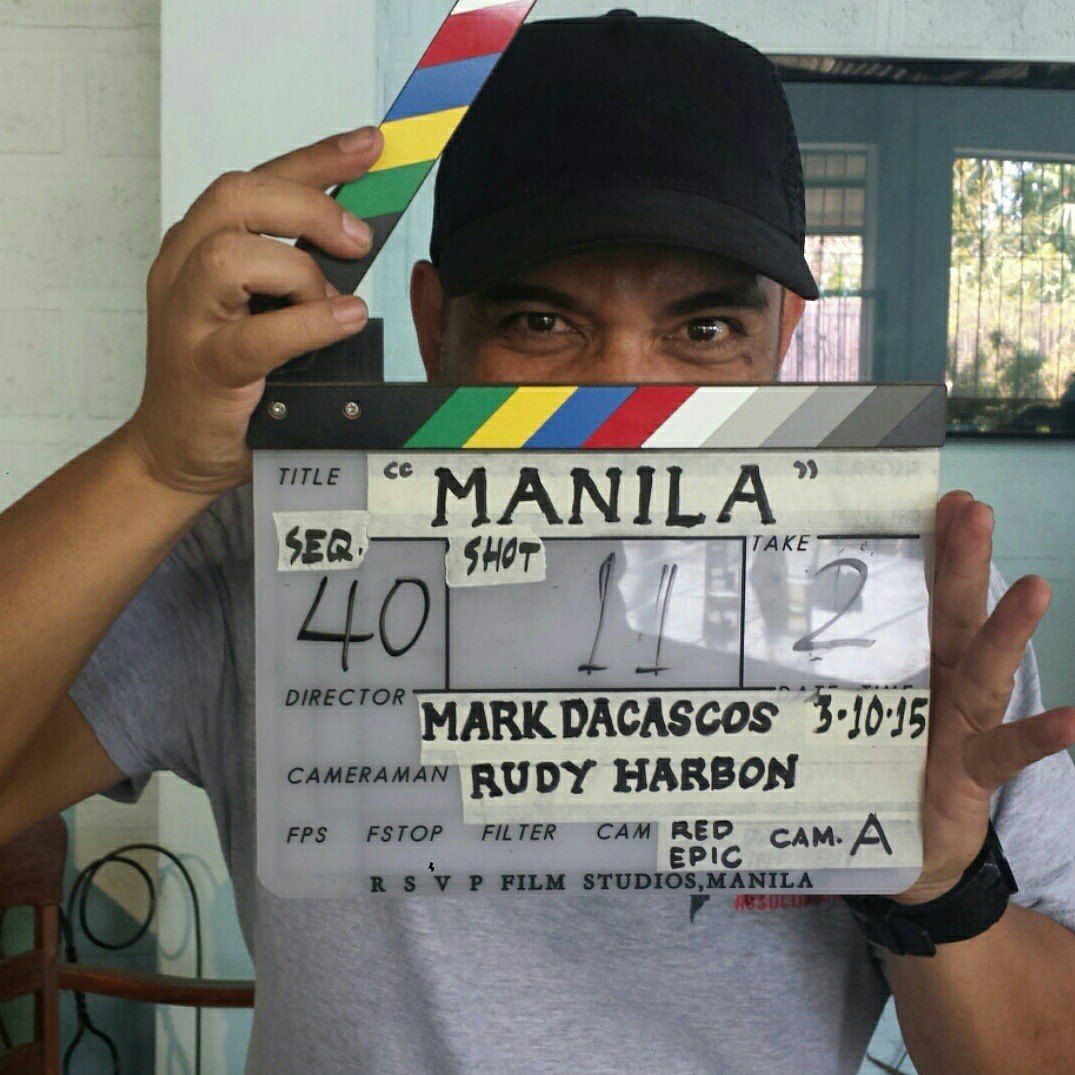
On the set of Showndown in Manila.
When you have a great stunt coordinator in Brett Chan, who’s the same stunt coordinator for Marco Polo, and you’re getting the A list martial artists involved from the stunt community, and then you see the finished product you’re like, wow, how did that happen? Again it’s miscommunication between the directing department and the stunt department. From what I understand, the stunt crew was required to present pre-visualisation rehearsals. Whether or not the director for that particular episode actually used them or not, that was their choice. So I’d asked at that point when I was working on episodes 9 & 10, “So who followed the pre-viz’s?” Now the answer that I got was that only 2 of the directors on the whole series had taken the time to check them out or follow some semblance of them.
What I felt they wanted to do based on the details I was given, in the one scene which has a lot of people fighting, is to get the feel of a one-track Oldboy style hallway fight. So they dollyed it, but then they stopped it after a few moves. Then they dollyed it again, and then they stopped it after a few more moves. Then they started doing inserts. I asked them, what was the use of making that whole camera track if you’re just going to stop and start it? So I interpreted it wrong, and the scene was used as a master shot, but this is an example of what I’m saying in regards to aspects such as this needing to be more clearly communicated.

Broken Path is also known as Broken Fist and Attack of the Yakuza.
PB: Do you think that the lack of communication is a specific problem with the tighter schedule that a TV series comes with?
SS: You have a much shorter amount of time compared to working on a movie to come up with something good. So it depends on who the coordinator hires to be able to pull of what’s being asked in that moment, the performer has to be able to do it. You know, the best scenario is working with a bunch of people that are your friends, people who you’ve worked with together for a while and you know you can trust. That’s what happened on Broken Path, we knew each other’s timing, we knew each other’s moves. A lot of times you may get projects were you’re cast by another stunt coordinator who’s recommended you as a friend. But the catch is the person you need to work with has been cast because of their look, they have the look whatever show it is needs, and you’ve never worked with that person before. So you find out what their skillset is, and see if you have that rapport, and then you learn if they can pull off what you want.
That’s why with TV you get away with doing a lot of camera tricks, the editing often has to hide the lack of skills. This is no more evident than when you see current Filipino action TV. It’s all “Whip that camera real fast!” or “That guy who’s about to fall, when he drops down, shoot his feet!” (laughter) As a producer I get it, they want to spend as little as they can, and make as much as they can. But, as a producer you should also understand that you can’t skimp on certain things, certain things need to be paid for. Action is one of those, if you want it pay for it. But too much here they say “Pwede na”, which means “That’s good enough”, or “That’ll do.” As I mentioned before, for me I don’t like “That’s good enough.” I’ll do 7 – 10 takes if that’s what it needs, let’s get it right, or let’s think about how we can adjust it. But at the end of the day, to work with people in the industry that have a similar mentality, I find myself wanting to stick with international productions.
PB: What would you say are the biggest differences between working in the States and working here in the Philippines?
SS: Stunts are an integral part to almost any action project that’s being developed in the States, and for the most part directors really do their research in finding the right stunt coordinator or 2nd unit director to be able to pull off what they want to do, and if given enough time and budget they’ll also allow for rehearsals. Because we’re a guild (SAG-AFTRA), there’s a standard pay that needs to be adhered to, but over here I have to negotiate literally everything.
I’m trying to arrange a meeting between the main stunt directors here so that we can sit down and come to an agreement were we stand by each other and look out for each other. That way, then the rest of the networks and production companies, even if they say they’re not going to pay the rate that’s being asked for and want to find cheaper talent, it’ll soon make them realise that they get what they pay for. I think it’s a necessity here, and it’ll relieve a lot of stress like the stunt guys undercutting each other, and instead it’ll create a unity and brotherhood. Let’s say I have a job and I get called for another one at the same time, I can then ask one of the other guys to go fill in for me.
So part of the perception is that I’m the newbie on the block here, and I’m taking work away from these guys. But it’s not like that, I’m creating more work for these people, whether I hire a stunt director myself, or people within a particular stunt group, it provides the work. The other side of the equation is that the more action I do, the more action others will want to do. I can’t work on everything, so I’m establishing a standard of demanding rehearsals and pre-vizing. I think I’m the only one who does pre-viz here, because the stunt directors here don’t know how to shoot it, much less edit it. If you were to talk to a stunt director here and ask him what lens should he use for a certain type of action shot, they wouldn’t know. They wouldn’t know the difference between an 18 and a 75, because they’ve never been given that consideration that they should know. But the fact is that they should, and they can do that by, you know, having those conversations with the DP’s (director of photography).
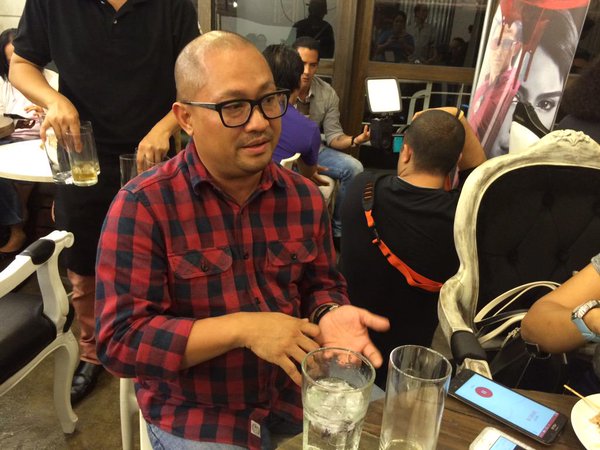
Pedring Lopez talking to the press about Nilalang (Photo credit: Alexa Villano)
That’s how I spend my time. Don’t just wait in your trailer and only appear when the action starts, go hang around on the set and ask the questions, why this, why that, why are you lighting this scene that way? That’s the way you learn. That’s why I say it’s my mission here to raise the standards of the industry in my mother country, and the other side of it is to test the waters, and see who shares that mind frame, in terms of thinking that the Philippines can be a great place for shooting movies. So for me Pedring is the guy with that mindset.
PB: How did you meet Pedring?
SS: I was recommended by a mutual friend, so I went in to meet him, showed him my (stunt) reel, and Pedring said to me “You know, I’m supposed to see two other guys, but I’m just going to call them and say no, we got our guy.” So that’s how it began, and he’s very easy to work with, I like the guy a lot, and I like his whole crew. Everybody is in their 40’s or younger, so they’re not jaded, they’re very open minded, aggressive, and creative, so they’re great people to work with.
PB: Some people have said there’s no market for action movies in the Philippines, but personally I don’t believe this to be true. It seems to be more of an excuse to not to take the time to make action movies. What are your own thoughts on this?
SS: I don’t think the market is a problem in terms of Filipino audiences not being interested in action movies anymore, I think it’s more a case of the action movie industry here got so bad, that people stopped watching them because of the lack of quality. I mean c’mon, you go and watch when the new Spider-Man movie comes out, they’ll be lining up to see it. So for me, I think Buy Bust is going to change that and people are going to say “We need to go see this movie!” At least for the local industry, I hope it makes them say “Ok, we need a female action star.”
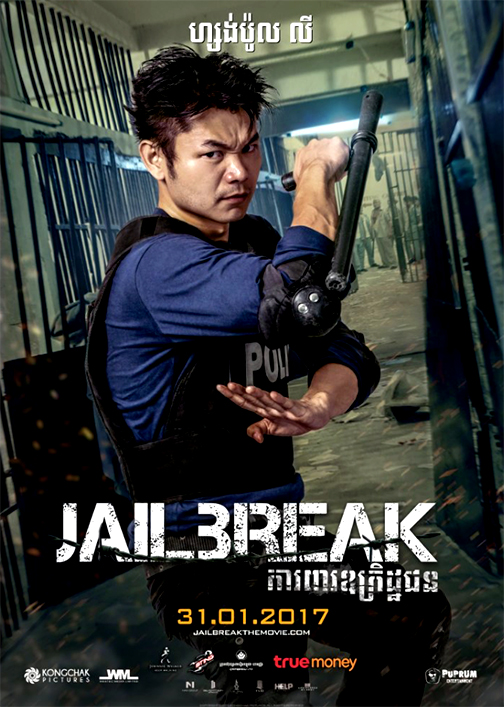
The lack of action movies have left them in a time warp that makes most of Filipino action look like it was made in the 80’s and 90’s. So again, it’s not their own fault, but it is their responsibility of not keeping up when it’s so readily available on YouTube. I mean if you have a country like Cambodia doing an action movie like Jailbreak, or others like Vietnam, Thailand, there’s no excuse. The Philippines, as far as being a media entertainment powerhouse, was well ahead of the curve 40 years ago, in fact the only country in front of us was Japan. So what happened? I don’t know as I haven’t delved into the history of it, but I hear bits and pieces from people who give various different reasons.
 PB: You’re definitely on a worthwhile mission, and hopefully your efforts will be reflected in the industry soon. In terms of yourself though, who were some of your inspirations that led you into the action movie industry?
SS: Jackie of course. Bruce of course. You know Hong Kong action movies were stale for quite a while, and the only guy who was doing anything innovative was Donnie Yen, so his work was inspiring to watch. But again I go back to Mark (Dacascos). I think he’s the epitome of a gentleman, and so pleasant to work with. He gives you his all, and he’s a serious actor, it’s not just about the action for him, he wants to act. I remember when he told me in the early 90’s, “Sonny if I never have to throw a punch or kick again, I’ll be so happy.” (laughter) But then, you know, he realises that that’s his money maker and he has a family to feed. What I really respect with Mark is his professionalism and how he conducts himself on and off set. He works hard and is a genuinely nice guy. He’s taken acting classes, and continues to do so, in L.A. with Howard Fine, who’s one of the top guys out there, as well as other coaches. Then he further spread his wings by going to improvisation school, but you know, he said there was so much that he couldn’t tap into for many years until he became a Dad. It makes sense.
So the reason why I speak so highly of Mark is that he’s undyingly faithful, loyal, and dedicated. Not just in his career as actor, but also as a family man. He’s probably the most disciplined person I know.
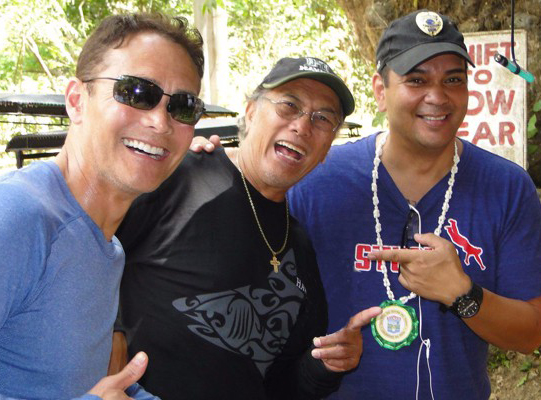
Mark Dacascos, Al Dacascos and Sonny on the set of Showdown in Manila.
PB: How many times have you and Mark worked together?
SS: (laughter) So it’s interesting that, after being friends for over 30 years, we didn’t work with each other on a movie until 2015 with Showdown in Manila. We went our separate ways a long time ago, and I don’t know if I could say I regret it, because you know when you look back at what you’ve done in your life, you are where you are because of the decisions you made. So when I look at the total sum of years that I’ve been in the business, and I look at some of my peers who started after me and where they are in the stunt world, I mean some of these guys are huge, I had to reflect and ask myself why I’m not at that level. And of course it’s easy – all they thought about was stunts, and that’s it, whereas I was like I want to try that and I want to try that. But, realizing that, I now look at it like I know a lot about this area, and I know a lot about this area, because that’s what a producer has to know, about who to get in for a certain position, and what I’m doing now, that experience really helps.
PB: We’ve spoken so much about the past, but what are your thoughts on the current action scene, are there any movies or actors you’re particularly looking forward to check out?
SS: So there’s Operation Mekong, I haven’t seen it, but I want to check it out for the military action. When it comes to stand alone scenes, I enjoyed the fight that takes place in the car during the chase scene in The Raid 2. As short as it was, that part was my favorite scene, even more so than anything in the original Raid movie, it really stood out for me. Of course again, being action centric, they didn’t look at the other details, so at the end when the car drove off, the streets were empty. No cars and no people because of course they had to block it off, but as a filmmaker, those small details bother me.
I’m curious about how Triple Threat will turn out with Iko Uwais and Tony Jaa, but I wish producers and directors would consider other actors besides Scott Adkins. Undoubtedly he’s made a name for himself and is highly skilled, but for me, too much of the tricking stuff is going to get old the same way all the muay thai stuff got old for Tony. You keep flipping around in every movie, it gets repetitive, and after doing Doctor Strange I’d like to see Scott focusing on that level.
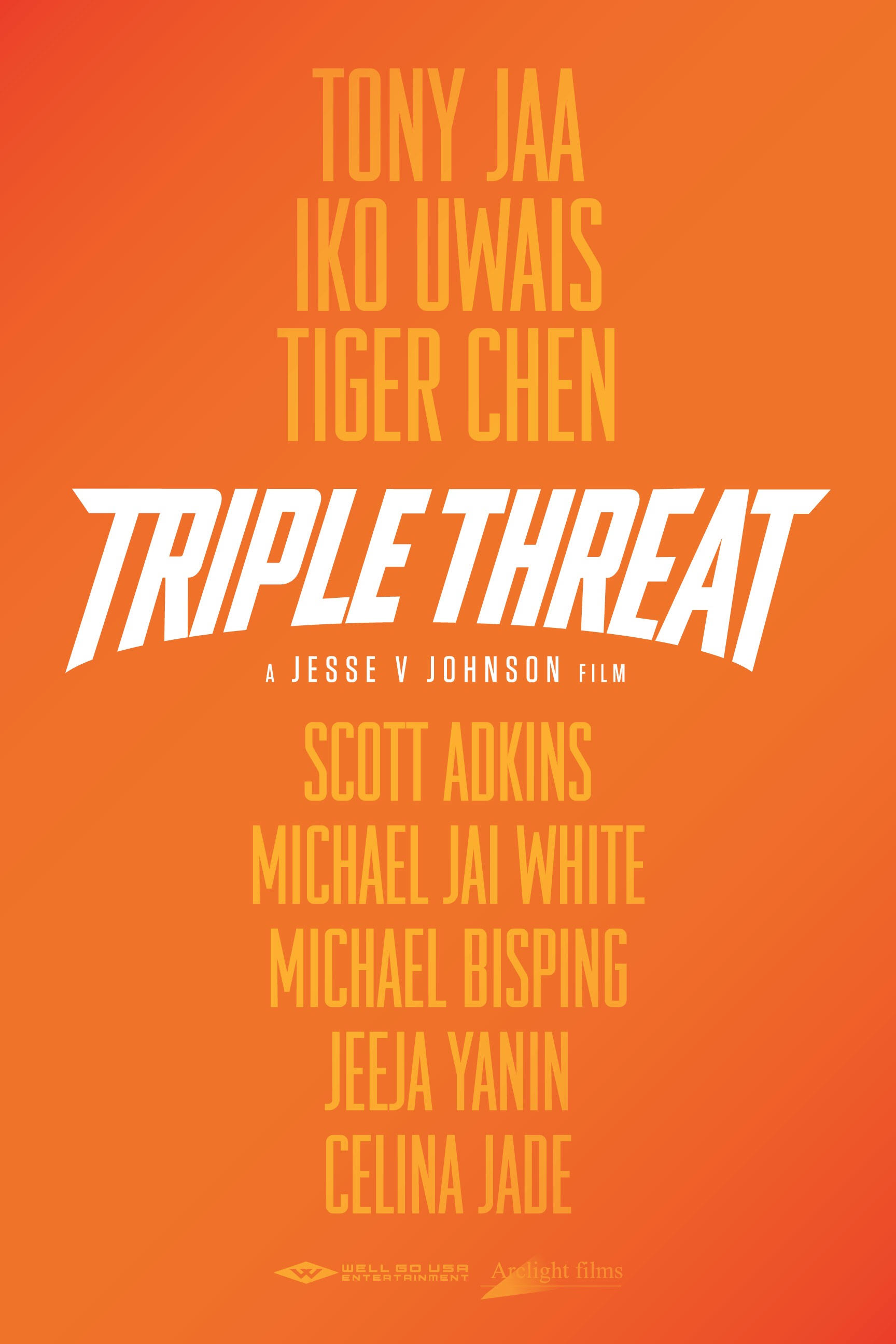
Triple Threat Teaser Poster
But he’s probably being offered decent money to headline the kind of B movies he’s doing right now. You have the Undisputed movies, but the problem for me goes back to the fact that they’ve become gratuitous. That wasn’t the case with the second one, with Michael Jai White, you know it had a good story to it, and Boyka wasn’t the focus. That’s not to take way from the choreography that Larnell (Stovall) did for the sequel, or the action directing that Isaac (Florentine) did, but again for me, there has to be more than just visuals.
PB: Adkins also has a rematch with his adversary from Undisputed III: Redemption, Marko Zaror, in the recently released Savage Dog, which I confess I’m looking forward to.
SS: Marko was a good kid man, you know we used to hang out together in L.A. Valley College way back. Being 6 foot 3 and being able to move the way he does, that takes talent, and he’s a super nice guy. It was Andy Cheng that brought him in as a double for The Rock on The Rundown (aka Welcome to the Jungle), so we were filming in Hawaii, and it was the day were all the doubles were doing the hill fall. We turned one corner and I saw Paul (Eliopoulos) and J.J. Perry, who were both doubling for (Seann William) Scott and taking turns falling, and I mean falling hard! I see Marko on the top of the hill waiting for his turn, and he looks scared stiff and pale, because of course he’s a martial artist more than a stuntman, but his time on the movie succeeded at getting him into the industry. (laughter)
Most recently Andy was on the 2nd season of Into the Badlands, which filmed in Ireland of all places, so I called him up and said “Hey, bring me on, I’d like to check out Ireland as well!” (laughter) But right now the goal for me is to bring some of my friends over for these World War 2 movies that are coming up and I’ll be working on. It’s a good opportunity, because there’s a lack of local guys who fit the bill to look Japanese here, so I can bring the likes of Simon Rhee and James Lew over.
PB: You mention you’ll be working on a couple of World War 2 movies, is there anything else coming up that you have plans to work on?
SS: So at the moment I’m stacked until July next year. After Buy Bust and Breach I have a couple of international war movies that I’m going to be working on as I mentioned, and then two movies based on Filipino comic-book characters. I’m also in talks with Pedring to work on another action horror movie. Plus there’s also a possible TV series in the mix as well.
In terms of right now, Buy Bust is half way though filming, so we’ll be wrapped in September, and I’m simultaneously pre-vizing Breach. So at the moment my life consists of rehearsing and filming for Buy Bust, and attending meetings with Pedring and the crew for Breach. The mentality of the people working in the industry at my level, is that you don’t necessarily know where your next job is going to come from, so it’s always best to take as much as you can. But I’d never want to short change something else just to bring in the money, plus I have to think about my health, so I increasingly find myself factoring in the latter recently. I’ll be 50 next month, so the mind is willing, but the body is saying “What are you doing!?” (laughter)
PB: Going back to an earlier question, I wanted to ask if there’s any one particular fight scene for you that stands out, or that you class as a personal favorite?
SS: It’s not an action movie, it’s actually a drama, and it’s so simple. In Once Were Warriors, it’s the bar fight scene. Why is it my favorite? It’s short, to the point, and brilliantly acted. It’s raw – bam bam bam. Also, when it comes to the action I have to say The Man from Nowhere, and I love the story, love Won Bin’s performance. You know the Koreans are just killing it right now, the production quality of their movies is incredible, the action is creative, and ultra-violent in a way that isn’t gratuitous.
The Raid, for me, had a lot repetitive moves that I think could have been replaced with something else in the choreography. There’s 3 shock value moments in The Raid, one were the guy gets his back snapped on the wall in the stairwell, one when the guy lands on the jagged door frame, and the other is when the guy gets shot point blank through the head. Those were the “Oh wow!” moments, but everything after that I’d felt like I’d seen it before. Now in The Raid 2, it has a higher budget, but aside from the car chase a lot of it was poorly executed with ideas that didn’t play well. I mean casting the guy who played Mad Dog again, are we not supposed to recognize that it’s the same guy? Then at the end of his big fight scene they go outside and it’s snowing, I mean snowing in Indonesia, c’mon! Artistic licence doesn’t work for that. (laughter)
PB: Looking at IMDB, which I know isn’t always the most reliable source out there, it has your next movie as Ron Yuan’s Unspoken: Diary of an Assassin, with Zoe Bell. What can we look forward to with this movie?
SS: You’re right about IMDB, we actually did that, gosh it was back in 2011 or 2012, and it’s been ongoing since then. We shot our stuff a long time ago. I’ll tell you a story, we did this scene were Ron took a camera into an L.A. Kings hockey game, and you’re not supposed to bring that kind of stuff. But talk about production value, so we had these great seats and it was perfect for the scene that we had in mind. So the game finishes, and Ron says ok let’s go and shoot this scene real quick in the bathroom. Ian Thomas Dale from Hawaii 5-0, he’s in the scene, along with Brian Tee, and Ian is going to be stabbing me in one of the stalls. But then as he’s holding the knife, the security guard walks in, and immediately asks us what’s going on. So Ron tells him we’re shooting a prank video for a bachelor party, and the guard tells us we have 5 minutes, and walks out. (laughter)
So we set the scene again, and Ian comes at me with the collapsible knife yelling at the top of his lungs, and this time a different security guard comes in, only now Ian is on top of me with the knife, and the guard really panics. (laughter) He gets on the radio, and as soon as we walk out of the bathroom we find ourselves surrounded by about 20 other guards. So they ask us what exactly we were doing in there, and Ron sticks to the same story about filming a prank for our friend’s bachelor party, but they ask us to show them what we have. So Ron is scrambling to hide his professional camera in case they take it, and instead shows them the collapsible knife and says “I just have this.” Of course the guards say that it’s not allowed and confiscated it, but say they’ll let us go, so thankfully we got the shot. Ron was panicking so much about his camera, but you know he’s a great guy, and he takes the opportunities to wherever the work is being shot, whether that be in Japan, Hawaii, L.A., New York, and I learnt a lot from him.
PB: So you guys have worked together before?
SS: Oh yeah, it was really Ron that brought me back in the game. From 2004 to 2007 I stepped away as a performer, because I’d partnered up with this associate who wanted to produce movies. So that period was kind of like my producing school. That’s why I mentioned earlier how I know about producing, and it was were, you know, I learnt the lawyer talk and what specific areas of producing people are hired for, so some people deal with the set issues, others deal with the financing and so on. So I stepped away, and the only thing that was sustaining me at that point was the regular work I had from the Power Rangers appearances, and working as a choreographer on the shows around the States.
But it wasn’t enough, and my partner at the end of the day had a lack of, I’d call it attention, as she was spending half of her time in Hong Kong and half of her time in L.A., and as a result we never got anything done. So I bumped into Ron in the gym one day, and we hadn’t seen each other in forever, and we asked each other what we were doing. Ron told me he had some stuff coming up, so if I wanted to come play, I could join him. That was back in 2007, and that was a good day. It’s one of those scenarios that show you that, despite what you think you want to do, sometimes you’re meant to do something else, and you always find yourself being brought back to that path.
PB: Thanks for the great discussion, you have some fantastic stories, it was a pleasure.
SS: No, thank you, and look out for Buy Bust and Breach!
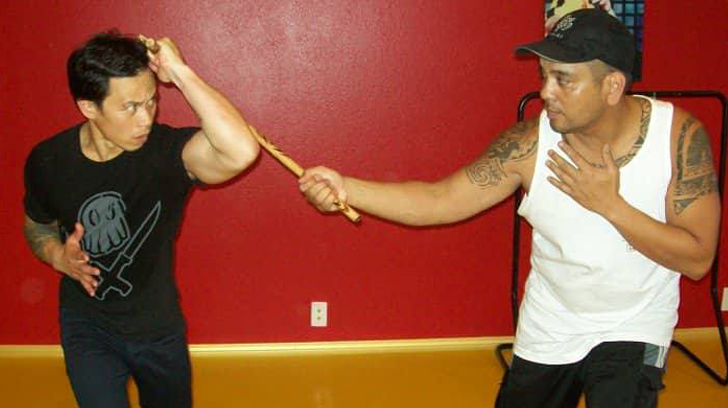
Ernie Reyes Jr. and Sison.
Thanks again to Sonny Sison and Paul Bramhall for getting this interview together.




Epic interview, really enjoyed reading this.
Great work.
That made for some very interesting reading. Great interview, Paul!!!
Sison seems like a great guy, and he certainly has a unique perspective of the film industry. It’s interesting how critical he was of The Raid films. Maybe it’s one of those things where if you work in fight choreography, certain things don’t amaze you like they would with other audiences.
Pingback: Red Band Trailer of Filipino Action film Maria. – Amdb