


 At the age of 14, I took the plunge in to the world of my favourite director, John Woo. The adrenalin rush seemed to last for days after watching the best pure action film ever made: Hard Boiled. The unending coolness of Chow Yun Fat and emotional depth of Tony Leung leapt off the screen, and both are on my list of Top 10 Actors. The villainous actor made less of an impression, however, and he has said he doesn’t like the film.
Then I saw Beast Cops. Then I saw Exiled. Then I saw Bunman. Then I saw Ebola Syndrome. Anthony Wong was made for the latter golden age of Hong Kong cinema; name me an actor who personifies the 90’s style more than him? – I dare you. Disregarding the martial arts genre, Wong stamped his incredible individual style on countless classics, even winning the Hong Kong film award for best actor in ’93 for Bunman. Only in Hong Kong at the time could this happen; the film is one of the most extreme I’ve ever seen, and Wong manages to look constantly psychotic throughout.
When it was announced that he would be attending Udine Far East Film Festival, I was ecstatic. Despite a reputation as being a little hard to interview, everyone attests to how genuine, nice and accommodating he is. Previous to the interview section at the end of this piece, I was in a ‘drinks party’ at the festival, and noticed him there. I jumped at the chance, and asked him to sign my Bunman DVD, already signed by director Herman Yau two years ago. Wong was lovely, and I talked a little about his feature debut My Name Ain’t Suzie, that had been screened the previous day. He joked “Oh, that was my son, my son”, as he looks so young and fresh faced in the role.
This spirit of humour and humbleness extended throughout the time I was in his company, and he walked past me after his new film Still Human won the Audience Award, looking so genuinely happy and giddy. With the recent protests in Hong Kong he has raised his voice again to support democracy, the only Hong Kong actor from the golden age to do so; this authenticity makes me even more proud to have met and interviewed him, at the same time sad and scared about the place of my dreams and its future. Whatever happens, Anthony Wong will continue to make challenging, vital films.
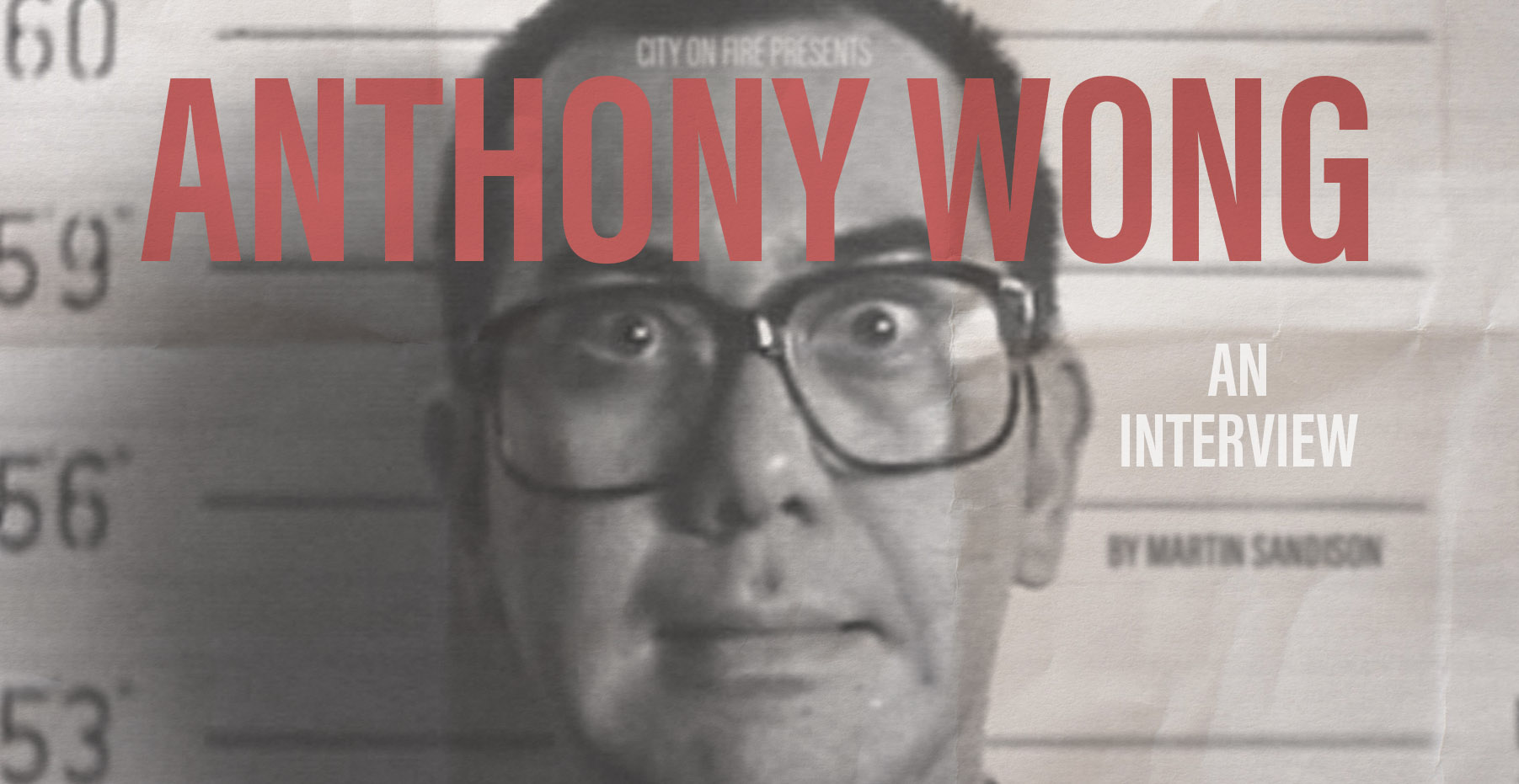
In the following interview with Anthony Wong, Martin Sandison is joined by Matija Tomic, Tim Youngs, Sabrina Baracetti and an un-named journalist.
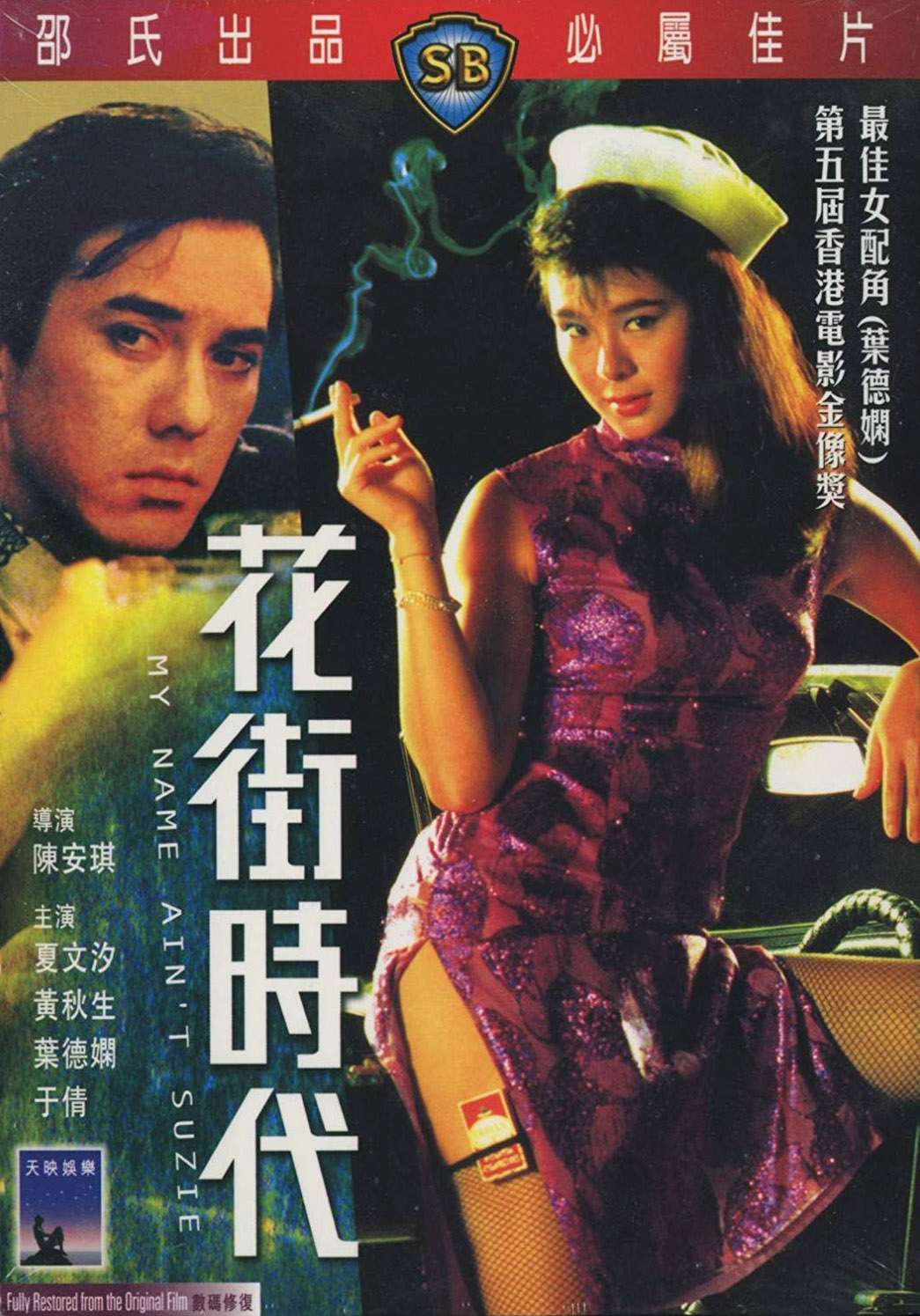
“My Name Ain’t Suzie” Chinese DVD Cover
Tim Youngs: So My Name Ain’t Suzie was your first film. You had been in TV for about three years before. I know you auditioned for the film, what was the experience like auditioning and then acting in the film?
Anthony Wong: If I speak in Cantonese it will be more clear and more interesting. (laughter) I saw the advertisement in the newspaper. Reading the description I thought it was the best feature for me. So I spoke to my friend Herman Yau. He told me one of the assistant directors was his friend, so he made the contact for me, and I went to the audition. There were lots of models, pretty ladies (laughter), no, I mean male models. (laughter) I was a little scared, worried. One of the guys there was Max Mok, he was very tall, handsome, masculine, very attractive (laughter). But the thing was, he wasn’t mixed race. Looking at him, I thought: “I could be qualified too”. My features were more prominent at that time, being mixed race. Because I’m not such a typical handsome boy, I thought: “maybe my acting will win them over”. So after that I only had one chance, I went home and waited. I waited a long, long time. As it was so long, I asked Herman to make a phone call for me. He said his friend wasn’t involved in the project any more. He sneaked around and found some news for me. So thought that I found out the director Angie Chen was the one who really liked my audition. So there were a lot of foreigners playing the sailors. They blocked a whole street in Wan Chai, and made it look like the 50’s. Many girls dressed like prostitutes, but they were all very pretty. Everyone was speaking English, and I didn’t speak one word of English at the time. The only line I had to say in English was: “you know this guy?”, and “good money”. So my first screen kiss was in the movie, I had two bottles of beer, but I was still very intimidated. Actually Angie was very nice and did not force me or pressure me to do anything. But Patricia Ha forced the kiss on me! I was very happy and learned a lot through this experience. My role in the film was I had been abandoned as a child, my father had gone back to America, and I was fatherless, and I grew up in Wan Chai. In reality, I also grew up in the Wan Chai area, and didn’t know my real father, who was English. So finally after all these years I reconnected with my family in England, my relatives. They all live in Australia. I found my fathers grave and paid my respects. So the role I played in this movie is like my real life.
TY: We’re here celebrating your career, you will receive the Golden Mulberry Lifetime Achievement award. After you made this first film you went to study acting at the Academy For Performing Arts. Did the experience making this film influence how you went forward as an actor?
Anthony Wong: After making this movie I realised I knew nothing about acting. After many years I watched this film again, I realised why the director Angie chose me, because I didn’t know how to act! (laughter). If I played this role again today, I wouldn’t be able to do it right. In the cinematic world, actors were only a tool to make the movie. In the balance of this world, the actors actually do directing too. So I went to the Academy to study acting because I wanted to be a director.
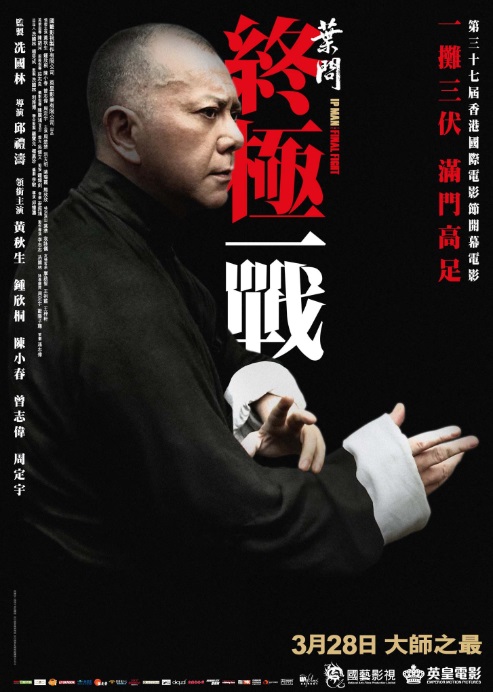
“Ip Man: The Final Battle” Theatrical Poster
Journalist: I know you studied kung fu, how was did that help your acting? How did that help with your role as Ip Man?
Anthony Wong: It helped NOTHING with Ip Man! (laughter) The style I studied is a totally different style. I had to learn Wing Chun from the very beginning. In terms of my career, it helped me to move faster! (laughter) For instance on set the countdown to an explosion..3..2..1! I can jump, before they count to one (laughter)
Journalist: I know you worked with my friend Bey Logan on The Medallion, how was that?
Anthony Wong: (very sarcastically) Oh, Master Bey. Oh…he’s a funny guy. Very hilarious. Tell him to call me. He’s your friend? Good guy. On The Medallion? There was a lot of waiting around.
Sabrina Baracetti: When was the last time you watched My Name Ain’t Suzie?
Anthony Wong: I’ve seen the film many times. I bought the DVD. It’s been more than ten years. I didn’t want to watch it, because I didn’t want to see myself as so handsome! (laughter)
Journalist: I want to know about your views on the political situation in Hong Kong now, and civil rights there.
Anthony Wong: So five years ago there was a mix up in the media, I thought they had a mix up between me and the activist Anthony Wong. The destiny of the other Anthony Wong is that he is on the list. Somebody told me I’m not on the list. Actually I don’t know what is happening, but I do know that my job is kind of banned by the Government. Maybe it’s time for me to retire and move to Italy!
Journalist: I heard you don’t want to make horror movies any more. Is this true, and why?
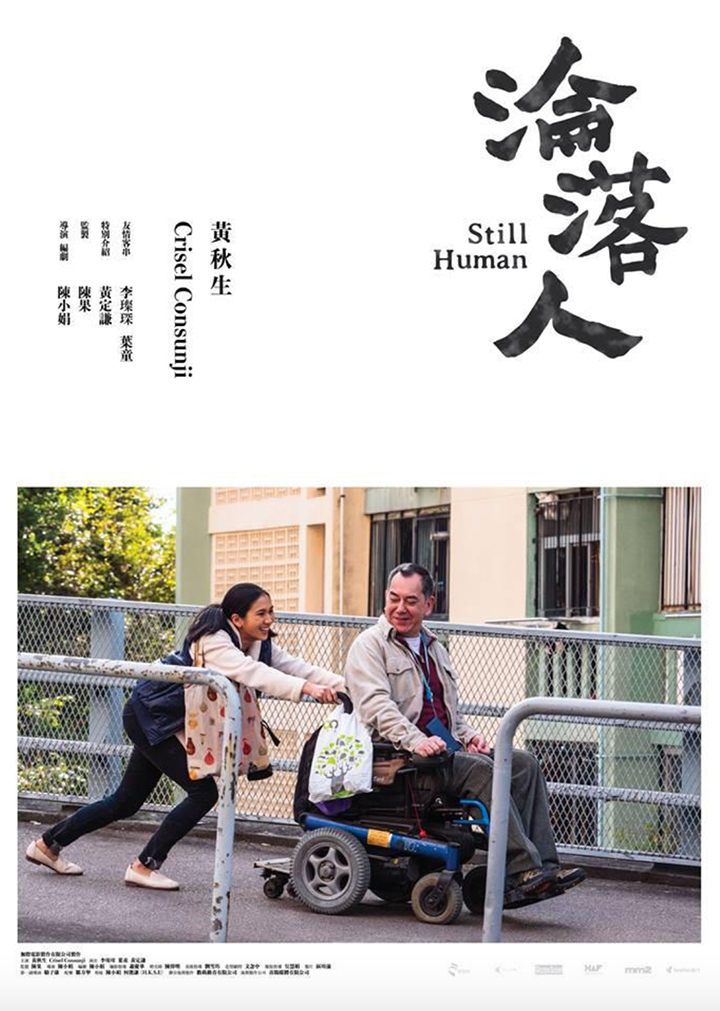
“Still Human” Theatrical Poster
Anthony Wong: Because I’m ageing! (laughter) When people are young, they have a kind of anger, power in the heart. When you get older, you don’t have that any more. I don’t want to do horror movies anymore. It’s time to try something new.
TY: Concerning the film Still Human, what appealed to you about the script?
Anthony Wong: Well actually I can’t remember. The director is pretty (laughter) and decent. I liked the story. In my opinion Hong Kong cinema has been missing a film wherein the main character is from the Phillipines or India. So when I received the script, and my costar would be from the Philippines, and her character was not portrayed negatively, this was the main reason I picked up the script.
TY: Did you do some research in to wheelchair users in preparation for the film?
Anthony Wong: Before my mum passed away, the last ten years of her life, she was in a similar situation to the character who I play, Cheong Wing. She was in a wheelchair, she was not mobile, she was sick. I took care of her for those ten years, so I familiarised myself with the situation, and I learned a lot. In terms of the behaviour, the way of communication, I picked up a lot from one of my friends. This is a guy who is blue collar, and speaks in this manner, a local dialect. The director of this film also wrote the script, so she has a very clear vision. So as an actor, I just followed her lead, and delivered what she wanted. The execution and implementation was not difficult.
TY: Still Human was made by a first time director. Is working with new talent something you want to do?
Anthony Wong: I don’t think they are new at all! They are all so experienced already! She (Oliver Chan) has already mastered a lot of technical aspects of film-making. And Krisel Consunji (his co-star) has been acting and performing since she was ten years old. I feel like I’m working with some con-artist. (laughter) she is so good!
TY: Is the industry in Hong Kong supporting new talent well?
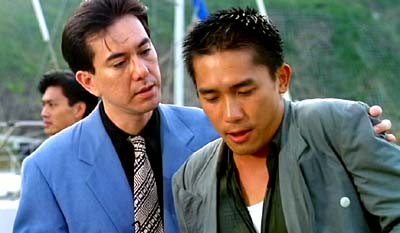
Anthony Wong and Tony Leung in Hard Boiled.
Anthony Wong: I actually said to those in the funding department in the Government that 3 million Hong Kong dollars can not make a good movie. I guess everyone is doing the work without worrying about getting paid. So there were changes, and they raised it to 5 million. We have all noticed the industry has changed a lot. In the past Hong Kong produced over 300 movies a year. Now there are around 20 films a year made by new film makers. There are a lot of political reasons for this. There are a lot of challenges to make movies. There are still a group of passionate, brave young film-makers who are tackling issues they are passionate about. Not necessarily political topics, just stories they want to tell. This is very admirable. In Hong Kong right now there are certain things that are ridiculous. You could be criticised just for eating Italian pasta.
Sabrina Baracetti: When you think about your career and all of the films you made, what is your feeling about it?
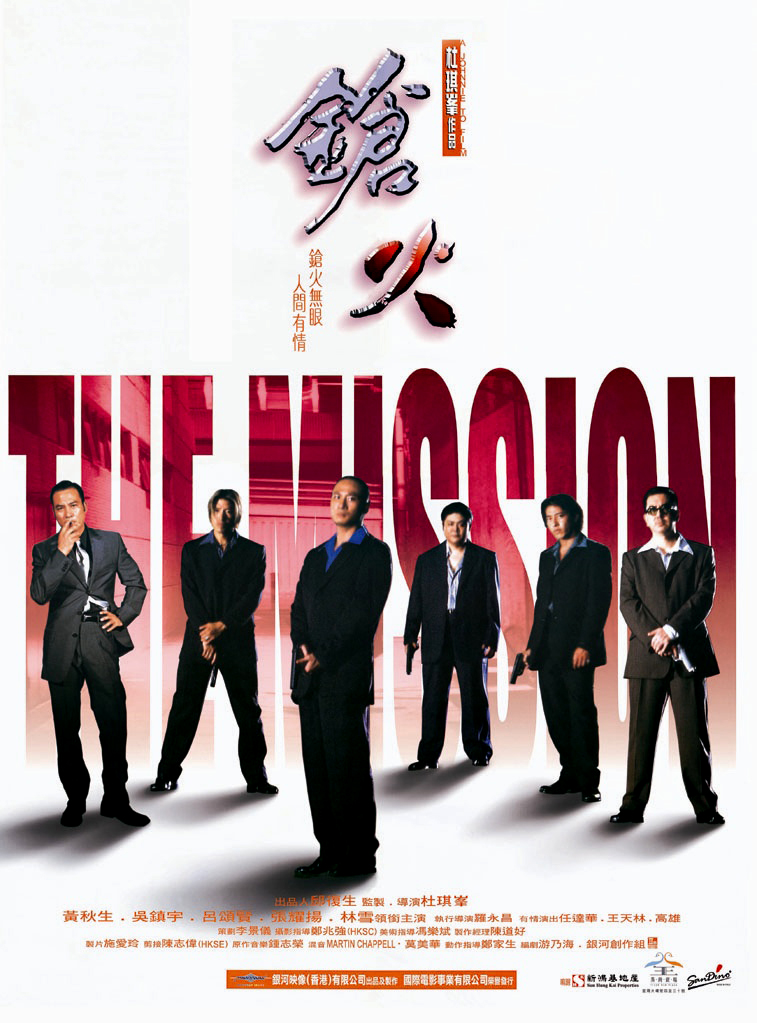
“The Mission” Chinese Theatrical Poster
Anthony Wong: There’s a lot of complex feelings. In the past a lot of my projects are big budget, a lot of experienced film makers involved, and many people working on one project. I felt like I was really in the movie industry, it’s very glamorous, a big spectacle, big productions. Except some of the stories are not that spectacular, they are boring. If we made Still Human in the old days, Krisel’s character would be played a very famous actor, with her skin coloured darker to become a Filipino maid. Most likely I wouldn’t be cast. Maybe they will cast Andy Lau. (laughter) And in the end Krisel’s character and mine would get married! (laughter)
Journalist: Could you elaborate more on why you chose to make this film without getting paid?
Anthony Wong: Because the director only had 3 million dollars, she couldn’t afford me! I couldn’t lower my fee. So if the movie made some money I get some profit-sharing! (laughter)
Journalist: Of your films is there one you are more attached to? One which you like watching again and you feel a personal connection to?
Anthony Wong: This is the most recent one, but I really like Still Human. Otherwise, Exiled.
TY: What’s your next project?
Anthony Wong: It will be a theatre production.
Journalist: What do you think about the story of Still Human? Does it show a different side of Hong Kong? What do you think of the lack of diversity in Hong Kong cinema?
Anthony Wong: I think there should be more films made like this. Hong Kong is an international city, and it seems like there have been few stories like this one. Maybe next time someone should make a movie about the Indian population in Hong Kong. That would be interesting. Like a Bollywood-type thing.
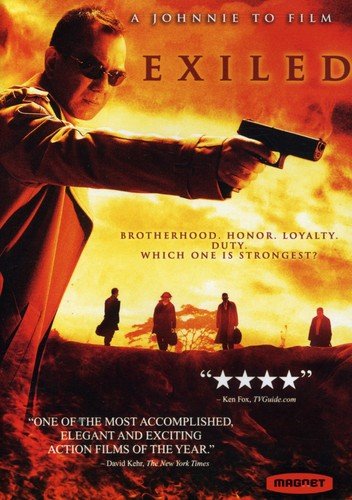
“Exiled” U.S. DVD Cover
Adriana Rosati: What challenges did you have shooting Still Human?
Anthony Wong: Nothing. It was easy for me. We don’t have to work overnight, which is a nightmare. I didn’t have to do wirework! (laughter) We had a beautiful director and a gorgeous actress! For me it was very easy.
Matija Tomic: Could you talk about where you studied kung fu and which style, and for how long?
Anthony Wong: When I was very young, I shared a flat in Hong Kong with a lot of people, even with my sifu. When I was growing up I went to my sifu and learned Ba Gua, a Shaolin style. I also learned Karate and Tai Chi. Of course I learned Wing Chun for the Ip Man movie. In Hong Kong, and also Guangzhou. There’s a master there called Wong Lim Yee, he’s very good, I studied Wing Chun with him.
MT: You seem to like improvising on set. Is the scene In Johnnie To’s The Mission when you play football with a little paper ball, is that improvised?
Anthony Wong: First of all…there’s no script! (laughter) Second, Johnnie To asked us to play with the paper ball. It was not improvisation. You can never do any improvisation in Johnnie To’s films. (laughter) You will get killed. (laughter)
Martin Sandison: You seem to like acting in serious roles as much as comedic ones. Which do you prefer?
Anthony Wong: I’m a serious guy. But I’m funny. (laughter) Sometimes I act in the wrong way!
Journalist: Apart from film you’ve done a lot of different things recently…
Anthony Wong: You mean like political…(laughter)
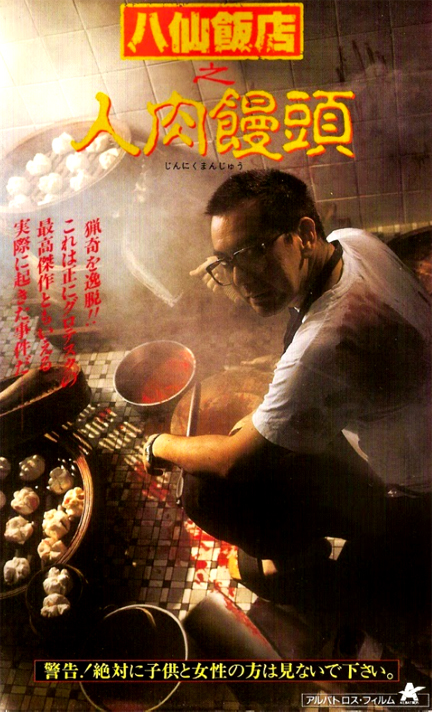
“The Untold Story” Japanese Theatrical Poster
Journalist: You have done a lot of other acting, like drama and theatre. Maybe because of you being outspoken about China. It means you’ve had to go elsewhere. Do you think other Hong Kong actors should expand like you have?
Anthony Wong: They don’t. They don’t have to. Because they earn a lot of money in China. If I got the opportunity to work in China, I won’t…What’s the point for others to do theatre? They make no money. In China, you get money. You get rich. Then you get in trouble. (laughter) My next role is in a Broadway play called A Normal Heart. Only a small part, it’s good for me.
MT: If you had the opportunity to make a martial arts film would you do it again?
Anthony Wong: You would have to give me two years to prepare!
MS: What do you think of the future of Hong Kong action cinema?
Anthony Wong: You have to ask the young generation. I think it will be totally different from the past. How to tell the story, the style, how to fight. The future is all in their hands.
https://www.youtube.com/watch?v=o0M67ea8ib8&feature=youtu.be&fbclid=IwAR2JoeVVSx7GS8C22Zj2rGL8iYuTTAY-9BlILnX4qMztL9CEEeBC6IHDh4U



Favorite part of the interview is Anthony’s reply to the question regarding the paper ball from THE MISSION:
You seem to like improvising on set. Is the scene In Johnnie To’s The Mission when you play football with a little paper ball, is that improvised?
Anthony Wong: First of all…there’s no script! (laughter) Second, Johnnie To asked us to play with the paper ball. It was not improvisation. You can never do any improvisation in Johnnie To’s films. (laughter) You will get killed. (laughter)
Fun stuff! Anthony still seems pleasantly eccentric, and it makes for good conversation.
I read somewhere when he was asked who his role model was, he replied “Freddy Krueger.” Only he can come up with that kind of deadpan response.
More head scratchingly, I’ve heard someone say in the audio commentary for Bunman, he said the horrid rape scenes were only there to please the men and added nothing to the story. He may have been joking, but it’s hard to tell.
Not many people realize that Anthony Wong is a real life martial artist, but he never used it in movies out of respect for the arts. When he finally did House of Fury, he seemed to lighten up a bit.
Anthony Wong really needs a good few hours to do a comprehensive interview. His output and versatility is staggering.
Tony Leung may be the critics’ darling but I think Anthony Wong may be Hong Kong’s greatest living actor.
Great interview. It’s good to see Anthony still going strong, even if not as prolific as before.
A very interesting interview Martin. Thanks for sharing it with us via CoF. I’ve been telling my son about how diversified Wong’s roles in Hong Kong cinema are (he’s only seen him in HARD BOILED and INFERNAL AFFAIRS as far as I can remember).
Awesome interview. Love his movies. Thanks.
Bunman and Ebola Syndrome were the perfect mix of disturbing gore and hilarity.
Did Wong and Stephen Chow ever work together? They need to.
Thank you so much for this in depth interview. He’s really done it all, and he does it all so well. A fading legend of a bygone era, Anthony Wong. One of the greats, one of the last of his kind.