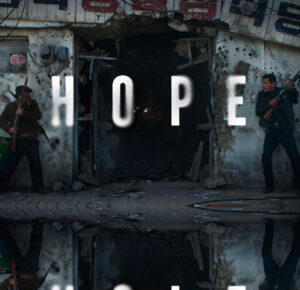

 In an era when conflicts unfold across smartphone screens before they reach newsrooms, the question of who documents war – and how – has shifted fundamentally. Platforms aggregating war footage now operate as de facto archives, capturing moments that traditional correspondents may never reach. This transformation is not merely technological. It is rewriting the relationship between conflict, memory, and historical truth.
From Centralized Journalism to Decentralized War Documentation
For most of the twentieth century, war documentation was a controlled enterprise. Governments managed press access, broadcasters curated footage, and photojournalists operated within established institutional frameworks. The camera was a professional instrument, and the archive was a physical place – film reels stored in broadcast vaults, prints filed in agency libraries.
The shift began gradually with the democratization of digital cameras and accelerated sharply with the mass adoption of smartphones. By the time conflict erupted in Syria in 2011, the paradigm had already cracked. Civilians were uploading eyewitness footage directly to YouTube within hours of incidents that no journalist had witnessed. The gatekeeping function of traditional media was not abolished – but it was profoundly disrupted.
Today, the architecture of war documentation is horizontal rather than hierarchical. Anyone with a charged phone and a network connection can become a primary source.
Telegram, X, and the New Archive of Raw War Footage
The platforms that have emerged as the dominant repositories of conflict footage were not designed for this purpose. Telegram, originally conceived as a secure messaging service, became a primary channel for distributing frontline video from Ukraine within days of the 2022 invasion – from infantry engagements to the rapidly expanding visual record of Drone Warfare, which produced some of the most widely circulated combat footage of the conflict. X (formerly Twitter) functions simultaneously as a breaking news wire and an unmoderated clip repository. Reddit communities dedicated to geopolitical conflicts aggregate footage with timestamps, coordinates, and user-generated analysis.
What distinguishes these environments from traditional archives is speed. Footage appears in real time, often before the situation it depicts has resolved. This immediacy has genuine documentary value – it compresses the distance between event and record. But it also introduces instability. Without institutional verification, a clip’s authenticity, provenance, and context are all uncertain until someone with the appropriate tools examines it.
The Verification Gap in Real-Time War Footage
The infrastructure of open-source intelligence (OSINT) has partially filled this gap. Communities of analysts cross-reference footage using satellite imagery, geolocation tools, and shadow mapping to verify time and place. Organizations like Bellingcat have demonstrated that rigorous verification is possible within decentralized media ecosystems. But these efforts remain reactive and selective – they cannot keep pace with the volume of combat footage generated in active conflict zones.
The Deepfake Problem and the Erosion of Trust
As verification methods have grown more sophisticated, so have the tools for fabrication. Synthetic media – video and audio generated or manipulated by artificial intelligence – now present a structural challenge to raw war footage as a historical source. In conflict contexts, deepfakes are not merely misinformation tools. They introduce epistemological doubt into the archive itself.
The concern is not only that false footage will be believed. It is that the existence of false footage will cause authentic eyewitness footage to be dismissed. When every clip carries a question mark, the evidentiary value of the entire category diminishes. Historians of future conflicts may face source corpora in which truth and fabrication are genuinely indistinguishable without specialized analytical tools.
Ethical Dimensions of the Visual Archive
Raw footage of war is, by nature, raw. It captures violence, death, and suffering without the editorial mediation that has historically governed what audiences see. The normalization of graphic content – its routine appearance in social media feeds alongside travel photography and sports highlights – raises questions that neither platforms nor viewers have adequately resolved.
There is also the matter of consent. Individuals captured in conflict footage – wounded, fleeing, dying – have not agreed to become historical documents. The families of those killed have not consented to the permanent availability of the most extreme moments of their loss. Digital archives, unlike physical ones, do not decay. The footage persists indefinitely, re-surfacing with each algorithmic recommendation.
Platforms have implemented inconsistent content moderation policies that satisfy neither documentary nor ethical standards. The result is an archive shaped less by principle than by enforcement capacity.
AI Verification and the Future of War Footage Archives
The most plausible response to both the verification gap and the deepfake problem lies in automated analysis. AI tools capable of detecting compression artifacts, identifying synthetic generation signatures, and cross-referencing metadata are already in early deployment. The trajectory suggests that future archival practice will involve machine-assisted provenance assessment as a baseline function.
But technological solutions address only part of the problem. Data overload – the sheer volume of war footage generated in modern conflicts – poses an archival challenge that no verification system can fully resolve. Future historians may find themselves not with too little evidence, but with too much: most of it unverified, all of it contextually ambiguous.
What emerges from this landscape is not a replacement for traditional documentation, but a parallel and deeply complicated archive – one that demands new methodologies, new ethics, and new institutions. Whether raw war footage becomes history’s main source will depend less on the footage itself than on the systems built to interpret it. Independent platforms tracking these developments, such as The Chronicles, point to a future where the archive is not a place but a process – distributed, contested, and never quite complete.